


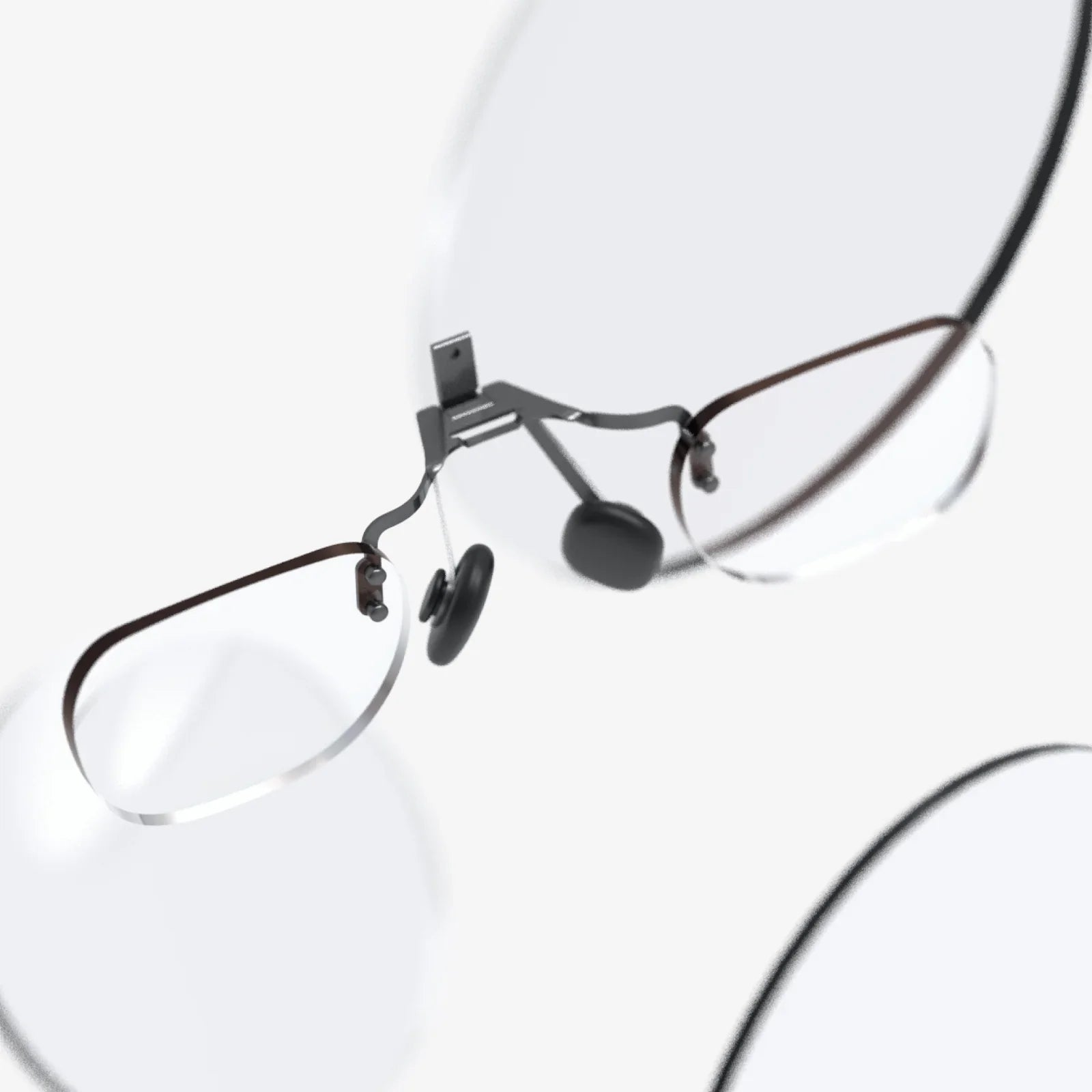
- by wangfred
Augment Reality Metaverse Virtual Reality: The Trifecta Reshaping Human Existence
- by wangfred
Imagine a world where the digital and physical are no longer separate realms but a seamless, interconnected continuum of experience. This isn't the distant future; it's the nascent reality being built today at the powerful intersection of three technological forces: Augmented Reality, the Metaverse, and Virtual Reality. This convergence promises to fundamentally alter how we work, learn, play, and connect, blurring the lines between what is real and what is simulated in ways that will challenge our perceptions and redefine human potential. The journey into this new dimension of existence starts not with a leap, but with a gradual, immersive merge.
Before we can understand their powerful synergy, we must first delineate the unique attributes of each technology. While often used interchangeably in popular discourse, Augmented Reality (AR), Virtual Reality (VR), and the Metaverse are distinct concepts that, when combined, create something far greater than the sum of their parts.
Virtual Reality is the technology of complete immersion. It functions by replacing a user’s physical environment with a entirely computer-generated simulation. Through a head-mounted display that encompasses the entire field of vision, paired with spatial audio and sophisticated motion tracking, VR transports the user's consciousness into a digital world. The key principle here is presence—the convincing sensation of being somewhere else. This makes VR the ultimate tool for applications requiring total focus and detachment from the real world, from deep-sea exploration simulations to intricate virtual design studios and immersive training scenarios for high-risk professions.
If VR is about escape, Augmented Reality is about enhancement. AR overlays digital information—images, text, data, 3D models—onto the user’s view of their real-world environment. Instead of blocking out reality, it annotates and enriches it. This is most commonly experienced through smartphone cameras or, more powerfully, through transparent AR glasses that allow for hands-free interaction. The magic of AR lies in its contextuality; it delivers relevant information precisely when and where it is needed. Imagine looking at a historical monument and seeing a reconstruction of its ancient past superimposed upon it, or a mechanic seeing the internal wiring diagram overlaid onto the machine they are repairing. AR bridges the gap between the abstract digital data cloud and our tangible physical reality.
The Metaverse is not a single technology but a hypothesized iteration of the internet as a single, universal, and immersive virtual world, facilitated by the use of VR and AR headsets. Often described as the spatial internet or the embodied internet, the core tenets of the Metaverse include:
Think of the Metaverse as the platform or the universe itself, while VR and AR are the primary portals or lenses through which we will access and interact with it.
The true revolution begins when these three concepts stop being siloed and start working in concert. They are not competing visions but complementary layers of a new computing paradigm.
Virtual Reality provides the immersive gateway to the purely digital domains of the Metaverse—the fantasy worlds, the conference rooms, the virtual concert venues. It is the tool for deep, distraction-free engagement within these spaces.
Augmented Reality, on the other hand, becomes the primary interface for bringing the Metaverse into our daily lives. It will map the data, avatars, and digital objects of the Metaverse onto our physical world. Your colleague's avatar could appear sitting in the empty chair next to you during a meeting. Navigation arrows could be painted onto the sidewalk guiding you to your destination. A virtual art gallery could be curated on the walls of your home.
This creates a spectrum of experience, from the fully real (unaided reality) to the fully virtual (VR), with Augmented Reality occupying the vast middle ground, often referred to as Mixed Reality (MR). The Metaverse is the persistent digital layer that exists across this entire spectrum, accessible through different lenses depending on the context and need.
The fusion of AR, VR, and the Metaverse is poised to disrupt nearly every sector of the global economy, moving beyond novelty and into core operational utility.
The concept of the office is being redefined. Virtual Reality enables the creation of perfect, bespoke workspaces for collaboration. Design teams can interact with 3D models at life-size scale, manipulating them with natural gestures. Architects can walk clients through unbuilt structures. This eliminates the barriers of geography and physical prototyping. Augmented Reality supercharges this by enhancing physical workspaces. A factory technician wearing AR glasses could see performance metrics floating next to machinery, receive remote expert guidance with annotations appearing directly on the faulty component, and access digital manuals hands-free. The Metaverse provides the persistent corporate campus where all these activities are logged, connected, and accessible, creating a continuous thread between remote and in-person work.
Learning will shift from passive absorption to active experience. Instead of reading about ancient Rome, history students can walk its streets in VR, witnessing historical events unfold around them. Medical students can practice complex surgical procedures on virtual patients, making mistakes without consequences and mastering muscle memory in a risk-free environment. AR can bring textbook diagrams to life, allowing a biology student to explore a beating heart hologram from every angle. The Metaverse can host entire virtual universities, with dedicated libraries, lecture halls, and social spaces, making high-quality education accessible to anyone, anywhere in the world.
The way we shop is in for a dramatic transformation. AR will allow us to try before we buy with unprecedented fidelity. You can see how a new sofa would look in your living room, how a pair of glasses fits your face, or how a paint color would change the mood of a room—all through your device. VR shopping in the Metaverse will be an experiential event. You could visit a virtual car showroom, configure your dream model, and take it for a test drive on a simulated Italian coastal road. Fashion brands will sell digital clothing for avatars, creating entirely new markets and expressions of identity. This moves e-commerce from a 2D transactional experience to a 3D experiential one.
The applications in healthcare are profound and life-changing. VR is already being used for exposure therapy to treat phobias and PTSD, allowing patients to confront triggers in a safe, controlled environment. It is also a powerful tool for pain management, distracting patients during painful procedures. AR can provide surgeons with real-time, overlayed data during operations, such as showing the exact location of a tumor beneath layers of tissue. For physical therapy, AR can turn exercises into interactive games, improving patient engagement and outcomes. The Metaverse could enable a global network of medical professionals to collaborate on complex cases within a shared virtual model of a patient's anatomy.
Such a fundamental shift in how we perceive and interact with reality brings with it a host of profound questions and challenges that society must grapple with.
In the Metaverse, your physical form is no longer your primary vessel for interaction. You are represented by an avatar—a digital representation that you can customize to an infinite degree. This offers incredible freedom for self-expression, allowing people to present themselves in ways that may not be possible in the physical world. However, it also raises complex questions about identity, authenticity, and behavior. If you can be anyone, who will you be? How does this fluidity impact our sense of self? The potential for identity exploration is liberating, but it also opens the door to deception and the fragmentation of personality.
To function, AR and VR systems require an unprecedented level of data collection about the user and their environment. They use cameras, microphones, and sensors to map physical spaces, track eye movement, gait, and even emotional responses. This data is essential for creating immersive experiences, but it also constitutes a treasure trove of intimate personal information. The privacy implications are staggering. Who owns the digital map of your home? How is your biometric data being used and stored? Without robust ethical frameworks and regulations, this new frontier could become a dystopian surveillance nightmare.
The promise of the Metaverse is one of boundless connection and opportunity. Yet, there is a very real risk that it could exacerbate existing social and economic inequalities. Access to high-quality VR/AR hardware and low-latency internet will be a significant barrier, potentially creating a new class of digital haves and have-nots. If crucial aspects of work, education, and social life migrate into these spaces, those without access could be left further behind. Ensuring equitable and affordable access will be one of the greatest challenges in realizing the inclusive potential of this technology.
The path forward is not predetermined. The development of the AR-infused Metaverse accessed through VR is a canvas upon which we, as a global society, must paint our collective future. This requires proactive effort from developers, policymakers, ethicists, and users.
We must champion the development of open standards and protocols to ensure interoperability and prevent the emergence of a few walled-garden Metaverses controlled by powerful entities. We need to embed privacy-by-design principles into the very architecture of these platforms, giving users true ownership and control over their data. Digital literacy education must evolve to help people critically navigate these new realities and understand the associated risks.
Most importantly, we must never lose sight of the human element. These technologies should be designed to augment human connection, not replace it; to enhance our physical reality, not escape from it. They should be tools for empowerment, creativity, and solving real-world problems, not just channels for consumption and distraction.
The fusion of Augmented Reality, the Metaverse, and Virtual Reality is more than a technological trend; it is a cultural, economic, and philosophical shift. It presents a mirror to our own world, reflecting both our highest aspirations for the future and our deepest anxieties. The door to this next chapter of human experience is now open. The question is no longer if we will step through, but how we will choose to build the world we find on the other side.
Share:
Virtual Reality Target Audience: Beyond Gamers to a World of Immersive Potential
Virtual Reality and 3D Imaging: The Future of Digital Interaction is Here