


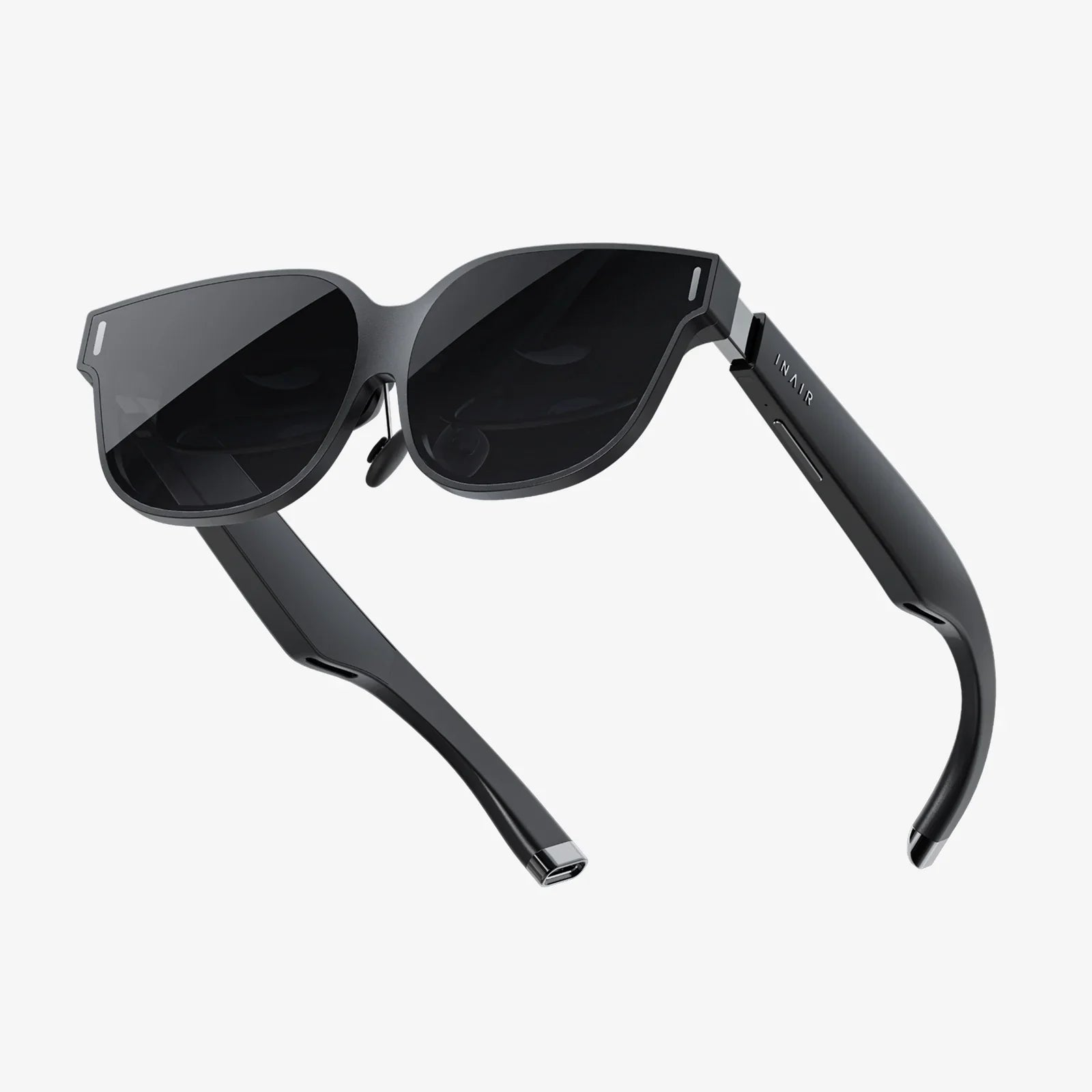
Imagine a world where the line between the digital and the physical doesn't just blur—it vanishes. Where information, art, and assistance are not confined to screens but are woven into the very fabric of your environment, accessible with a glance, a gesture, or a spoken word. This is the promise, and increasingly the reality, of Augmentation Virtual Reality, a transformative force poised to reshape every facet of our lives, from how we work and learn to how we connect and create. It’s not about escaping our world, but about making it richer, smarter, and infinitely more connected.
Beyond the Hype: Defining the Augmented Spectrum
Often conflated with its fully immersive cousin, Virtual Reality (VR), Augmentation Virtual Reality operates on a fundamentally different principle. Where VR seeks to transport users to a completely synthetic environment, AR aims to enhance the real world by overlaying it with digital content. Think of it as a dynamic, interactive layer of information painted onto your perception of reality.
This spectrum of augmentation can be broken down into several key categories:
- Marker-Based AR: This early form of AR relies on a physical visual cue, like a QR code or a specific image, to trigger the placement and display of digital content. The device's camera recognizes the marker and uses it as an anchor point.
- Markerless AR (or Location-Based AR): This more advanced form uses GPS, digital compasses, and accelerometers in a device to place digital content based on a specific location. Imagine pointing your phone at a historic street and seeing a reconstruction of what it looked like centuries ago.
- Projection-Based AR: This technique projects synthetic light onto physical surfaces, sometimes allowing for interaction. These projections can create interactive touchscreens on any wall or display complex data directly onto machinery.
- Superimposition-Based AR: This form partially or fully replaces the original view of an object with an augmented one. For instance, a medical student might use it to superimpose a detailed, interactive 3D model of a human heart over a physical mannequin.
The magic that makes this possible is a sophisticated cocktail of technologies. Computer vision, the eyes of AR, allows devices to understand and interpret the environment. Simultaneous Localization and Mapping (SLAM) algorithms enable a device to map its surroundings in real-time while tracking its own position within that space. This is combined with powerful processing, advanced display technologies (from smartphone screens to optical head-mounted displays), and intuitive input methods like gesture and voice control.
The Industrial Metamorphosis: AR on the Factory Floor
While consumer applications often grab headlines, the most profound impact of Augmentation Virtual Reality is currently unfolding in industrial and enterprise settings. Here, AR is not a novelty but a powerful tool solving critical problems and driving unprecedented efficiency.
Revolutionizing Manufacturing and Assembly
Complex assembly processes, which once required voluminous paper manuals and extensive training, are being streamlined with AR. Technicians wearing AR glasses can see digital work instructions, 3D arrows, and animations overlaid directly onto the physical components they are assembling. This reduces errors, slashes training time, and accelerates production lines. A worker can be guided, step-by-step, through wiring a complex control panel, with the AR system highlighting exactly which wire goes where.
Supercharging Maintenance and Repair
Field service technicians are being empowered like never before. Instead of troubleshooting a malfunctioning machine with only a manual for reference, they can use AR to see a digital twin of the equipment. Interactive schematics can highlight problematic parts, and a remote expert, seeing what the technician sees through a live feed, can annotate the real-world view with arrows and notes to guide the repair process from thousands of miles away. This minimizes downtime, reduces the need for specialist travel, and empowers less-experienced staff to perform complex tasks.
Transforming Design and Prototyping
In architecture, engineering, and construction, AR allows designers to visualize their creations at full scale in the real world long before ground is broken. An architect can walk clients through a life-size, holographic model of a new building on the empty plot of land. Engineers can project the internal wiring and plumbing of a structure onto bare walls, identifying clashes and issues in the design phase that would be costly to fix during construction. This ability to "see the unseen" is revolutionizing the design review process.
Redefining the Human Experience: AR in Daily Life
Beyond the factory walls, Augmentation Virtual Reality is steadily permeating our daily routines, offering new layers of information, entertainment, and connection.
The Future of Retail and E-Commerce
Shopping is being transformed from a guessing game into an interactive experience. AR apps allow users to visualize how a piece of furniture would look and fit in their living room, how a new shade of paint would change their kitchen, or how a pair of glasses would look on their face. This "try before you buy" capability drastically reduces purchase uncertainty and product return rates, building consumer confidence and engagement.
A New Dimension for Education and Training
Textbooks and 2D diagrams are giving way to immersive, interactive learning. Medical students can practice procedures on detailed, holographic human anatomies. History students can take a virtual walk through ancient Rome, watching historical events unfold around them. Mechanics-in-training can disassemble and reassemble virtual engines. AR makes abstract concepts tangible and dangerous or expensive training scenarios safe and repeatable.
Navigation and Contextual Information
The humble map is evolving. Instead of looking down at a phone, AR navigation apps can overlay directional arrows and street names onto the live view of the street through your camera, making it intuitive to find your way. Point your device at a restaurant, and you might see its reviews and menu float beside it. Look at a landmark, and its history materializes before your eyes. The world itself becomes an intuitively labeled and interactive interface.
The Invisible Challenges: Navigating the AR Frontier
The path to a seamlessly augmented world is not without significant hurdles. These challenges are as much about human factors and ethics as they are about technology.
The Hardware Conundrum: Form vs. Function
For AR to become truly ubiquitous, the hardware must evolve. Current options range from powerful but socially isolating headsets to convenient but limited smartphones. The holy grail is a pair of stylish, lightweight glasses that can deliver high-fidelity graphics, all-day battery life, and robust processing power without compromising comfort or social acceptance. Overcoming this form factor challenge is critical for mass adoption.
Privacy in a Perpetually Watching World
AR devices, by their very nature, are equipped with always-on cameras and sensors that continuously scan the environment. This raises profound privacy concerns. Who has access to this data? How is it stored and used? The potential for unauthorized surveillance, data harvesting, and facial recognition in public spaces is a serious threat that requires robust legal frameworks and transparent ethical guidelines from developers.
The Digital Divide and Social Etiquette
As with any advanced technology, there is a risk that AR could exacerbate social inequalities, creating a divide between those who can afford access to augmented information and those who cannot. Furthermore, new social norms will need to be established. Is it rude to wear AR glasses during a conversation? How do we interact with people who are partially immersed in a digital layer we cannot see? These are societal questions we are only beginning to grapple with.
Glimpsing the Horizon: The Future of Augmented Reality
The current state of AR is merely a prelude to a far more integrated future. We are moving towards a world where the AR cloud—a persistent, shared digital copy of the real world—will allow for collaborative experiences that are anchored in space and time. Persistent digital art installations, multi-user games played on city streets, and shared data visualizations in corporate lobbies will become commonplace.
The convergence of AR with Artificial Intelligence (AI) and 5G connectivity will be particularly potent. AI will act as the brain, understanding context and intent to deliver the right information at the right time without explicit commands. Meanwhile, 5G’s high bandwidth and low latency will offload intense processing to the cloud, enabling more complex AR experiences on smaller devices.
Perhaps the ultimate evolution is the move towards more intimate interfaces—from handhelds to head-mounted displays, and eventually to contact lenses or even direct neural interfaces, creating a seamless and invisible bridge between human thought and the digital layer of the world.
The true potential of Augmentation Virtual Reality lies not in flashy filters or isolated apps, but in its ability to become an invisible, indispensable utility. It’s the promise of a world where technology recedes into the background, no longer a distraction we hold in our hands but a natural extension of our perception, quietly amplifying human potential and deepening our understanding of the world around us. The future isn't about looking at a screen; it's about looking at the world and seeing more.
Share:
Is Virtual Reality Repair the Next Frontier for Tech Enthusiasts and DIYers?
Virtual Reality Based Interactive Visualization: The Next Frontier of Human-Computer Interaction