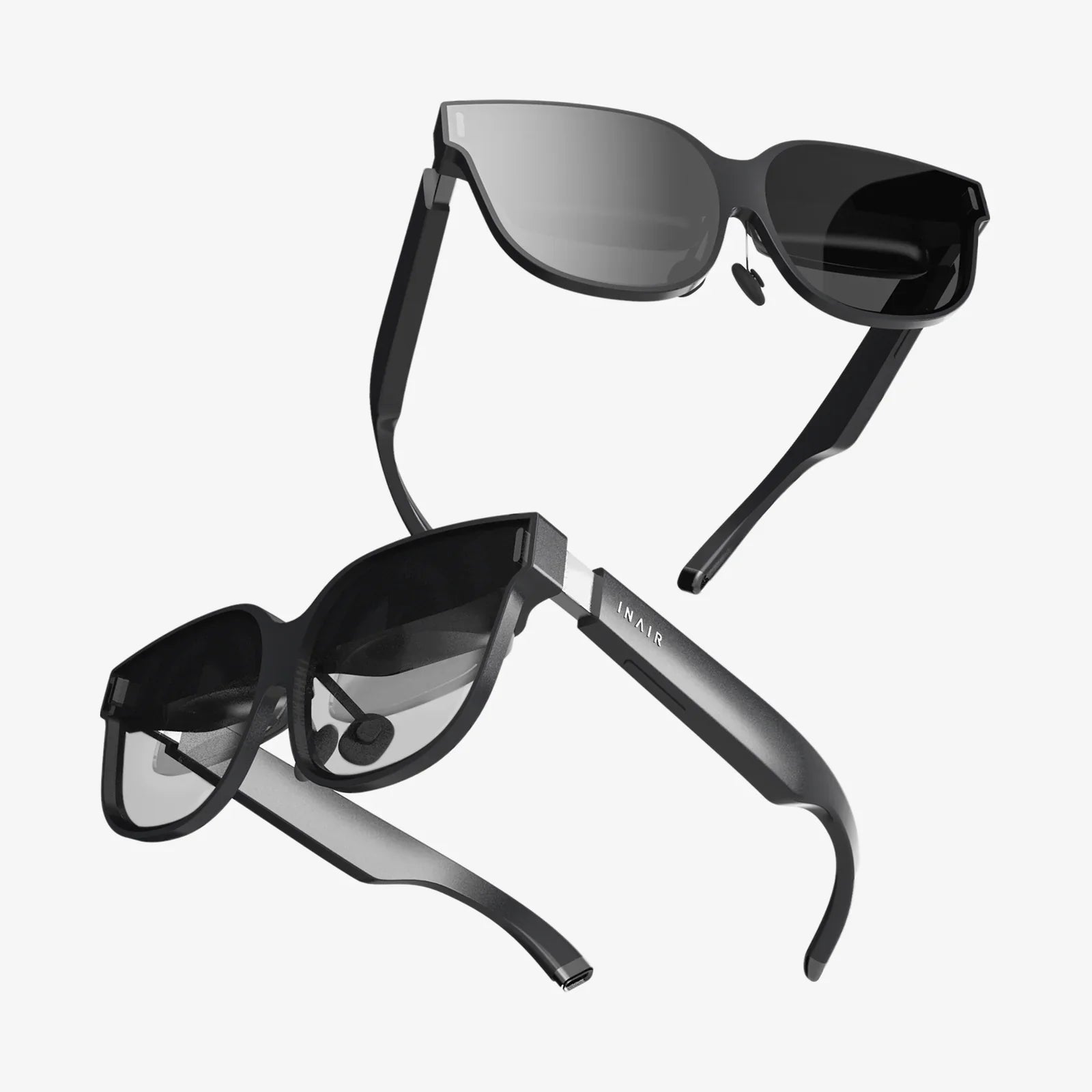
Imagine stepping inside a human heart, watching blood cells rush past you, or walking through a building that hasn't been constructed yet, adjusting the lighting and materials with a wave of your hand. This is no longer the stuff of science fiction; it is the immediate, tangible reality offered by virtual reality based interactive visualization, a technological revolution that is fundamentally altering how we perceive, interact with, and understand complex information.
The Confluence of Immersion and Interaction
At its core, virtual reality based interactive visualization is the sophisticated marriage of two powerful concepts: immersion and interaction. Virtual reality provides the immersion—a complete sensory envelopment that transports the user into a digitally constructed environment. This is achieved through head-mounted displays that track head and body movements, updating the visual field in real-time to create a convincing sense of presence. You are not just looking at a screen; you are inside the simulation.
Interactive visualization is the complement to this immersion. It is the ability to not only see data or models but to manipulate them, probe them, and change them in real-time. It transforms static images or complex datasets into dynamic, malleable objects of inquiry. When these two forces combine, the result is a paradigm shift. Users are no longer external observers but active participants within the information space. This shift from observation to experience unlocks deeper cognitive and emotional understanding, facilitating insights that are often impossible to achieve through traditional 2D screens.
Beyond the Screen: The Technology Behind the Magic
The magic of this technology is built upon a robust stack of hardware and software components working in perfect harmony.
The Hardware Ecosystem
The user's gateway is the head-mounted display (HMD), a device that has evolved from clunky prototypes to sophisticated, high-resolution visors. These devices contain precise inside-out or outside-in tracking systems that map the user's position in physical space to their movement in the virtual one. This is augmented by controllers, haptic feedback gloves, and even full-body tracking suits, which translate the user's physical actions into digital intent. For the most demanding applications, omnidirectional treadmills allow for natural walking within infinite virtual spaces.
The Software Engine
Powering the experience is complex software. Real-time 3D rendering engines are the workhorses, generating photorealistic or stylized environments at high frame rates to maintain immersion and avoid user discomfort. Crucially, these engines must also handle the computational logic of interaction. Physics engines simulate gravity, collision, and material properties, while specialized SDKs (Software Development Kits) provide the tools for developers to create intuitive interaction paradigms—grabbing, pulling, twisting, and painting within the virtual world.
The Data Pipeline
Finally, there is the data itself. Virtual reality based interactive visualization can ingest information from myriad sources: complex scientific simulations, point clouds from 3D laser scans, architectural BIM models, or real-time financial data streams. The visualization layer translates these abstract numbers and points into visual forms—streams of particles, evolving shapes, heat maps on a model—that can be intuitively grasped and explored from any angle.
Transforming Industries: From Abstract Data to Tangible Experience
The applications of this technology are vast and are already disrupting numerous professional fields by making the abstract tangible and the complex simple.
Revolutionizing Medicine and Healthcare
In medicine, the impact is profound. Medical students can step inside a photorealistic, interactive human body, dissecting layers of anatomy without ever touching a cadaver. Surgeons can rehearse complex procedures on a precise virtual replica of their patient's specific anatomy, derived from MRI or CT scans, planning their approach and anticipating challenges. This technology is also being used for patient education, allowing individuals to visually understand their condition and treatment plan, reducing anxiety and improving outcomes. Furthermore, it powers revolutionary therapies for phobias, PTSD, and rehabilitation, creating controlled, immersive environments for exposure therapy and motor skill retraining.
Reimagining Design and Architecture
The architecture, engineering, and construction industry has been transformed. Stakeholders are no longer forced to interpret a building from 2D blueprints or static 3D models. Instead, they can put on a headset and walk through their future home, office, or factory at a 1:1 scale. They can experience the spatial relationships, test sightlines, and assess the aesthetic impact of different materials and lighting conditions in real-time. This immersive design review process identifies costly errors and design flaws long before ground is broken, saving millions and ensuring the final product meets expectations. Engineers can visualize stress loads on a bridge or airflow over a car, interacting with the simulation to optimize performance.
Accelerating Scientific Discovery
For scientists, virtual reality based interactive visualization is a powerful new microscope for data. Researchers can step inside a molecular simulation, watching proteins fold and interact, or navigate a vast astronomical dataset, flying between galaxies to understand the large-scale structure of the universe. Geologists can walk through a 3D map of a fault line, and climatologists can stand within a hurricane simulation, visually correlating countless variables to generate new hypotheses and communicate findings in an instantly understandable way. It turns data analysis from a passive, analytical process into an active, exploratory one.
Redefining Education and Training
Education is moving from rote memorization to experiential learning. History students can witness historical events unfold around them, art students can step inside a painting, and chemistry students can safely combine volatile elements in a virtual lab. For high-stakes training—such as for pilots, astronauts, or nuclear plant operators—VR provides a risk-free environment to practice emergency procedures and develop muscle memory, building competence and confidence without the associated danger or cost of physical simulators.
Navigating the Challenges: The Path to Ubiquity
Despite its immense potential, the path to widespread adoption of virtual reality based interactive visualization is not without obstacles.
The Technical Hurdles
Technical barriers remain. Achieving true photorealism at high, stable frame rates requires immense computational power, making high-end experiences inaccessible to many. Latency—the delay between a user's movement and the visual update—must be kept to an absolute minimum to prevent motion sickness, a significant challenge known as VR-induced symptoms. The form factor of hardware, while improving, still needs to become lighter, wireless, and more comfortable for prolonged use. Furthermore, creating intuitive and standardized interaction models is an ongoing challenge; a user should not need a manual to know how to manipulate their virtual environment.
The Human and Ethical Dimensions
Beyond hardware, there are human factors. Prolonged use can lead to eye strain and mental fatigue. The phenomenon of "presence" is so powerful that it raises ethical questions about its potential for misuse, such as in creating hyper-realistic propaganda or traumatic experiences. Data privacy also becomes a critical concern in immersive environments that can track user gaze, movement, and biometric responses in unprecedented detail.
The Content Creation Bottleneck
Finally, there is the challenge of content. Creating high-quality, interactive VR experiences is currently a time-consuming and expensive process, requiring specialized skills in 3D modeling, programming, and experience design. The industry needs more robust tools that allow domain experts—the scientists, architects, and teachers—to easily translate their data and ideas into immersive formats without being expert developers themselves.
The Future is Immersive: What Lies Ahead
The trajectory of this technology points toward a more seamless and integrated future. We are moving towards standalone, wireless headsets with resolution matching the human eye. Haptic technology will evolve from simple controller vibrations to full tactile feedback, allowing users to feel the texture of a virtual object. The integration of artificial intelligence will be pivotal, with AI agents acting as guides within the simulation, dynamically generating content, or optimizing the visualization in real-time based on the user's focus and actions.
Perhaps the most exciting evolution will be the move towards collaborative virtual spaces. The true power of this medium will be unlocked when teams of experts from across the globe can meet inside a virtual model, interacting with the data and with each other as naturally as if they were in the same physical room, pointing, discussing, and modifying the simulation together in real-time. This will democratize expertise and accelerate innovation across every field.
We are standing at the precipice of a new era of computing, an era defined not by the desktop metaphor but by the experience of presence within information. Virtual reality based interactive visualization is more than a new way to view a graph or a model; it is a fundamental extension of human capability, offering us a powerful new lens to see, understand, and shape our world. The boundary between the digital and the physical is dissolving, and we are being invited to step through.