


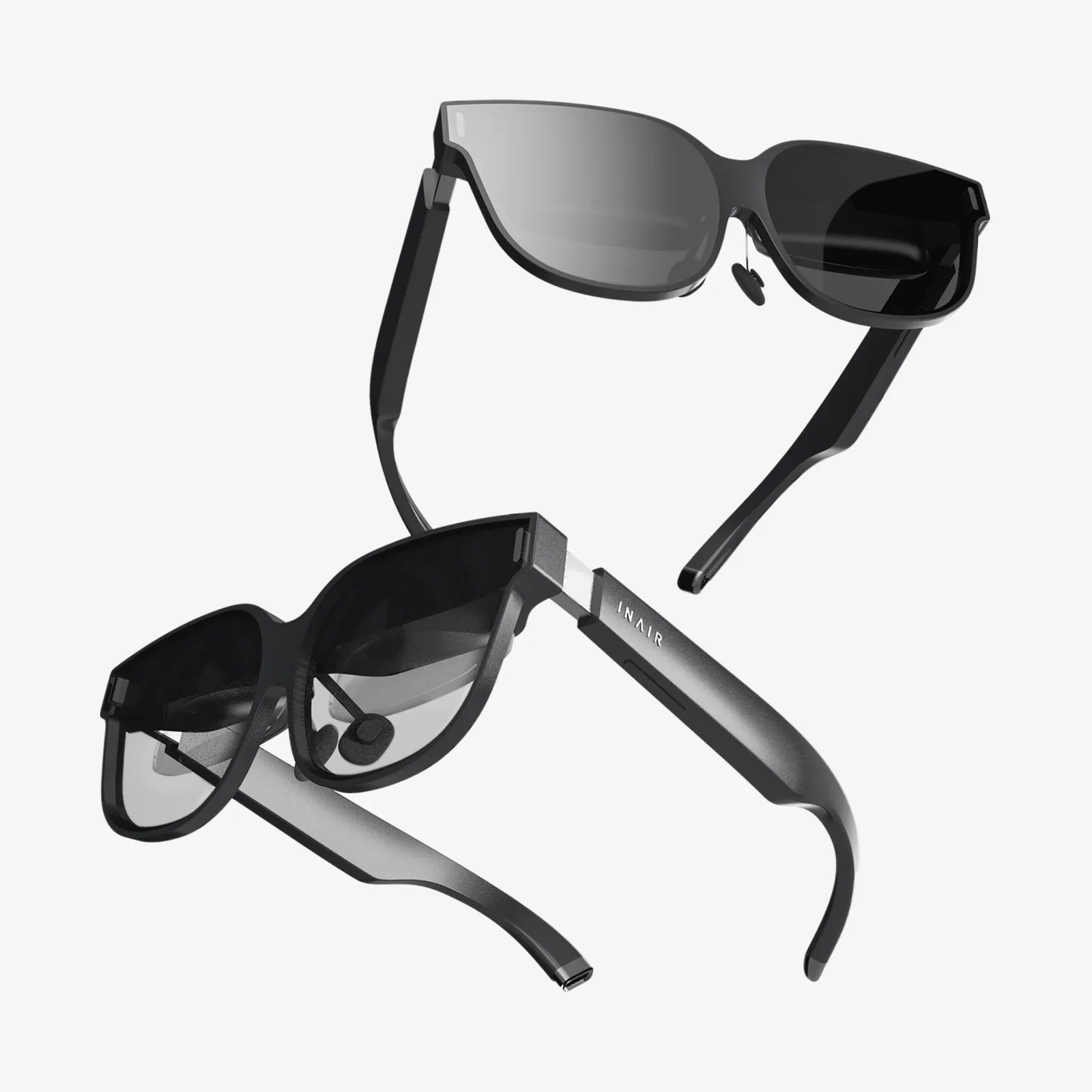
- by wangfred
Augmented and Virtual Reality in Operations: The Next Frontier of Industrial Efficiency
- by wangfred
Imagine a world where a factory floor supervisor can see real-time production data floating beside a malfunctioning machine, where a trainee surgeon can practice a complex procedure countless times without risk, or where a designer can walk through a full-scale prototype of a jet engine before a single piece of metal is cut. This is not a distant science fiction fantasy; it is the rapidly emerging reality of operations supercharged by augmented and virtual reality. These immersive technologies are breaking down the barriers between the digital and physical worlds, creating a powerful new toolset that is fundamentally reshaping how industries plan, execute, and optimize their most critical processes.
While often mentioned in the same breath, Augmented Reality (AR) and Virtual Reality (VR) serve distinct purposes and offer different value propositions for operational environments.
Virtual Reality (VR) immerses the user completely in a computer-generated, digital environment. By wearing a headset that blocks out the physical world, the user is transported to a simulated space. In operations, VR's power lies in its ability to create risk-free, repeatable, and cost-effective simulations. It is the ultimate tool for immersion without consequence.
Augmented Reality (AR), by contrast, overlays digital information—such as images, data, and 3D models—onto the user's real-world view. This is typically achieved through smart glasses, tablets, or smartphones. AR does not replace reality; it enhances it. Its strength is in providing contextual information exactly where and when it is needed, directly within the worker's field of view, turning the physical environment into an interactive interface.
The choice between AR and VR is not about which technology is superior, but about selecting the right tool for the specific operational task. VR is ideal for training and simulation away from the live environment, while AR excels at assisting and guiding tasks within the live environment.
One of the most immediate and impactful applications of immersive technology is in the realm of training and workforce development. Traditional training methods often involve expensive physical mock-ups, lengthy classroom sessions, and learning on the job, which can be slow and prone to costly errors.
VR transforms this paradigm by placing trainees inside hyper-realistic simulations. An aerospace technician can learn the intricate steps of assembling a complex component, with the system guiding their movements and providing instant feedback. They can make mistakes, learn from them, and reset the simulation in seconds, compressing months of on-the-job learning into days. This method not only accelerates proficiency but also ensures a consistently high standard of training, independent of the location of the trainer or trainee.
AR, on the other hand, acts as an on-demand expert guide. A maintenance engineer wearing AR glasses can look at a piece of equipment and see animated, step-by-step repair instructions overlaid directly onto the components. They can access digital manuals, see torque specifications, and even initiate a video call with a remote senior engineer who can see their view and draw annotations into their real-world environment to guide them. This drastically reduces downtime, minimizes errors, and empowers less experienced workers to perform complex tasks with confidence.
The MRO sector is experiencing a seismic shift thanks to AR and VR. Unplanned downtime is one of the largest costs in industrial operations, and these technologies are powerful weapons in the fight against it.
VR is used for planning maintenance procedures and simulating complex disassembly sequences before a technician ever sets foot on site. This allows teams to identify potential tooling conflicts, access issues, and safety hazards in a virtual space, leading to safer and more efficient execution in the real world.
AR is the star of the show during execution. Technicians can use AR to visualize the internal components of a machine, seeing “X-ray vision” overlays that reveal hidden parts, wiring, and pipelines. Sensor data from the Internet of Things (IoT) can be streamed directly into their field of view, showing temperature, pressure, and performance metrics in real-time. When a fault is detected, the system can highlight the exact component that needs attention. This context-aware guidance reduces diagnostic time, prevents misdiagnosis, and ensures repairs are completed correctly the first time. Furthermore, the entire process can be recorded through the AR device, creating a valuable digital record for compliance, auditing, and training future technicians.
The traditional product development cycle is lengthy and iterative, often relying on physical prototypes that are expensive and time-consuming to produce. AR and VR are collapsing this timeline and fostering unprecedented levels of collaboration.
Designers and engineers can use VR to step inside their CAD models at a 1:1 scale. They can walk around a virtual prototype of a new factory layout, assess ergonomics by simulating a worker's movements, and identify design flaws long before commissioning begins. This “digital twin” approach allows for rapid iteration and validation, saving millions in potential rework costs.
AR enables collaborative design reviews where participants from around the globe can see and interact with the same 3D model projected onto a real tabletop or into an empty space. They can make annotations, propose changes, and gain a shared understanding that is impossible to achieve with 2D blueprints or screen shares. This breaks down silos between departments and geographies, accelerating decision-making and ensuring everyone is aligned from the earliest stages of a project.
The fast-paced world of logistics and warehousing demands speed and accuracy. AR is proving to be a game-changer in optimizing these fulfillment centers.
Warehouse operatives equipped with AR smart glasses can receive order-picking instructions directly in their line of sight. The system can visually guide them along the most efficient route through the warehouse, highlighting the exact shelf and bin location for the next item. It can even display the quantity to be picked and confirm the item via barcode or image recognition, virtually eliminating picking errors. This hands-free operation allows workers to move and work faster without constantly consulting a handheld scanner or paper list, leading to significant gains in productivity and order accuracy.
Furthermore, AR can assist in loading and unloading trucks by visualizing the optimal placement of packages within a container to maximize space utilization and ensure cargo stability.
At its core, AR/VR is about enhancing human capability and safety. These technologies provide a layer of information that makes hazardous environments safer and connect frontline workers to a world of expertise.
VR is extensively used for safety training, immersing workers in dangerous scenarios—like dealing with a chemical spill or a fire on an oil rig—without exposing them to any real risk. This builds muscle memory and prepares them to react calmly and correctly in a real emergency.
AR can provide vital safety information directly in a worker's environment. It can highlight hazardous zones, display warning signs when approaching high-voltage equipment, or provide real-time air quality metrics. The ability to connect with a remote expert via AR is perhaps one of its most powerful safety features. A lone worker in a remote location can get expert guidance without the need for the expert to travel, ensuring problems are resolved quickly and safely without putting additional personnel at risk.
Despite the immense potential, integrating AR and VR into operations is not without its challenges. The initial investment in hardware, software development, and content creation can be significant. There are also technical hurdles related to connectivity, especially in large industrial facilities where a robust Wi-Fi or 5G network is essential for seamless AR experiences.
Perhaps the most significant challenge is cultural and human-centric. Success depends on user adoption, and this requires designing intuitive interfaces that provide genuine utility without overwhelming the worker. Comprehensive change management and training are crucial to overcome skepticism and demonstrate the tangible value of these new tools. Concerns around data security, privacy, and the potential for digital distraction must also be addressed through clear policies and robust technology design.
The trajectory of AR and VR points towards even deeper integration into the operational fabric. We are moving towards the widespread adoption of the "industrial metaverse"—a persistent, shared digital layer over the physical world where data, processes, and people interact in real-time. The convergence of AR/VR with Artificial Intelligence (AI), IoT, and 5G connectivity will unlock new capabilities. AI-powered AR assistants will not only provide instructions but also predict problems and propose solutions. Haptic feedback technology will allow users to “feel” virtual objects, adding another layer of realism to training and design.
As the hardware becomes lighter, more powerful, and more affordable, adoption will accelerate across all sectors, from energy and construction to healthcare and field services. The workforce itself will evolve, with new roles emerging for experience designers, data visualization experts, and immersive technology managers.
The transformative potential of augmented and virtual reality in operations is no longer up for debate; it is being proven on factory floors, in warehouses, and at remote sites every day. These technologies are not about replacing human workers but about augmenting their intelligence, skills, and efficiency. They are creating a future where human ingenuity is amplified by digital precision, where errors are dramatically reduced, and where complex tasks are executed with newfound confidence and clarity. The businesses that embrace this immersive revolution today are not just investing in new technology; they are investing in a smarter, safer, and vastly more efficient future, building a decisive competitive advantage that will define the next era of industrial productivity.
Share:
Virtual Reality Goggles Funny: The Unseen Comedy Revolution in Your Headset
Virtual Reality vs Digital Art: The Ultimate Showdown of Immersive Expression