


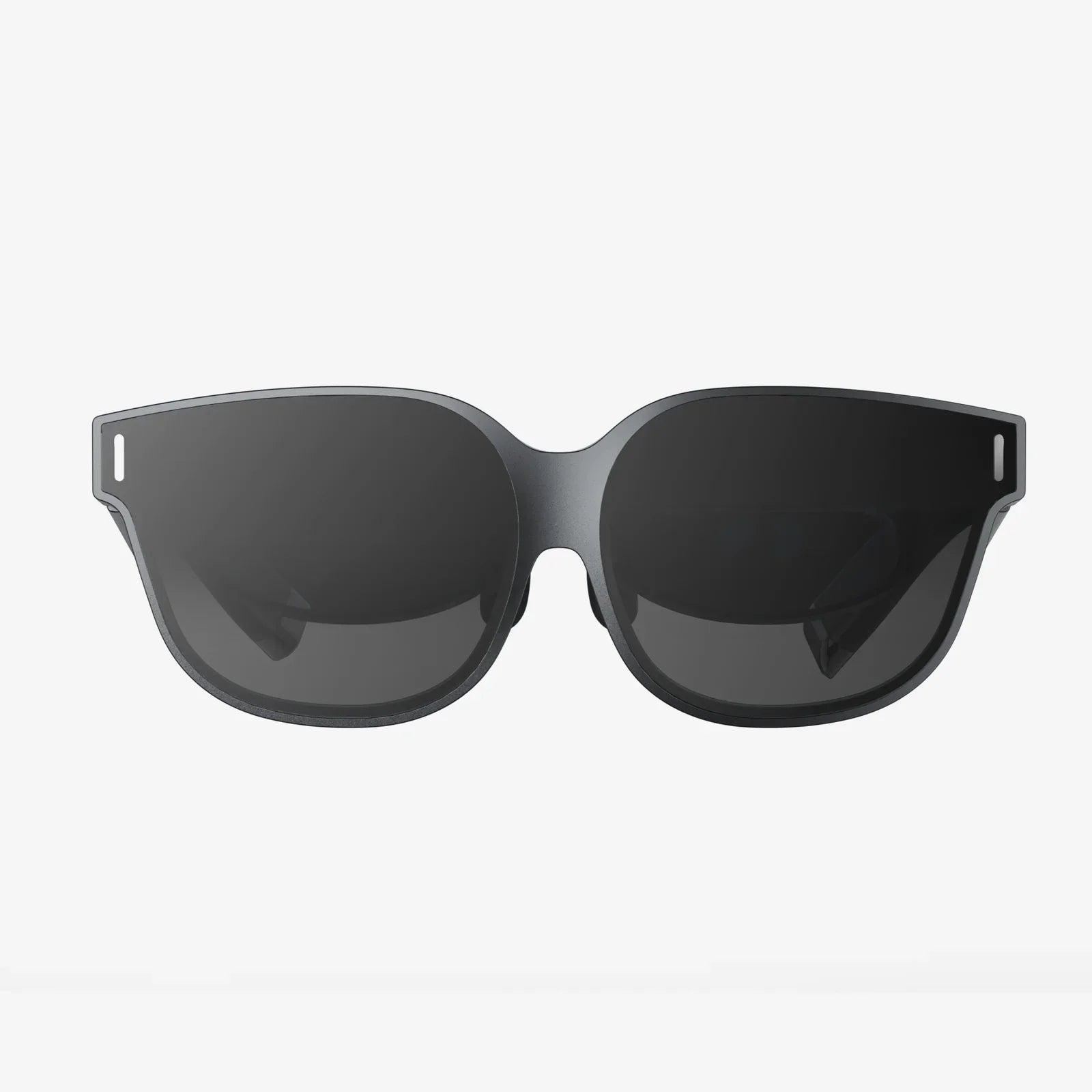
- by wangfred
Virtual Reality vs Digital Art: The Ultimate Showdown of Immersive Expression
- by wangfred
Imagine stepping inside a painting, not just observing its brushstrokes but feeling the wind it depicts and hearing the world it contains. This is no longer a fantasy confined to science fiction, but the very frontier of a creative revolution, a battleground of perception where two titans of technology and creativity clash and converge. The debate between virtual reality and digital art is not merely a technical comparison; it is a profound exploration into the future of human expression, storytelling, and our very perception of reality itself. It asks a fundamental question: do we want to observe a crafted world, or do we want to live inside it?
To understand the conflict and synergy between these two fields, we must first establish clear definitions. They are often mistakenly conflated, yet they represent distinct concepts with different intents and executions.
Digital Art is a broad umbrella term encompassing any artistic work or practice that uses digital technology as an essential part of the creative or presentation process. It is a medium, a toolset. For decades, artists have used software for digital painting, 3D modeling, vector illustration, photo manipulation, and generative algorithms. The final output has traditionally been a 2D image, a video, a print, or an animation—a representation to be viewed on a screen or a surface. The viewer is an external observer, looking at the artwork from the outside. The artistry lies in composition, color theory, narrative, and technique, all channeled through the digital canvas.
Virtual Reality (VR), on the other hand, is not merely a medium but an environment. It is a computer-generated simulation of a three-dimensional environment that can be interacted with in a seemingly real or physical way by a person using special electronic equipment, such as a headset with a screen inside and controllers. The core tenet of VR is immersion—the psychological sensation of being physically present in a non-physical world. It is defined by its interactivity and its 360-degree nature. The viewer is not an observer but a participant, an occupant within the artwork. The artistry shifts from crafting a scene to building an entire world with its own physics, logic, and possibilities for interaction.
This fundamental difference in output leads to a profound philosophical schism in artistic intent and audience experience.
Digital art, even in its most dynamic animated forms, operates on the principle of curated observation. The artist acts as a director, carefully controlling the frame, the focus, and the narrative flow. The viewer's journey, while open to interpretation, is guided along a visual path laid out by the creator. It is a testament to the power of the single, powerful image—a captured moment designed to evoke emotion, provoke thought, or showcase sublime beauty. It is art as a window.
Virtual reality dismantles this window and throws the viewer through the frame. Its power is rooted in embodiment and agency. The experience is inherently personal and non-linear. Two people may have entirely different experiences within the same VR piece based on where they look, what they interact with, and how they choose to move. The artist becomes an architect of experiences rather than just images. They design spaces for exploration and emotion, understanding that presence—the feeling of actually “being there”—is their most powerful tool. This can create unparalleled empathy, as seen in experiences that place you in the shoes of a refugee or a wild animal, or sheer awe, as when standing on a virtual Martian landscape.
The creation pipelines for these two disciplines, while sharing some DNA, are vastly different in scope and complexity.
A digital artist's toolkit is centered on software for rendering 2D and 3D assets. Mastery involves a deep understanding of light, texture, and form. The workflow is often solitary, with a single artist or a small team capable of producing breathtaking work. The final product is a file—a JPEG, MP4, or GIF—that is easily shared and displayed across countless devices with consistent fidelity.
Creating for VR is more akin to game development and architectural visualization than traditional digital art. It requires a multidisciplinary team: 3D modelers, environment artists, sound designers, programmers, and UX experts. Beyond asset creation, artists must grapple with real-time rendering engines, spatial audio, user interface design that exists in three dimensions, and, most critically, performance optimization. A dropped frame rate or laggy interaction can instantly shatter the fragile illusion of presence, pulling the user out of the experience. The technical constraints are significant, demanding a balance between visual detail and smooth performance.
To frame this solely as a rivalry is to miss the most exciting part of the story: their powerful and symbiotic convergence. VR has become the newest and most immersive canvas for digital art.
Pioneering artists are using VR not just as a display method but as a revolutionary sculpting and painting tool. Applications allow creators to step into a blank virtual space and “paint” in three dimensions with light, form, and motion. They can create sculptures that defy gravity, walk around their own creations as they build them, and craft entire environments that are impossible in the physical world. This is digital art, but it is art born of VR and fundamentally designed for VR. It cannot be fully appreciated on a 2D screen; it demands the immersion of the headset to understand its scale, depth, and intention.
Furthermore, traditional digital art principles are the bedrock upon which compelling VR is built. The stunning 3D models, textures, and concept art that populate virtual worlds are all created using the same software and skills honed by digital artists for years. A VR experience without a strong artistic vision—without compelling color palettes, thoughtful lighting, and strong visual design—feels hollow and unconvincing. The technology provides the stage, but the digital art provides the set, the props, and the visual soul.
Both fields face their own unique set of challenges, but VR's are particularly pronounced due to its nascent and hardware-intensive nature.
Accessibility and Friction: Anyone with a phone or computer can view a piece of digital art. Engaging with VR art requires a several-hundred-dollar headset, a sufficiently powerful computer, and a physical space to use it in. This creates immense friction and limits the audience to a tech-savvy or affluent few. Digital art is instantly shareable with a global audience; VR is largely a solitary, private experience.
Isolation: The very headset that creates immersion also creates physical isolation. The experience is intensely personal, often cutting the user off from their immediate surroundings. This contrasts with the often social experience of viewing art in a gallery or even sharing finds online with friends.
The Persistence of the 2D Image: Despite the rise of VR, the 2D image remains the dominant currency of our visual culture. It is how we communicate on social media, consume news, and share memories. A masterpiece created in VR must often be “flattened” into a 2D video or screenshot to be marketed and appreciated by the wider world, inevitably losing its essential quality in the process.
The trajectory is not of one replacing the other, but of their continued evolution and integration. We are moving toward a future where the lines are increasingly blurred.
The development of more affordable, wireless, and higher-fidelity headsets will gradually lower the barrier to entry, making VR art more accessible to both creators and viewers. Technologies like augmented reality (AR) and mixed reality (MR) offer a middle ground, overlaying digital artworks onto our physical world through glasses or phone screens, blending observation with embodiment.
We will see the rise of shared virtual galleries where avatars can congregate to view digital art collections, combining the social aspect of a museum with the infinite possibilities of a virtual space. Furthermore, the concept of the “metaverse”—a persistent network of shared virtual spaces—promises a future where our digital and physical identities and assets, including art, seamlessly intertwine.
The ultimate takeaway is that virtual reality and digital art are not adversaries in a zero-sum game. They are two powerful languages in the expanding lexicon of human creativity. One offers the profound, focused power of the frame—a timeless ability to capture a feeling, an idea, a beauty that can be appreciated by anyone, anywhere. The other offers the unparalleled power of place—the ability to not just show someone a story, but to let them live it. The future of art isn't about choosing between the brush and the headset; it's about artists mastering both to tell stories we've only just begun to imagine.
This is not the end of art as we know it, but a magnificent expansion of its very definition. The canvas is no longer flat; it surrounds us. The palette is no longer just color; it is space, sound, and motion. The next generation of masters will be those who can harness the intimate power of the image while fearlessly building worlds we can step into, forever changing our relationship with the art itself and with each other. The revolution is not coming; it is already here, waiting for you to put on the headset and dive in.
Share:
Augmented and Virtual Reality in Operations: The Next Frontier of Industrial Efficiency
Best Virtual Reality Technology: A Deep Dive into the Future of Immersion