


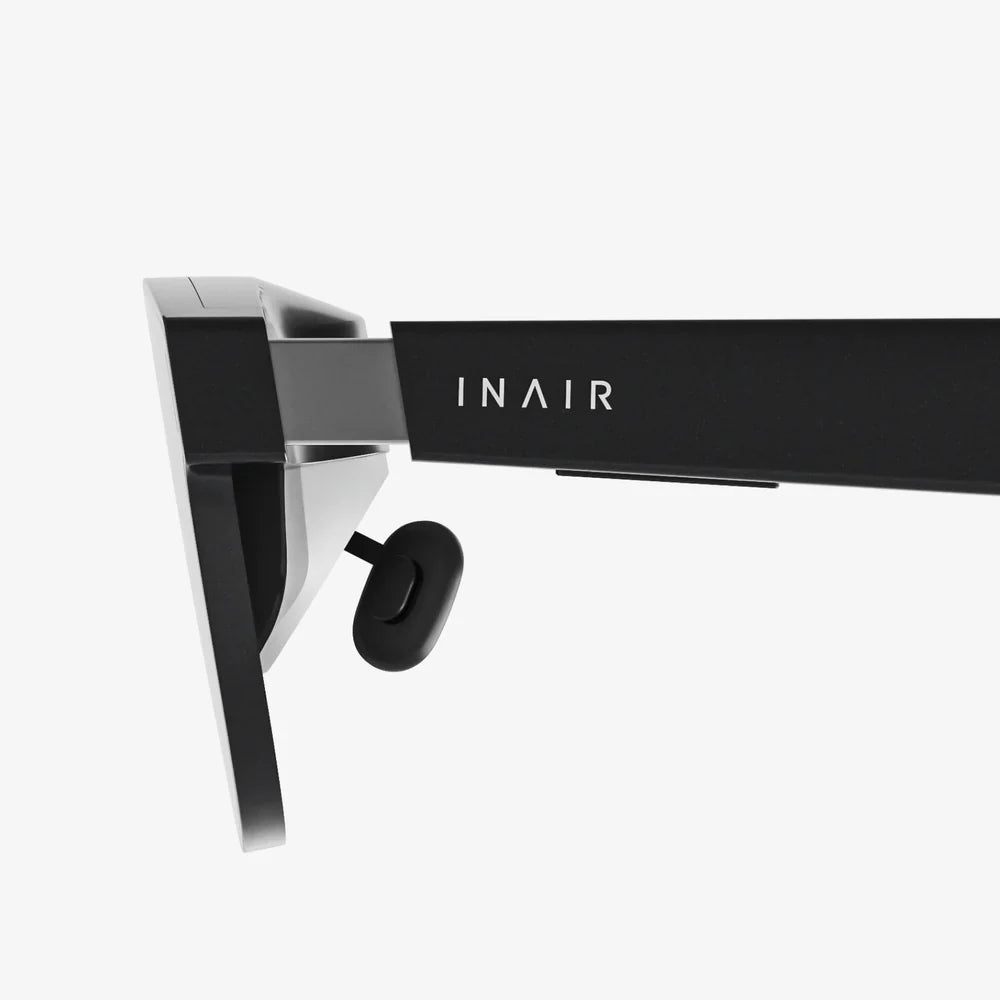
Imagine a world where your very surroundings become an intelligent, interactive canvas—a world where digital information doesn't just sit on a screen but is seamlessly woven into the fabric of your physical reality, anticipating your needs and enhancing your capabilities. This is no longer the realm of science fiction; it is the emerging reality being forged at the powerful intersection of two of the most transformative technologies of our time. The convergence of these fields is creating systems that don't just display data but understand the world, learn from it, and augment it in profoundly intelligent ways.
The Foundational Duo: Defining the Core Technologies
To understand the power of their union, we must first define the individual components. Augmented Reality (AR) is a technology that superimposes a computer-generated overlay—comprising images, sounds, text, and 3D models—onto a user's view of the real world. Unlike Virtual Reality (VR), which creates a completely immersive digital environment, AR enhances the real world by adding a digital layer to it. This is typically achieved through devices like smartphones, tablets, smart glasses, and heads-up displays.
Machine Learning (ML), a critical subset of artificial intelligence, is the science of enabling computers to learn and make decisions without being explicitly programmed for every task. It involves algorithms that parse data, learn from that data, and then apply what they have learned to make informed decisions or predictions. Through techniques like deep learning and neural networks, ML systems can identify patterns, recognize images and speech, and even generate content, improving their accuracy over time with more data and experience.
For years, these technologies developed on parallel tracks. AR was impressive but often lacked contextual intelligence; it could place a digital dinosaur in your living room, but it couldn't understand that the dinosaur should occlude behind your sofa or react to your presence. ML was powerful at processing data but often existed in the abstract realm of servers and datasets, disconnected from our immediate physical experience. It was only a matter of time before their paths converged, creating a symbiotic relationship where each technology dramatically amplifies the capabilities of the other.
The Symbiosis: How Machine Learning Supercharges Augmented Reality
The true magic begins when machine learning is infused into the augmented reality pipeline. ML acts as the brain, providing the cognitive functions that allow AR to move from a simple display tool to a contextual, intelligent partner. This fusion addresses the core challenges that once limited AR's potential.
1. Advanced Environmental Understanding and Scene Reconstruction
Early AR experiences relied on simple marker-based tracking or basic plane detection (finding floors and walls). Machine learning, particularly computer vision, has revolutionized this. Convolutional Neural Networks (CNNs) can now analyze a video feed in real-time to perform complex tasks:
- Semantic Segmentation: ML models can classify every pixel of an image, distinguishing a wall from a window, a person from a car, or a tree from a sidewalk. This allows AR content to interact with the environment intelligently—for example, a virtual character could realistically step onto a couch rather than float through it.
- 3D Object Recognition and Occlusion: Instead of just detecting horizontal planes, ML can identify specific objects (e.g., a coffee mug, a specific machine part) and understand their precise 3D geometry. This enables perfect occlusion, where digital objects can realistically hide behind real-world objects, a fundamental requirement for believable immersion.
- Simultaneous Localization and Mapping (SLAM) Enhancement: SLAM technology allows a device to map an unknown environment while simultaneously tracking its location within it. ML enhances SLAM by making it more robust and accurate, able to handle dynamic environments with moving people and changing lighting conditions.
2. Robust and Adaptive Object Tracking
Tracking the position of objects is crucial for stable AR. ML models can be trained to track objects with high fidelity even when they move, rotate, or are partially obscured. This is vital for industrial applications where a digital manual must stay locked onto a specific engine component, or in retail where a virtual try-on accessory must remain fixed to a user's ear or wrist as they move.
3. Natural and Intuitive User Interfaces
ML enables interaction with the AR world without controllers or touchscreens. Gesture recognition models interpret hand and finger movements, allowing users to manipulate holograms with natural gestures. Gaze tracking understands where a user is looking, enabling selection and interaction through sight alone. Furthermore, voice recognition powered by ML natural language processing allows for conversational control of the AR experience. This combination creates a truly hands-free and intuitive interface, blending the digital and physical command systems seamlessly.
The Reverse Flow: How Augmented Reality Empowers Machine Learning
While ML gives AR its brain, AR provides ML with something equally valuable: a rich, contextual, and perpetual source of real-world data and a revolutionary interface for displaying its insights. This completes the symbiotic loop.
1. The Ultimate Data Collection and Annotation Platform
Training robust ML models requires vast amounts of accurately labeled data—a process that is often tedious and expensive. AR can streamline this dramatically. Workers wearing AR glasses can perform tasks while the system records video of their environment and actions. This video can be automatically annotated using the AR system's own understanding of the scene (e.g., "wrench turning bolt A on component B"). This creates perfectly labeled, contextual datasets for training ML models for predictive maintenance, assembly guidance, and safety compliance, all collected in the flow of work.
2. Visualizing the Invisible: Making ML Insights Tangible
ML models often operate as "black boxes," producing outputs that are difficult for humans to interpret or trust. AR solves this by visualizing the model's insights directly in the context of the real world. For instance:
- A predictive maintenance model can flag a motor as high-risk. Instead of showing a probability score on a dashboard, AR can project a glowing red highlight onto the actual motor on the factory floor, along with overlays showing stress points and predicted time-to-failure.
- A medical ML model analyzing MRI scans can project its findings—highlighting a tumor's precise location and boundaries—directly onto the surgeon's view of the patient during an operation.
- A retail recommendation algorithm can move beyond a simple "customers who bought this..." list and instead highlight the recommended product on the physical shelf in front of the shopper.
This makes the abstract, probabilistic output of ML concrete, actionable, and instantly understandable, building crucial human trust in AI systems.
Transformative Applications Across Industries
The combined force of AR and ML is already disrupting numerous sectors, creating new paradigms for work, learning, and interaction.
Revolutionizing Industrial and Manufacturing Sectors
This is perhaps the most mature application area. Intelligent AR systems are becoming the ultimate tool for the modern worker.
- Assembly and Maintenance: AR glasses guide technicians through complex procedures, overlaying digital arrows and instructions onto physical equipment. ML adapts the guidance based on the worker's experience level, the specific model of machinery, and real-time sensor data. It can also recognize errors—like a missing component or an incorrectly installed part—and immediately alert the user.
- Quality Control and Inspection: An ML model trained on thousands of images of defects (cracks, corrosion, misalignments) can analyze a live AR video feed from an inspector's glasses. The system can then automatically flag potential flaws with visual annotations, ensuring nothing is missed and significantly speeding up the inspection process.
- Training and Skill Development: New employees can learn complex tasks on the job with intelligent AR guidance. The ML system can monitor their progress, provide feedback, and gradually reduce the amount of guidance as their proficiency increases, creating a personalized learning curve.
Advancing Healthcare and Medicine
In healthcare, the stakes are high, and the precision offered by this fusion is saving lives and improving outcomes.
- Surgical Navigation: Surgeons can see critical anatomical structures, tumor margins, and blood vessels overlaid directly onto their patient during surgery. ML models can process pre-operative scans in real-time to update these overlays based on the actual surgical field, accounting for tissue shift and movement.
- Medical Training: Students can practice procedures on augmented patients, where ML provides realistic physiological responses to their actions. They can also explore detailed, interactive 3D models of human anatomy that respond to voice commands and gestures.
- Patient Care and Rehabilitation: ML can analyze a patient's movement during physical therapy sessions via an AR device, providing real-time, personalized corrections and encouragement to ensure exercises are performed correctly for optimal recovery.
Redefining Retail and E-Commerce
The retail experience is being personalized and dematerialized through intelligent augmentation.
- Virtual Try-On: ML-powered AR enables highly accurate virtual try-ons for clothes, glasses, makeup, and jewelry. The technology understands facial features, body shape, skin tone, and lighting to render products with photorealistic accuracy, drastically reducing purchase uncertainty and return rates.
- Personalized In-Store Navigation: Shoppers can use their smartphone or AR glasses to navigate a store. An ML-driven recommendation engine can guide them to products they are likely to need, show personalized offers on shelves, and provide detailed product information and reviews on demand.
- Virtual Furniture and Home Decor: Customers can place true-to-scale 3D models of furniture in their own homes. ML helps with scene understanding to ensure the virtual object respects the physics of the space, adjusting for lighting and shadows to create a realistic preview.
Creating Immersive Educational Experiences
Education is being transformed from passive learning to active exploration.
- Interactive Learning: History students can walk through augmented recreations of ancient Rome, with ML-driven virtual characters answering their questions. Biology students can dissect virtual frogs or explore interactive human bodies.
- Skill-Based Training: Similar to industrial training, AR and ML can guide learners through complex tasks like automotive repair, plumbing, or electrical work, providing adaptive, context-sensitive instruction and assessment.
Ethical Considerations and Future Challenges
As with any powerful technology, this convergence brings forth significant ethical and societal questions that must be addressed proactively.
- Privacy and Surveillance: AR devices with always-on cameras and microphones, combined with ML's ability to identify and track objects and people, represent a unprecedented data collection capability. Robust frameworks for data ownership, consent, and anonymization are critical to prevent a dystopian future of perpetual surveillance.
- Algorithmic Bias and Reality Distortion: If an ML model powering an AR experience is trained on biased data, it will produce biased augmentations. This could lead to discriminatory information being projected onto people or environments, effectively baking systemic biases into our perceived reality. Ensuring fairness, transparency, and accountability in these models is paramount.
- The Blurring of Reality: As augmentations become more convincing and personalized, distinguishing between what is real and what is digitally added may become challenging. This raises concerns about manipulation, misinformation, and the psychological impact of altering one's perception of reality.
- Accessibility and the Digital Divide: The hardware required for high-end AR/ML experiences remains costly. There is a risk that these transformative tools could exacerbate existing inequalities, granting enhanced capabilities only to those who can afford them.
The Road Ahead: Towards a Perceptive and Predictive Digital Layer
The future of this symbiotic relationship points towards even tighter integration. We are moving towards a world where our digital devices will not only understand the context of our environment but also our intentions. Spatial computing will mature, allowing digital objects to have a persistent presence in the world, remembered and interacted with across sessions. ML models will become more efficient, capable of running on-device to ensure low latency and protect user privacy. Furthermore, the rise of generative AI will allow for the real-time creation of 3D content and interactive experiences tailored to the immediate context and user, making the augmented layer truly dynamic and creative.
The seamless fusion of these technologies is pushing us toward an era of ubiquitous computing, where information is not something we seek out on a device, but something that surrounds us, understands us, and assists us intuitively. It’s a future where our environment is not just smart but perceptive, and our interactions with the digital realm are as natural as interacting with the physical world. This isn't just an upgrade to our devices; it's a fundamental upgrade to human perception and cognition itself, unlocking possibilities we are only beginning to imagine.
The line between the digital and the physical is not just blurring; it is being intelligently woven together by the invisible hand of machine learning, creating a tapestry of reality that is richer, more informative, and more interactive than ever before. The next time you look at the world around you, consider the hidden data, the latent patterns, and the unseen potential—soon, you won't have to imagine it; you'll be able to see it, interact with it, and let it guide you, all through the lens of these two extraordinary technologies working in perfect harmony.
Share:
VR AR Device News 2025: The Year Spatial Computing Became Mainstream
Glasses That Use AI Are Redefining Human Perception and Interaction