


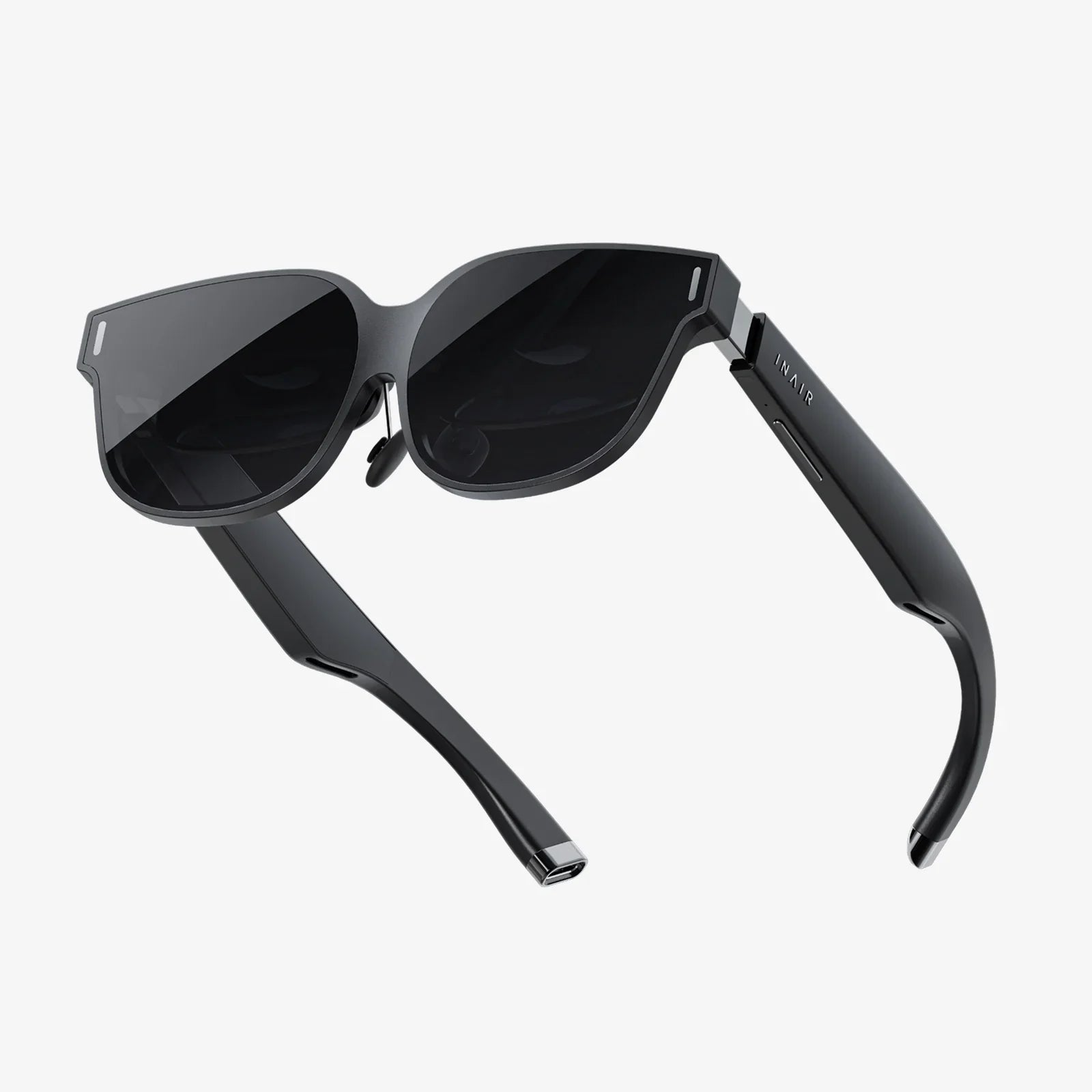
Imagine a world where digital information dances seamlessly atop your physical surroundings, where you can summon a high-definition screen to work from any café, or step into a fully immersive simulation to learn, play, or connect. This is no longer the stuff of science fiction; it is the burgeoning promise of augmented and virtual reality displays, technologies poised to fundamentally reshape our interaction with the digital realm. The journey from clunky prototypes to sleek, consumer-ready hardware has been rapid, yet the path to their ultimate vision is paved with profound technical and human-centric challenges. The race is on to conquer these hurdles, and the stakes for how we will compute, communicate, and experience the world are immense.
The Fundamental Divide: AR vs. VR
While often grouped under the umbrella of "spatial computing," AR and VR displays serve distinct purposes and, consequently, face different sets of obstacles. Understanding this dichotomy is the first step to appreciating their respective landscapes.
Virtual Reality: The Pursuit of Total Immersion
Virtual Reality aims to completely replace a user's field of view with a computer-generated environment. The primary challenge here is convincing the human brain that it is somewhere it is not. This requires creating a convincing, comfortable, and interactive simulation of reality.
Key Display Technologies in VR
- OLED and LCD Panels: Most current headsets use fast-switching, high-resolution panels for each eye. The quest for higher pixel density (pixels per degree or PPD) is relentless, as it directly correlates with the elimination of the "screen door effect" and the achievement of visual fidelity comparable to human acuity.
- Pancake Lenses: A significant evolution from the older Fresnel lenses, pancake optics use a folded path to drastically reduce the distance between the display panel and the eye. This has been instrumental in creating more compact and lightweight headset form factors.
- Varifocal and Light Field Displays: A major frontier involves solving the vergence-accommodation conflict (VAC). Traditional VR displays present a fixed focal plane, causing eye strain as users focus on virtual objects at different distances. Emerging technologies like varifocal displays, which physically move screens or lenses, and light field displays, which project light rays replicating real-world depth cues, aim to solve this by allowing the eyes to naturally accommodate.
Augmented Reality: The Art of Seamless Blending
Augmented Reality seeks to overlay digital content onto the real world. The display challenge is not replacement but integration. The ideal AR display is one where virtual objects are indistinguishable from physical ones, both in terms of visual quality and spatial persistence.
Key Display Technologies in AR
- Optical See-Through (OST): This method uses waveguides, often made of glass or plastic, to project imagery from micro-displays (like LCoS or MicroLED) into the user's eye while allowing real-world light to pass through. Waveguides are the technology of choice for most sleek, glasses-like prototypes, acting as a transparent screen.
- Video See-Through (VST): Used by some headsets that offer both VR and AR (often called Mixed Reality or MR), this method uses outward-facing cameras to capture the real world, compose the digital overlay on a processor, and present the combined image on an internal display. While this can offer more control and richer effects, it introduces latency and a potential reduction in real-world fidelity.
- Retinal Projection: A more experimental approach, retinal projection systems aim to scan images directly onto the user's retina. This could potentially offer immense brightness, a large field of view, and solve many optical challenges, but it remains in early stages of development for consumer applications.
Converging Perspectives: The Shared Vision
Despite their differences, the trajectories of AR and VR are increasingly intertwined. The ultimate goal for many in the industry is a single device capable of seamlessly shifting between fully virtual and augmented experiences—a true mixed-reality display. This vision is driving research in several key areas that benefit both fields.
The Drive for Visual Perfection
Both AR and VR demand unprecedented levels of visual performance. Key metrics include:
- Resolution and PPD: The human eye can discern approximately 60 PPD. Current high-end VR headsets are approaching 25-30 PPD, while most AR glasses are significantly lower. Bridging this "acuity gap" is critical for text legibility and overall realism.
- Field of View (FoV): A limited FoV feels like looking through a tunnel. Expanding FoV to match human binocular vision (around 200 degrees horizontal) without making devices enormous is a massive optical engineering challenge.
- High Dynamic Range (HDR) and Contrast: Real-world lighting has an immense range of brightness. Displays that can replicate the deep blacks of a shadow and the brilliant glare of the sun are essential for realism, especially for AR where virtual objects must match their environment.
Beyond Visuals: Multimodal Experiences
The display is just one sensory channel. The perspective of a truly immersive experience involves engaging other senses seamlessly.
- Spatial Audio: 3D audio that changes dynamically as a user moves their head is already a key feature, making virtual environments convincing and locating AR objects in space.
- Haptics and Touch: The challenge of touching the virtual world is being tackled through advanced controllers, wearable haptic gloves, and even devices that use ultrasonic waves to simulate tactile sensation in mid-air.
The Daunting Challenges on the Road to Adoption
For all the exciting progress, significant barriers remain that prevent these technologies from becoming as ubiquitous as smartphones. These challenges are deeply technical, deeply human, and deeply interconnected.
The Form Factor Conundrum
This is arguably the most immediate challenge, particularly for AR. Social acceptance is paramount. Today's most immersive VR headsets are still bulky and tethered to a powerful computer or constrained by mobile-level processing power. The goal is a pair of comfortable, stylish, all-day wearable glasses for AR and significantly lighter, smaller headsets for VR. This requires miniaturizing every component—processors, batteries, sensors, and optics—without compromising performance, a task pushing the limits of materials science and semiconductor design.
The Battle for Brightness and Battery Life
For AR displays to be usable outdoors, they must be incredibly bright to overcome ambient light, often requiring thousands of nits of luminance. This creates a vicious cycle: brighter displays demand more power, which requires larger batteries, which makes the device heavier and less wearable. Solving this power efficiency puzzle, perhaps through ultra-low-power micro-displays like MicroLEDs and revolutionary waveguide efficiency, is critical.
Latency and Tracking: The Motion-to-Photon Barrier
Any delay between a user's movement and the update of the display—a phenomenon known as latency—can quickly lead to disorientation and simulator sickness, especially in VR. Achieving "motion-to-photon" latency under 20 milliseconds is a stringent requirement that demands incredibly fast sensors, powerful processing, and high-refresh-rate displays. For AR, this also extends to the challenge of persistent occlusion (ensuring a virtual cup sits convincingly behind a real book) and robust tracking in dynamic, unprepared environments.
Content and the Killer App
A display is useless without compelling content. While gaming has been the primary driver for VR, and enterprise training leads for AR, the perspective for mass adoption hinges on finding a "killer app"—the spreadsheet for the PC, the browser for the internet. This could be a revolutionary social platform, a new paradigm for remote work and collaboration, or an indispensable daily assistant powered by AI. Creating the tools and ecosystems for developers to build these experiences easily is a challenge in itself.
Health, Safety, and Social Etiquette
Long-term effects of head-worn displays on vision, particularly for developing eyes, are still being studied. Furthermore, the ethical and social implications are vast. How do we manage privacy when devices have always-on cameras and sensors? What are the rules of engagement in public spaces when people are immersed in digital layers? These are not just engineering problems but societal ones that need to be addressed proactively.
The Future is Mixed
The trajectory is clear: the lines between AR and VR will continue to blur. The future likely belongs to versatile devices that can dynamically adjust their opacity, shifting from a transparent AR mode to an immersive VR mode. Research into holographic optics, new metamaterials for lenses, and breakthroughs in neural interfaces for more intuitive control could redefine the very concept of a display. The perspective is not just about putting screens in front of our eyes, but about creating a new layer of reality, an inseparable blend of the physical and digital that enhances human capability and connection.
The dream of perfect digital immersion is no longer a distant fantasy but a tangible goal being pursued in labs and design studios around the globe. While the challenges of creating socially acceptable, visually flawless, and computationally efficient augmented and virtual reality displays are formidable, the pace of innovation shows no signs of slowing. The devices that will ultimately win our hearts and minds are being forged in the fires of these very constraints, promising a future where the boundaries between our world and the digital universe finally dissolve, unlocking unimaginable new ways to work, create, and play. The next revolution in computing is not on your desk or in your pocket; it’s being built right before your eyes.
Share:
Augmented Reality and Virtual Reality Market: A Deep Dive into the Next Digital Frontier
Augmented Reality vs Virtual Reality Meaning: A Deep Dive Into Our Digital Future