


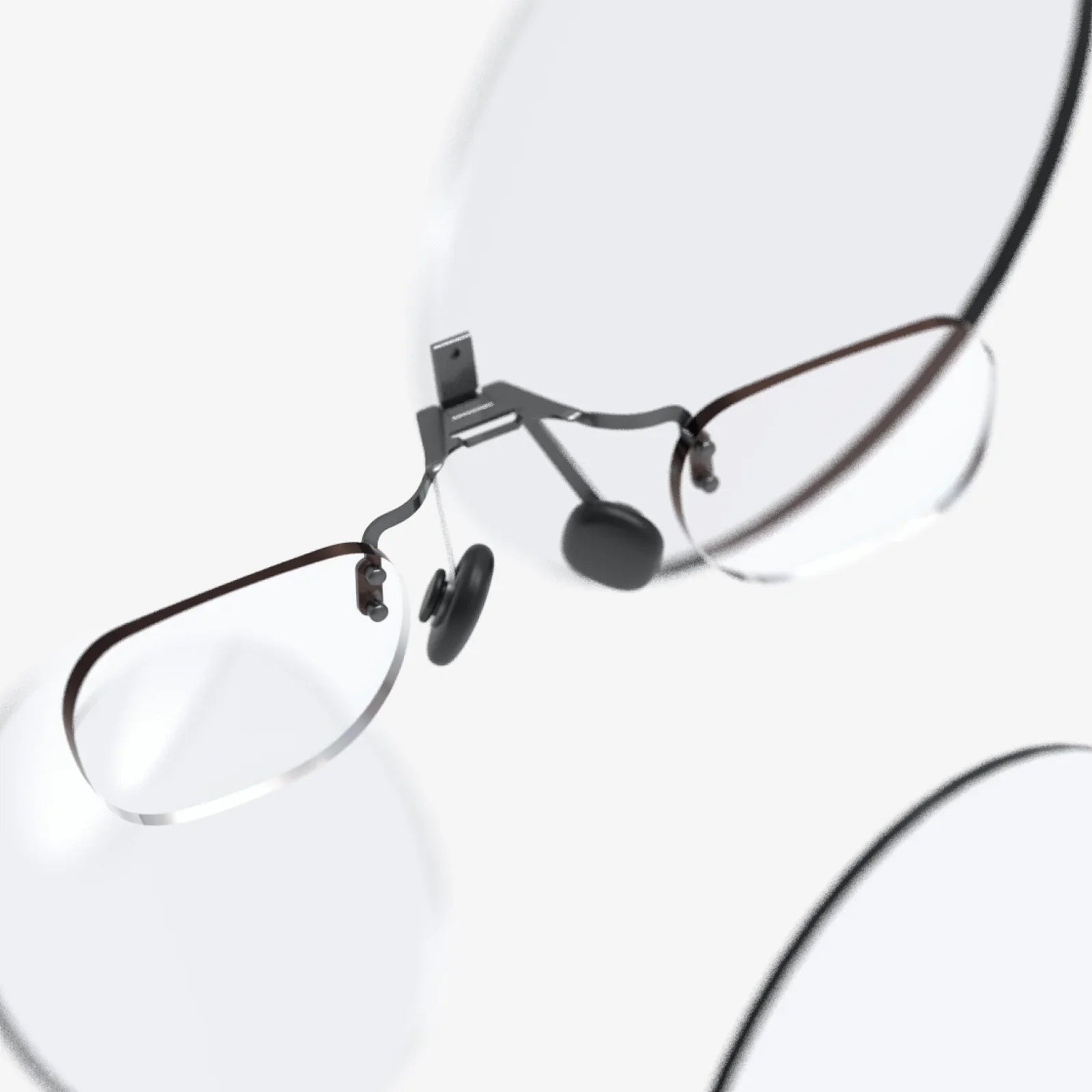
The digital and physical worlds are colliding in ways once confined to science fiction, and at the epicenter of this convergence lies a market bursting with unprecedented potential. The immersive technologies of augmented reality (AR) and virtual reality (VR) are no longer nascent novelties; they are powerful tools reshaping how we work, learn, play, and connect. From overlaying crucial data onto a surgeon’s field of view to transporting an entire team into a virtual design studio, the applications are as vast as human imagination itself. This isn't just about new gadgets; it's about a fundamental shift in human-computer interaction, promising to redefine entire industries and create economic value on a monumental scale. The journey into this new reality is already underway, and its trajectory is nothing short of spectacular.
The Foundational Pillars: Distinguishing AR from VR
While often mentioned in the same breath, augmented reality and virtual reality represent two distinct approaches to immersive technology, each with its own market dynamics and use cases.
Virtual Reality (VR) creates a completely computer-generated environment, fully immersing the user and blocking out the physical world. This is typically achieved through a head-mounted display (HMD) that tracks the user's head and, often, hand movements. The VR market initially found its footing in entertainment, particularly gaming, where it offers unparalleled immersion. However, its value proposition has rapidly expanded into training simulations, virtual tourism, architectural walkthroughs, and therapeutic applications for treating phobias or PTSD.
Augmented Reality (AR), by contrast, layers digital information—be it images, data, or 3D models—onto the user's view of the real world. This can be delivered through smartphone screens, smart glasses, and even heads-up displays in vehicles. The AR market thrives on its ability to enhance reality rather than replace it, making it exceptionally valuable for field service, where a technician can see repair instructions overlaid on a malfunctioning machine, or in retail, where customers can visualize how a piece of furniture would look in their living room before purchasing.
The synergy between these two technologies is creating a spectrum of mixed reality (MR) experiences, further blurring the lines and expanding the market's possibilities.
Market Size, Growth Trajectory, and Key Drivers
The numbers surrounding the augmented reality and virtual reality market are staggering and indicative of a sector on the cusp of mainstream adoption. Global market valuations, which were in the tens of billions just a few years ago, are projected to swell into the hundreds of billions within this decade. This exponential growth is not happening in a vacuum; it is propelled by a powerful confluence of technological, economic, and social drivers.
Technological Advancements
The evolution of core technologies is solving the critical barriers that once held AR and VR back. Hardware is becoming more powerful, affordable, and comfortable. Displays are achieving higher resolutions with faster refresh rates, drastically reducing issues like latency and screen door effect that cause user discomfort. Simultaneously, the development of inside-out tracking, which uses onboard cameras and sensors instead of external beacons, has made systems more portable and easier to set up.
Perhaps the most significant catalyst is the rollout of high-speed, low-latency 5G networks. The massive bandwidth and minimal delay offered by 5G are essential for streaming high-fidelity AR and VR content wirelessly and for enabling cloud-based rendering, which offloads intensive processing from the headset to powerful remote servers. This paves the way for thinner, lighter, and more accessible devices.
The Enterprise Adoption Engine
While consumer applications generate significant buzz, the enterprise sector is currently the primary engine driving the augmented reality and virtual reality market. Companies across diverse sectors are implementing these technologies to solve real-world business problems, achieve measurable ROI, and gain a competitive edge.
- Manufacturing and Industrial Maintenance: AR is revolutionizing assembly lines and repair workflows. Digital work instructions can be superimposed onto physical machinery, guiding workers through complex procedures, reducing errors, and slashing training time. VR is used to design factories in virtual space and train employees on dangerous equipment in a completely safe environment.
- Healthcare and Medicine: The healthcare segment is one of the most promising for AR and VR. Surgeons use AR for enhanced visualization during procedures, overlaying CT scans onto a patient's body. VR is employed for surgical training, medical education, physical rehabilitation, and pain management, offering controlled and immersive therapeutic experiences.
- Retail and E-commerce: AR has emerged as a powerful tool for bridging the gap between online and in-store shopping. Virtual try-on for clothes, accessories, and makeup, along with apps that let users place virtual furniture in their homes, are reducing purchase hesitation and minimizing return rates.
- Real Estate and Construction: Architects and developers are using VR to create immersive walkthroughs of unbuilt properties, allowing clients to experience a space before a single brick is laid. AR on construction sites can display blueprints directly onto the building frame, ensuring accuracy and improving communication.
The Post-Pandemic Shift
The global pandemic acted as an unexpected but powerful accelerant for the AR and VR market. With remote work and social distancing becoming the norm, businesses and individuals sought new ways to collaborate and socialize. Virtual meetings evolved into immersive gatherings in VR spaces, and remote assistance via AR became a critical tool for maintaining operations when on-site visits were impossible. This period demonstrated the tangible utility of immersive tech, moving it from a "nice-to-have" to a "need-to-have" for many organizations.
Challenges and Hurdles on the Path to Mass Adoption
Despite the optimistic projections, the path forward for the augmented reality and virtual reality market is not without significant obstacles. Addressing these challenges is crucial for achieving sustained, long-term growth.
Hardware Limitations: For VR, headsets are still often considered bulky, and issues like simulator sickness persist for some users. For AR, the holy grail remains a pair of stylish, all-day smart glasses with a wide field of view, compelling battery life, and seamless connectivity. Current technology has yet to deliver this perfect form factor at a consumer-friendly price point.
Content and Ecosystem Development: Hardware is useless without compelling software. The "killer app" for mass consumer AR beyond social media filters is still evolving. For both AR and VR, there is a need for a richer, more diverse library of enterprise applications and consumer content to justify the investment for the average user.
Privacy and Security Concerns: AR glasses, with their always-on cameras and sensors, raise profound questions about data privacy, surveillance, and security. Establishing clear ethical guidelines, robust data protection protocols, and earning public trust will be paramount.
Social Acceptance and Cultural Norms: Wearing technology on your face in public is a significant social hurdle. Norms around when and where it is appropriate to use AR and VR devices are still being formed. Overcoming the perception of isolation with VR or social awkwardness with AR glasses is a subtle but important challenge.
The Future Horizon: Beyond the Headset
The future of the augmented reality and virtual reality market extends far beyond incremental improvements to today's devices. We are moving towards a world where immersive technology is seamlessly woven into the fabric of our daily lives.
The concept of the spatial web or metaverse is gaining traction—a persistent, shared, and interconnected digital layer over the physical world. In this future, AR and VR will be the primary interfaces for navigating this new frontier, allowing us to interact with digital information and with each other in contextually relevant ways regardless of physical location.
Advancements in Artificial Intelligence (AI) will be a key enabler. AI will power more intuitive and natural interactions through advanced gesture recognition, eye-tracking, and voice control. It will also be critical for understanding user environments in real-time, allowing digital content to interact intelligently with the physical world.
Furthermore, we will see the rise of haptic feedback technology that allows users to not just see and hear digital content but to feel it, adding a powerful new dimension to immersion for training, design, and communication.
The journey into this immersive future is already transforming how we perceive and interact with reality itself. The barriers between the digital and the physical are dissolving, creating a new landscape of endless possibility. For businesses, investors, and creators, understanding the dynamics of this market is no longer optional—it’s essential for navigating the next chapter of the digital revolution. The next era of computing is not on a screen; it’s all around us.
Share:
Augmented Reality in Virtual Experiences: Merging Realities to Redefine Our World
Augmented Reality and Virtual Reality Displays: Perspectives and Challenges Shaping Our Digital Future