


Imagine pointing your device at a city street and seeing its history layered over the present, watching a virtual dinosaur stomp through your living room, or visualizing how a new sofa would perfectly fit in your empty corner before you buy it. This is no longer the realm of futuristic fantasy; it is the tangible, exciting, and rapidly evolving world of the augmented reality app. These applications are quietly orchestrating a revolution, not by replacing our world, but by enriching it, adding a dynamic digital stratum of information, interaction, and imagination directly onto our physical reality. They are fundamentally altering how we work, learn, shop, and play, bridging the gap between the digital and the tangible in ways we are only beginning to comprehend.
The Engine Behind the Illusion: How an Augmented Reality App Works
At its core, an augmented reality app functions as a sophisticated interpreter between the digital and physical realms. The magic doesn't happen by accident; it's a complex ballet of hardware and software working in perfect harmony. The process typically begins with the device's camera, which acts as its eyes, continuously capturing the live video feed of the user's environment.
Simultaneously, sensors like the gyroscope, accelerometer, and magnetometer (compass) work overtime to understand the device's precise position, orientation, and movement in space. This sensor fusion is critical for stability—it's what prevents a virtual object from jittering unnaturally or floating away when you move.
The real brainpower comes from computer vision algorithms. This is where the app performs a feat called simultaneous localization and mapping (SLAM). In simple terms, SLAM allows the app to understand the geometry of the environment in real-time. It identifies unique feature points, tracks them across frames, and constructs a rudimentary 3D map of the space. This map is the canvas upon which digital content is anchored. Whether it's detecting a flat surface like a table (plane detection), recognizing a specific image or object (image/object recognition), or placing a character in a specific GPS coordinate (location-based AR), the app uses this spatial understanding to seamlessly blend pixels with reality.
Finally, the rendering engine takes over, drawing the 3D models, animations, or informational overlays and compositing them into the live camera feed with correct lighting, perspective, and occlusion (where digital objects can appear to hide behind real-world ones), completing the compelling illusion of a unified experience.
Beyond Gaming: The Expansive Ecosystem of Augmented Reality Applications
While viral games brought AR into the mainstream consciousness, the technology's utility extends far beyond entertainment. Its true potential lies in its ability to provide contextual information and visual guidance, making it a powerful tool across countless sectors.
Retail and E-Commerce: Try Before You Buy, From Anywhere
The retail landscape is being utterly transformed. Augmented reality apps are solving one of online shopping's oldest problems: the inability to interact with a product physically. Customers can now use their devices to see how a pair of glasses fits their face, how a new shade of paint transforms a room, or how a modern coffee table looks in their actual living space, scaled to perfection. This "try-before-you-buy" digital experience drastically reduces purchase hesitation and product return rates, boosting consumer confidence and driving sales. Virtual showrooms allow brands to showcase entire product lines without the overhead of physical space, while interactive AR manuals can show assembly instructions or features overlaid on the product itself.
Education and Training: Making Knowledge Tangible
Education is undergoing a profound shift from passive learning to active, immersive exploration. An augmented reality app can bring textbooks to life. Students studying anatomy can explore a detailed, interactive 3D model of the human heart, peeling back layers to see ventricles and arteries. History classes can walk through ancient Roman settlements reconstructed on their school grounds. Mechanics in training can see the internal parts of a complex engine and follow step-by-step repair instructions visually superimposed on the machinery. This hands-on, visual learning enhances comprehension, improves knowledge retention, and makes acquiring complex skills safer and more efficient.
Industrial and Field Service: The Augmented Workforce
In industrial settings, the value of an augmented reality app is measured in increased efficiency, reduced errors, and enhanced safety. Factory technicians wearing AR-enabled smart glasses can see schematics, torque values, and safety warnings overlaid directly on the equipment they are repairing, keeping their hands free and their eyes on the task. Architects and construction managers can walk through a building site and see the digital BIM model superimposed onto the unfinished structure, allowing them to identify clashes and verify plans long before construction is complete. Remote experts can guide on-site workers by drawing annotations into their field of view, drastically reducing travel costs and downtime.
Healthcare: Enhancing Precision and Patient Care
The healthcare industry is leveraging AR for both practitioners and patients. Surgeons can use AR projections to visualize a patient's anatomy, such as the precise location of tumors or blood vessels, directly onto their body during procedures, increasing surgical precision. Medical students can practice complex procedures on virtual patients. For patients, AR apps can help explain a diagnosis or treatment plan by visualizing their condition in an easy-to-understand, interactive 3D format, reducing anxiety and improving informed consent. They can also assist with physical therapy by guiding patients through exercises with proper form.
Navigating the New Frontier: Challenges and Ethical Considerations
The ascent of the augmented reality app is not without its significant hurdles and sobering ethical questions. As we layer digital information onto the real world, we must be cautious about the world we are creating.
Privacy and Data Security: These apps require immense amounts of data about a user's environment, movements, and behaviors. The continuous video feed from a camera is arguably the most intimate data stream possible, capturing every detail of a user's private life and physical space. The question of who owns this data, how it is stored, and how it might be used (or misused) for advertising, surveillance, or profiling is paramount. The risk of data breaches exposing detailed 3D maps of people's homes is a terrifying prospect.
Digital Addiction and Reality Blur: As experiences become more immersive and engaging, the potential for addiction increases. The line between the virtual and the real could become dangerously blurred for some, potentially leading to social isolation or an inability to engage with the un-augmented world. Furthermore, the concept of "attention theft" becomes critical—if everyone is constantly looking at the world through a device, what are we missing in our immediate, unmediated reality?
The Digital Divide and Accessibility: High-quality AR experiences often require powerful, newer devices and fast, reliable internet connections. This creates a risk of a new "AR divide," where access to this enhancing technology is limited to those who can afford it, potentially exacerbating existing social and economic inequalities. Furthermore, developers must ensure these apps are designed to be accessible to users with different physical and cognitive abilities.
Advertising and Digital Spam: The potential for AR-based advertising is a goldmine for marketers, but it also threatens to turn our reality into a spam-filled landscape. Imagine walking down a street and being bombarded by virtual billboards, pop-up ads, and promotional characters. This "ad-ification" of our physical space could be incredibly intrusive and difficult to escape, leading to visual pollution on an unprecedented scale.
The Future is Layered: What's Next for Augmented Reality?
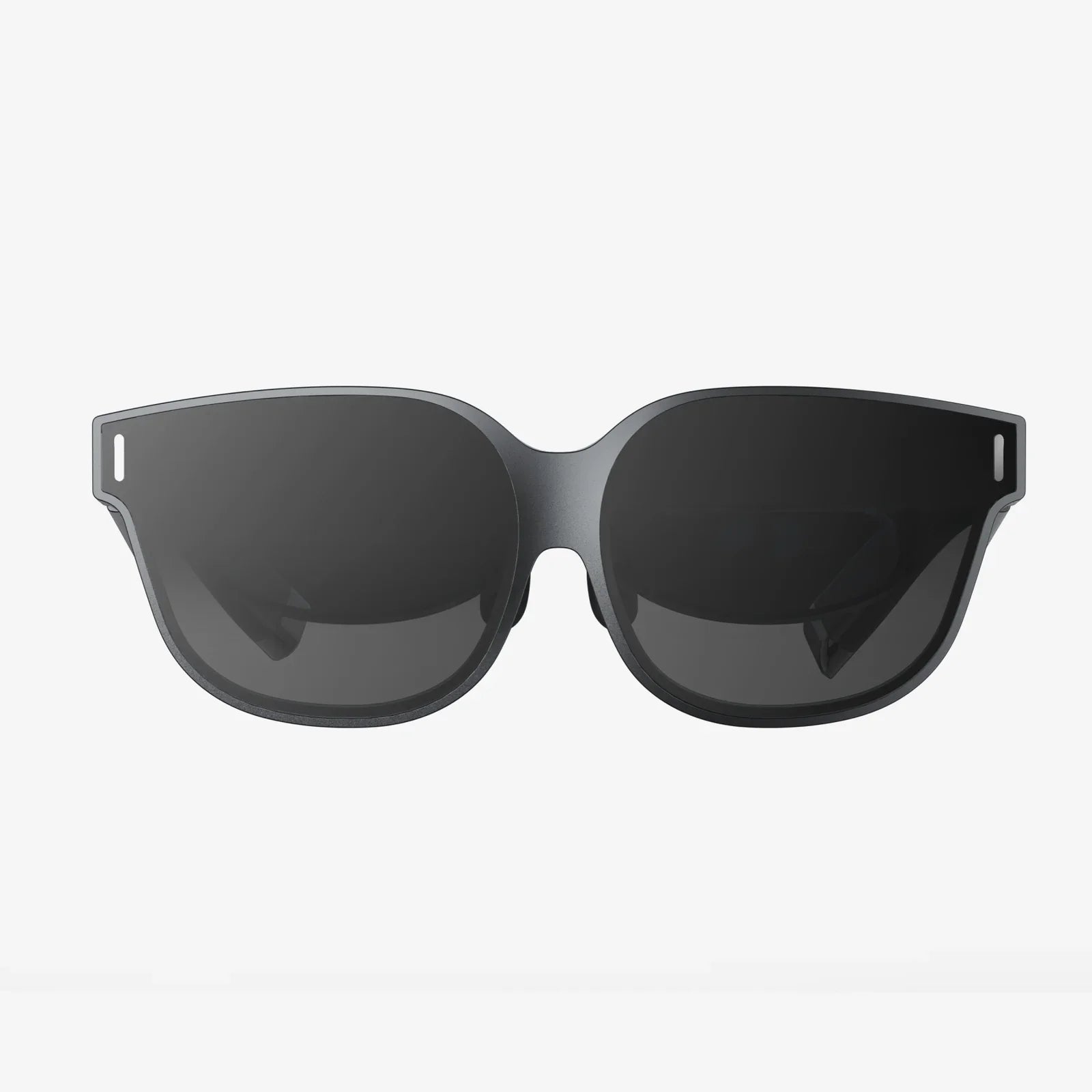
The current smartphone-based AR experience is merely the first step. The future points toward more seamless and integrated forms of interaction. The next evolutionary leap is the development of comfortable, socially acceptable, and powerful AR smart glasses. This shift from handheld to hands-free, always-available augmentation will be as transformative as the move from desktop computers to smartphones.
We are also moving toward a more connected AR experience often referred to as the "AR Cloud." Think of it as a persistent, digital copy of the real world that everyone can access and interact with. This would allow for shared, multi-user experiences that persist in a location. A virtual art installation could remain in a park for months; directions or notes left by one user could be seen by another; the digital world would become a permanent, collaborative layer on top of our own.
Advances in artificial intelligence will make AR apps more intuitive and contextual. Instead of responding to simple commands, they will anticipate needs, understand complex environments with greater accuracy, and offer information before it's even asked for. The convergence of AR with other technologies like 5G (for ultra-low latency) and haptic feedback (for a sense of touch) will create experiences that are not only visually immersive but physically tangible.
The humble augmented reality app is the key that is unlocking a new dimension of human-computer interaction. It is a technology that empowers us to see the world not just as it is, but as it could be—full of hidden data, guided instructions, boundless creativity, and magical experiences. The challenge ahead is not just technological; it is profoundly human. It is our responsibility to build this layered future thoughtfully, prioritizing utility over intrusion, enrichment over distraction, and a reality that is enhanced for everyone, not just a few. The device in your pocket is no longer just a window to the internet; it's a lens for a new reality, and what we choose to see through it will define the next chapter of our digital lives.
Share:
Augmented Reality Gaming Market: A New Reality Dawns
VR AR News Today: The Metaverse Builds and the Lines Between Realities Blur