


The digital frontier is shifting beneath our feet, not in some distant future, but today. Headlines scream of multi-billion dollar investments, while sleek new devices promise to redefine our very perception of reality. This isn't science fiction; this is the pulse of VR AR news today, a rapidly accelerating domain where the virtual and the physical are colliding to create unprecedented possibilities and profound questions. Keeping pace requires more than just a passing glance; it demands a deep dive into the forces shaping our tomorrow.
The Enterprise Arena: Where Immersion Drives Value
While consumer applications often grab the spotlight, some of the most compelling VR AR news today is emerging from corporate boardrooms and factory floors. Enterprises are moving beyond pilot programs and are now deploying immersive technologies at scale, recognizing their potential to solve real-world business challenges.
In manufacturing and complex engineering, technicians are using AR smart glasses to overlay digital schematics, torque values, and animated instructions directly onto physical machinery. This "see-what-I-see" capability drastically reduces errors, slashes training time for new hires, and enables remote experts to guide on-site workers through intricate procedures from thousands of miles away. The result is a more agile, efficient, and safer workforce.
The design and architecture sectors have been utterly transformed. Architects and clients don VR headsets to walk through photorealistic, full-scale models of unbuilt structures. They can assess sightlines, test material finishes in real-time under different lighting conditions, and identify potential design flaws long before the first brick is laid. This collaborative virtual prototyping saves immense amounts of time and capital, moving projects from concept to completion with unprecedented precision.
Furthermore, the retail industry is harnessing AR to bridge the gap between online and in-store shopping. Customers can use their smartphones or future AR glasses to visualize how a new sofa would look in their living room, how a pair of sunglasses fits their face, or even how a new shade of paint transforms a room. This try-before-you-buy experience, powered by accurate spatial mapping, is reducing return rates and building consumer confidence in a way static images never could.
The Hardware Revolution: Lighter, Faster, Smarter
The hardware that powers these experiences is undergoing a revolution of its own. The clunky, tethered, and nausea-inducing headsets of yesteryear are giving way to a new generation of sophisticated wearables. The central theme in hardware-focused VR AR news today is the relentless pursuit of immersion through comfort and power.
Standalone devices have become the gold standard for accessibility. These all-in-one headsets, powered by mobile chipsets that grow more potent with every iteration, offer complete freedom of movement without the need for a connection to an expensive computer. Their improved battery life, lighter form factors, and better weight distribution are making multi-hour sessions not just possible, but comfortable.
Perhaps the most significant leap is in visual fidelity. Pancake lenses are replacing the older Fresnel lens design, allowing for a much slimmer headset profile while providing a larger, clearer, and sharper sweet spot. Micro-OLED displays are now being integrated, offering breathtaking pixel-per-degree density, true blacks, and vibrant colors that eliminate the screen-door effect that once plagued early adopters. This combination makes virtual environments feel tangibly real and text perfectly legible.
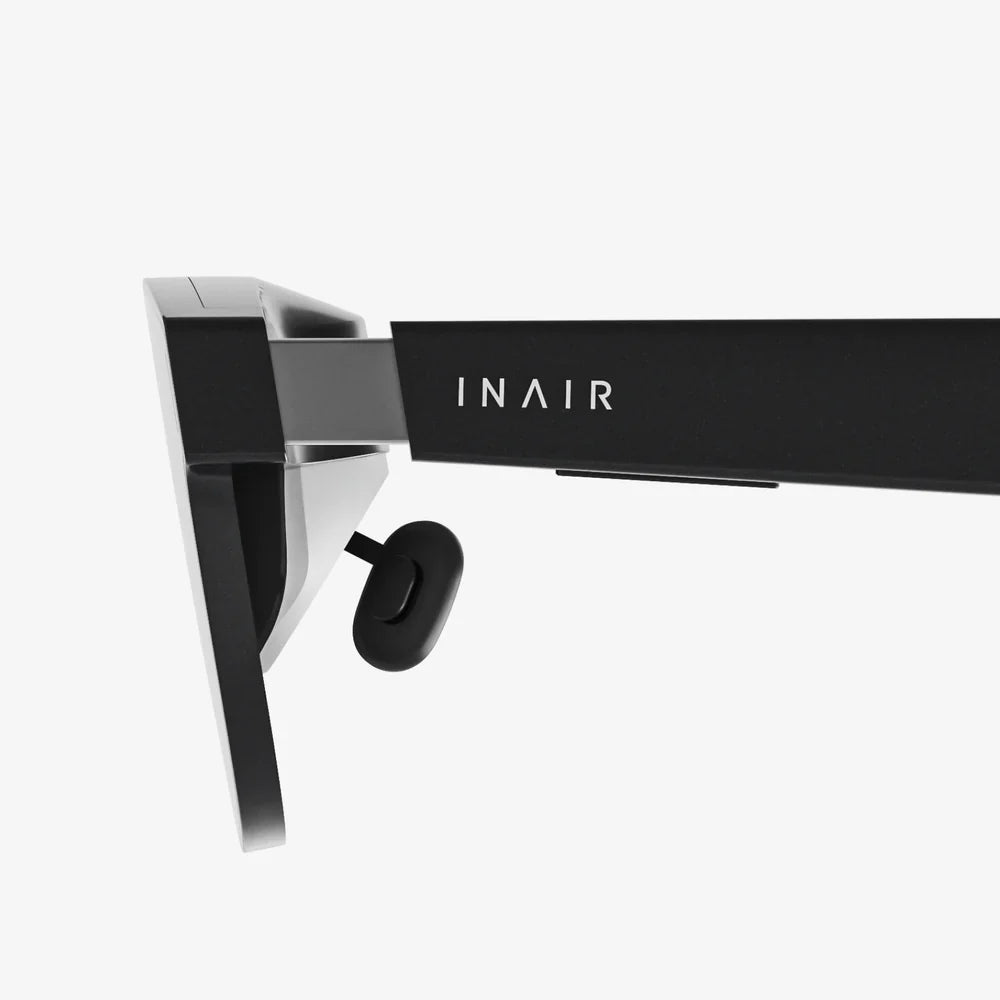
On the AR front, the holy grail remains a pair of stylish, socially acceptable glasses that offer full-color, high-brightness digital overlays on the real world. Recent breakthroughs in waveguide technology and laser beam scanning are inching this dream closer to reality. While today's most powerful AR glasses are still primarily enterprise-focused, the pace of innovation suggests consumer-grade spectacles are on the not-too-distant horizon.
Spatial Computing and the AI Symbiosis
The term "spatial computing" is dominating expert commentary in VR AR news today, and for good reason. It represents the foundational shift from simply viewing digital content to interacting with it as if it were a natural part of our environment. This is the operating system for the next digital era.
At the heart of spatial computing is a device's ability to understand and map the physical space around it. Through a combination of cameras, LiDAR scanners, and sophisticated algorithms, headsets can create a precise 3D mesh of a room, identifying surfaces, objects, and their spatial relationships. This allows digital objects to behave credibly—a virtual cat can jump on your real sofa, and a digital screen can appear anchored to your real wall.
This is where Artificial Intelligence becomes the indispensable partner. AI is the engine that makes sense of all this spatial data. It enables features like persistent digital placement, where your virtual workspace remains exactly where you left it when you return to the room. It powers hand-tracking so accurate that users can pinch, grab, and manipulate digital objects with intuitive gestures, making controllers optional. AI-driven object recognition allows your headset to understand that a flat, horizontal surface is a "desk" and a vertical one is a "wall," enabling context-aware interactions.
Looking forward, generative AI is poised to supercharge content creation within these spaces. Imagine describing a virtual environment—“a serene Japanese garden with a koi pond at sunset”—and having a powerful AI generate it around you in real-time. This fusion of generative AI and immersive VR/AR will democratize world-building and unlock creative possibilities we are only beginning to imagine.
The Content Ecosystem: Beyond Gaming
Gaming remains a powerhouse driver of VR adoption, with titles offering deeply engaging experiences that are impossible on flat screens. However, the content landscape is maturing and expanding at a remarkable rate, a key trend in VR AR news today.
Social VR platforms have evolved into vibrant digital metropolises where people gather for far more than just games. Users attend live concerts in virtual venues, watch movies together in immersive theaters, collaborate on 3D projects in shared workspaces, or simply hang out and chat as expressive avatars. These platforms are becoming a new layer of the internet—a place to be, rather than a place to browse.
In healthcare, VR is proving to be a revolutionary tool. It's being used for exposure therapy to treat phobias and PTSD, allowing patients to confront triggers in a safe, controlled environment. Surgeons practice complex procedures on virtual anatomy, and medical students learn from inside a hyper-realistic simulation of the human body. AR, meanwhile, assists surgeons by projecting critical patient data, like ultrasound imagery, directly into their field of view during operations.
Education and training are undergoing a similar transformation. From history students taking a guided tour of ancient Rome to mechanics learning the intricacies of a jet engine by taking it apart virtually, immersive learning boosts retention and engagement by creating memorable, experiential lessons.
Navigating the Ethical and Societal Labyrinth
With great power comes great responsibility, and the immersive world of VR and AR is no exception. The most critical conversations in VR AR news today are not just about technology, but about the ethical framework we build around it.
Data Privacy and Security: These devices are data collection powerhouses. They have the potential to record not just what you look at, but how you move, where you go, your unconscious physiological responses (via eye-tracking and eventually biometric sensors), and even a detailed 3D map of your home. This creates an unprecedented privacy challenge. Who owns this immensely personal data? How is it stored, used, and protected? The industry is grappling with establishing clear, transparent, and user-centric data policies before regulatory bodies are forced to step in.
The Reality Gap: As experiences become hyper-realistic, the line between virtual and actual events can blur, leading to potential psychological impacts. Furthermore, the concept of "experiential identity" is complex—if someone is harassed or assaulted in a virtual space, the trauma can feel very real, yet legal frameworks are ill-equipped to handle such crimes. Establishing norms, codes of conduct, and robust safety tools within these platforms is paramount.
Accessibility and the Digital Divide: There is a real risk that these immersive technologies could exacerbate existing social and economic inequalities. High-quality hardware and the powerful computing required remain expensive. If crucial future workplaces, social spaces, and educational tools migrate into VR/AR, ensuring equitable access is a societal imperative that must be addressed proactively.
The Road Ahead: What's Next on the Horizon?
Peering into the future, several emerging technologies promise to further reshape the landscape. Haptic feedback suits and gloves are advancing rapidly, moving beyond simple vibrations to simulate the feel of texture, resistance, and impact, closing the loop on tactile immersion. Brain-computer interfaces, though in early stages, hint at a future where we might navigate virtual worlds through thought alone.
The concept of the "metaverse"—a persistent, interconnected network of virtual spaces—continues to evolve. The current trend is moving away from a single, monolithic metaverse controlled by one entity and towards an open, interoperable ecosystem of experiences, much like the World Wide Web. This open framework would allow users to travel between different virtual worlds and social platforms with a consistent digital identity and assets, a concept known as interoperability.
Ultimately, the goal is not to replace reality, but to augment and enhance it. The technology is steadily progressing towards a future where powerful, unobtrusive AR glasses become as commonplace as smartphones, overlaying a helpful and magical digital layer onto our everyday lives, while VR offers unparalleled escapes for work, play, and connection.
The stream of VR AR news today is more than just a list of product launches and tech specs; it's the chronicle of a fundamental shift in human-computer interaction. We are building the bridge between atoms and bits, crafting new tools that will redefine how we work, learn, heal, and connect. The potential is limitless, the challenges are significant, and the journey is just beginning. One thing is certain: the future will not be flat, and it's arriving faster than anyone predicted.
Share:
Augmented Reality App: Transforming Our Perception of Reality and Reshaping Industries
Different Types of Augmented Reality: A Deep Dive into the Digital Overlay Reshaping Our World