


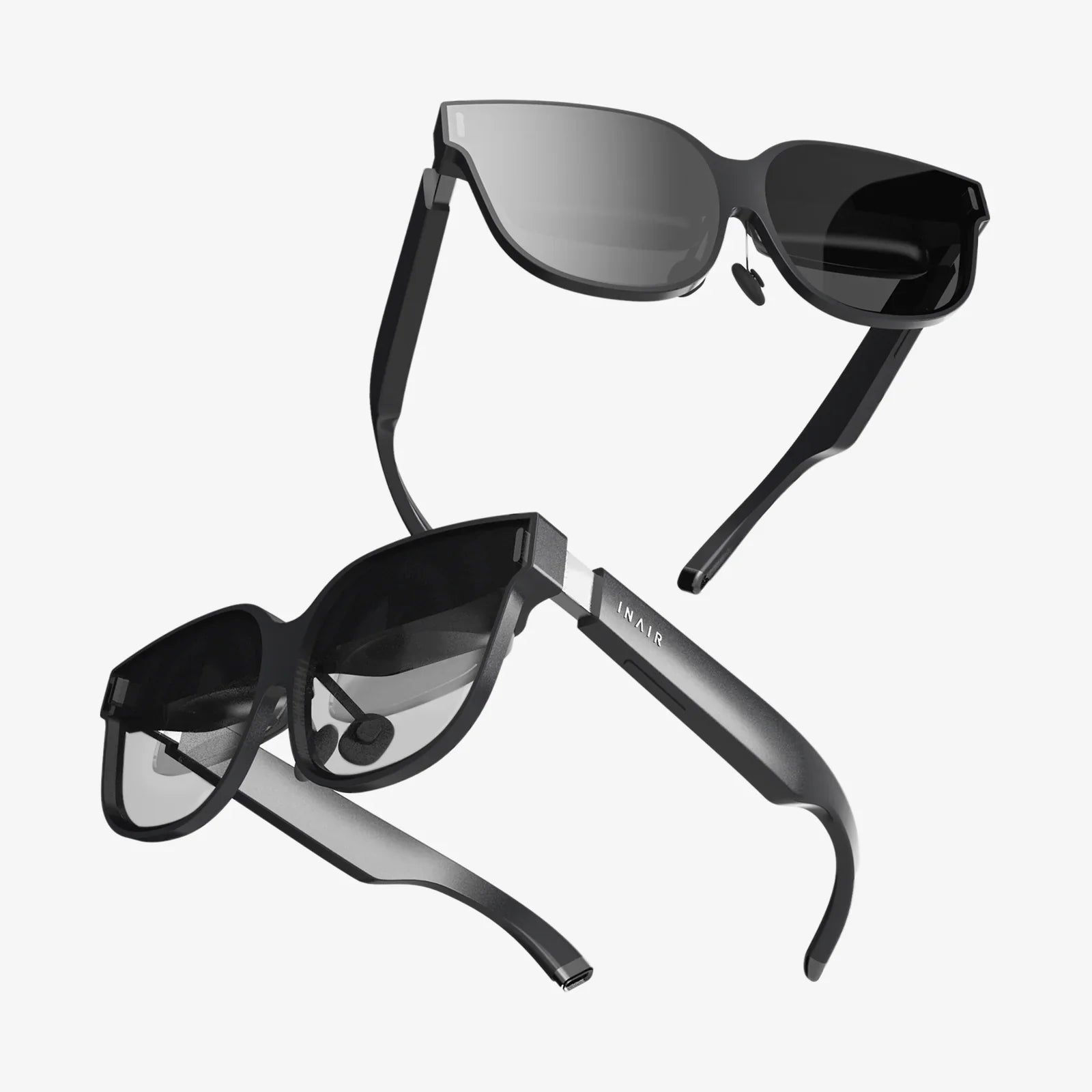
Imagine a world where information doesn’t live on a screen in your hand, but is seamlessly painted onto the fabric of reality itself. Where directions float on the street before you, historical figures reenact events on the very ground they occurred, and complex mechanical instructions are superimposed directly onto the machinery you’re repairing. This is the promise of augmented reality (AR) displays, a technology poised not just to change how we interact with computers, but to fundamentally alter our perception of and interaction with the world around us. We stand on the precipice of an invisible revolution, one that will weave the digital and the physical into a single, unified experience.
The Core Mechanics: How We See the Unseeable
At its heart, an AR display is a sophisticated system designed to do one thing: blend synthetic light with natural light to create a cohesive image for the viewer. Unlike Virtual Reality (VR), which seeks to replace the real world with a digital one, AR aims to supplement it. This seemingly simple goal belies a universe of complex engineering and optical innovation.
Optical Waveguides: The Invisible Canvas
Many modern AR displays, particularly those in eyewear form factors, rely on optical waveguides. Think of a waveguide as a transparent piece of glass or plastic that acts like a conduit for light. Light from a micro-display projector is injected into the edge of this glass. Through a process involving diffraction gratings (nanoscale patterns etched onto the glass) or other optical techniques, this light is then "bent" and directed towards the user’s eye. The result is an image that appears to be floating in space, superimposed over the user’s normal field of view, while the real world remains completely visible and in focus. This technology is the key to creating sleek, socially acceptable glasses, as it allows the display components to be tucked away in the frame.
Beam Splitters and Combiners: A Classic Approach
An earlier and more straightforward method involves the use of beam splitters or optical combiners. In this setup, a partially reflective surface is placed between the user’s eye and the world. A micro-display projects an image onto this surface, which reflects some of the light into the eye while allowing light from the real world to pass through. This method often provides a brighter, more vivid image and a wider field of view but at the cost of bulkier form factors, as the combiner often needs to be larger and positioned further from the face.
Challenges in Creating a Convincing Illusion
Creating a believable AR experience is a monumental technical challenge. It’s not enough to simply project an image; that image must become a coherent part of the user’s reality. This requires tackling several persistent hurdles:
- Field of View (FoV): The FoV is the angular extent of the virtual image a user can see. A narrow FoV feels like looking through a small window, severely limiting immersion. Expanding the FoV without making the hardware enormous and while maintaining image quality is a primary focus of display engineers.
- Resolution and Brightness: Virtual text and objects must be sharp enough to read and bright enough to be visible even in direct sunlight. Achieving this without draining a small battery in minutes is a significant power management challenge.
- Latency and Tracking: When a user moves their head, the virtual content must stay "locked" to the real world with imperceptible delay. High latency—a lag between real-world movement and digital content adjustment—causes a disconnect that can lead to user discomfort or nausea. This requires incredibly fast motion sensors and processors.
- Vergence-Accommodation Conflict: This is a fundamental physiological challenge. Our eyes naturally converge (point inward) and accommodate (focus) on an object at a specific distance. In many AR displays, virtual objects are projected at a fixed focal plane (e.g., two meters away), but they might be rendered to appear at a different distance (e.g., ten meters). This mismatch can cause eye strain and visual fatigue. Next-generation displays are exploring varifocal and light field technologies to solve this problem.
Beyond Gaming: The Transformative Applications
While consumer entertainment often grabs headlines, the most profound and immediate impact of AR displays is occurring in enterprise, healthcare, and education. These fields are turning science fiction into standard operating procedure.
Revolutionizing Industry and Manufacturing
On the factory floor, AR displays are becoming indispensable tools. Technicians wearing AR glasses can see schematics, torque settings, and animated assembly instructions overlaid directly on the engine or machine they are servicing. This "see-what-I-see" capability allows remote experts to guide on-site workers with digital annotations drawn in their field of view, drastically reducing downtime and errors. In logistics, warehouse workers are guided by virtual pathways and indicators to the exact shelf location for picking, streamlining operations and boosting efficiency.
The Future of Surgery and Patient Care
In the medical theater, AR displays are providing surgeons with a kind of X-ray vision. By fusing pre-operative scans from CT or MRI with the surgeon’s live view of the patient, critical structures like tumors, blood vessels, and nerves can be visualized beneath the surface of the skin. This enhances precision and can lead to less invasive procedures and improved patient outcomes. Furthermore, medical students can practice complex procedures on virtual anatomy overlays, and nurses can use AR to instantly display patient vitals and information upon entering a room.
Redefining Education and Training
AR displays can transform any space into an interactive learning environment. History students can witness historical events unfold around them in their classroom. Chemistry students can manipulate virtual molecules that appear to float on their desk, observing reactions without risk. Mechanics in training can practice disassembling a complex transmission with virtual guidance, gaining muscle memory and confidence before touching physical, expensive equipment. This "learning by doing" in a enhanced context dramatically improves retention and understanding.
Enhancing Everyday Navigation and Social Interaction
On a consumer level, the potential is equally staggering. Navigation will evolve from a 2D map to a 3D path laid over the streets, with arrows and points of interest anchored to buildings. Shopping will be transformed—point your glasses at a product to see reviews, price comparisons, or even how a piece of furniture would look in your living room. Socially, AR promises shared experiences where friends in different physical locations can appear as avatars in your environment, collaborating on a virtual design project or simply watching a movie "together" on a virtual screen.
The Human and Societal Dimension: A Double-Edged Sword
As with any transformative technology, the widespread adoption of AR displays brings a host of ethical, social, and psychological questions that we are only beginning to grapple with.
The Privacy Paradox
Always-on, camera-equipped AR glasses worn in public represent a paradigm shift in surveillance. The potential for facial recognition, object tracking, and the constant recording of one’s environment raises immense privacy concerns for both the wearer and, more critically, everyone they encounter. Who has access to this data? How is it stored and used? Establishing clear digital etiquette and robust legal frameworks will be essential to prevent a future of constant, unbeknownst surveillance.
The Attention Economy’s Final Frontier
If we think smartphones are distracting, consider a technology that can overlay notifications, advertisements, and digital content over every waking moment of our lives. The battle for our attention will move from our pockets to our retinas. The risk of "experience pollution"—where our view of the real world is cluttered with unwanted digital spam—is very real. The ability to create "attention filters" and user-controlled zones of digital silence will be critical for maintaining mental well-being and our connection to the unadulterated physical world.
Redefining Reality and the Digital Divide
As AR becomes more sophisticated, the line between what is real and what is digitally augmented will blur. This raises profound questions about perception, truth, and shared experience. If everyone can customize their reality with different information layers and filters, do we risk losing a common understanding of our world? Furthermore, the cost of this technology could create a new "digital divide," not just in access to information, but in access to an enhanced reality, potentially exacerbating existing social and economic inequalities.
Gazing into the Crystal Ball: The Future of AR Displays
The current state of AR is merely the larval stage. The next decade will see breakthroughs that make today’s technology look primitive. We are moving towards contact lens displays that are virtually invisible to the observer, offering a truly seamless interface. Research into retinal projection, which paints images directly onto the retina with low-power lasers, could bypass many of the optical challenges of today’s systems. The ultimate goal is a display with a wide field of view, high resolution, all-day battery life, and a form factor as comfortable and socially normalized as a standard pair of eyeglasses.
The convergence of AR displays with other technologies will unlock even greater potential. When combined with Artificial Intelligence, your AR glasses could become an incredibly powerful personal assistant, recognizing objects and people, providing context-aware information, and anticipating your needs before you even ask. The development of the spatial web—an internet mapped onto the physical world—will provide the content and framework for these displays to truly become windows into a digitally-augmented universe.
The journey of augmented reality displays is not merely a tale of technological progress; it is a story about redefining human potential. It’s about giving surgeons superhuman sight, granting students the power to hold history in their hands, and connecting us to information and to each other in ways that feel magical. The hardware will get smaller, the images sharper, and the software smarter, but the true revolution lies in the endless possibilities that appear when we start to look at our world not for what it is, but for what it could be.
Share:
Girl Wearing VR Headset: A Portal to New Realities and Unseen Challenges
Best VR Headset to Replace Monitor: The Ultimate Guide to a Virtual Workspace