


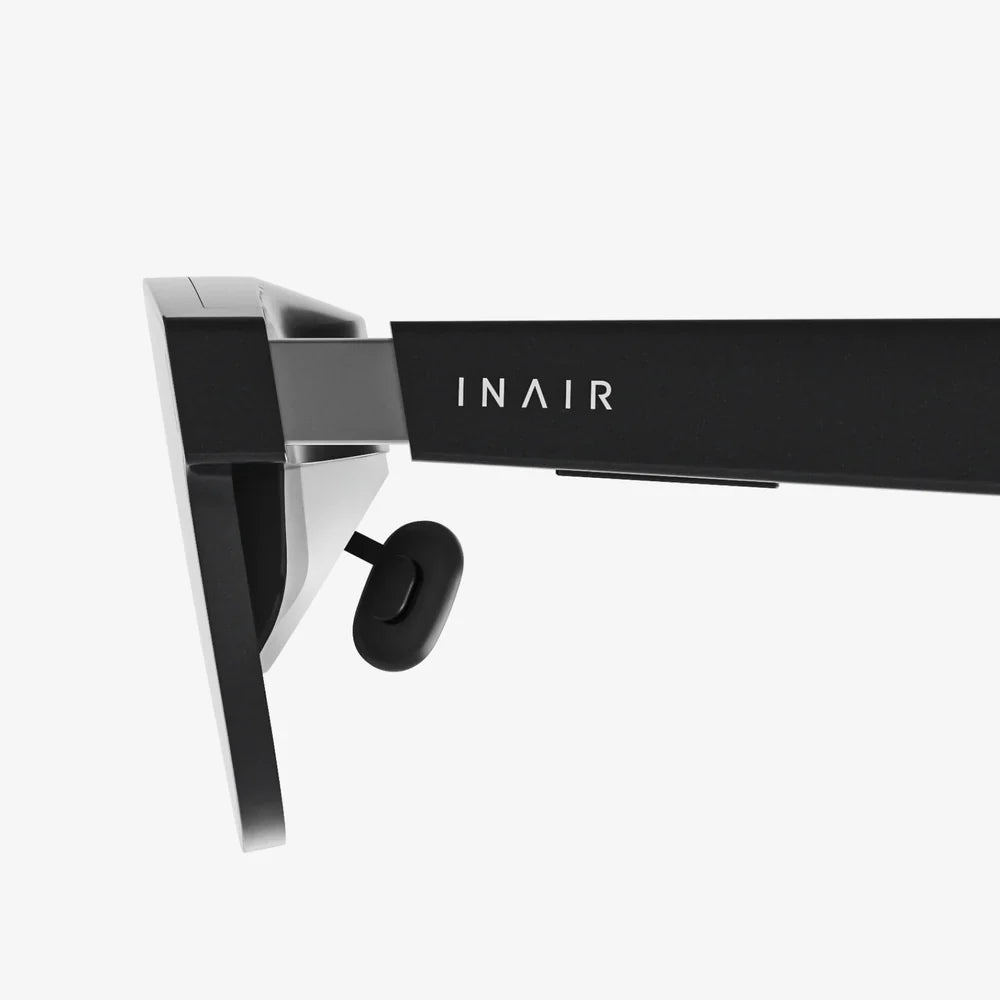
Imagine a world where digital information overlays your physical surroundings, where you can step into entirely fabricated universes, and where holographic objects interact seamlessly with your real-world environment. This isn't science fiction; it's the present and future being built by the powerful trio of Augmented Reality (AR), Virtual Reality (VR), and Mixed Reality (MR). These immersive technologies are poised to revolutionize everything from how we work and learn to how we play and connect, blurring the lines between the physical and digital realms in ways we are only beginning to understand. The journey into these synthetic worlds starts here.
Defining the Digital Spectrum: From Augmentation to Immersion
While often grouped under the umbrella of "immersive tech," AR, VR, and MR represent distinct points on a continuum known as the virtuality spectrum. Understanding their core differences is the first step to appreciating their unique potential and applications.
Virtual Reality (VR): The Total Escape
Virtual Reality is the most immersive of the three technologies. It functions by completely replacing the user's real-world environment with a simulated, digital one. Using a head-mounted display (HMD) that covers the entire field of vision, along with motion tracking and controllers, VR transports the user into a computer-generated world. The key principle here is isolation; a successful VR experience blocks out the physical world and convinces the user's senses that they are somewhere else entirely. This can range from a 360-degree video to a fully interactive, computer-rendered game or simulation. The user exists within the digital environment, with no view of their actual surroundings.
Augmented Reality (AR): The Digital Overlay
In direct contrast to VR's isolation, Augmented Reality seeks to enhance the real world by superimposing digital information onto it. AR does not replace reality but adds a layer of data, imagery, or animation onto the user's view of their physical environment. This is most commonly experienced today through smartphone and tablet screens, where the device's camera captures the real world and the software places digital objects within it. The defining trait of AR is that the digital elements are superimposed upon rather than integrated with the real world. Think of popular social media filters that place cartoon ears on your head or navigation apps that project directions onto a live video feed of the street ahead. The digital and physical worlds coexist but do not intelligently interact.
Mixed Reality (MR): The Seamless Blend
Mixed Reality is the next evolution, often considered the most advanced and complex point on the spectrum. It merges the real and virtual worlds to produce new environments and visualizations where physical and digital objects co-exist and interact in real-time. This requires advanced sensors and cameras to deeply understand the geometry of the physical environment—surfaces, lighting, and spatial mapping. In a true MR experience, a digital character can sit on your real-world couch, and a virtual light source can cast realistic shadows from a physical object. MR anchors holographic content to the real world, making it persistent and interactive. It's the difference between seeing a digital dinosaur through your phone screen (AR) and having a life-sized, seemingly solid dinosaur walking around your living room, occluded by your furniture as it moves (MR).
Under the Hood: The Technology Powering Immersion
The magic of AR, VR, and MR is made possible by a sophisticated stack of hardware and software technologies working in concert.
Sensors and Tracking
All three technologies rely heavily on a suite of sensors. Inside-out and outside-in tracking systems monitor the user's head and hand positions with incredible precision. Accelerometers, gyroscopes, and magnetometers work together for rotational and positional tracking. For MR and advanced AR, depth-sensing cameras, like time-of-flight sensors, are crucial. They scan the environment to create a 3D mesh, allowing digital objects to understand and interact with the physical space—knowing where the floor, walls, and tables are located.
Displays and Optics
The display is the window to these new realities. VR headsets use high-resolution screens placed very close to the eyes, with lenses that focus and widen the field of view to create a sense of immersion. AR and MR devices face a greater challenge: they must project digital imagery onto the user's view of the real world. This is achieved through various methods, such as optical see-through (using waveguides and combiners to project light directly into the eye) and video see-through (using cameras to capture the real world and blend it with digital elements on a screen inside the headset).
Computational Power and Connectivity
Rendering complex, believable worlds requires immense processing power. This can be handled by a tethered connection to a powerful computer, a built-in mobile processor, or increasingly, by leveraging cloud computing resources. The advent of high-speed, low-latency 5G networks is particularly significant for AR and MR, as it allows for offloading heavy processing to the cloud, enabling smaller, lighter, and more powerful untethered devices.
Transforming Industries: Practical Applications Today
The value of these technologies extends far beyond entertainment. They are already driving innovation and efficiency across numerous sectors.
Revolutionizing Enterprise and Manufacturing
In industrial settings, AR is a powerful tool for workforce augmentation. Technicians performing complex repairs can wear smart glasses that overlay step-by-step instructions, diagrams, and safety information directly onto the machinery they are working on, freeing them from cumbersome paper manuals and reducing errors. MR is used for sophisticated prototyping, allowing designers and engineers to visualize and interact with full-scale 3D models of new products before any physical prototype is built, saving immense time and resources. VR is invaluable for safety training, immersing employees in hazardous scenarios—like a factory fire or a high-voltage electrical incident—in a completely safe, controlled, and repeatable environment.
Advancing Healthcare and Medicine
The impact on healthcare is profound. Medical students use VR to practice complex surgical procedures on virtual patients, gaining valuable muscle memory and experience without risk. Surgeons use AR in the operating room to visualize critical information, such as a patient's internal anatomy or the location of a tumor, directly over their field of view during a procedure. MR is being explored for remote surgery and collaboration, where an expert surgeon can guide a less experienced colleague from the other side of the world by drawing holographic annotations into their real-world view. Furthermore, VR is proving highly effective in therapy, treating conditions like PTSD, phobias, and chronic pain through controlled exposure and distraction.
Redefining Retail and E-Commerce
AR has broken into the mainstream through retail. Customers can now use their smartphones to see how a new piece of furniture would look in their home, how a pair of glasses fits their face, or how a shade of paint appears on their wall before making a purchase. This "try before you buy" capability drastically reduces purchase uncertainty and product returns, enhancing consumer confidence and driving sales. Virtual showrooms in VR allow brands to create immersive, branded experiences that customers can explore from anywhere.
Elevating Education and Training
Immersive technologies offer unparalleled educational potential. Instead of reading about ancient Rome, students can take a VR field trip and walk its streets. Complex abstract concepts in science, from molecular biology to astrophysics, can be transformed into interactive 3D models that students can manipulate and explore from every angle. AR can bring textbooks to life, with animations and additional information popping out of the pages. This experiential learning leads to significantly higher engagement and knowledge retention.
The Road Ahead: Challenges and The Future of Spatial Computing
Despite rapid progress, the path to ubiquitous adoption is not without significant hurdles that developers and engineers are racing to overcome.
Overcoming Technical and Social Hurdles
Hardware Limitations: For VR, achieving true visual fidelity (akin to human eyesight) with wide field-of-view, high-resolution displays in a compact, comfortable, and affordable form factor remains a challenge. For AR and MR, creating socially acceptable glasses that are lightweight, have all-day battery life, and offer a bright, high-resolution display in all lighting conditions is the holy grail. User Experience: Issues like motion sickness in VR, often caused by latency between a user's movement and the visual response, are being mitigated with better technology but remain a concern. Privacy and Security: Always-on cameras and microphones that map our personal spaces raise legitimate questions about data collection, security, and how this intimate data is used and protected.
The Vision of the Metaverse
The ultimate expression of these technologies is often described as the "metaverse"—a persistent, shared, and interconnected universe of virtual spaces. This concept envisions a future where our digital and physical lives are further integrated, where we work in virtual offices, socialize at digital concerts, and own virtual goods. While today's implementations are fragmented, the convergence of AR, VR, and MR is expected to form the foundational interface for this next iteration of the internet, often called the spatial web. In this future, information will not be on a page but placed in the world around us, accessible through lightweight, ubiquitous glasses.
Convergence and The Next Decade
The lines between AR, VR, and MR will continue to blur. We are already seeing devices that can switch between a fully immersive VR mode and a passthrough AR/MR mode. The future likely belongs to versatile MR headsets that can slide along the virtuality spectrum based on the user's needs. Advances in artificial intelligence, particularly in computer vision, will be critical in enabling these devices to understand and contextually interact with our environments in real-time. Furthermore, the development of haptic feedback technology—gloves and suits that simulate touch—will add another critical layer of sensory immersion, making digital objects feel tangible.
The revolution initiated by augmented, virtual, and mixed reality is only in its infancy. We are moving from a world of observers to a world of active participants in digitally-augmented spaces. As the hardware shrinks, the software gets smarter, and the networks get faster, these technologies will cease to be niche gadgets and become as integral to our daily lives as the smartphone is today. The boundary between what is real and what is digital is dissolving, opening up a universe of limitless possibility for human creativity, connection, and exploration. The door to these new dimensions is now open, and stepping through it will change your perception of reality itself.
Share:
AR Technology iPhone X: The Unseen Revolution in Your Pocket
AR Advanced Technology Inc. Is Pioneering the Next Industrial Revolution