


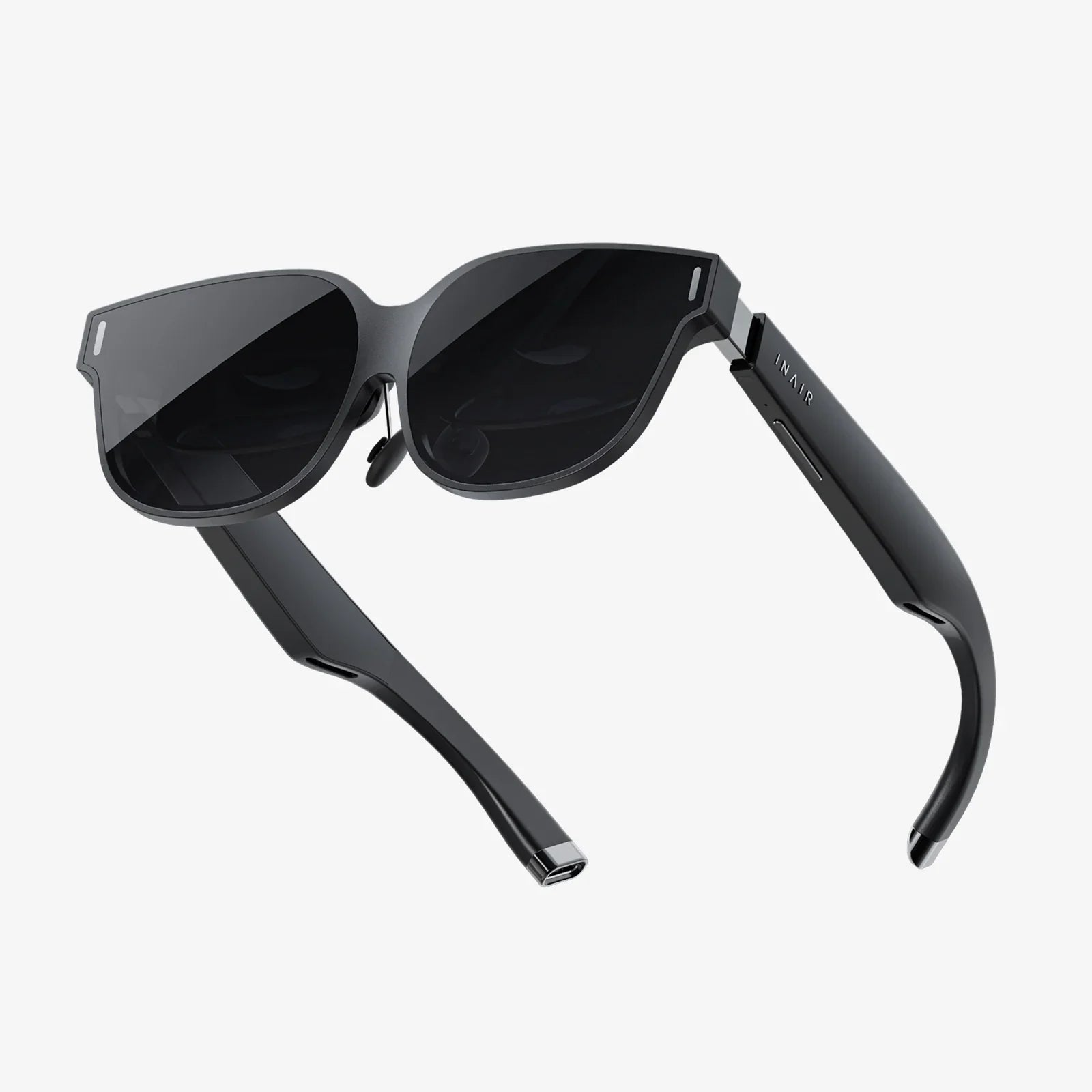
- by wangfred
Augmented Reality Based AR: The Invisible Layer Reshaping Our World
- by wangfred
Imagine a world where information doesn't live on a screen in your pocket but is painted onto the very fabric of your reality, where digital guides appear on the machinery you're repairing, historical figures materialize on the street corners they once walked, and the distinction between the physical and the digital begins to beautifully, irreversibly blur. This is the promise and the rapidly unfolding reality of Augmented Reality Based AR, a technology poised not just to change how we interact with devices, but to fundamentally reshape human experience, productivity, and connection.
At its core, Augmented Reality Based AR is an experiential technology that overlays computer-generated perceptual information onto the real world. Unlike its cousin, Virtual Reality (VR), which seeks to replace reality with a simulated one, AR aims to supplement and enhance it. This magic is made possible through a sophisticated interplay of hardware and software components.
The process begins with sensors and cameras that act as the eyes of the device, continuously scanning the environment. These sensors capture a rich stream of data, including video feed, depth information, and positional tracking data. This raw data is then processed by powerful computer vision algorithms, the true brain of the operation. These algorithms perform critical tasks like simultaneous localization and mapping (SLAM), which allows the device to understand its own position in space while simultaneously constructing a 3D map of the surrounding environment. It identifies planes (like floors and tables), recognizes objects, and tracks surfaces.
Once the environment is understood, the processing unit takes over. This is where the digital content—be it a 3D model, an animation, or a data overlay—is rendered and precisely aligned with the physical world. The final step is the display, which projects this composite view to the user. Display technologies vary widely, from the familiar screens of smartphones and tablets to more advanced systems like transparent eyeglasses or holographic lenses that project light directly into the retina, creating the illusion that digital objects coexist with physical ones.
The true power of Augmented Reality Based AR is revealed not in flashy demos but in its practical, problem-solving applications that are already delivering immense value across the economic spectrum.
In manufacturing and complex machinery maintenance, AR is a game-changer. Technicians wearing AR smart glasses can see digital schematics and animated repair instructions overlaid directly onto the physical equipment they are servicing. This hands-free guidance drastically reduces errors, slashes training time for new employees, and improves overall safety by allowing workers to keep their focus on the task without constantly looking away at a manual or screen. Remote experts can see what an on-site technician sees and annotate their field of view with arrows and notes, enabling knowledge transfer across thousands of miles in real-time.
The retail sector is undergoing an AR-powered metamorphosis. Customers can now visualize how a piece of furniture would look in their living room, how a new shade of paint would transform a wall, or how a pair of glasses would fit their face—all from their own homes before making a purchase. This "try before you buy" capability at scale significantly reduces purchase hesitation and product return rates, building consumer confidence and creating a more engaging and personalized shopping journey.
In healthcare, the stakes are high, and AR is rising to the challenge. Medical students can practice complex surgical procedures on detailed, interactive 3D holograms of human anatomy, gaining invaluable experience without risk to patients. Surgeons can use AR projections during operations to visualize critical information like the location of tumors or blood vessels directly on the patient's body, enhancing precision and improving outcomes. Furthermore, AR can assist in vein detection for injections and provide therapeutic experiences for patient rehabilitation.
Education is being transformed from passive learning to active exploration. Instead of reading about ancient Rome, students can walk through a digitally reconstructed Forum on their classroom table. Chemistry students can manipulate and combine virtual molecules, watching reactions unfold safely. This immersive, interactive form of learning caters to different styles and dramatically improves engagement and knowledge retention by making abstract concepts tangible and visually compelling.
For AR to become truly ubiquitous and powerful, it cannot be constrained by the processing limits of a local device. This is where Cloud-Based AR emerges as a critical enabler. By offloading the intense computational workload of rendering complex 3D models and scenes to powerful remote servers in the cloud, AR experiences can become more sophisticated, persistent, and accessible to a wider range of devices, including those with less powerful processors.
The seamless function of Cloud AR is inextricably linked to the rollout of high-speed, low-latency 5G networks. Latency—the delay between a user's action and the system's response—is the enemy of immersion. A laggy AR experience breaks the illusion and can cause user discomfort. 5G’s ultra-reliable low-latency communication (URLLC) is essential for streaming high-fidelity AR content from the cloud instantly, ensuring a smooth and responsive experience that feels truly integrated with reality.
As with any powerful technology, the widespread adoption of Augmented Reality Based AR brings forth a host of challenges that society must proactively address.
Privacy and Data Security: AR devices, by their very nature, are data collection powerhouses. They have cameras and sensors that are constantly capturing detailed information about your environment, which could include unknowing bystanders. The question of who owns this data, how it is stored, and how it is used is paramount. Robust frameworks must be established to prevent unauthorized surveillance and data misuse.
Digital Addiction and Reality Blur: If current mobile technology already challenges our attention spans, always-available AR information layers could exacerbate issues of digital distraction and addiction. The potential for a new digital divide—between those who can afford advanced AR wearables and those who cannot—is also a serious concern. Furthermore, the long-term psychological effects of persistently mediating reality through a digital filter are not yet fully understood.
Content Moderation and Spatial Spam: How do we prevent the physical world from being polluted with digital spam, offensive graffiti, or malicious virtual objects? Establishing protocols for moderating the AR landscape and defining digital property rights will be crucial to maintaining a usable and pleasant shared reality.
The trajectory of Augmented Reality Based AR points toward a future where the technology becomes increasingly invisible and intuitive. We are moving toward contact-lens style displays and even direct neural interfaces that could make the digital overlay indistinguishable from reality. The concept of the spatial web or metaverse—a persistent, shared, and interconnected layer of information over the entire planet—is becoming a tangible goal for the industry.
In this future, your context-aware AR agent will not just show you directions to a coffee shop but will highlight the friend sitting inside, translate the menu in real-time, and display the Yelp reviews hovering over each pastry. The world will become hyper-connected, context-rich, and infinitely customizable.
The journey of Augmented Reality Based AR is just beginning, and its ultimate shape will be determined not just by engineers and corporations, but by all of us. It is a canvas upon which we will paint the next chapter of human-computer interaction. The challenge and the opportunity lie in building this new layer with intentionality, ensuring it amplifies our humanity, enhances our capabilities, and connects us more deeply to the world and each other, rather than isolating us in a personalized digital bubble. The door to a truly augmented age is now open, and the decision of how we step through it is ours to make.
Share:
What AR VR Headset Could: Unlocking the Future of Perception
What Is Augmented Reality Experience - A Comprehensive Guide to the Digital Overlay