


- by wangfred
What Is Augmented Reality Experience - A Comprehensive Guide to the Digital Overlay
- by wangfred
Imagine a world where the digital and the physical don't just coexist but are seamlessly, magically intertwined—where information, stories, and breathtaking creations are painted directly onto the canvas of your reality. This is the promise of augmented reality, a technology not of distant science fiction but of our immediate present, and it's poised to fundamentally alter how we work, learn, play, and connect. The journey to understanding this transformative power begins with a single, pivotal question.
At its simplest, an augmented reality (AR) experience is an interactive encounter where digital information—be it images, sounds, haptic feedback, or other sensory projections—is overlaid and anchored onto the user's real-world environment in real-time. Unlike Virtual Reality (VR), which seeks to replace the user's surroundings with a completely simulated one, AR aims to supplement and enhance reality by adding a digital layer to it. The key differentiator is that AR experiences maintain a connection to and are contextualized by the physical space you are in; they are not an escape from reality but an enrichment of it.
This augmentation can manifest in myriad ways. It could be as straightforward as seeing navigation arrows painted onto the road through your car's windshield, or as complex as visualizing the fully assembled inner workings of a jet engine from a physical prototype part. The "experience" is the user's subjective journey through this blended reality—the feeling of wonder when a prehistoric creature appears to stomp through your living room, the surge of clarity when complex data is visualized hovering over a machine, or the convenience of seeing how a new sofa would look in your actual apartment before making a purchase.
Creating a convincing and cohesive AR experience is a complex dance of hardware and software, all working in concert to blend two worlds seamlessly. The process generally involves three critical steps: capturing the real world, processing and aligning the digital content, and displaying the composite view to the user.
The foundation of any AR experience is its understanding of the physical environment. This is achieved through a combination of cameras, sensors (like accelerometers, gyroscopes, and LiDAR), and sophisticated algorithms. The technology performs a process known as Simultaneous Localization and Mapping (SLAM). In essence, SLAM allows the device to both map an unknown environment and simultaneously track its own location within that map. It identifies unique features, points, and planes (like floors, walls, and tables) to create a digital spatial understanding. This map is what allows a digital cartoon character to convincingly hide behind your real-world couch or for a virtual tennis match to remain stable on your physical coffee table.
Once the environment is mapped, the AR software must process where to place the digital objects. This involves intense computational power to render high-quality 3D graphics, animations, or videos and then align them perfectly with the real world based on the SLAM data. This alignment must account for perspective, lighting, and occlusion (ensuring digital objects can be hidden behind physical ones), which is crucial for achieving believability. Advanced computer vision algorithms analyze the scene to understand lighting conditions and shadows, allowing the digital object to cast a realistic shadow or be illuminated correctly, making it feel like it truly belongs.
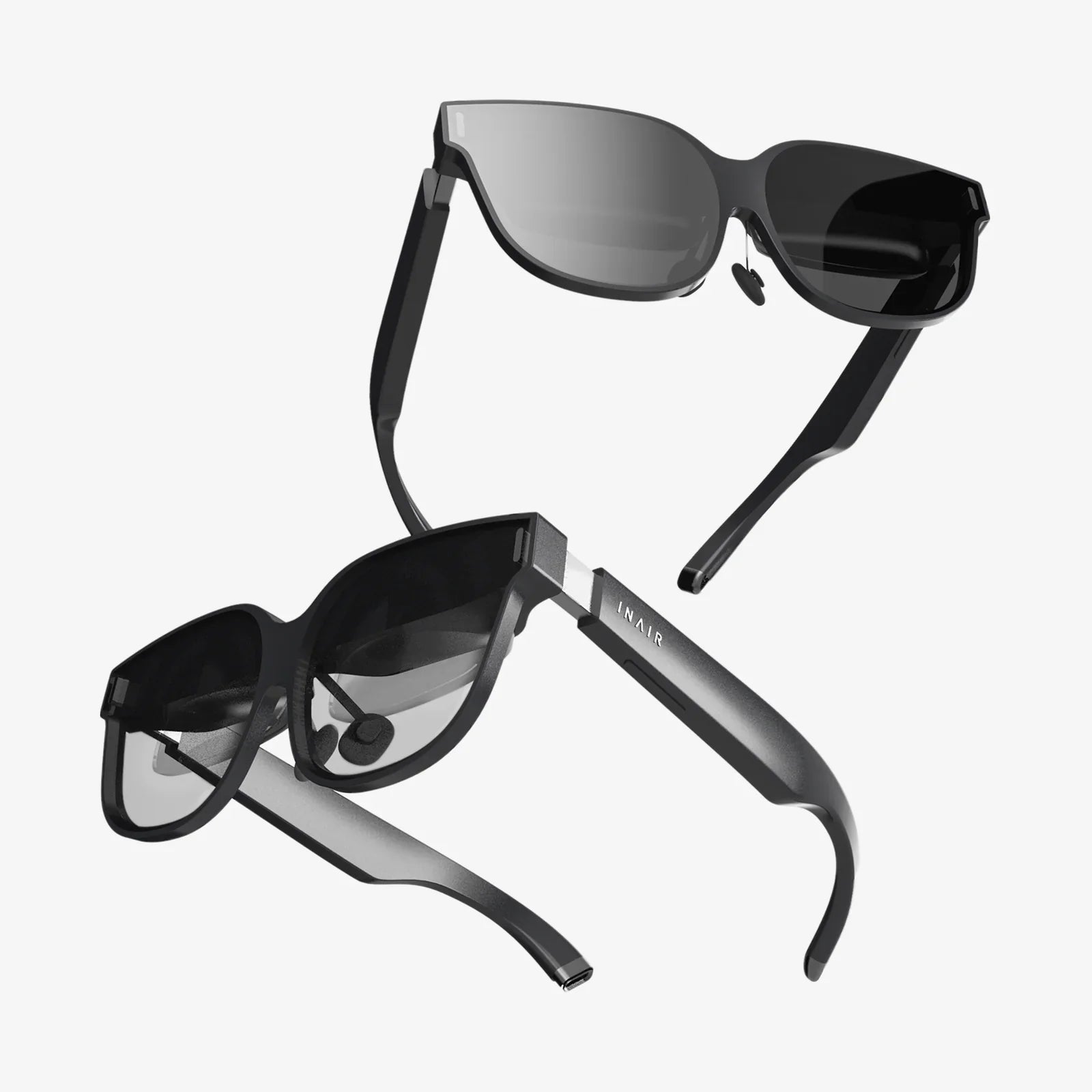
This is the final and most crucial step from the user's perspective: viewing the merged realities. There are several primary methods for this:
Not all AR experiences are created equal. They are often categorized based on how they anchor digital content to the physical world.
This was one of the earliest forms of AR. It relies on a specific visual trigger, or "marker"—often a QR code, a custom image, or a distinct pattern. The device's camera scans this marker, which acts as a digital anchor point. The software recognizes the marker's unique features and orientation, and uses this data to position and display the associated digital content precisely on top of it. This method is highly reliable and accurate but is limited by the need for a pre-defined marker to be present in the environment.
This is the more advanced and flexible approach that powers most modern AR applications. As the name suggests, it does not require a physical marker. Instead, it uses the SLAM technology discussed earlier to understand the environment and place digital content based on GPS data, digital compass readings, accelerometer data, or identified real-world surfaces (like placing a virtual lamp on the floor). This allows for much more dynamic and context-aware experiences, such as leaving a virtual note for a friend at a specific geographic location or furnishing your entire home without scanning a single code.
The value of AR extends far beyond playful filters and games. It is a powerful tool solving real-world problems across numerous sectors.
AR is dismantling the final barrier to online shopping: the inability to try before you buy. Virtual try-on experiences for glasses, makeup, and clothing are becoming commonplace. Furniture retailers allow customers to place true-to-scale 3D models of sofas, tables, and decor into their living spaces to visualize fit and style. This drastically reduces purchase uncertainty, minimizes returns, and creates a more engaging and confident shopping experience.
AR brings learning to life. Instead of reading about the solar system, students can watch the planets orbit the sun on their desk. Medical students can practice complex surgical procedures on detailed, interactive holograms of the human body without risk. Field technicians can receive overlaid step-by-step repair instructions directly on the machinery they are fixing, improving accuracy and reducing training time. AR transforms abstract concepts into tangible, interactive models, enhancing comprehension and retention.
In the industrial world, AR is a game-changer for design, assembly, and maintenance. Designers can visualize and interact with full-scale 3D prototypes overlaid onto the physical world, allowing for rapid iteration and collaboration. On the factory floor, assembly line workers can see wiring diagrams or part numbers projected directly onto the equipment they are building, reducing errors and speeding up production. Remote experts can see what a on-site technician sees and annotate their field of view with arrows and notes to guide them through a complex repair, saving time and travel costs.
Turn-by-turn navigation is evolving from a 2D map on a screen to arrows and directions overlaid onto the real street through your smartphone or car windshield. Tourists can point their devices at a monument, museum exhibit, or restaurant to see historical recreations, informational overlays, or reviews pop up, creating a deeply contextual and informative exploration of a new city.
Despite its immense potential, the path to ubiquitous AR is not without obstacles. Technical challenges like improving battery life for wearable devices, achieving photorealistic rendering in real-time, and ensuring robust spatial understanding in all environments remain active areas of development. Furthermore, the always-on, data-capturing nature of AR wearables raises significant questions about privacy, data security, and digital etiquette. The prospect of continuous environmental recording and facial recognition capabilities necessitates the establishment of strong ethical frameworks and regulations to prevent misuse and protect individual privacy. Overcoming user apprehension regarding these issues is as critical as overcoming the technical hurdles.
The trajectory of AR points toward a future where digital augmentation is as commonplace and intuitive as using a smartphone is today. The eventual goal is the development of comfortable, socially acceptable, and powerful AR glasses that offer all-day utility—a true successor to the smartphone. The concept of the "spatial web" or "metaverse" envisions a world where digital information and experiences are persistently tied to locations and objects, accessible to anyone with AR capability. This will fundamentally change how we access information, socialize, and perceive reality itself, merging our digital and physical identities into a continuous, augmented existence.
We are standing at the precipice of a new layer of human experience, one where the boundary between our atoms and our bits begins to truly blur. The question is no longer if augmented reality will become integral to our daily lives, but how quickly we will adapt to and shape this extraordinary new way of seeing, interacting, and understanding the world around us. The next time you look around your room, your street, or your workspace, try to imagine what digital layers might one day reside there, invisible until you choose to see them—and you'll begin to grasp the limitless potential waiting to be unlocked.
Share:
Augmented Reality Based AR: The Invisible Layer Reshaping Our World
XR Glasses Definition: Unlocking the Future of Immersive Reality