


- by wangfred
Augmented Reality Based Technologies Are Reshaping Our World
- by wangfred
Imagine a world where digital information doesn’t just live on a screen but is seamlessly woven into the fabric of your physical reality, enhancing everything you see, do, and learn. This is no longer the stuff of science fiction; it is the burgeoning reality being built today through the rapid advancement of augmented reality based technologies. This transformative layer of intelligence is poised to revolutionize our daily lives, professional workflows, and our very perception of the world around us.
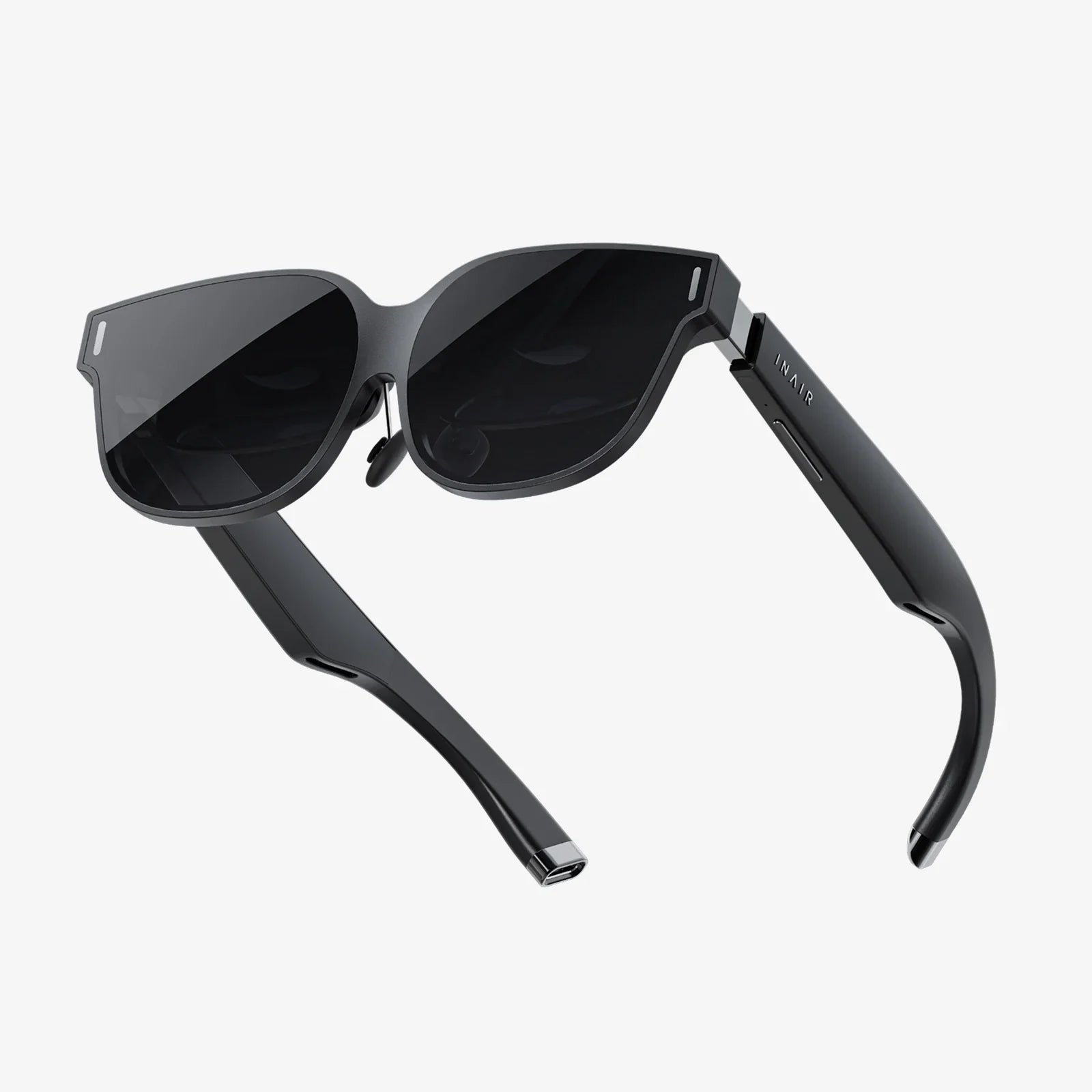
At its essence, an augmented reality based system functions by superimposing computer-generated perceptual information—be it images, sounds, haptic feedback, or data streams—onto the user’s view of the real world. Unlike its cousin, virtual reality, which seeks to replace reality entirely, AR aims to supplement and enrich it. The magic happens through a sophisticated technological ballet. A combination of sensors, cameras, and algorithms work in concert to understand the environment. This process, often called simultaneous localization and mapping (SLAM), allows the device to map the physical space and precisely anchor digital content within it. This digital overlay can then be experienced through various hardware, from smartphones and tablets to more advanced head-mounted displays and smart glasses, each offering different levels of immersion and interactivity.
While consumer-facing filters and games often capture the public's imagination, the most profound impact of augmented reality based solutions is currently being felt in industrial and enterprise settings. Here, AR is not a novelty but a powerful tool driving efficiency, safety, and precision.
On the factory floor, AR is a game-changer. Technicians equipped with AR smart glasses can see digital work instructions, 3D models, and animated guides overlaid directly onto the machinery they are assembling or repairing. This hands-free access to information drastically reduces errors, slashes training time for complex tasks, and minimizes the need to constantly consult physical manuals or computer screens. An augmented reality based guidance system can project digital templates onto a physical workpiece, showing an assembler exactly where to place components or how to route wiring, thereby accelerating production and ensuring consistent quality control.
For field service engineers, an augmented reality based remote assistance platform is like having a team of expert colleagues looking over their shoulder, no matter where they are in the world. A technician facing a complex problem can stream their live point-of-view to a remote expert. The expert can then annotate the technician's real-world view with arrows, circles, and text instructions, effectively guiding their hands. This eliminates costly and time-consuming return visits, empowers less-experienced staff, and ensures problems are resolved correctly the first time.
The medical field is embracing augmented reality based tools for both education and practice. Medical students can explore detailed, interactive 3D models of human anatomy projected onto a mannequin or even into empty space, providing a depth of understanding that textbooks cannot match. In surgery, AR can be a powerful aid. By overlaying critical information—such as the location of tumors, blood vessels, or surgical pathways—directly onto the surgeon’s view of the patient, these systems enhance precision and reduce risk. For instance, during a minimally invasive procedure, an augmented reality based navigation system can provide a surgeon with an "X-ray vision" effect, visualizing internal structures without making large incisions.
As the technology matures and becomes more accessible, its influence on our daily consumer lives is growing at an exponential rate.
Shopping is being fundamentally reimagined through augmented reality based applications. The dreaded "will it fit?" question for furniture is becoming obsolete. Consumers can now use their smartphone cameras to see how a new sofa would look in their living room, at true scale, from every angle. The fashion industry is leveraging AR for virtual try-ons, allowing users to see how glasses, makeup, or clothing items will look on them before making a purchase. This "try before you buy" digital experience not only boosts consumer confidence but also significantly reduces return rates for online retailers.
The way we navigate cities and access information is becoming more intuitive. Imagine walking through a foreign city and simply pointing your phone at a restaurant to see its reviews and menu pop up next to it, or looking down a street to see digital arrows painted onto the pavement guiding you to your destination. An augmented reality based navigation system moves maps off the 2D screen and into the 3D world, making it incredibly easy to understand your surroundings and find your way. This contextual layer of data, often referred to as the Web of Things, turns the entire world into an interactive interface.
The entertainment industry was one of the first to showcase AR's potential to a mass audience. The phenomenon of location-based AR games demonstrated how technology could turn entire cities into playgrounds, encouraging physical exploration and social interaction. Beyond gaming, AR is creating new forms of interactive storytelling and artistic expression. Museums are using it to bring exhibits to life, allowing statues to move and tell their stories. Books can be enhanced with animated illustrations that leap off the page, creating deeply engaging experiences for readers of all ages.
Despite its immense potential, the widespread adoption of augmented reality based technology faces several significant hurdles that must be addressed.
For AR to become a truly all-day, everyday technology, the hardware must evolve. Current head-mounted displays often face a trade-off between performance and social acceptability. Bulky, expensive headsets with powerful processing are great for enterprise but impractical for consumers. Sleeker smart glasses often lack the computational power and battery life for sophisticated applications. The holy grail is a device that is as socially acceptable as regular eyeglasses, with all-day battery life, high-resolution displays, and powerful, untethered processing—a challenge that continues to drive innovation in materials science, battery technology, and miniaturization.
An augmented reality based world raises profound questions about privacy and data security. These systems, by their very nature, are constantly capturing and analyzing the environment through cameras and sensors. This data is essential for AR to function, but it also creates a risk of pervasive surveillance. Who has access to this visual data? How is it stored and used? Furthermore, the distraction of immersive digital content overlays poses a safety risk, particularly when used while walking or driving. Establishing clear ethical guidelines, robust data governance policies, and developing digital etiquette for AR use will be critical for its responsible integration into society.
There is a risk that the benefits of AR could exacerbate existing digital divides. High-cost hardware and the requirement for robust internet connectivity could limit access to wealthier individuals and developed nations, creating a new class of "AR haves and have-nots." It is imperative that developers and policymakers work to ensure these tools are designed with accessibility in mind and that their transformative potential, particularly in education and training, is available to as many people as possible.
The trajectory of augmented reality based technology points toward a future where the digital and physical are inextricably linked. We are moving toward spatial computing, where our environment itself becomes the computer interface. The development of more advanced AI will enable AR systems to not just display information, but to truly understand context and intent, offering proactive and intelligent assistance. The convergence of AR with 5G connectivity will enable incredibly complex rendering to be done in the cloud and streamed seamlessly to lightweight devices, solving many of today's hardware limitations. Furthermore, the concept of the digital twin—a perfect virtual replica of a physical object or system—will be brought to life through AR, allowing engineers to monitor and interact with real-world assets in real-time.
The line between what is real and what is digital will continue to blur, not to obscure our reality, but to augment our human capabilities in ways we are only beginning to imagine. This is not about escaping our world; it is about equipping ourselves with a new lens to see it more completely, understand it more deeply, and interact with it more intelligently. The next great leap in human-computer interaction is already here, waiting for you to look up and see it.
Share:
Why Is VR and AR Important: The Next Leap in Human Experience and Connection
Augmented Reality Now: The Invisible Layer Reshaping Our Daily Lives