


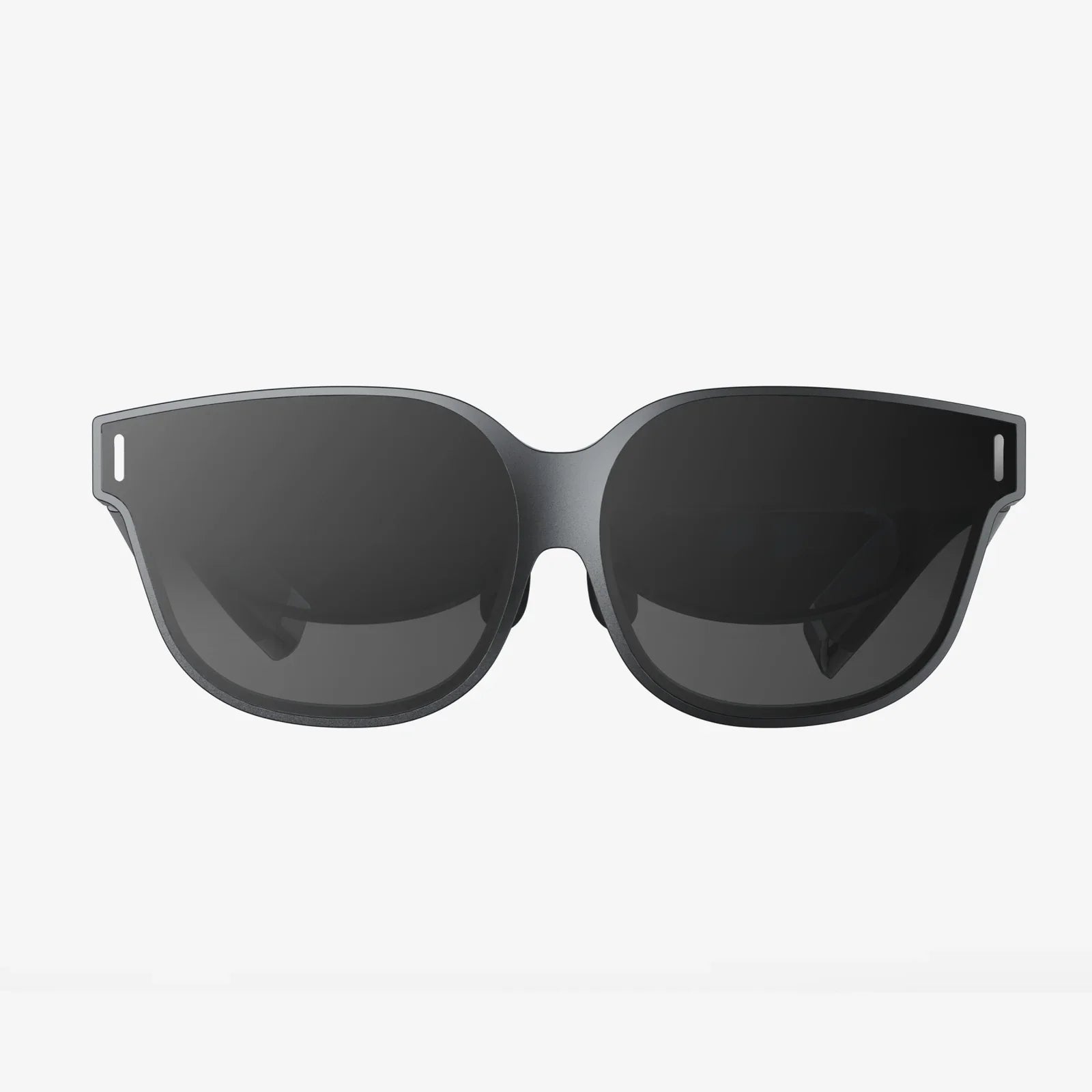
Imagine a world where digital information doesn't just live on a screen but is seamlessly woven into the fabric of your physical reality, enhancing everything you see, do, and experience. This is the promise of augmented reality (AR), a technology that has rapidly evolved from a science fiction fantasy into a powerful tool transforming our daily lives and professional landscapes. The quest to identify the augmented reality best examples isn't just about cool tech demos; it's a journey through the most innovative applications that are solving real-world problems, creating unforgettable experiences, and fundamentally changing how we interact with the world around us. From trying on clothes without leaving your home to visualizing complex machinery before it's built, AR is breaking down the barriers between the digital and the physical, and its most compelling use cases are a glimpse into a future that is already here.
Revolutionizing Retail and E-Commerce
The retail sector has been one of the earliest and most enthusiastic adopters of augmented reality, leveraging its power to bridge the critical gap between online browsing and in-store confidence. This application directly addresses one of the biggest hurdles of e-commerce: the inability to physically interact with a product before purchase.
Virtual Try-On: Fashion and Apparel
One of the most prominent augmented reality best examples is the virtual fitting room. Through sophisticated AR platforms, users can now see how a pair of glasses frames their face, how a shade of lipstick complements their skin tone, or how a watch looks on their wrist—all in real-time through their smartphone camera or webcam. This technology uses advanced algorithms for facial mapping, skin tone analysis, and gesture recognition to create a highly realistic and personalized shopping experience. The impact is profound, significantly reducing return rates for retailers and empowering consumers to make more informed purchasing decisions from the comfort of their homes.
Furniture and Home Décor Visualization
Perhaps an even more impressive feat is the ability to place virtual furniture and home décor items within your actual living space. Using AR, shoppers can project a life-sized, 3D model of a new sofa into their lounge, a bookshelf against their wall, or a lamp on their side table. They can walk around the virtual object, assess its scale, check how its color and style fit with their existing décor, and even see how it looks in different lighting conditions throughout the day. This eliminates the guesswork and measuring tape anxiety associated with buying large items, preventing costly mistakes and ensuring customer satisfaction. It represents a fundamental shift from shopping for a product to experiencing it within the context of one's own life before a transaction ever occurs.
Transforming Education and Training
Augmented reality is poised to revolutionize learning by making it more interactive, immersive, and effective. It moves education beyond static images in a textbook, bringing complex concepts to life and providing hands-on experience in a risk-free environment.
Interactive Learning Materials
Imagine a student pointing their tablet at a diagram of the human heart in their biology textbook. Suddenly, a detailed, beating 3D heart model animates above the page. The student can rotate it, zoom in to see the ventricles and arteries, and even trigger labels to understand the name and function of each part. This is not a future concept; it's a current reality. From historical artifacts resurrected on a classroom desk to complex geological formations erupting from a map, AR creates engaging, multi-sensory learning experiences that dramatically improve comprehension and retention. It caters to various learning styles and turns abstract ideas into tangible, interactive models.
Skills and Safety Training
In fields where hands-on training is essential but also dangerous or expensive, AR provides an invaluable solution. Mechanics-in-training can practice complex repair procedures on virtual engine models that overlay physical components, receiving step-by-step guidance and digital annotations. Medical students can practice intricate surgical procedures on virtual patients, allowing for repetition and mistake-making without consequence. Factory workers can be trained on dangerous machinery through AR simulations that highlight safety procedures and potential hazards in their actual work environment. These augmented reality best examples in professional training not only accelerate the learning curve but also enhance safety, reduce training costs, and improve overall competency.
Advancing Healthcare and Medicine
The healthcare industry is leveraging AR to improve patient outcomes, enhance surgical precision, and streamline complex medical procedures. The technology is becoming a critical tool for diagnosis, treatment, and medical education.
Enhanced Surgical Navigation
One of the most critical applications of AR is in the operating room. Surgeons can now wear AR headsets that project vital information—such as 3D reconstructions of a patient's anatomy from CT or MRI scans—directly onto their field of view, overlaying it onto the patient's body during surgery. This allows a surgeon to, in effect, see “inside” the patient, visualizing the precise location of a tumor, a major blood vessel, or a delicate nerve pathway before making an incision. This “X-ray vision” enhances spatial understanding, improves surgical accuracy, minimizes invasiveness, and can significantly reduce operation times. It represents a monumental leap in precision medicine, translating complex scan data into an intuitive, visual guide during life-saving procedures.
Patient Education and Rehabilitation
AR is also transforming the patient experience. Doctors can use AR visualizations to explain a diagnosis or a planned surgical procedure to patients and their families in a clear, visually intuitive manner, reducing anxiety and improving understanding. In physical rehabilitation, AR games and exercises can make the recovery process more engaging. A patient recovering from a stroke, for instance, might use an AR system that projects virtual objects for them to grasp or targets for them to reach, turning repetitive therapeutic movements into a motivating and tracked activity. This gamification of therapy improves patient adherence to exercise regimens and provides therapists with valuable data on progress and range of motion.
Empowering Industrial Design and Manufacturing
In the industrial sector, often referred to as Industry 4.0, AR is streamlining design processes, improving manufacturing efficiency, and revolutionizing maintenance and repair operations.
Design and Prototyping
Engineers and designers are using AR to visualize and interact with 3D models of their creations at a 1:1 scale long before physical prototypes are built. An automotive design team can project a full-scale, photorealistic model of a new car into an empty garage, walk around it, inspect the curves and lines from every angle, and even make virtual modifications in real-time. Architects can walk clients through a life-sized, interactive model of a building that is overlaid onto the physical construction site. This ability to experience a design in its intended environment uncovers potential issues early, saves immense resources on physical prototyping, and facilitates better collaboration and decision-making among stakeholders.
Assembly, Maintenance, and Remote Assistance
On the factory floor, AR is a powerful tool for guiding complex assembly and maintenance tasks. Through AR glasses or tablet devices, technicians can see digital instructions and animated arrows overlaid directly onto the physical machinery they are working on. These systems can highlight the exact bolt that needs to be tightened, show the correct sequence for wiring a panel, or provide a video demonstration of a specific step. Furthermore, an expert engineer located thousands of miles away can see what an on-site technician sees through their AR headset and can draw annotations and provide guidance directly into the technician's field of view. This “see-what-I-see” remote assistance drastically reduces downtime, minimizes errors, and allows a single expert to support a global workforce.
Enhancing Navigation and Tourism
AR is changing how we navigate our cities and explore new destinations, layering a rich tapestry of information onto our immediate surroundings.
Context-Aware City Navigation
Forget looking down at a blue dot on a 2D map. The next generation of navigation uses AR to superimpose directional arrows, street names, and points of interest directly onto the live view from your smartphone camera as you walk down the street. This creates an intuitive, heads-up display for the real world, making it almost impossible to get lost. You can simply hold up your phone and see floating labels indicating the nearest coffee shop, subway entrance, or historical landmark, complete with ratings and distance information. This contextual overlay turns any city into an interactive, information-rich environment, simplifying exploration and discovery.
Immersive Cultural and Historical Experiences
Tourism has been utterly transformed by AR. Pointing a device at a historical ruin can trigger a reconstruction of how the building looked in its prime, with virtual characters populating the streets. Museums are using AR to make their exhibits come alive, allowing visitors to see animations explaining a dinosaur's movement, to virtually unwrap a mummy, or to interact with a famous painting in three dimensions. These experiences create deeply engaging and memorable connections with culture and history, moving beyond passive observation to active, participatory learning. They allow us to not just see the past, but to experience it layered seamlessly onto the present.
The Future of Entertainment and Gaming
While entertainment is often the first thing people associate with AR, the applications here have evolved far beyond a single popular game, creating new forms of shared social experiences and interactive art.
Location-Based Gaming and Experiences
The success of a certain global phenomenon game proved the mass-market appeal of AR, turning public parks and city centers into collaborative and competitive playgrounds. This genre has expanded into more complex location-based AR games that encourage exploration, exercise, and real-world social interaction. Beyond gaming, AR is being used for immersive theatrical experiences and art installations. Users can explore virtual sculptures in a public square or watch a fantastical narrative play out on their own street corner, blending storytelling with the physical environment to create magic and wonder in everyday locations.
Social AR and Interactive Filters
One of the most ubiquitous augmented reality best examples is the humble social media filter. These face-tracking effects, which can add silly hats, alter appearances, or apply sophisticated makeup, have become a cultural language of their own. They represent the democratization of AR, putting powerful creative tools into the hands of billions of users. This has evolved into shared AR experiences on social platforms, where multiple people can interact with the same virtual object in a room simultaneously, paving the way for a future where our digital social interactions are as rich and nuanced as our physical ones.
The most compelling augmented reality best examples are those that move beyond novelty to deliver genuine utility, emotional connection, and tangible value. They are not about replacing our reality but about enriching it, providing us with a digital lens that reveals a deeper layer of understanding, efficiency, and possibility. From the operating room to the classroom, the factory floor to the living room, AR is quietly weaving itself into the infrastructure of our lives, offering a more intuitive and intelligent way to work, learn, play, and see the world. This is just the beginning; as the technology becomes more sophisticated and accessible, the line between our digital and physical lives will continue to blur, creating a future where the two are inextricably and wonderfully linked. The next time you look at the world through your screen, remember—you're not just capturing a moment, you're unlocking a new dimension of it.
Share:
Augmented Reality Screen for 100-Inch Display: The Future of Immersive Computing
How Much Does Augmented Reality Development Cost: A Comprehensive 2024 Guide