


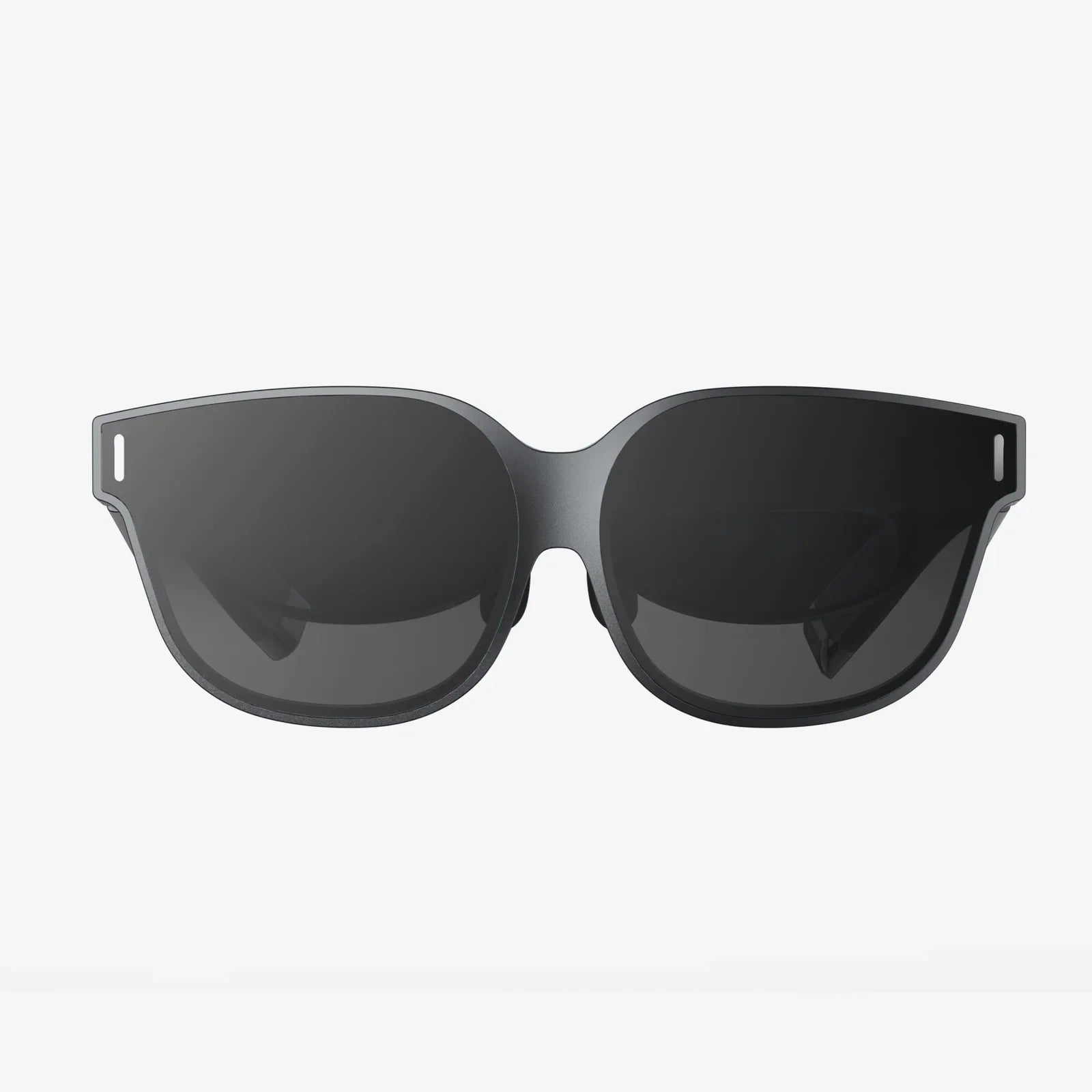
Imagine a world where your living room wall transforms into a cinematic masterpiece, your office desk expands into a boundless digital workspace, and educational diagrams leap from the pages of a textbook into three-dimensional life, all without a single physical screen. This is no longer the realm of science fiction but the tangible promise of an augmented reality screen for a 100-inch display. This revolutionary technology is poised to shatter the constraints of physical hardware, redefining our very perception of space, information, and interaction. The journey beyond the bezel begins here, inviting you to step into a future where your environment is your canvas and digital content is woven seamlessly into the fabric of your reality.
Beyond the Bezel: Redefining the Display Itself
For decades, the paradigm of visual computing has been tethered to a simple concept: a physical, luminous rectangle confined within a bezel. We have chased higher resolutions, thinner profiles, and larger diagonals, but the fundamental limitation remained—the digital world was trapped behind a piece of glass. The advent of the augmented reality screen for a 100-inch display represents a paradigm shift as profound as the move from the command line to the graphical user interface. It decouples the visual experience from the physical object.
This technology is not merely a projector; it is a sophisticated system that combines advanced optical waveguides, precise spatial mapping, and powerful rendering engines. It understands the geometry of your room, the position of your furniture, and the location of your eyes. Instead of emitting light onto a surface, it projects images directly onto your retina, or uses a combination of lenses and micro-displays to create the perception of a massive, high-resolution screen floating in space. The result is a perfect, pin-sharp 100-inch image that can be placed on any wall, or even left to float in mid-air, independent of ambient light conditions. The physical constraints of panel size, weight, and installation are utterly eliminated.
The Architectural Canvas: Transforming Space and Place
The most immediate impact of this technology is architectural. Our homes and offices are designed around screens. The living room is oriented toward the television, the desk toward the monitor. An augmented reality screen liberates space from function. A single, empty wall can serve as a home theater, a video conferencing portal, a digital art gallery, and a children's interactive playground, all within the same hour. When not in use, the screen vanishes, restoring the room to its original aesthetic.
This has profound implications for interior design and urban living. Small apartments can enjoy a big-screen experience without dedicating precious square footage to a black rectangle. Corporate offices can create dynamic, collaborative environments where presentation screens can be summoned and resized at will in any conference room. Public spaces like airports and museums can provide rich, contextual information overlaid on physical exhibits or architectural features without the visual clutter of fixed monitors. The environment becomes dynamic and responsive, a living interface that adapts to the needs of the moment.
A New Dimension of Cinematic immersion
Entertainment is perhaps the most tantalizing application. A 100-inch augmented reality display offers a cinematic experience that is both immersive and social. Unlike head-mounted displays that isolate the user, this technology can be designed for shared viewing, allowing a family to gather around a virtual screen just as they would a traditional television. However, it goes far beyond simply replicating a large TV.
Imagine watching a nature documentary where a life-sized blue whale slowly glides through the space of your living room, its scale truly awe-inspiring. A director's commentary could appear as a ghosted figure standing beside the screen, pointing to details within the scene. During a sports game, real-time statistics and player vitals could hover beside the action, without obscuring the view. The content is no longer framed by a bezel but exists within your world, breaking the fourth wall and creating a deeper, more emotionally resonant connection to the narrative.
The Ultimate Productivity Powerhouse
The potential for professional and creative work is staggering. The concept of the desktop is exploded. With a virtual 100-inch canvas, a user is no longer limited to the confines of two or three physical monitors. They can organize infinite windows, applications, and data visualizations across their entire field of view. A financial analyst could have real-time market data streams flowing along one wall, 3D charts rotating in the center of the room, and video calls with colleagues positioned elsewhere, all simultaneously in focus and accessible.
This technology enables true spatial computing for productivity. Architects and engineers can examine 3D models at full scale, walking around them and manipulating components with gestures. Coders can create a sprawling, non-linear timeline of code and documentation. Researchers can lay out vast networks of information and draw connections between them in thin air. The interface becomes a manifestation of one's cognitive model, reducing the friction between thought and action and unlocking new levels of focus and efficiency.
Revolutionizing Education and Training
In educational settings, an augmented reality screen becomes a magical portal for learning. Abstract concepts become tangible. Students studying anatomy can explore a full-scale, beating human heart from every angle. History lessons can be transformed into immersive recreations of ancient Rome, with historical figures explaining their context directly to the class. Chemistry students can safely combine virtual elements and watch the reactions unfold on their desk.
For specialized training, the benefits are even more critical. Surgeons can practice complex procedures on virtual patients, mechanics can see the internal workings of an engine overlaid on the physical machinery, and astronauts can simulate repairs in a zero-gravity environment. This hands-on, visual, and interactive form of learning dramatically improves knowledge retention, comprehension, and skill acquisition, making expertise more accessible and training significantly more effective.
The Invisible Infrastructure: Sensing and Processing
The magic of the floating image is enabled by a hidden web of sophisticated technology. This system relies on a suite of sensors—cameras, depth sensors, LiDAR, and inertial measurement units—that constantly scan the environment. This real-time data creates a dynamic 3D map of the room, allowing the system to understand surfaces, occlusions, and lighting conditions to anchor digital content convincingly.
This spatial understanding is paired with immense processing power. Rendering photorealistic graphics for a 100-inch field of view at high frame rates requires the equivalent of a high-end gaming computer. This horsepower is necessary not only for graphics but also for persistent world-locking (ensuring a virtual object stays in place if you look away and back), occlusion (allowing digital objects to hide behind real-world furniture), and intuitive gesture-based interaction. The complexity is immense, but the payoff is an experience that feels effortless and magical.
Navigating the Human Interface: Control and Interaction
How does one interact with a screen made of light? The input modalities for these systems are as innovative as the display itself. While traditional remote controls or companion devices may serve as a familiar fallback, the true potential is unlocked through more natural interfaces.
- Gesture Control: Users can point, pinch, drag, and resize elements with hand movements, turning the space in front of them into a touchless touchscreen.
- Voice Commands: Natural language processing allows for complex commands: "Move the browser window to the left wall and open my calendar."
- Eye Tracking: By knowing precisely where a user is looking, the system can highlight elements, enable dwell-based selection, or create intuitive focus-based navigation.
- Haptic Feedback: Paired with wearable devices, users could feel a subtle click when dragging a virtual slider or a vibration when interacting with a button, adding a crucial layer of tactile confirmation to the visual experience.
Challenges on the Horizon
Despite its breathtaking potential, the path to ubiquitous adoption of consumer-grade augmented reality screens for 100-inch displays is not without obstacles. The technology demands a significant leap in processing power, battery life for mobile units, and miniaturization of already complex optics. There are also human factors: mitigating eye strain over prolonged use, designing intuitive interfaces that avoid gesture fatigue, and establishing social etiquette for using such powerful technology in public and shared spaces.
Furthermore, content must be reimagined. Filmmakers, app developers, and UX designers need new tools and a new language for creating experiences that are unbound, spatial, and contextual. The question is no longer just "what looks good on a screen?" but "how does this experience live and breathe in a user's world?"
The journey from our current two-dimensional interfaces to a world enriched by persistent, large-scale augmented reality is not a question of if, but when. The foundational technologies are rapidly maturing in labs and early commercial products. As processing follows Moore's Law, optics advance, and developers embrace this new canvas, the augmented reality screen for a 100-inch display will transition from a spectacular demo into an indispensable tool for living, working, and playing. It promises to erase the final barrier between our digital and physical selves, turning the entire world into our interface and unlocking human potential in ways we are only beginning to imagine. The wall in front of you is no longer a boundary; it's the most exciting destination in tech.
Share:
Mathematics and Augmented Reality: The Unseen Fusion Reshaping Our World
Augmented Reality Best Examples: Transforming Industries and Redefining Reality