


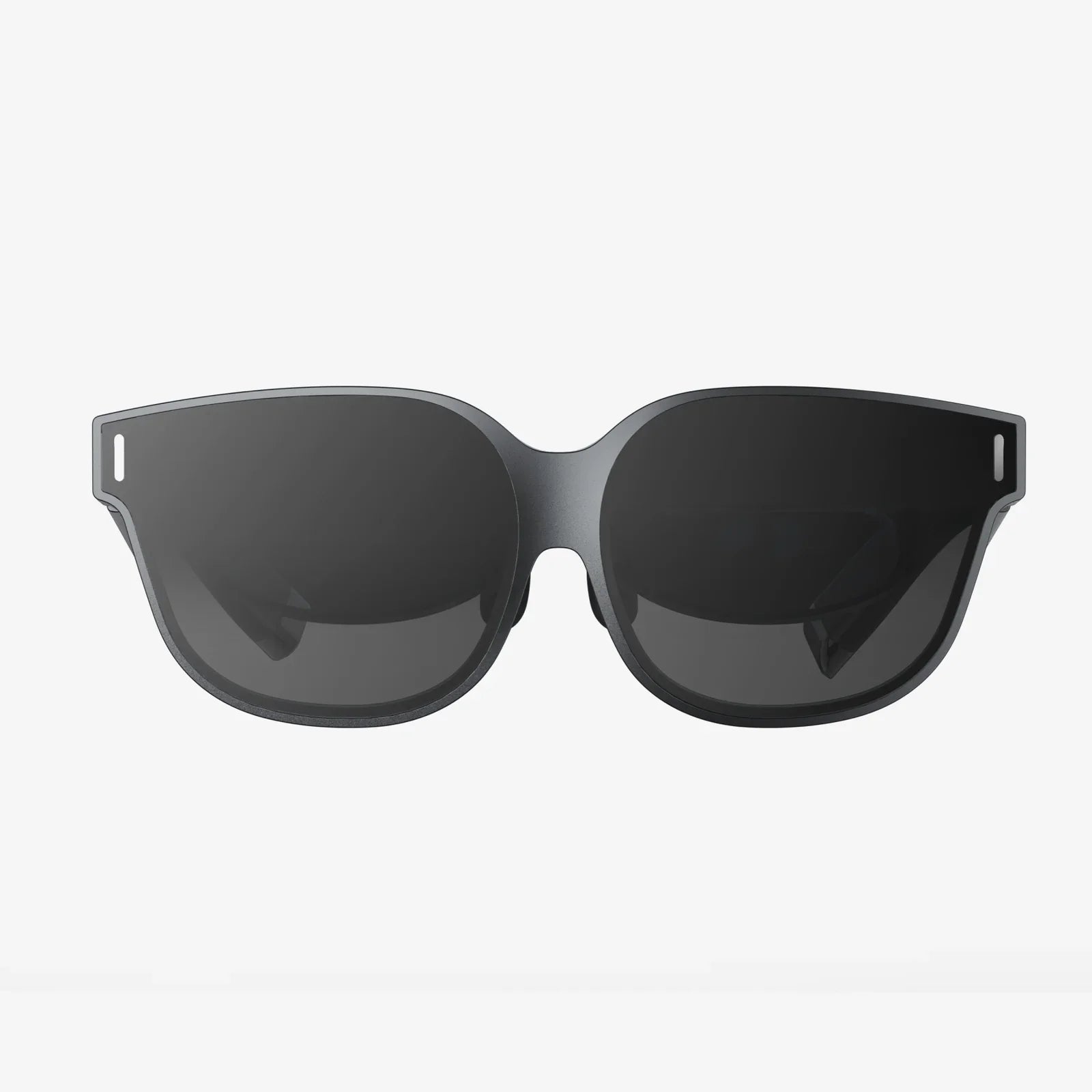
Imagine a world where digital information doesn't live on a screen in your hand but is seamlessly woven into the fabric of your reality. This is no longer the realm of science fiction; it is the burgeoning present being built by a vibrant and competitive ecosystem of augmented reality companies. These innovators are not just creating apps; they are constructing the very frameworks, hardware, and software that will define the next era of computing, fundamentally altering how we work, learn, play, and connect. The race to overlay our world with a persistent digital layer is on, and the stakes have never been higher.
The Technological Pillars Powering the AR Revolution
At the heart of every successful augmented reality company lies a mastery of complex, converging technologies. This isn't just about displaying a graphic; it's about creating a convincing and interactive fusion of the real and the virtual. The challenge is immense and requires expertise across several critical domains.
Computer Vision and Simultaneous Localization and Mapping (SLAM): This is the cornerstone of modern AR. SLAM algorithms allow a device to understand its physical environment in real-time. By processing data from cameras and sensors, the device can simultaneously map an unknown space (Mapping) and pinpoint its own location within that space (Localization). This enables digital objects to be placed persistently and accurately on a table, a wall, or the floor, and to remain there as the user moves around. Companies investing heavily in advanced SLAM are solving the critical problem of anchoring the digital to the physical.
Display Technology and Optics: How do you make digital light coexist with natural light? This is the primary quest for AR hardware firms. The solutions are diverse, ranging from optical see-through displays, often used in smart glasses, which use waveguides or holographic optical elements to project images directly into the user's eye, to video see-through systems, common on smartphones and some headsets, which use cameras to capture the real world and then blend graphics onto the video feed. The battle is to create displays that are high-resolution, wide-field-of-view, energy-efficient, socially acceptable, and, ultimately, comfortable to wear for extended periods.
Tracking and Sensing: A convincing AR experience requires precise tracking of the user's head, eyes, and hands. Inside-out tracking, where sensors on the headset itself track movement relative to the environment, has become a standard, freeing users from external beacons or cameras. Furthermore, hand-tracking technology is evolving rapidly, moving beyond controllers to allow users to manipulate digital objects with natural gestures, a crucial step for intuitive interaction.
Processing Power and Edge Computing: The computational demands of running complex SLAM algorithms, rendering high-fidelity 3D graphics, and understanding the environment are staggering. While cloud computing offers one solution, latency is a critical enemy of immersion. The most advanced AR companies are developing specialized chipsets and leveraging edge computing to perform these intensive tasks locally on the device, ensuring a smooth, responsive, and lag-free experience.
A Spectrum of Specialization: The Diverse AR Landscape
The term "augmented reality companies" encompasses a wide array of players, each with a unique focus and business model. The landscape can be broadly categorized, though many leading players operate across multiple categories.
The Platform and Software Giants: These are the established tech behemoths and ambitious startups building the foundational operating systems and development platforms for AR. They create the software development kits (SDKs) and game engines that empower millions of developers to build AR experiences. Their goal is to establish the dominant platform, the "AR ecosystem," upon which all future applications will be built. This includes creating cloud services for persistent AR worlds, app stores for distribution, and robust developer tools.
The Hardware Pioneers: This group is focused on the monumental task of designing and manufacturing the physical devices that will deliver AR to the masses. Their work spans consumer-focused smart glasses, enterprise-grade headsets for industrial use, and everything in between. The challenges here are deeply interdisciplinary, involving not just optics and display tech, but also industrial design, battery life, thermal management, and creating a form factor that people will actually want to wear.
The Enterprise Solution Providers: Many of the most successful and profitable AR companies today are those focused squarely on business and industrial applications. They develop specialized software that solves concrete problems for large corporations. This includes applications for remote expert assistance (where a specialist can see what a field technician sees and guide them with AR annotations), complex assembly guidance in manufacturing, immersive training simulations, and sophisticated logistics and warehouse management systems that visually guide workers to items.
The Creative Studios and Niche Developers: This vibrant sector consists of agencies and development shops that bring creative visions to life. They work with brands to create marketing campaigns, educational institutions to build immersive learning modules, and entertainment companies to develop games and interactive stories. They are the artisans who use the tools provided by the platform builders to craft compelling user experiences.
Transforming Industries: The Real-World Impact of AR
The value of augmented reality is being proven not in hypotheticals, but in tangible ROI and transformative workflows across the global economy.
Revolutionizing Manufacturing and Field Services: On factory floors and in remote locations, AR is dramatically increasing efficiency and reducing errors. Technicians wearing smart glasses can have digital work instructions overlaid directly onto the machinery they are repairing, freeing their hands and eliminating constant glances at a paper manual or tablet. A remote expert can see the technician's view and draw arrows, circles, or notes into their field of vision, enabling faster problem-solving and reducing the need for expensive travel. For complex assembly, AR can visually guide workers through each step, ensuring precision and compliance.
Redefining Retail and E-Commerce: The "try before you buy" paradigm is being supercharged. Furniture retailers allow customers to see how a sofa will look and fit in their living room at true-to-life scale. Cosmetic brands enable users to virtually try on makeup and shades. Fashion outlets offer virtual fitting rooms for clothes. This not only enhances consumer confidence and reduces return rates but also creates a novel and engaging shopping experience that bridges the gap between online and physical retail.
Advancing Healthcare and Medicine: The applications in medicine are both profound and life-changing. Surgeons can use AR overlays to visualize patient anatomy, such as CT scans or vital signs, directly on their field of view during procedures, improving accuracy and outcomes. Medical students can learn anatomy through interactive 3D holograms of the human body. AR can also assist in vein visualization for nurses, physical therapy guidance for patients, and complex medical device training.
Enhancing Education and Training: AR transforms passive learning into an active, exploratory process. Instead of reading about ancient Rome, students can walk through a digitally reconstructed forum in their classroom. Mechanics-in-training can practice on virtual engines, and chemistry students can conduct hazardous experiments safely. This hands-on, visual approach improves knowledge retention and engagement, making learning a truly immersive adventure.
Navigating the Frontier: Challenges and The Road Ahead
Despite the incredible progress, the path to ubiquitous AR is fraught with significant hurdles that the industry must collectively overcome.
The Social Acceptance Hurdle: For consumer AR to truly take off, the hardware must become something people are proud to wear, akin to everyday eyewear. Current designs often remain clunky, obtrusive, or socially awkward. The industry is striving for a "killer form factor"—glasses that are lightweight, stylish, and offer all-day battery life. Until then, consumer adoption will be limited to specific use cases primarily driven by smartphones.
The Privacy Imperative: AR devices, by their very nature, are equipped with always-on cameras and sensors that continuously scan the user's environment. This raises profound privacy questions. How is this visual and spatial data being used, stored, and protected? Companies must build trust through transparent policies, robust on-device data processing, and clear user controls. The ethical development of AR is not optional; it is a prerequisite for public adoption.
The Interoperability Dream: For a truly open and connected AR world, digital objects and experiences need to be persistent and shared across different devices and platforms. If one user places a virtual note on a restaurant window, another user with a different company's hardware should be able to see it. Achieving this level of interoperability requires unprecedented collaboration and open standards between competing companies—a difficult but necessary evolution.
The Quest for a Killer App: While enterprise has found its "killer apps" in training and remote assist, the consumer market is still searching for the one application that will drive mass adoption. Was it a revolutionary game? A new paradigm for social connection? A transformative way to navigate cities? The company or consortium that cracks this code will unlock the consumer market.
The architects of our augmented future are not waiting for a distant tomorrow; they are building it today in research labs, startup garages, and corporate R&D departments. The convergence of 5G connectivity, artificial intelligence, and increasingly sophisticated hardware is accelerating this progress at a breathtaking pace. The choices made by these augmented reality companies today—on privacy, openness, and design—will echo for decades, determining whether this powerful technology enhances our humanity or complicates it. One thing is certain: the world is about to get a lot more interesting.
Share:
Presence and Immersion in Virtual Reality: The Ultimate Guide to Feeling Truly There
VR AR News: The Next Digital Revolution Is Happening Now