


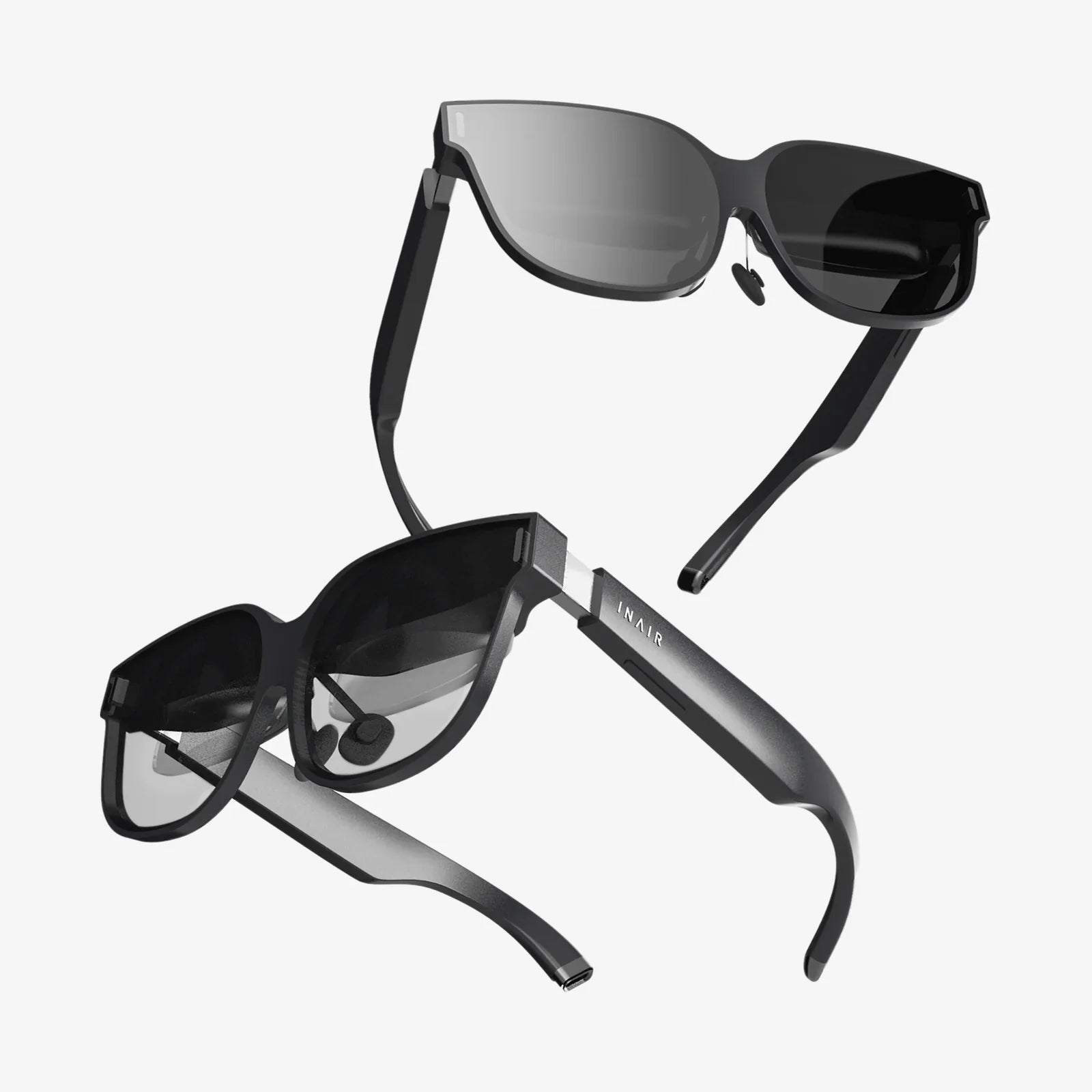
Imagine a world where digital information doesn’t just live on a screen but is seamlessly woven into the fabric of your everyday life. This is the promise of augmented reality, a technological revolution not confined to science fiction but actively being built by a vibrant and competitive global ecosystem of innovators. The journey to understand this new digital frontier begins with the pioneers constructing it.
Demystifying the Technology: More Than Just Digital Overlays
At its core, Augmented Reality (AR) is a technology that superimposes a computer-generated image, video, or 3D model onto a user's view of the real world, thus providing a composite view that blends the physical and digital realms. Unlike Virtual Reality (VR), which creates a completely immersive, artificial environment, AR enhances the real world by adding a layer of interactive data and digital objects to it.
The magic of AR is powered by a sophisticated stack of hardware and software. This includes sensors like cameras, accelerometers, and gyroscopes to understand the device's position and orientation. Computer vision algorithms are then used to recognize objects, surfaces, and environments, a process known as SLAM (Simultaneous Localization and Mapping). This allows the digital content to be accurately placed and persistently anchored in the real world. Finally, the processing power, either from a dedicated device or a connected system, renders the digital content in real-time, creating a believable and interactive experience.
The Diverse Landscape of Augmented Reality Companies
The AR ecosystem is not a monolith; it is a complex web of specialized players, each contributing a critical piece to the puzzle. These entities can be broadly categorized, though many leading companies operate across multiple categories.
The Tech Titans: Building the Foundational Platforms
These are the household names, the giants with vast resources who are investing heavily to create the underlying operating systems and software development kits (SDKs) for AR. Their goal is to establish the dominant platform upon which all other applications are built. Their strategies often involve:
- Developing robust AR SDKs that provide developers with the tools for tracking, environmental understanding, and rendering.
- Integrating AR deeply into their existing mobile operating systems, making the technology instantly accessible to billions of users.
- Creating authoring tools that allow designers and artists to build AR experiences without needing to write complex code.
- Investing in long-term research into advanced hardware like smart glasses and neural interfaces.
The Enterprise Solution Providers: Driving ROI in the Workplace
While consumer AR captures headlines, some of the most significant and profitable applications are happening in enterprise and industrial settings. A specialized segment of companies focuses exclusively on these B2B solutions, delivering tangible return on investment by solving critical business problems. Their work includes:
- Remote Assistance: Enabling a remote expert to see what a field technician sees and provide visual annotations and guidance, drastically reducing travel costs and downtime.
- Assembly and Manufacturing: Projecting digital work instructions directly onto assembly lines, ensuring precision, reducing errors, and speeding up training for complex tasks.
- Design and Prototyping: Allowing architects, engineers, and designers to visualize and interact with full-scale 3D models of their creations in a real-world context before anything is physically built.
- Logistics and Warehousing: Using AR smart glasses to display picking lists, inventory data, and optimal routes, dramatically improving the efficiency and accuracy of warehouse operations.
The Hardware Innovators: Crafting the Windows to the AR World
The hardware is the conduit through which we experience AR. This sector includes companies developing everything from the components to the finished devices. This category is incredibly diverse, encompassing:
- Smart Glasses Manufacturers: Ranging from enterprise-focused devices with rugged designs and long battery life to more consumer-oriented fashion accessories.
- Component Specialists: Firms focused on perfecting the micro-displays, waveguides, depth sensors, and specialized chips (like AR-specific processors) that make advanced AR possible.
- Mobile Device Makers: While not exclusively AR companies, their integration of high-resolution cameras, powerful processors, and LiDAR scanners into smartphones and tablets has been the primary driver of mainstream AR adoption to date.
The Creative Agencies and Development Studios: The Storytellers and Experience Crafters
Technology is nothing without compelling content. A growing sector of the AR economy consists of creative studios and development agencies that partner with brands, museums, educational institutions, and other enterprises to build engaging AR experiences. They are the artists and coders who translate a concept into a functional and memorable application, specializing in areas like marketing campaigns, interactive learning, and immersive entertainment.
Industries Transformed by Augmented Reality
The applications of AR are vast and are already creating profound shifts across numerous sectors. The work of AR companies is directly impacting how we work, learn, shop, and play.
Revolutionizing Retail and E-Commerce
AR is solving one of the fundamental limitations of online shopping: the inability to try before you buy. Forward-thinking retailers are using AR to allow customers to:
- Visualize furniture in their own home at true-to-life scale, ensuring it fits the space and matches the décor.
- "Try on" everything from glasses and makeup to watches and clothing using their smartphone camera, increasing confidence and reducing return rates.
- Access additional product information, reviews, or styling suggestions by simply pointing their phone at an item in a physical store.
Elevating Education and Training
AR has the power to turn abstract concepts into tangible, interactive experiences. In educational settings, it can bring historical events to life, allow students to dissect a virtual frog, or explore the solar system in 3D. For corporate training, it provides a safe, cost-effective environment to practice complex procedures, from operating heavy machinery to performing delicate surgical techniques, without any real-world risk.
Advancing Healthcare and Medicine
In medicine, AR is moving from novelty to a critical clinical tool. Surgeons can use AR overlays to visualize patient anatomy, such as veins, tumors, or surgical plans, directly on the patient's body during procedures, improving accuracy and outcomes. It is also used for medical training, patient education, and assisting with complex diagnoses by providing 3D visualizations of 2D scan data.
Enhancing Manufacturing and Field Service
As mentioned in the enterprise section, this is one of the most mature application areas. AR is providing digital work instructions overlaid on machinery, guiding technicians through complex repair and maintenance tasks step-by-step. This not only improves efficiency and accuracy but also helps to capture and disseminate the knowledge of expert workers who are nearing retirement.
The Future Horizon: Challenges and Opportunities for AR Companies
The path forward for AR is incredibly exciting, but it is not without significant hurdles that companies must overcome to achieve ubiquitous adoption.
Overcoming Technical and Social Hurdles
For AR to become as commonplace as the smartphone, several challenges remain. The hardware, particularly smart glasses, needs to become lighter, more socially acceptable, and offer all-day battery life. The "social acceptance" factor is crucial; people need to feel comfortable wearing AR devices in public. Furthermore, resolving issues of connectivity, data privacy, and digital security will be paramount, especially as these devices become more integrated into our personal and professional lives.
The Next Evolution: The Spatial Web and the AR Cloud
The next great leap for AR companies is the development of the "AR Cloud"—a persistent, digital copy of the real world. Think of it as a universally accessible 3D map that allows digital content to be persistently anchored to specific locations, shared across devices, and experienced collaboratively by multiple users. This will form the foundation of the "Spatial Web," where information is tied to places and objects, not just URLs. The company or consortium that successfully builds and owns a piece of the AR Cloud will be positioned to define the next era of computing.
A New Paradigm for Human-Computer Interaction
Ultimately, the work of AR companies is leading us toward a fundamental shift in how we interact with computers. We are moving away from a paradigm of keyboards, mice, and touchscreens and toward a future of natural, intuitive interaction using gesture, voice, and gaze. This will make technology more accessible and dissolve the barrier between the digital and physical worlds, creating a seamless flow of information that enhances human capability and perception.
The architects of our augmented future are not waiting for a distant tomorrow; they are coding, designing, and building it today. From the tech giants laying the foundational platforms to the nimble startups solving niche problems, this collective effort is quietly adding a rich, interactive layer of data onto our reality. The question is no longer if this will happen, but how quickly we will adapt to a world where the digital and physical are forever intertwined, and which of these visionary companies will lead the way.
Share:
What's a Virtual Office? The Definitive Guide to the Modern Workspace
Making Smart Glasses Now: The Race to Redefine Reality on Your Face