


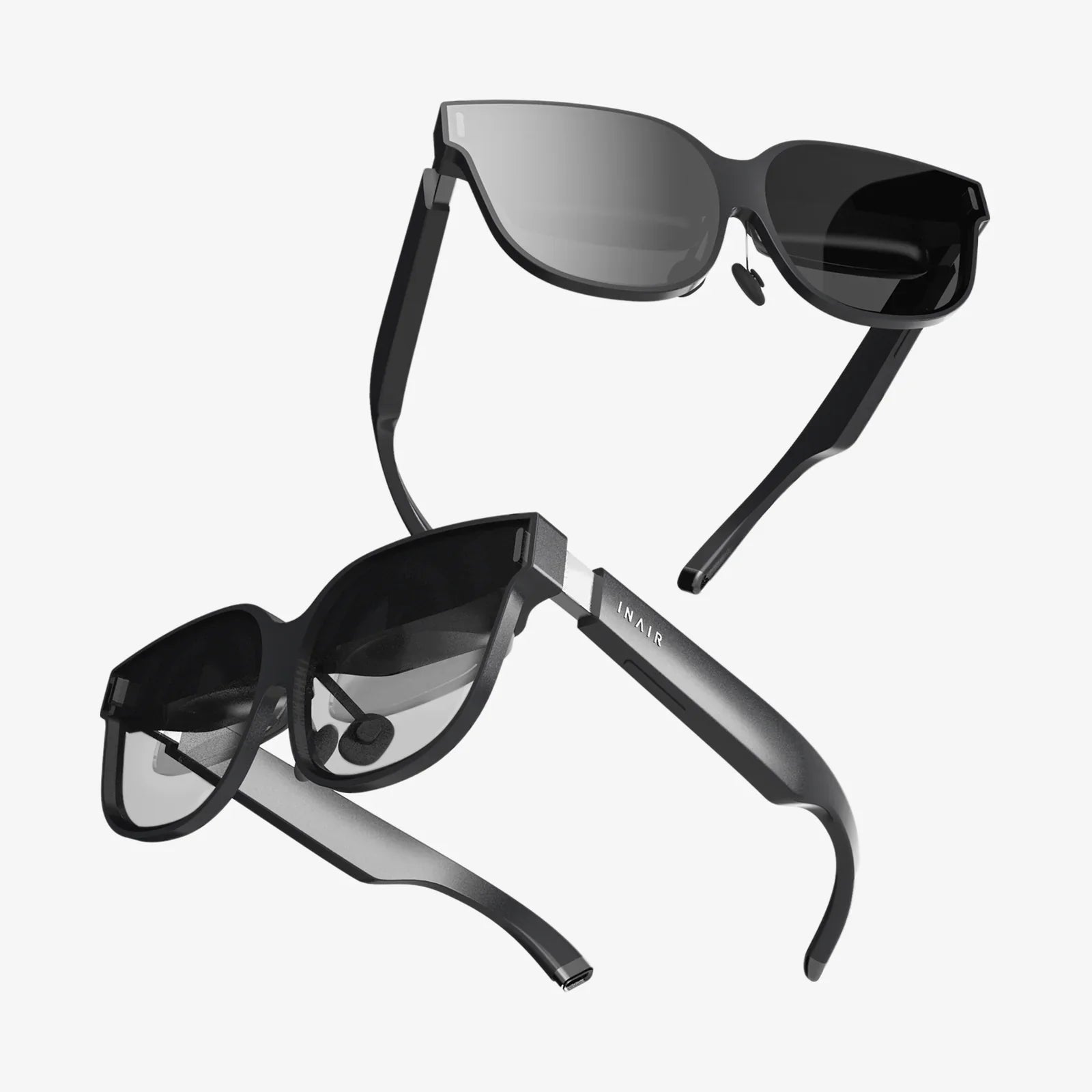
Imagine a world where information doesn't live on a screen in your hand but floats seamlessly in your field of vision, where directions are painted onto the street ahead, and a colleague from another continent appears as a photorealistic hologram sitting across from you at your desk. This isn't a distant sci-fi fantasy; it's the fervent, multi-billion-dollar pursuit happening in labs and design studios across the globe. The race for making smart glasses now is more than a technological sprint; it's a fundamental reimagining of how we interact with the digital world, and the finish line is closer than you think.
The Daunting Trinity: The Core Challenges of Modern Smart Glasses
Creating a device that sits on one of the most sensitive parts of the human body is an exercise in extreme engineering. Developers are grappling with a triumvirate of challenges that must be solved in unison: display technology, power management, and form factor. Failure in any one area dooms the entire product.
The Display: Projecting the Future Onto Your Retina
At the heart of every pair of smart glasses is the display system—the magic window that overlays digital content onto the physical world. The primary hurdle is achieving high brightness, resolution, and color fidelity without consuming excessive power or creating a bulky device. Several technologies are vying for dominance.
Waveguide displays are currently the frontrunner for consumer-ready devices. These use a tiny projector (often based on LCoS, LCD, or MicroLEDs) to shoot light into a transparent piece of glass or plastic etched with microscopic gratings. This light bounces through the "waveguide" until it's directed into the user's eye. The advantage is a relatively sleek design, but challenges remain with field of view (often described as looking through a postage stamp), optical efficiency (which impacts brightness and battery life), and manufacturing complexity.
Alternative approaches like BirdBath optics use a combination of a beamsplitter and a curved mirror to reflect the image from a micro-display into the eye. This can offer a wider field of view and brighter image but often results in a deeper, more goggle-like form factor that is less appealing for all-day wear.
On the horizon, technologies like holographic optics and laser beam scanning promise revolutionary improvements. Holographic waveguides aim to use laser light and computer-generated holograms to create more efficient and wider-field displays, while laser beam scanning projects images directly onto the retina, potentially allowing for incredibly sharp visuals regardless of the user's prescription. However, these technologies are still maturing and face significant regulatory and commercial hurdles.
The Power Dilemma: Fuelling a Computer on Your Face
Smart glasses are, in essence, wearable computers. They require significant processing power for tasks like spatial tracking, computer vision, running applications, and driving the display. All of this demands energy, but the available real estate for a battery on a pair of glasses is minuscule.
This has led to a critical architectural decision: whether to house the compute power on the device itself or to tether it to a more powerful companion device, like a smartphone or a dedicated processing puck. On-device processing offers ultimate freedom and immediacy but is severely constrained by thermals and battery life. Tethered designs extend functionality and battery life but sacrifice the elegant, untethered experience that is the ultimate goal.
Innovations in low-power chipsets designed specifically for always-on ambient computing are crucial. These systems-on-a-chip (SoCs) must perform complex tasks while sipping power, not guzzling it. Furthermore, advancements in battery technology, such as solid-state batteries offering higher energy density, and alternative charging methods like solar charging integrated into the frames or kinetic energy harvesting from movement, are active areas of research. The solution will likely be a combination of all these approaches: ultra-efficient silicon, smarter software that only activates power-hungry components when needed, and new battery chemistries.
The Form Factor: The Invisible Revolution
Perhaps the most significant barrier to mass adoption is aesthetics. For smart glasses to become an all-day, every-day item, they cannot look like clunky, dystopian headgear. They must be indistinguishable from, or even more stylish than, traditional eyewear. This is a monumental challenge in industrial design and materials science.
Engineers are tasked with packing processors, batteries, sensors, speakers, microphones, and optical projectors into a package that weighs less than 100 grams and is only a few millimeters thick. This requires custom-designed components, innovative material use like lightweight polymers and composites, and new manufacturing techniques such as micro-molding and 3D printing for complex internal structures.
The goal is social acceptability. A successful product must make the technology fade into the background, allowing the user to feel normal and engaged with their surroundings, not like a cyborg. This extends to the user interface; interactions must be subtle and intuitive, leveraging voice commands, touch-sensitive temples, and gesture recognition that doesn't require the user to perform awkward movements in public.
Beyond Hardware: The Software That Breathes Life into Glass
Brilliant hardware is useless without an ecosystem of software and applications that deliver compelling value. The operating system for smart glasses must be fundamentally different from those designed for phones or desktops. It needs to be context-aware, always ready but never intrusive.
Spatial computing is the key paradigm. This involves understanding the physical environment in real-time—using cameras, LiDAR, and other sensors to map surfaces, recognize objects, and track the user's position. This allows digital content to be "pinned" to the real world: a virtual monitor on your real desk, a recipe card hovering next to your stove, or a virtual sculpture in your living room.
Developing for this spatial canvas requires new tools and frameworks. Developers are building applications that leverage:
- Augmented Navigation: Turn-by-turn directions overlaid on the sidewalk, with points of interest flagged on buildings.
- Real-Time Translation: See subtitles in your language overlaid on a foreign street sign or a conversation with another person.
- Interactive Learning & Assistance: A mechanic seeing a highlighted diagram of an engine component they are repairing, or a medical student observing an anatomy lesson superimposed on a mannequin.
- Enhanced Social Connection: Sharing a virtual experience with a friend's avatar, both interacting with the same digital objects from different physical locations.
Furthermore, the AI that powers these experiences must be robust and capable of operating with low latency, often processing data on the device itself to ensure user privacy and responsiveness.
A Future Forged in Glass: From Niche to Normal
The path to ubiquitous smart glasses won't be a single breakthrough but a gradual evolution. We are likely to see this progression unfold in distinct waves.
The first wave, which we are currently in, is dominated by audio-forward glasses. These devices prioritize discreet speakers and microphones, offering a superior audio experience for calls and music with a light sprinkle of augmented reality, like basic notifications, delivered through simple LEDs. Their success lies in their near-normal appearance and a clear value proposition: great audio without earbuds.
The next wave will introduce limited visual overlays. These devices will feature basic monochrome or low-color displays capable of showing contextual information—text messages, calendar appointments, simple directions—in a small area of the lens. They will serve as a secondary, glanceable screen for your smartphone, reducing the need to constantly pull out your phone.
The final wave, the true spatial computing glasses, will offer full-color, wide-field-of-view, high-resolution displays capable of rendering complex 3D graphics. These will be standalone computers capable of understanding and interacting with the world at a deep level. This category will take the longest to perfect due to the immense technical challenges, but it represents the ultimate vision.
As the technology matures, it will unlock transformative applications across every industry, from revolutionizing remote collaboration and complex field work to creating new forms of immersive entertainment and redefining accessibility for individuals with disabilities.
The specter of privacy and the dreaded "surveillance glasses" trope is a serious societal concern that must be addressed head-on. Transparency and user control will be non-negotiable features. Clear physical indicators when cameras or sensors are active, robust on-device data processing, and strict ethical guidelines will be essential to building the trust required for this technology to flourish.
The dream of a seamless blend of the digital and physical is no longer a fantasy confined to movies and novels. It's a tangible goal being pursued with relentless intensity. The teams making smart glasses now are not just building a new gadget; they are crafting a new layer of human experience, designing the lens through which we will all someday see the world. The future is looking clear, and it's wearing glasses.
Share:
Augmented Reality Companies: The Architects of a New Digital Layer on Our World
Eye Health Wearable Tech The Future of Vision Care and Digital Wellness