


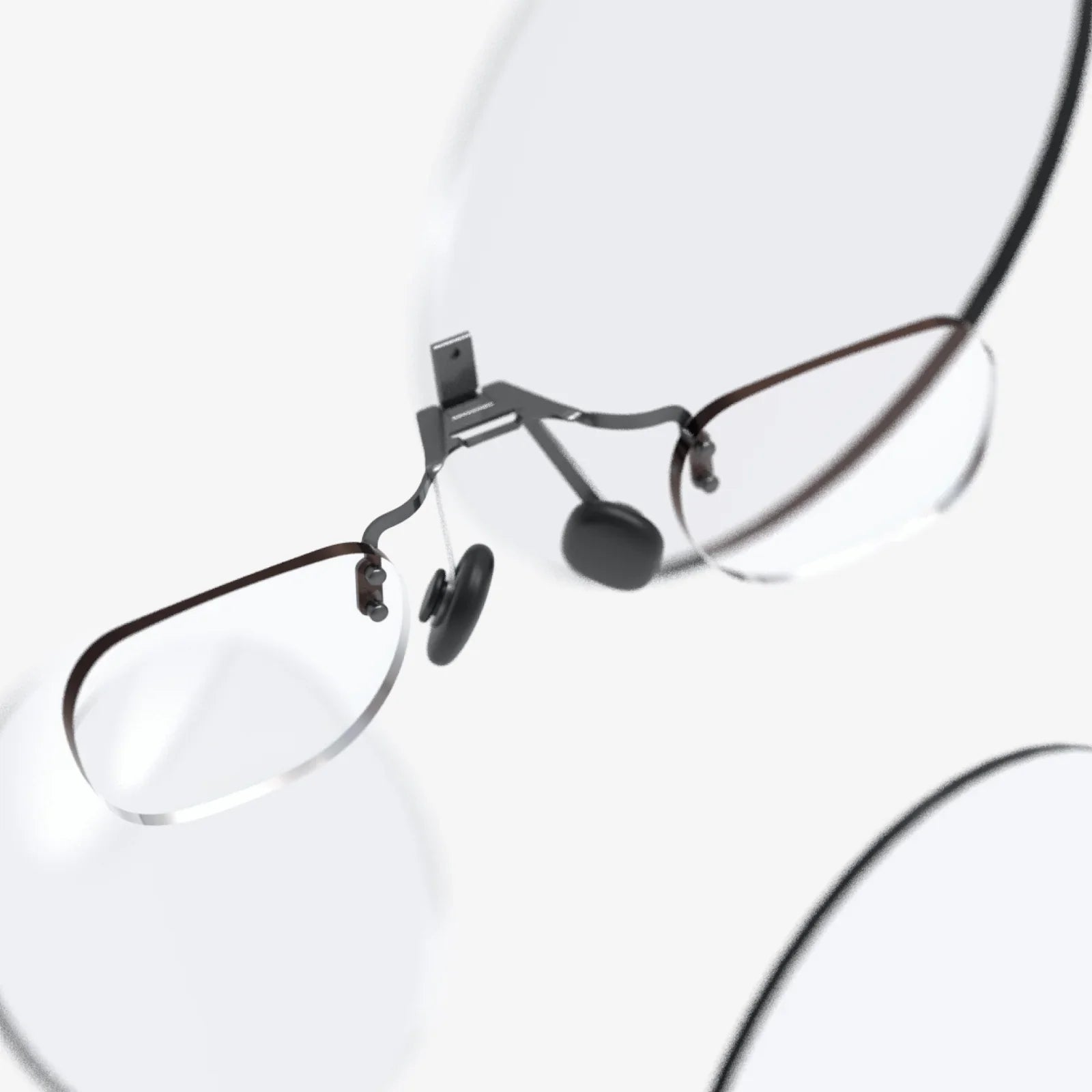
Imagine a world where digital information doesn't just live on a screen but is seamlessly woven into the fabric of your everyday reality, enhancing everything you see, do, and experience. This is no longer the realm of science fiction; it is the present and future being built by Augmented Reality. From the moment you wake up to the way you work, learn, and play, AR is poised to become as fundamental as the smartphone, fundamentally altering our perception of what's possible.
Defining the Digital Overlay: What Exactly is Augmented Reality?
At its core, Augmented Reality (AR) is a technology that superimposes a computer-generated image, video, or 3D model onto a user's view of the real world, thus providing a composite view that augments the physical environment with digital information. This definition is crucial for distinguishing AR from its technological cousin, Virtual Reality (VR). While VR aims to replace the user's reality with a fully immersive, digital simulation, AR's goal is to enhance reality by adding a layer of interactive, contextual data onto the world that already exists.
The concept, though explosively popular in recent years, is not new. The term "Augmented Reality" was coined in 1990 by Boeing researcher Tom Caudell, but its roots go back further to the 1960s with Ivan Sutherland's "Sword of Damocles," an early head-mounted display system. What has changed dramatically is the accessibility of the technology. Once confined to expensive laboratory setups and specialized industrial applications, AR is now readily available on the smartphones in our pockets and increasingly on wearable devices like smart glasses.
The Engine Room: Key Technologies Powering AR
For Augmented Reality to work convincingly, it relies on a sophisticated interplay of hardware and software components. Understanding these provides a deeper appreciation for the magic it creates.
Sensors and Cameras
These are the eyes of an AR system. The camera captures the live view of the physical world, while a suite of sensors—including accelerometers, gyroscopes, and magnetometers—work together to understand the device's position, orientation, and movement in space. More advanced systems use depth sensors and LiDAR (Light Detection and Ranging) scanners to create a precise 3D map of the environment, allowing digital objects to occlude or be occluded by real-world objects, a critical step for immersion.
Processing Power
The raw data from sensors and cameras is meaningless without immense computational power. The device's processor must analyze the visual data in real-time to identify surfaces, planes (like floors and tables), and feature points. This enables the crucial process of tracking, ensuring that digital content remains locked in place in the real world even as the user moves their device or head.
Display Technologies
This is how the digital content is presented to the user. The main types are:
- Smartphone and Tablet Displays: The most common method, using the device's screen as a viewport into the augmented world.
- Smart Glasses and Headsets: Wearable devices that project images directly onto the user's retina or use transparent lenses to overlay graphics onto their field of vision. These offer a hands-free experience, which is vital for many enterprise applications.
- Projection-Based AR: Instead of a personal display, light is projected onto physical surfaces to augment them, such as projecting a keyboard onto a table.
Computer Vision and Machine Learning
This is the brain of the operation. Computer vision algorithms interpret the visual data to understand the environment. They can perform object recognition (identifying a chair, a machine part, or a face) and simultaneous localization and mapping (SLAM), which builds a map of an unknown environment while simultaneously tracking the device's location within it. Machine learning supercharges this by training systems to recognize complex patterns and objects with high accuracy.
A World of Use: The Expansive Applications of Augmented Reality
The true power of AR is revealed not in its technology but in its application. It is a versatile tool solving real-world problems and creating novel experiences across a stunning array of sectors.
Revolutionizing Retail and E-Commerce
AR is fundamentally changing how consumers shop. The dreaded "will it fit?" question for furniture is being answered by apps that allow users to place true-to-scale 3D models of sofas, tables, and lamps into their living rooms. The fashion industry leverages AR for virtual try-ons for clothes, sunglasses, and makeup, allowing customers to visualize products on their own bodies from the comfort of their homes. This not only enhances customer confidence and reduces return rates but also creates an engaging, interactive shopping experience that blurs the line between online and in-store retail.
Transforming Education and Training
AR has the potential to turn every classroom and training facility into an interactive, immersive learning environment. Instead of staring at a static image in a textbook, students can point their device at a page to see a 3D model of the human heart beat and rotate in front of them, or watch a historical event play out on their desk. This caters to different learning styles and makes complex subjects tangible. In corporate and industrial training, AR is a game-changer. Technicians can receive real-time, contextual information overlaid on the machinery they are repairing, and medical students can practice complex surgical procedures on virtual patients, all without risk.
Empowering Industrial and Manufacturing Sectors
This is one of the most mature and valuable applications of AR. The concept of the "digital twin"—a virtual replica of a physical asset—is brought to life through AR. Engineers can visualize and interact with complex CAD models at full scale on the factory floor. Assembly line workers can be guided with precise, hands-free instructions overlaid on their workspace, highlighting the next part to install and the correct tools to use, drastically reducing errors and training time. Maintenance crews can see the internal status of equipment, with arrows and diagrams pointing directly to components that need inspection, along with live data feeds from IoT sensors.
Advancing Healthcare and Medicine
In healthcare, AR is moving beyond training into direct patient care. Surgeons can use AR headsets to overlay critical information—such as 3D reconstructions of tumors or the path of a major blood vessel—directly onto their view of the patient during an operation, improving precision and safety. It can assist in extremely difficult procedures like spinal surgery, where accuracy is measured in millimeters. AR is also used for vein visualization, projecting a map of veins onto a patient's skin to make injections easier for nurses and less painful for patients. Furthermore, it serves as a powerful tool for patient education, helping doctors explain conditions and procedures visually.
Enhancing Navigation and Wayfinding
Forget looking down at a blue dot on a 2D map. The future of navigation is AR. Imagine holding up your phone and seeing arrows and directions painted onto the street in front of you, guiding you to your destination turn-by-turn in the real world. This can be applied indoors as well, helping you navigate complex spaces like airports, museums, and large office buildings to find your gate, a specific exhibit, or a conference room. For drivers, AR head-up displays (HUDs) can project navigation cues, speed, and safety warnings directly onto the windshield, allowing them to keep their eyes on the road.
Unleashing Creativity in Entertainment and Gaming
The global phenomenon of a certain mobile game that had millions chasing virtual creatures in public parks was a watershed moment for AR, demonstrating its mass-market appeal. Beyond gaming, AR is creating new forms of interactive art installations and live experiences. At concerts, attendees can point their phones at the stage to see enhanced visual effects. In the home, AR can transform a living room into a collaborative game board or a portal to a storybook world, creating shared experiences that are both magical and memorable.
Challenges and The Road Ahead
Despite its promise, AR faces significant hurdles. Technical challenges include improving battery life for wearable devices, creating more natural and intuitive user interfaces, and achieving truly seamless integration of digital and physical objects. Social and ethical concerns around privacy, data security, and the potential for digital spam cluttering our reality need careful consideration and regulation. Furthermore, the cost of high-end AR hardware remains a barrier to widespread adoption.
However, the trajectory is clear. The convergence of 5G connectivity (enabling high-speed, low-latency data transmission), edge computing, and increasingly sophisticated AI will push AR into new frontiers. We are moving towards a world of persistent AR, where digital augmentations are permanently anchored to locations, creating a shared layer of information and interaction over our cities and spaces. The concept of the "spatial web" or "metaverse" envisions a future where our physical and digital lives are inextricably linked, and AR will be the primary lens through which we experience this fusion.
The line between what is real and what is digital is not being erased, but rather being masterfully intertwined. Augmented Reality is more than a gadget or a fleeting trend; it is a foundational shift in how we compute and interact with information. It promises a future where knowledge is not something we seek out on a screen but is instead presented to us contextually, visually, and instantly, empowering us to perform tasks with superhuman efficiency, learn with profound depth, and experience the world with a renewed sense of wonder. The augmented layer is coming, and it will change everything.
Share:
What Is Augmented Reality in Business: The Ultimate Guide to Transforming Operations and Customer Experience
What's VR and AR? A Deep Dive into the Digital Realms Reshaping Our World