


Imagine stepping into a completely new world, one crafted from pure digital imagination, or seeing digital dragons land on your coffee table and interact with your real environment. This is no longer the stuff of science fiction; it's the rapidly evolving reality brought to us by two transformative technologies: Virtual Reality and Augmented Reality. But what exactly are they, and how are they different? The journey to understanding these digital frontiers is not just about technology; it's about redefining human experience itself.
The Core Concepts: Defining the Realities
At their heart, VR and AR are about altering our perception of reality, but they do so in fundamentally different ways.
Virtual Reality: The Total Immersion
Virtual Reality (VR) is the technology of complete immersion. It works on a simple but powerful principle: replace your reality. By wearing a head-mounted display, users are visually and acoustically transported into a computer-generated, simulated environment. This environment can be a photorealistic recreation of a real place, a fantastical game world, or a abstract digital space for work or socializing. The goal of VR is to create a convincing sense of presence—the feeling of actually "being there." This is achieved by tracking the user's head movements and updating the visual display in real-time, making the digital world respond just as the physical one would.
Augmented Reality: The Enhanced Reality
Augmented Reality (AR), in contrast, does not seek to replace the world but to augment and enhance it. AR technology superimposes digital information—images, text, 3D models, animations—onto the user's view of their real-world environment. Unlike VR, which requires a dedicated headset, AR can be experienced through a variety of devices, including smartphones, tablets, and specialized glasses. The magic of AR lies in its ability to blend the digital and the physical seamlessly, creating a composite view where both coexist and interact. The key concept here is contextual relevance; the digital information provided is directly related to what the user is looking at in the real world.
Bridging the Spectrum: Mixed Reality and the Metaverse
The line between VR and AR is not always rigid. This has given rise to the concept of Mixed Reality (MR), which exists on a spectrum between the purely physical and the entirely virtual. MR not only overlays digital objects but also allows them to interact intelligently with the real world. A digital character in MR could hide behind your real sofa, or a virtual ball could bounce off your actual wall. This requires advanced understanding of the physical environment, often mapped using sensors and cameras. Furthermore, both VR and AR are considered foundational technologies for the metaverse, a persistent network of shared 3D virtual spaces. In this envisioned future, the boundaries between these realities may blur entirely, creating a fluid continuum of digital and physical interaction.
The Technological Engine Room: How They Work
The creation of these compelling experiences relies on a sophisticated stack of hardware and software working in perfect harmony.
The Hardware of Illusion
For VR: The primary hardware is the headset. Inside, you typically find two high-resolution displays (one for each eye), a series of motion sensors (gyroscopes, accelerometers), and external or internal cameras for positional tracking. High-quality audio through headphones is crucial for immersion, often employing spatial 3D audio techniques to make sounds come from specific directions in the virtual space. Many systems also include handheld controllers, which are tracked in space, allowing users to reach out, grab, and manipulate virtual objects.
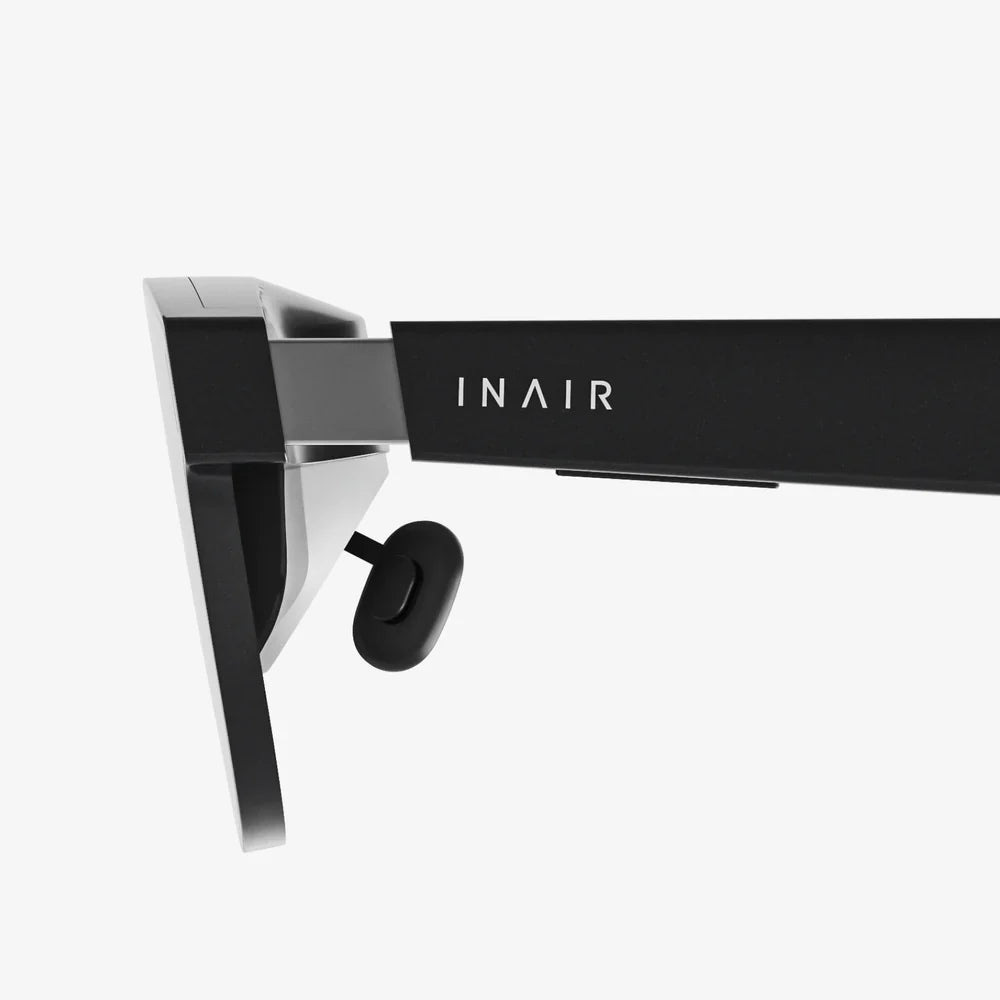
For AR: The hardware can be more varied. Smartphone-based AR uses the device's camera, sensors, and screen to display the augmented world. Smart glasses are a more advanced form factor, projecting digital imagery directly onto the lenses in front of the user's eyes, allowing for hands-free operation. These glasses contain tiny projectors, waveguides, and sensors to understand the environment and align digital content perfectly with the real world.
The Software and Tracking Magic
Both technologies depend on complex software. Computer vision algorithms are the unsung heroes, especially for AR. They enable simultaneous localization and mapping (SLAM), which allows the device to understand its position in a space while simultaneously building a map of that environment. This is how your phone can place a virtual sofa in your living room and keep it locked in place as you walk around. For VR, this tracking ensures that when you turn your head, the world turns with you without delay (a phenomenon called latency, which can cause discomfort if too high). Game engines are commonly used to render the complex 3D graphics for both VR and AR experiences in real-time.
A World of Applications: Beyond Gaming
While gaming and entertainment were the initial driving forces, the applications for VR and AR now extend into nearly every professional and personal domain.
Revolutionizing Education and Training
VR creates safe, controlled, and repeatable training environments for high-stakes professions. Surgeons can practice complex procedures on virtual patients, aviation students can learn to fly in any weather condition, and factory workers can learn to operate dangerous machinery—all without any real-world risk. AR, on the other hand, acts as an interactive overlay manual. A mechanic can look at an engine and see instructions and part names overlaid on the components they need to repair. Medical students can study human anatomy using AR models that float above their textbooks.
Transforming Healthcare and Therapy
The therapeutic potential is vast. VR is being used for exposure therapy, helping patients with phobias (like fear of heights or flying) confront their triggers in a safe setting. It's also used for pain management, distracting burn victims during painful wound care procedures. AR assists surgeons by projecting critical information, like a patient's vitals or a 3D model of a tumor, directly into their field of view during an operation.
Redefining Design and Retail
Architects and interior designers use VR to create virtual walkthroughs of unbuilt structures, allowing clients to experience a space before a single brick is laid. Car designers can review full-scale 3D models of new vehicles in VR. In retail, AR has become a powerful tool. Customers can use their phones to see how a piece of furniture would look in their home or "try on" glasses, makeup, or clothes virtually, dramatically enhancing online shopping and reducing return rates.
Enhancing Remote Collaboration and Tourism
VR and MR are building the future of remote work. Instead of a flat video call, colleagues from across the globe can meet as lifelike avatars in a virtual boardroom, interact with 3D models, and brainstorm on virtual whiteboards as if they were in the same room. For tourism, VR offers virtual tours of distant museums, historical sites, and natural wonders, making them accessible to anyone with a headset.
Challenges and The Road Ahead
Despite the incredible progress, significant challenges remain before these technologies become ubiquitous. For VR, the issues of motion sickness (often caused by latency or a mismatch between visual and vestibular signals), the bulk and cost of hardware, and the need for powerful computing resources are ongoing hurdles. For AR, the holy grail is creating a pair of stylish, lightweight, and socially acceptable glasses with all-day battery life and a bright, high-resolution display—a formidable engineering challenge. Both fields also grapple with important questions around data privacy, as these devices, particularly AR glasses, have the potential to capture vast amounts of information about our lives and environments.
Yet, the trajectory is clear. Processing power will continue to increase while hardware shrinks. Advancements in display technology, like micro-LEDs and holographic optics, will make visuals sharper and more lifelike. Artificial intelligence and 5G/6G connectivity will enable more complex and responsive experiences. We are moving towards a future where interacting with digital information will be as natural and intuitive as interacting with the physical world.
The distinction between staring at a screen and living in our world is crumbling, giving way to a new paradigm where the digital and physical are interwoven. Understanding what VR and AR are is the first step in navigating this exciting new layer of human existence, one where our reality is limited only by our imagination.
Share:
Augmented Reality Definition and Applications: Bridging Our Digital and Physical Worlds
AR VR Market Growth: The Next Digital Revolution Is Already Here