


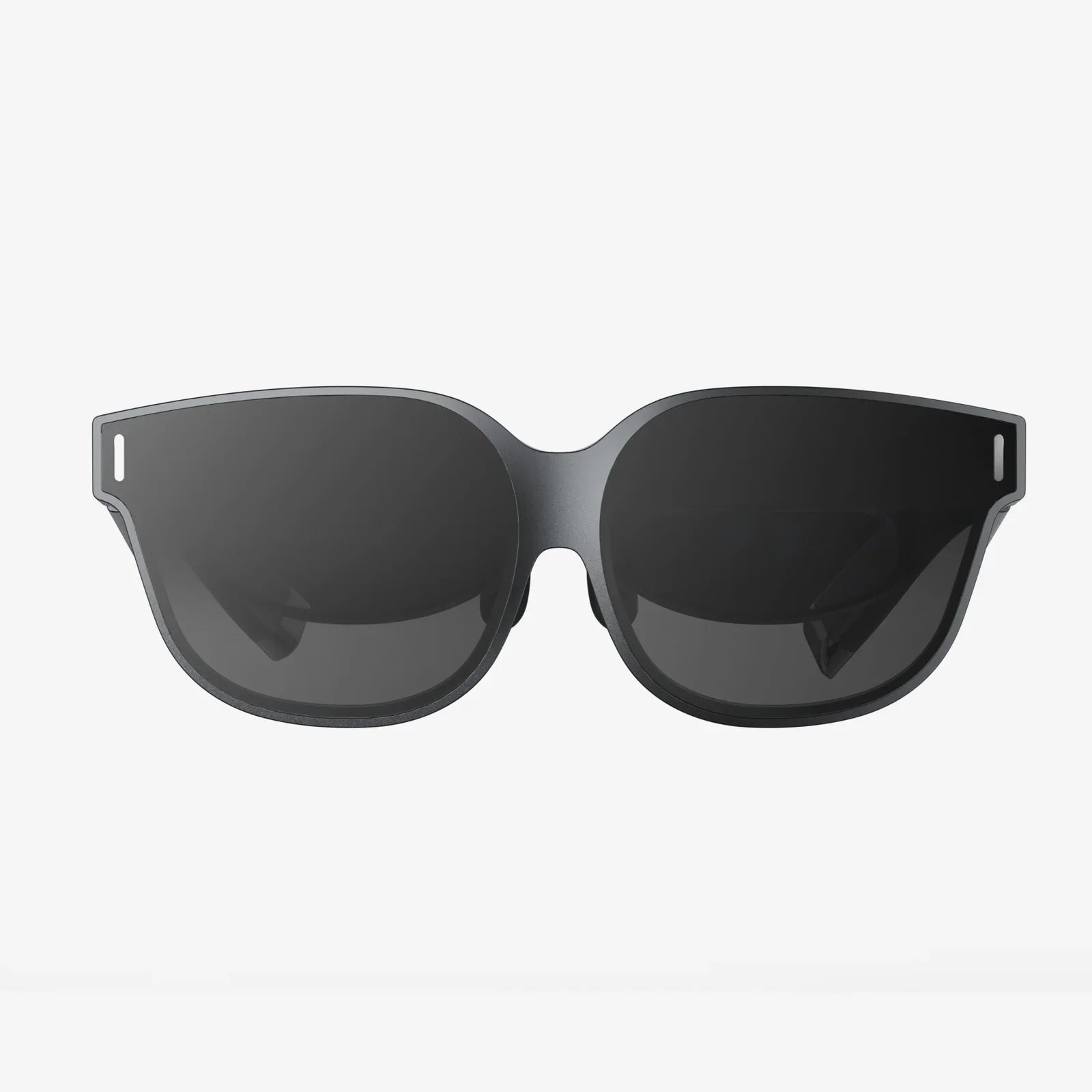
Imagine a world where the line between the digital and the physical blurs into irrelevance, where information and imagination are painted directly onto the canvas of reality. This is not a distant science fiction fantasy; it is the present and rapidly evolving domain of augmented reality. Unlike its fully immersive counterpart, virtual reality, AR does not seek to replace the world around us but to enhance it, supplementing our perception with a dynamic layer of computergenerated data. To truly understand its potential and mechanics, one must delve into the fundamental augmented reality definition characteristics that set it apart and fuel its revolutionary applications.
The Core Definition: More Than Meets the Eye
At its essence, augmented reality is an interactive experience that seamlessly blends elements of the real world environment with computergenerated perceptual information. The key term here is "augmented." It signifies an enhancement or addition, not a substitution. The real world remains the primary focus, while digital content—be it 3D models, text, images, or video—is superimposed upon it and, in advanced systems, anchored to specific points within it. This creates a unified, interactive view where the physical and the digital coexist and interact in real time.
A crucial distinction lies in its comparison to virtual reality. VR transports the user to a completely simulated environment, requiring a headset that occludes the real world. AR, conversely, starts with the real world and adds to it. This makes AR inherently more accessible and applicable to a vast array of everyday tasks, from navigating a city street to learning how to repair a complex engine. Another related technology, often confused with AR, is mixed reality. While some use the terms interchangeably, MR typically represents a more advanced form of AR where digital objects can truly interact with the physical environment—a virtual ball can bounce off a real table, for instance.
The Foundational Characteristics of AR
For an experience to be genuinely classified as augmented reality, it must possess three core characteristics. These pillars define its functionality and differentiate it from simpler technologies like image recognition or onscreen graphics.
1. The Combination of Real and Virtual Worlds
This is the most fundamental characteristic. AR systems must be capable of displaying both the realworld environment, usually captured via a camera, and the virtual elements simultaneously. The magic lies in the integration. It is not merely a pictureinpicture view; the digital content must be composited into the realworld view in a way that makes it appear part of that reality. This requires sophisticated rendering techniques that account for lighting, perspective, and occlusion (where real objects can block virtual ones, and viceversa in more advanced systems). The goal is perceptual fusion, convincing the user's brain that the digital entity is actually present in their physical space.
2. RealTime Interaction
Augmented reality is not a static, prerecorded experience. It is dynamic and responsive. The digital overlays must update in real time as the user moves through their environment or as the environment itself changes. This could mean a navigation arrow adjusting its position as you turn your head, a character hiding behind a real piece of furniture, or realtime data from a machine being displayed above it. This characteristic demands significant computational power for tasks like simultaneous localization and mapping, object tracking, and instant rendering. The latency—the delay between a user's movement and the update of the AR display—must be extremely low to maintain the illusion of cohesion and prevent user discomfort.
3. Accurate 3D Registration of Virtual and Real Objects
Perhaps the most technically challenging characteristic is registration. This refers to the precise alignment of virtual objects with the physical world. A virtual chair must appear to be sitting firmly on the real floor, not floating above it or sinking through it. It must maintain its position and perspective as the user moves around it. This requires a deep understanding of the environment's geometry. Advanced AR systems achieve this through a combination of computer vision, sensor fusion (using data from cameras, gyroscopes, accelerometers, and sometimes depth sensors), and complex algorithms that create a spatial map of the surroundings. The accuracy of this registration is what sells the illusion and makes AR practical for complex tasks like surgical guidance or architectural visualization.
The Technological Enablers Behind the Magic
These defining characteristics are made possible by a suite of hardware and software technologies working in concert.
Sensing and Perception
AR devices act as the eyes and ears of the system. Cameras capture the live video feed of the real world. Sensors—including accelerometers, gyroscopes, and magnetometers—track the device's position, orientation, and movement in space (a process known as 6 degrees of freedom tracking). More advanced systems incorporate LiDAR scanners or structured light projectors to create a depth map of the environment, providing crucial data for accurate occlusion and placement.
Processing and Computation
The raw data from sensors is meaningless without processing. This is handled by powerful processors and specialized algorithms. Computer vision algorithms analyze the camera feed to identify flat surfaces (planes), edges, feature points, and sometimes specific objects or images (markers). SLAM technology is the star player here, allowing the device to both map an unknown environment and localize itself within that map simultaneously. All this data is fused together to understand exactly where the device is and what is around it, forming the foundation for placing virtual content.
Display and Projection
Finally, the fused reality must be presented to the user. Several methods exist. Smartphone and Tablet Displays are the most common, using the device's screen as a viewport into the augmented world. Smart Glasses use optical seethrough or video seethrough systems to project images directly into the user's field of view, offering a more handsfree experience. HeadsUp Displays project information onto transparent surfaces like car windshields or helmet visors. ProjectionBased AR takes a different approach, using digital projectors to beam light directly onto physical objects, effectively "painting" them with digital information without the need for a headset.
Applications Transforming Industries
The power of AR is not theoretical; it is already driving tangible change across numerous sectors by leveraging its core characteristics.
Retail and ECommerce
AR has revolutionized online shopping by solving the "trybeforeyoubuy" problem. Customers can use their smartphones to see how a virtual sofa would look in their living room, how a new shade of paint would cover their walls, or how a pair of glasses would fit their face. This enhances consumer confidence, reduces return rates, and creates a more engaging shopping experience.
Industrial Manufacturing and Maintenance
In factories and workshops, AR is a powerful tool for efficiency and accuracy. Technicians wearing smart glasses can see digital work instructions overlaid directly on the machinery they are repairing. Assembly line workers can see virtual guides showing the exact placement of components, reducing errors. Remote experts can see what a field technician sees and annotate their view in real time to guide them through a complex procedure, saving time and travel costs.
Healthcare and Medicine
The precise registration characteristic of AR makes it invaluable in medicine. Surgeons can use AR overlays to visualize a patient' internal anatomy, such as tumors or blood vessels, directly on their body during an operation, improving precision and safety. Medical students can practice procedures on virtual patients superimposed onto mannequins. AR can also assist in physical therapy by guiding patients through exercises with correct form.
Education and Training
AR brings learning to life. Textbooks can be augmented with 3D models of the human heart, historical artifacts, or complex molecules that students can interact with from all angles. This moves learning from abstract to concrete, improving comprehension and retention. Training for dangerous jobs can be conducted safely in a augmented environment that mimics realworld hazards.
Navigation and Wayfinding
Instead of looking down at a 2D map on a phone, AR navigation apps overlay directional arrows and street names directly onto the live view from your camera. This allows for intuitive, headsup navigation. Indoors, this technology can help people find their gate in a massive airport or locate a specific product in a large supermarket.
Challenges and the Path Forward
Despite its promise, AR faces significant hurdles. Hardware limitations, such as battery life, processing power, and the field of view in smart glasses, remain a barrier to all-day use. Social acceptance and privacy concerns regarding always-on cameras and data collection need to be addressed. Creating high-quality, compelling content is expensive and requires specialized skills. Furthermore, a lack of universal standards can lead to fragmented experiences.
The future, however, is bright. The ongoing miniaturization of components, improvements in battery technology, and the development of more powerful, efficient processors will lead to smaller, lighter, and more capable AR wearables. The convergence of AR with artificial intelligence will create systems that not only understand the environment but can reason about it and generate context-aware content instantly. The concept of the spatial web—an internet overlayed on the real world—promises a future where digital information is as persistent and interactive as the physical objects around us.
The journey into this augmented age is already underway, transforming how we work, learn, shop, and interact with our surroundings. By understanding its foundational principles—the seamless blending of realities, the imperative of real-time interaction, and the precision of spatial registration—we can better anticipate its profound impact and actively shape a future where our digital and physical lives are not separate, but synergistically enhanced.
Share:
History of Augmented Reality: From Sci-Fi Fantasy to Everyday Reality
What's the Difference Between AR and VR? A Deep Dive into the Digital Frontier