


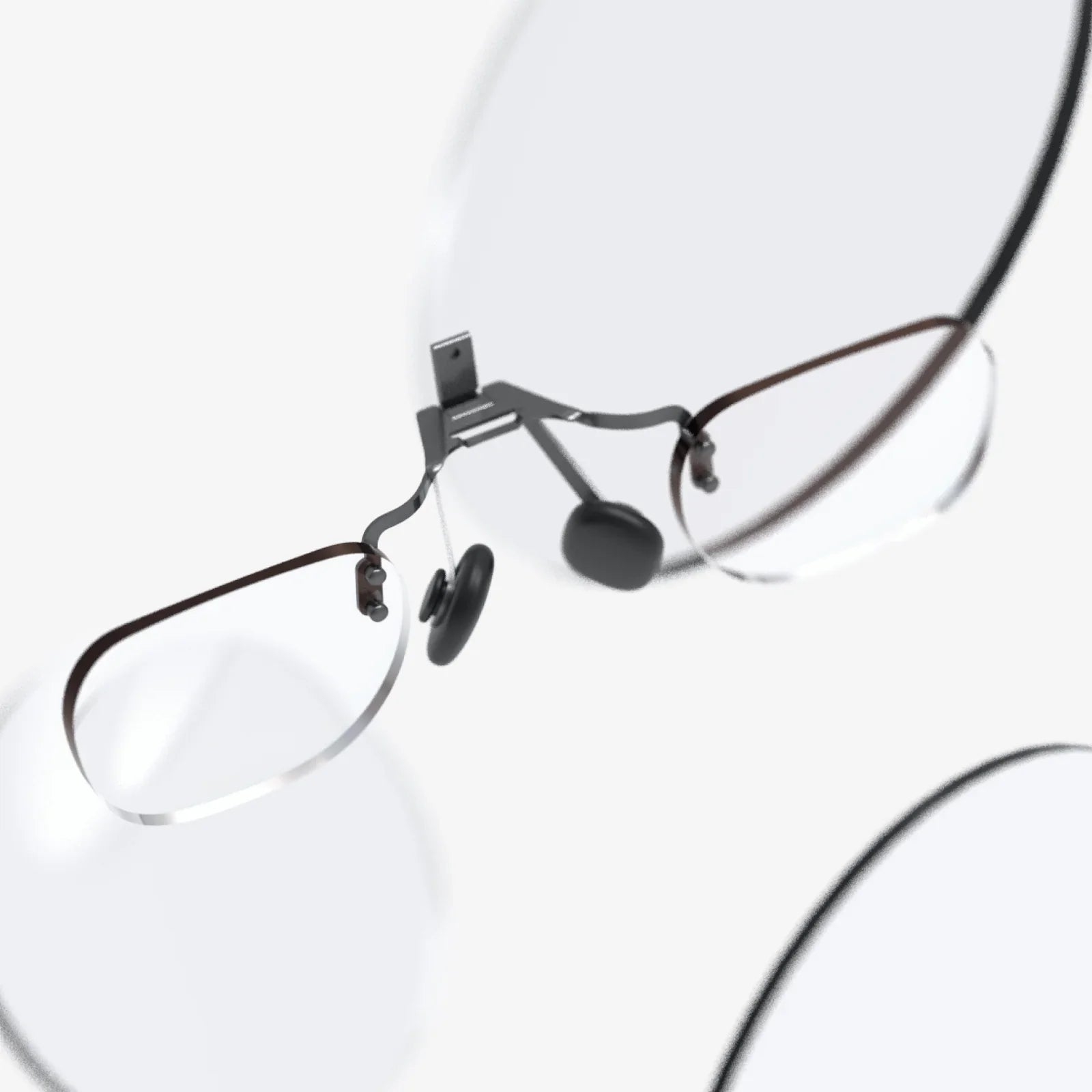
Imagine a world where digital information doesn't just live on a screen but is seamlessly woven into the fabric of your physical reality, where the line between what is real and what is computer-generated becomes beautifully blurred. This is the promise and the power of augmented reality, a technology that is rapidly moving from science fiction to an integral part of our daily lives. At its core, understanding the augmented reality definition computer is about unlocking a new way of interacting with both data and our environment, a paradigm shift as significant as the advent of the personal computer or the smartphone.
The Essence of Augmented Reality: Beyond the Buzzword
To truly grasp the augmented reality definition computer, we must first strip away the marketing hype and examine its fundamental principle. Unlike virtual reality (VR), which aims to replace the user's real-world environment with a completely simulated one, augmented reality (AR) enhances one's perception of reality by overlaying or composing digital information—images, text, data, 3D models, and animations—onto the user's view of the physical world. The key differentiator is that AR supplements reality, rather than completely replacing it. This digital overlay is interactive in real-time and is spatially registered in three dimensions, meaning it appears to coexist with objects in the real world. This creates a unique, composite view that augments the natural environment with a layer of computer-generated perceptual information.
Deconstructing the AR System: The Computer's Crucial Role
The magic of AR doesn't happen by accident; it is the result of a sophisticated symphony of hardware and software, with the computer acting as the conductor and brain. The augmented reality definition computer encompasses the entire processing unit responsible for this feat, which can be a powerful remote server, a dedicated headset, a smartphone, or even embedded systems in smart glasses.
Core Technological Components
Every AR system, regardless of its form factor, relies on a set of core components that work in concert:
- Sensors and Cameras: These are the eyes of the system. External-facing cameras capture the user's real-world environment in real-time. Depth sensors, like LiDAR (Light Detection and Ranging), measure the distance to surrounding objects, creating a detailed depth map of the space. Other sensors, including accelerometers, gyroscopes, and magnetometers (collectively known as an Inertial Measurement Unit or IMU), track the orientation, rotation, and movement of the user's head or device.
- Processing Unit: This is the computer itself. It is the central nervous system that takes all the data from the sensors and performs the immense computational heavy lifting. Its tasks include simultaneous localization and mapping (SLAM), which is the process of constructing and updating a map of an unknown environment while simultaneously tracking the device's location within it. It also handles image recognition, object tracking, and the rendering of the complex digital graphics that will be overlaid onto the real world.
- Projection and Display:
Once the computer has processed the environment and determined what digital content to display and where, it must present this composite view to the user. This is achieved through various display technologies:
- Optical See-Through: Used in many smart glasses, this method allows the user to look directly at the real world through transparent lenses or combiners. Digital images are then projected onto these surfaces, making them appear as part of the real world. This is often considered the purest form of AR visualization.
- Video See-Through: Commonly used in smartphone and tablet-based AR, this method uses the device's camera to capture a live video feed of the real world. The computer then processes this feed, composites the digital assets onto it, and displays the final augmented image on the device's screen. The user sees the world through the camera's lens, not their own eyes.
- Projection Mapping: This method directly projects digital light onto physical surfaces, effectively "painting" them with information. This can turn any surface into an interactive display without the need for the user to wear a headset or hold a device.
The Spectrum of Augmented Reality Experiences
Not all AR is created equal. The technology exists on a spectrum, defined by the level of integration and persistence of the digital content.
Marker-Based AR
This is one of the earliest and simplest forms of AR. It relies on a specific, predefined visual object or "marker"—often a QR code or a distinct image—to trigger the display of digital content. The device's camera identifies the marker, and the computer uses it as an anchor point to position and orient the digital overlay. This method is highly reliable and precise but is limited to the presence of the marker.
Markerless AR
This more advanced form uses the computer's SLAM and depth-sensing capabilities to understand and map the environment without needing a predefined marker. It can place digital objects on horizontal surfaces like tables and floors or anchor them to specific real-world locations using GPS (for outdoor AR). This allows for much more dynamic and flexible experiences, such as placing virtual furniture in your living room or battling digital creatures in your local park.
Projection-Based AR
As mentioned earlier, this technique projects synthetic light onto physical surfaces. It can be used for simple tasks like projecting a keyboard onto a desk or for complex artistic and architectural installations that change the appearance of large structures.
Superimposition-Based AR
This form partially or fully replaces the original view of an object with an augmented view of that same object. A prime example is in medicine, where a surgeon might use AR to see a reconstructed CT scan overlaid directly onto a patient's body during a procedure, or in mechanics, where a technician could see the internal components of a machine layered on top of its exterior casing.
Real-World Applications: Transforming Industries
The theoretical augmented reality definition computer comes to life through its practical applications, which are already revolutionizing numerous fields.
Healthcare and Medicine
AR is proving to be a game-changer in medicine. It is used for enhanced surgical planning and guidance, allowing surgeons to visualize anatomy in 3D before making an incision. During procedures, AR can project vital signs, ultrasound data, or 3D reconstructions of tumors directly into the surgeon's field of view. It is also revolutionizing medical training, enabling students to practice procedures on virtual patients and explore detailed, interactive 3D models of human anatomy.
Manufacturing, Engineering, and Maintenance
In complex industrial settings, AR provides workers with hands-free, contextual information. Technicians performing maintenance on a piece of equipment can see digital instructions and annotations overlaid on the machinery itself, highlighting exactly which bolt to turn or which part needs inspection. Engineers can use AR to visualize and interact with 3D prototypes at full scale before a single physical part is manufactured, streamlining the design process and reducing costly errors.
Retail and E-Commerce
The retail sector has eagerly adopted AR to bridge the gap between online and in-store shopping. Customers can use their smartphones to see how a piece of furniture would look in their home, how a new shade of paint would transform a room, or how a pair of glasses would fit their face before making a purchase. This "try before you buy" functionality reduces uncertainty and returns while enhancing customer engagement.
Education and Training
AR brings learning to life. Instead of reading about ancient Rome, students can take a virtual tour of the Colosseum through their tablet. Mechanics in training can learn to repair a complex engine by following digital instructions overlaid on a physical training model. This interactive, immersive form of learning improves knowledge retention and engagement.
Navigation and Wayfinding
AR is set to transform how we navigate. Instead of looking down at a 2D map on a phone screen, AR navigation apps can overlay directional arrows, street names, and points of interest directly onto a live view of the road ahead through your phone's camera or, eventually, your car's windshield or AR glasses. This creates a more intuitive and safer navigation experience.
The Future Trajectory and Challenges
The evolution of the augmented reality definition computer is far from complete. The future points toward even more seamless and powerful experiences, primarily driven by the development of lightweight, socially acceptable, and high-performance AR glasses that could one day replace the smartphone as our primary connected device. This future, often referred to as the "Spatial Web" or "Web 3.0," envisions a world where digital information is persistently anchored to locations and objects, accessible to anyone with AR capabilities.
However, this path is not without significant challenges. Technical hurdles include improving battery life, developing more powerful and efficient processors for on-device AI, creating displays with a wide field of view and high resolution, and perfecting the tracking and registration of digital objects in complex, dynamic environments. Beyond technology, serious questions around privacy, data security, and digital addiction must be addressed. The constant recording and analysis of our surroundings raise profound ethical concerns about surveillance and the ownership of our personal data.
From its humble beginnings as a complex laboratory concept to its current status as a transformative technology accessible through everyday devices, the journey of augmented reality is a testament to the incredible power of the computer to redefine human experience. It is a tool for enhancing perception, amplifying intellect, and bridging the gap between the abstract digital realm and the tangible physical world. The true potential of the augmented reality definition computer lies not in the technology itself, but in our human capacity to harness it for creativity, efficiency, and deeper understanding, fundamentally changing how we work, learn, play, and connect with the world around us.
The digital and physical worlds are on a collision course, and augmented reality is the lens through which we will witness and shape the spectacular merger. This isn't just about seeing a dinosaur in your living room; it's about fundamentally augmenting human capability, turning every blank space into a potential canvas and every task into an opportunity for enhanced understanding. The next time you look around, remember—you might be just one pair of glasses away from seeing the invisible layer of data that will define our future.
Share:
Augmented Reality on Mobile Devices: Reshaping Reality From Your Pocket
Best VR Headset If You Wear Glasses: The Ultimate Guide to a Clear & Comfortable Experience