


- by wangfred
Augmented Reality on Mobile Devices: Reshaping Reality From Your Pocket
- by wangfred
Imagine pointing your phone at a starlit sky and watching the constellations trace themselves out before your eyes, complete with their mythological stories. Envision walking through a foreign city and seeing translations and historical facts overlaid onto the buildings around you, as if the city itself were whispering its secrets. This is no longer the stuff of science fiction; it is the tangible, awe-inspiring power of augmented reality on mobile devices, a technological revolution that is quietly placing a lens of digital magic over our physical world, all from a device we already carry in our pockets.
At its essence, augmented reality (AR) is a technology that superimposes computer-generated perceptual information—be it images, sounds, text, or haptic feedback—onto the user's view of the real world. Unlike virtual reality (VR), which creates a completely immersive, digital environment that replaces the real one, AR enhances the real world by adding a digital layer to it. The goal is to create a cohesive experience where digital objects coexist and interact with the physical environment in real-time. Mobile devices have become the primary gateway to this experience due to their ubiquity, powerful sensors, and constant connectivity. They act as a portable window, a viewfinder through which we can perceive this enriched version of reality.
The ability to convincingly merge digital and physical realms requires a sophisticated orchestra of hardware and software working in perfect harmony. Modern smartphones are technological marvels packed with the necessary components to make AR possible.
The magic begins with a suite of advanced sensors. The high-resolution camera acts as the primary eye, continuously capturing the live video feed of your surroundings. The accelerometer and gyroscope work together to understand the phone's precise orientation, tilt, and rotation in three-dimensional space. This ensures that a digital dinosaur placed on your desk doesn't slide away when you move your phone but stays anchored to that spot. More advanced AR utilizes a time-of-flight (ToF) sensor or a LiDAR scanner, which fires out invisible laser beams to measure the exact distance to every object in the room. This creates a detailed depth map of the environment, allowing digital objects to accurately occlude behind real-world furniture or realistically sit on uneven surfaces.
The raw data from these sensors is meaningless without immense computational power. This is handled by the device's central processing unit (CPU) and, more importantly, its graphics processing unit (GPU), which is optimized for rendering complex 3D graphics smoothly. A specialized component known as a digital signal processor (DSP) helps with the heavy lifting of sensor data analysis. Modern mobile chipsets even include a dedicated AI processing unit (NPU) that accelerates machine learning tasks crucial for AR, such as object recognition and spatial understanding.
This is the true genius of AR software. Through complex algorithms and machine learning, the phone's system can perform simultaneous localization and mapping (SLAM). SLAM allows the device to both understand its own position in an unknown environment and simultaneously map the geometry of that environment. It identifies feature points—distinct edges, corners, and textures—and tracks them frame-by-frame to understand how the scene is changing. This is how your phone knows where the floor is to place a virtual character or how to pin a navigation arrow to a real-world street corner.
While playful social media filters brought AR to the masses, its applications extend far beyond entertainment, revolutionizing numerous sectors.
AR is solving one of online shopping's biggest drawbacks: the inability to try before you buy. Customers can now use their phones to see how a new sofa would look in their living room, accurately scaled to the room's dimensions. They can virtually "try on" glasses, makeup, or even see how a new shade of paint would look on their walls. This not only enhances consumer confidence and reduces return rates but also creates a far more engaging and interactive shopping experience.
Textbooks are being brought to life. Students can point their devices at a diagram of the human heart and watch a beating, interactive 3D model emerge from the page. History classes can explore ancient ruins rebuilt in their original glory right on their desks. Medical students can practice complex surgical procedures on detailed AR holograms, and mechanics can see repair instructions and part diagrams overlaid directly onto the engine they are working on. This kinesthetic, visual learning leads to dramatically improved comprehension and retention.
Turn-by-turn navigation is evolving from a flat 2D map to an immersive 3D guide. AR navigation apps overlay giant arrows and directions onto the live street view, making it intuitively obvious whether to turn left or right. In large, complex spaces like airports or shopping malls, AR can guide you to your specific gate or store. For tourists, pointing a phone at a monument can reveal its history, opening hours, and even user reviews, creating a deeply contextual and informative exploration tool.
In manufacturing and complex machinery maintenance, technicians can use AR glasses or tablets to see schematics, safety information, and step-by-step instructions overlaid onto the equipment they are servicing. This provides hands-free access to crucial information, reduces errors, and speeds up training and task completion. Remote experts can see what a field technician sees and annotate their view in real-time to guide them through a complex repair, saving time and travel costs.
Despite its promise, the widespread adoption of mobile AR faces significant hurdles. The immense processing power required can quickly drain battery life and cause devices to heat up. Consistent and accurate environmental mapping can be hampered by poor lighting, repetitive textures, or constantly changing scenes. There is also a lack of universal standards, leading to fragmented experiences across different devices and operating systems.
Beyond technical challenges, serious ethical questions arise. The concept of "augmented reality spam"—where our physical world could be littered with digital advertisements and unwanted virtual graffiti—is a genuine concern. The collection of vast amounts of visual and spatial data from users' environments raises profound privacy and security issues. Who owns the data of your living room's 3D map? Furthermore, the potential for deepfakes and malicious AR content designed to deceive or cause harm in the real world presents a new frontier for cybersecurity. Establishing clear ethical guidelines and robust security frameworks is paramount for the healthy development of this technology.
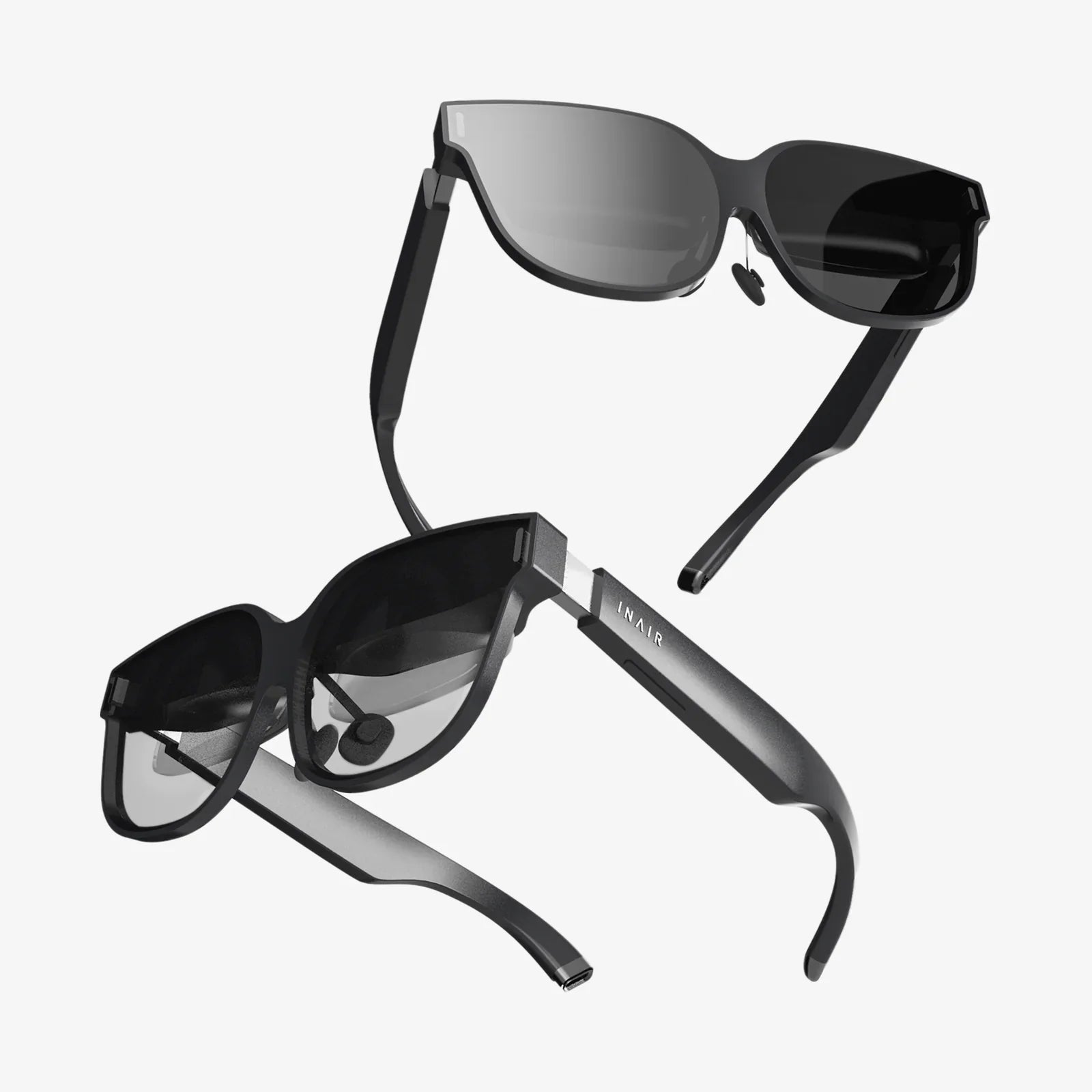
The future of mobile AR is moving towards a more seamless and continuous experience. The next evolutionary step is the development of advanced AR glasses that are socially acceptable, lightweight, and powerful. These will aim to free our hands and integrate the digital layer directly into our field of vision, moving the interface from a screen we hold to a display we wear.
This will be powered by the concept of the "permanent AR cloud," a persistent, shared 3D digital map of the world. This cloud will allow AR experiences to be anchored permanently to locations. A digital art installation in a park would be visible to everyone days later, and notes left on a virtual bulletin board for a specific location would persist for the next person to find. The convergence of AR with 5G and eventually 6G connectivity will offload intense processing to the cloud, enabling ever more complex and photorealistic experiences on thinner, lighter devices. Furthermore, the integration of artificial intelligence will make AR contexts more intelligent and predictive, anticipating our needs and providing information before we even ask for it.
We are standing at the precipice of a fundamental shift in how we interact with computing. The goal is no longer to look down at a device, but to have the device look out at the world with us, enhancing our perception, amplifying our abilities, and deepening our understanding of everything around us. The smartphone was merely the catalyst; the true destination is a world where the line between the digital and the physical becomes beautifully, and usefully, blurred.
The world you see through your phone is just a preview. As the technology matures and slips onto our faces and into our environments, the very fabric of our daily lives—how we work, learn, socialize, and perceive reality itself—will be rewoven with digital threads, creating a tapestry of experience limited only by our imagination. The revolution isn't coming; it's already in your hand, waiting for you to look up and see it.