


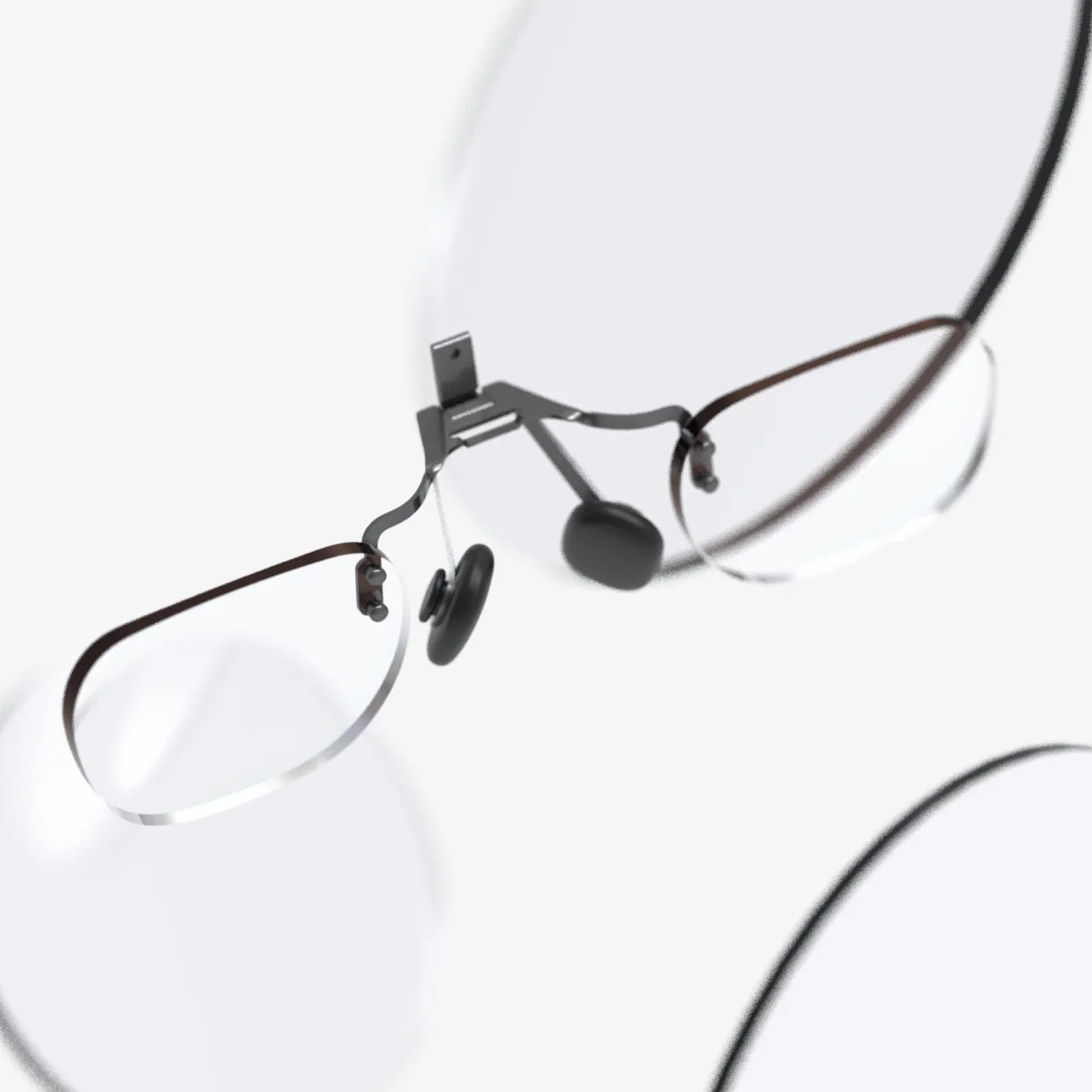
Imagine a world where the line between your thoughts and the digital realm dissolves, where information doesn't just appear on a screen but is woven seamlessly into the very fabric of your reality. This is not a distant sci-fi fantasy; it is the imminent future being crafted at the intersection of advanced optics and generative artificial intelligence. The next great leap in personal technology is taking shape not in our pockets, but on our faces, promising to redefine human-computer interaction in the most intimate way imaginable.
The Architectural Blueprint: More Than Just a Display
The foundation of this revolution lies in a sophisticated hardware architecture designed for ubiquitous, ambient computing. Unlike their predecessors, which often felt like clumsy headsets, future glasses will be indistinguishable from conventional eyewear—lightweight, stylish, and all-day comfortable. This form factor is critical for mass adoption, moving from a niche gadget to an indispensable life tool.
At their core will be a symphony of miniaturized sensors: high-resolution cameras, depth sensors, microphones, and inertial measurement units, all working in concert to perceive the world as the wearer does. These will be powered by ultra-low-power system-on-chips (SoCs) with dedicated neural processing units (NPUs) capable of running complex AI models locally, ensuring real-time responsiveness and safeguarding user privacy by minimizing data transmission to the cloud. The optical systems will represent a quantum leap, likely employing holographic waveguides or advanced laser beam scanning to project crisp, vibrant images onto the retina, creating the illusion of digital objects existing in real space.
The Generative AI Brain: From Passive Tool to Proactive Partner
Hardware is merely the skeleton; generative AI is the soul. This is what will transform smart glasses from a passive display into a context-aware, proactive intellectual partner. It will function as a perceptual cortex, continuously interpreting the vast, multimodal data stream from the sensors.
- Real-Time Visual and Auditory Synthesis: The AI will not just see and hear; it will understand. Point your gaze at a restaurant, and reviews and its menu, generated on the fly from aggregated data, overlay your view. A conversation in a foreign language is translated and subtitled in real-time, with the AI synthesizing a voice that matches the original speaker's tone and cadence. Look at a complex piece of machinery, and the AI highlights components and generates a step-by-step repair guide specific to your model.
- Hyper-Personalized Contextual Awareness: The system will learn your routines, preferences, and goals. Walking through a grocery store, it could generate a shopping list based on your meal-planning preferences and dietary restrictions, then guide you to each item, even suggesting a new recipe upon noticing a ripe avocado. In a meeting, it could discreetly provide biographical information about a new colleague or generate talking points based on the agenda, all by synthesizing information from your emails, calendar, and the web.
- The Ultimate Mnemonic Device: Forgetting a name or where you left your keys will become a relic of the past. The AI will act as a perfect, searchable memory, allowing you to ask, "What was the name of that red wine I enjoyed at the Italian place last month?" and instantly retrieving the moment from your visual history, generating the answer.
Revolutionizing Industries Through Augmented Practice
The professional implications are staggering. This technology will create a new paradigm of "augmented practice," where expertise is accelerated and enhanced.
- Healthcare: A surgeon could see critical vitals, MRI data, and anatomical guides overlaid directly on their patient during a procedure. A medical student could practice diagnoses on AI-generated patient simulations. A paramedic could receive AI-generated, step-by-step instructions for a rare emergency procedure.
- Engineering and Manufacturing: An engineer could visualize and interact with a 3D CAD model of a new component superimposed onto the physical assembly line, making adjustments in real-time. A technician could see wiring diagrams generated for the specific machine they are repairing, with the AI highlighting the next connection point.
- Education and Training: History students could witness AI-generated reenactments of historical events on the very ground they occurred. Chemistry students could safely manipulate virtual molecules that appear to sit on their lab bench. This moves learning from abstract to experiential.
Navigating the Inevitable Ethical Labyrinth
Such profound capability does not arrive without profound responsibility. The ethical challenges are arguably as complex as the technology itself.
- Privacy in a Perpetually Recorded World: The potential for constant, passive recording creates a societal minefield. Robust, unambiguous visual and auditory indicators must signal when recording is active. Legal frameworks must evolve to protect the privacy of non-consenting individuals who are incidentally captured by a wearer's gaze. Data must be encrypted and processed with a bias towards on-device, ephemeral handling.
- The Authenticity Crisis: When generative AI can alter or generate a perfect simulation of reality in real-time, how do we trust what we see? The potential for misinformation, manipulation, and deepfakes becomes an order of magnitude more dangerous when injected directly into a person's perception. Developing verifiable digital provenance standards will be crucial.
- Access and the Digital Divide: This technology risks creating a new, extreme chasm between the information-rich and the information-poor. If access to a real-time AI assistant becomes a key determinant of success in education and employment, equitable access models must be a priority from the outset.
- Cognitive Overload and Human Connection: There is a danger of sensory and informational overload, fracturing attention and reducing our ability to be present. We must design for augmentation, not replacement, ensuring the technology enhances human interaction rather than erecting a digital barrier between people.
The Human Dimension: Redefining Connection and Memory
Beyond utility, this technology will deeply reshape personal human experiences. Imagine a parent being able to re-live a cherished moment from their child's first birthday through their own eyes, not just a video. A grandparent with fading eyesight could have their vision subtly enhanced by the AI, clarifying faces and text. For those with memory-related illnesses, a digitally-augmented memory could provide a crucial tether to identity and loved ones.
Social interaction will be transformed. Conversations could be enhanced with real-time fact-checking or language translation, fostering deeper cross-cultural understanding. But it also raises questions: if everyone is subtly being fed conversational prompts or information about the person they are talking to, what happens to the spontaneity and authenticity of human connection? The design of these systems must prioritize empathy and subtlety, acting as a gentle guide rather than an overbearing director.
The journey to perfecting this technology is fraught with immense technical and ethical hurdles, from battery life and social acceptance to building AI systems that are truly trustworthy. Yet, the trajectory is clear. We are moving towards a future where our most powerful tool is not a device we look down at, but one that looks out at the world with us, understanding our context and intent to help us learn, create, and connect in ways previously confined to our imagination. The age of staring at a rectangle is ending; the age of living within an intelligent, responsive reality is about to begin.
Share:
First AI Powered Glasses: The Dawn of a New Invisible Computing Era
Augmented Reality on Mobile Devices: Reshaping Reality From Your Pocket