


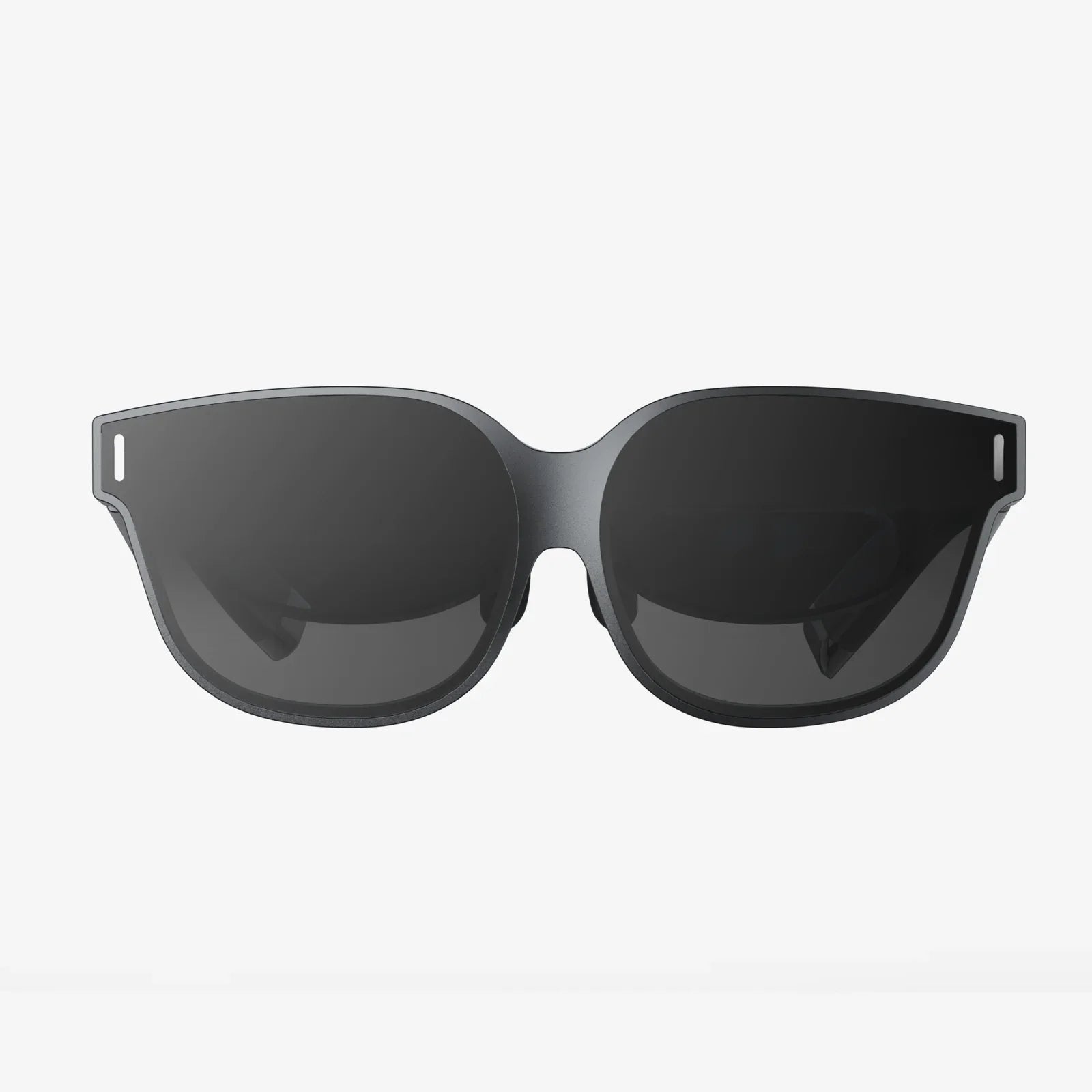
Imagine a world where the digital and the physical are not separate realms but a single, unified experience. A world where information is not something you search for on a screen but is seamlessly integrated into your immediate environment, accessible with a glance. This is not a distant sci-fi fantasy; it is the promise and the present reality of augmented reality. This technology, often whispered about in tech circles and glimpsed in viral social media filters, is poised to fundamentally alter our perception of reality itself. But what exactly is it? This comprehensive guide will peel back the layers of the augmented reality definition explanation, moving beyond the buzzwords to explore its core mechanics, its fascinating history, and its profound potential to revolutionize everything from how we work to how we play.
Deconstructing the Core Concept: More Than a Filter
At its most fundamental level, the augmented reality definition explanation is deceptively simple: it is a technology that superimposes a computer-generated image, video, or information onto a user's view of the real world. The key differentiator from virtual reality (VR) is that AR does not replace your surroundings; it enhances them. It adds a digital layer, or "augmentation," onto the existing physical environment, creating a composite view that exists in real-time.
This process relies on a sophisticated technological ballet. A typical AR system requires several key components to function:
- Sensors and Cameras: These act as the eyes of the system, continuously scanning the physical environment. They gather data about the user's surroundings, including depth, spatial relationships, and objects. This data is the raw material upon which the digital world is built.
- Processing: This is the brain. The raw data from the sensors is fed into a processor—often a powerful mobile chipset—that interprets the environment. It performs complex tasks like simultaneous localization and mapping (SLAM), which essentially creates a real-time 3D map of the space and understands the device's position within it.
- Projection or Display: This is the output, the mechanism that renders the digital content for the user to see. This can be achieved through various means, from the screen of a smartphone or tablet to more advanced head-mounted displays (HMDs) like smart glasses, which project images directly onto the user's retina or a transparent lens.
- Software and Algorithms: This is the nervous system that connects everything. The software, powered by advanced algorithms for computer vision and object recognition, is what makes sense of the sensor data and dictates what digital content is generated, where it is placed, and how it behaves.
A Spectrum of Augmentation: Marker-Based vs. Markerless AR
Not all AR experiences are created equal. The technology exists on a spectrum, primarily defined by how the digital content is anchored to the physical world. Understanding this distinction is crucial to a complete augmented reality definition explanation.
Marker-Based AR (Recognition-Based): This is often considered the simpler, more traditional form. It relies on a specific, predefined visual object—a "marker"—to trigger the digital overlay. This marker is typically a high-contrast, distinct image, like a QR code or a specialized symbol. The device's camera identifies this unique pattern, and the software uses it as a fixed anchor point to position and display the digital content. The classic example is pointing your phone at a movie poster and having a trailer play directly over the poster. It is highly reliable and precise but limited to environments where these specific markers are present.
Markerless AR (Location-Based or Projection-Based): This represents the more advanced and flexible future of AR. As the name implies, it does not require a physical marker. Instead, it uses other technologies to understand and interact with the environment.
- Location-Based AR: This variant uses GPS, digital compasses, and accelerometers in a smartphone to determine the user's location and orientation. It then overlays information relevant to that specific point in space. The wildly popular game that had millions chasing digital creatures in public parks is a prime example, overlaying Pokémon onto a real-world map.
- Projection-Based AR: This method projects artificial light onto physical surfaces, creating interactive displays. It can project a virtual keyboard onto a table or create complex holographic-like images that users can interact with. It is less common in consumer devices but has significant industrial applications.
- Superimposition-Based AR: This is perhaps the most sophisticated form. It uses object recognition to partially or fully replace the original view of an object with an augmented one. For instance, a furniture app can recognize your empty living room and allow you to see how a new digital sofa would look in that exact spot, replacing the empty space. This requires immense processing power and advanced computer vision.
The Invisible Engine: How AR Truly Sees the World
The magic of placing a digital dinosaur in your living room that stays rooted to the spot as you walk around it is made possible by a suite of technologies working in concert. The core enabler of modern, markerless AR is a concept known as Simultaneous Localization and Mapping (SLAM).
Imagine you are blindfolded and placed in an unknown room. Your task is to create a map of that room and simultaneously figure out where you are within it. You might stretch out your hands, feel the walls, and take small, measured steps. With each touch and step, you build a mental model of the room and your position in it. This is essentially what the SLAM algorithm does in real-time. Using data from cameras, inertial measurement units (IMUs), and other sensors, the device constructs a map of the unknown environment while simultaneously tracking its own location within that map. This allows digital objects to have persistent location and depth, obeying the laws of physics within the AR space.
Complementing SLAM is Depth Tracking. This is achieved through various methods, such as using time-of-flight sensors that measure how long it takes for light to bounce back from surfaces to calculate distance, or structured light systems that project a pattern of light onto a surface and use the distortion of that pattern to understand depth. This is why digital objects can appear to be behind your real-world coffee table or in front of your bookshelf.
Finally, Object Recognition is the layer of intelligence that allows AR to be context-aware. Powered by machine learning models, the software can be trained to identify specific objects—a chair, a car engine, a human face. Once an object is recognized, the AR system can attach relevant information to it or transform it entirely, moving from generic augmentation to targeted, intelligent interaction.
A Journey Through Time: The History of Augmented Reality
While it feels like a technology of the 21st century, the conceptual roots of AR are surprisingly deep. A thorough augmented reality definition explanation must acknowledge its long gestation period.
The term "augmented reality" is widely credited to former Boeing researcher Tom Caudell in 1990, who used it to describe a digital display system that guided workers in assembling electrical wires for aircraft. However, the idea was born much earlier. In 1968, computer scientist Ivan Sutherland, with the help of his student Bob Sproull, created "The Sword of Damocles," which is widely considered the first head-mounted display system. It was a terrifying and primitive apparatus so heavy it had to be suspended from the ceiling, and it displayed simple wireframe graphics. But it laid the foundational principle: a see-through display that superimposed computer-generated graphics onto the user's physical view.
The 1990s and early 2000s saw AR confined primarily to research labs and high-cost industrial, military, and medical applications. It was a tool for experts, not the public. The catalyst for its mainstream explosion was the proliferation of powerful smartphones. The release of smartphones with high-resolution cameras, fast processors, GPS, and accelerometers in the late 2000s provided the perfect, ubiquitous hardware platform for AR experiences. Suddenly, developers could create AR apps for millions of users without requiring them to buy specialized equipment.
This democratization accelerated with the release of software development kits (SDKs) from major tech companies, which gave developers the tools to easily incorporate AR into their apps. The viral success of a certain location-based AR game in 2016 was a cultural watershed moment, proving to the world that AR was not just a gimmick but a technology capable of capturing the global imagination.
Transforming Industries: The Practical Power of AR
Beyond social media filters and games, AR is demonstrating immense practical value across a wide range of sectors. Its ability to deliver information contextually and visually is solving real-world problems.
Healthcare and Medicine: Surgeons are using AR headsets to overlay critical information—such as a patient's vital signs, 3D models of anatomy, or guidance for incisions—directly into their field of view during operations, keeping their focus on the patient. Medical students use AR to practice procedures on digital holograms, and patients can use AR visualizations to better understand their conditions and treatments.
Manufacturing and Maintenance: This is one of the most mature applications. Field technicians can wear AR glasses to see step-by-step repair instructions overlaid onto the complex machinery they are fixing. They can receive remote guidance from an expert who can draw annotations directly into their field of view. This reduces errors, cuts training time, and improves efficiency dramatically.
Retail and E-Commerce: AR is revolutionizing the shopping experience. Customers can use their phones to see how a new piece of furniture would look and fit in their home before buying it. Cosmetic companies offer virtual try-on for makeup and glasses. This "try before you buy" digital experience reduces purchase anxiety and lowers return rates.
Education and Training: Textbooks become interactive portals. Students can point their device at a diagram of the solar system and watch the planets orbit in their classroom, or dissect a virtual frog. AR brings abstract concepts to life, creating immersive and engaging learning experiences that cater to different learning styles.
Navigation: Imagine walking through a new city and having directional arrows and points of interest painted onto the sidewalk in front of you, rather than having to constantly look down at a phone. AR-powered navigation systems for cars can project turn-by-turn directions and hazard warnings directly onto the windshield, making driving safer and more intuitive.
Challenges and the Road Ahead: The Future of AR
Despite its rapid progress, AR technology still faces significant hurdles on its path to ubiquity. A complete augmented reality definition explanation must address these challenges.
Hardware Limitations: For AR to become a all-day technology, the hardware needs to evolve. Current smart glasses often struggle with a trade-off between power, battery life, field of view, and form factor. The ideal device—one that is as lightweight and socially acceptable as regular glasses but with the computational power of a high-end smartphone—is still on the horizon. Advances in micro-displays, battery technology, and 5G connectivity (for offloading processing to the cloud) are critical.
Social and Privacy Concerns: The always-on, data-gathering nature of AR cameras and sensors raises profound privacy questions. How is the visual data being collected and used? Who has access to it? Furthermore, the social etiquette of wearing cameras on your face and interacting with a digital world in public spaces is yet to be established. There is a risk of creating a new digital divide and further blurring the lines between public and private life.
User Experience and Content Creation: Designing intuitive interfaces for a 3D, spatial computing environment is a new frontier for designers. How do users interact with floating menus and digital objects? Furthermore, creating a rich and useful AR ecosystem requires a massive amount of 3D content and context-aware information, which is a significant undertaking.
The future, however, is dazzlingly bright. The long-term vision is often referred to as the "Metaverse" or the "Mirrorworld"—a persistent, shared, and interconnected layer of AR that blankets the physical planet. In this future, your AR glasses will be your constant companion, providing contextual information, translating signs in real-time, connecting you with persistent digital art installations, and allowing you to collaborate with holograms of colleagues from across the globe as if they were in the same room. It will be a world where the digital and physical are inextricably fused, creating new forms of art, commerce, and human connection that we are only beginning to imagine.
The line between what is real and what is digital is not just blurring; it is being deliberately and creatively redrawn. This is the true essence of the augmented reality definition explanation: a fundamental shift in human-computer interaction that promises to weave the informational fabric of the digital world directly into the tapestry of our physical lives. The device in your pocket or the glasses on the horizon are not merely screens; they are windows into this new, augmented layer of existence, waiting for you to look through and explore the infinite possibilities layered atop your own world.
Share:
Virtual & Augmented Reality VR AR Chicago: The Heartland's Metaverse Revolution
Top Selling Augmented Reality Glasses Are Redefining Our Digital and Physical Worlds