


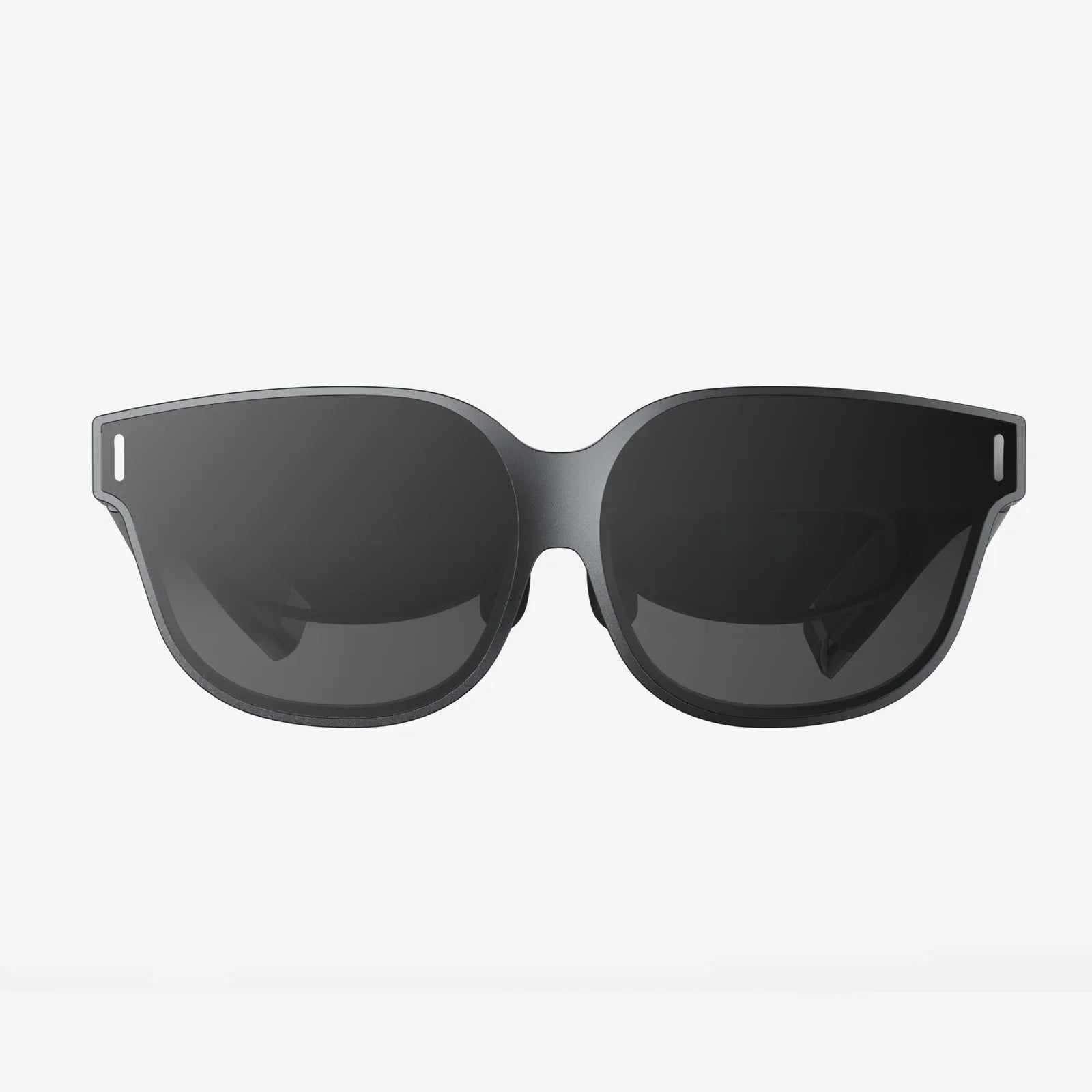
Imagine slipping on a headset and stepping onto the floor of the Chicago Board of Trade, not as a spectator, but as a trader in the roaring 1920s, the cacophony of shouts and hand signals swirling around you. Or perhaps you point your phone at the iconic Bean in Millennium Park and watch as a historical overlay reveals the early blueprints of Frank Gehry’s Pritzker Pavilion spring to life. This is not a glimpse into a distant future; it is the burgeoning reality of virtual and augmented reality in Chicago today. The city, renowned for its architectural prowess, financial muscle, and gritty industrial spirit, is quietly but decisively positioning itself as a critical epicenter for the VR and AR revolution, building the next digital frontier from the ground up.
The Foundation: Why Chicago is a Natural Hub for XR
Chicago's ascent in the immersive technology sector is no accident. It is the result of a powerful convergence of its inherent strengths. Unlike coastal tech hubs often focused on consumer applications, Chicago's economy is rooted in heavyweight industries like manufacturing, logistics, finance, healthcare, and professional services. These sectors are now prime candidates for the practical, ROI-driven applications of VR and AR, collectively known as Extended Reality (XR).
The city's world-class universities, including the University of Illinois at Chicago's Electronic Visualization Lab (a pioneer in CAVE environments), Northwestern University, and the Illinois Institute of Technology, provide a steady pipeline of talent in computer science, design, and engineering. This academic backbone is crucial for fueling innovation and research. Furthermore, Chicago's central location and status as a national transportation hub make it an ideal testbed for enterprise XR solutions that need to integrate with physical supply chains and distributed workforces.
Beyond Gaming: Enterprise and Industrial Applications
While entertainment is a driver of consumer adoption, Chicago's VR AR scene is dominated by powerful enterprise use cases that solve real-world problems.
Transforming Architecture, Engineering, and Construction (AEC)
In a city that gave the world the skyscraper, it's fitting that XR is revolutionizing how buildings are designed and constructed. Firms are using virtual reality to conduct immersive client walkthroughs of unbuilt structures, allowing for design changes before a single foundation is poured. This eliminates costly errors and enhances client communication. Augmented reality, using tablets or smart glasses, is deployed on construction sites, overlaying BIM (Building Information Modeling) data onto the physical world. A worker can look at a blank wall and see the precise path for electrical conduits or plumbing, drastically improving accuracy and safety.
Revolutionizing Healthcare and Medical Training
Chicago's esteemed medical institutions are leveraging XR for breakthrough applications. Surgeons use VRAR
Supercharging Manufacturing and Logistics
The region's strong manufacturing base is adopting XR for training, assembly, and remote assistance. A factory worker wearing AR glasses can see digital instructions overlaid on a complex machine they are assembling, reducing training time and errors. When a piece of equipment breaks down, a remote expert can see what the on-site technician sees and annotate their field of view with arrows and notes to guide the repair, saving thousands in travel costs and downtime. This application of augmented reality is particularly valuable for Chicago's vast network of logistics and distribution centers.
The Ecosystem: Startups, Studios, and Community
The growth of VR AR in Chicago is fueled by a vibrant and collaborative ecosystem. A multitude of startups and dedicated studios are pushing the boundaries of what's possible.
- Content Creation Powerhouses: Numerous studios specialize in creating immersive experiences for clients, from virtual property tours for real estate giants to interactive training modules for Fortune 500 companies.
- Software and Platform Innovation: Startups are building the underlying tools and platforms that power XR, focusing on cloud-based rendering, spatial data management, and no-code creation tools to make the technology more accessible.
- Hardware Agnosticism: The Chicago approach is typically pragmatic. The focus is on developing applications that solve problems, regardless of the specific headset or device, ensuring solutions are scalable and adaptable.
This community is nurtured by regular meetups, conferences, and organizations that connect developers, artists, entrepreneurs, and corporate innovators. These gatherings are melting pots of ideas, fostering the cross-pollination that leads to the next great breakthrough.
Immersive Art and Storytelling: A New Cultural Frontier
Beyond the corporate world, Chicago's rich artistic soul is finding profound expression through XR. The city's storied history in improv, theater, and fine art is translating into breathtaking immersive experiences. Artists are using virtual reality to create empathetic narratives that transport viewers into entirely new perspectives, from the journey of a refugee to the inner workings of a biological cell. Museums and cultural institutions are experimenting with augmented reality to add new layers of context and engagement to their exhibits, turning passive observation into an active, educational discovery. This fusion of cutting-edge technology and deep artistic tradition is creating a unique cultural signature for Chicago.
Challenges and the Road Ahead
The path forward is not without its obstacles. Access to high-end hardware remains a barrier for some, and the industry continues to grapple with challenges related to user interface design, connectivity (especially for data-intensive AR), and creating comfortable, long-duration experiences. The "killer app" for mass consumer AR, akin to the spreadsheet for the PC, is still evolving.
However, Chicago is uniquely equipped to tackle these challenges. The city's collaborative spirit, combined with its deep industry expertise, means that solutions are being developed hand-in-hand with the end-users who need them most. The focus is on utility, on creating XR tools that are as indispensable in a boardroom, operating room, or factory floor as a laptop or smartphone is today.
The future of VR AR in Chicago is one of convergence. We will see the lines between the physical and digital worlds blur even further. The digital twins of entire cities, including Chicago itself, will be used for urban planning, disaster preparedness, and tourism. The metaverse, in its most practical sense, will begin as a series of interconnected enterprise and industrial digital spaces where collaboration and design happen in real-time, across continents. And Chicago, with its central role in the global economy and its burgeoning XR ecosystem, is poised to be a primary architect of this new reality.
From the trading floors to the operating rooms, from the construction sites to the art galleries, a quiet transformation is underway. Chicago is not just adopting virtual and augmented reality; it is refining it, applying its trademark no-nonsense midwestern ingenuity to build immersive experiences with purpose and power. The next time you walk down LaSalle Street or gaze up at the Willis Tower, remember—the city's next great innovation might not be made of steel and glass, but of pixels and polygons, visible only to those who know where to look.
Share:
Best Virtual Office: The Ultimate Guide to Professionalism, Flexibility, and Growth
Augmented Reality Definition Explanation: A Comprehensive Guide to the Digital Overlay