


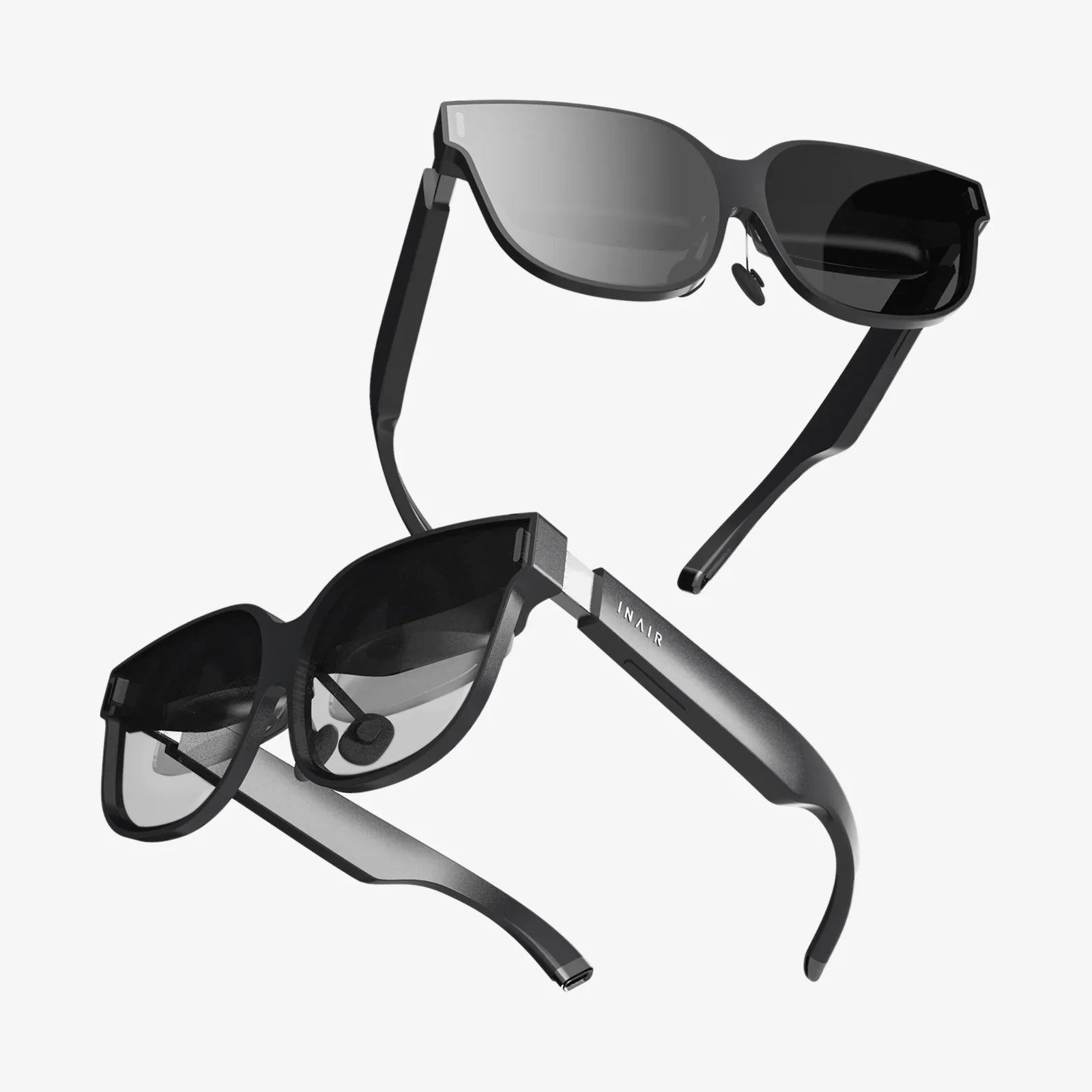
- by wangfred
Augmented Reality Design Examples That Are Reshaping Our World
- by wangfred
Imagine a world where digital information doesn't just live on a screen but is seamlessly woven into the fabric of your everyday life, where the line between the physical and the virtual becomes beautifully blurred. This is the promise of augmented reality (AR), a technology that is rapidly evolving from a futuristic concept into a powerful design tool. Across the globe, visionary designers and developers are creating breathtaking augmented reality design examples that are not only captivating users but are also solving real-world problems, enhancing human capabilities, and fundamentally changing how we interact with our environment. The most compelling AR experiences feel less like a piece of technology and more like a natural extension of our own perception, and it is through these innovative design examples that we can truly glimpse the future.
Before diving into specific applications, it's crucial to understand the core principles that separate a gimmicky AR filter from a truly transformative experience. Successful AR design is not merely about overlaying 3D models onto a camera feed; it's about creating a coherent and intuitive dialogue between the user, the digital object, and the physical space.
Contextual Awareness: The most powerful AR experiences are deeply context-aware. The digital content must understand and respond to its environment. This means accounting for lighting, spatial geometry, surfaces, and even acoustics. An AR character should be able to walk behind a real-world couch, not float on top of it. Its shadow should fall naturally based on the room's light sources. This level of fidelity is what sells the illusion and creates a sense of true presence.
User-Centric Interaction: AR interaction must be intuitive and respectful of the user's physical space. Designers are moving away from complex menus and embracing gesture-based controls, voice commands, and even gaze tracking. The goal is to minimize cognitive load, allowing the user to focus on the experience itself rather than on how to control it. The interaction should feel magical—pinching the air to resize a virtual piece of furniture or using a simple hand wave to navigate a data visualization.
Spatial Audio: Sound is half the experience in creating immersion. Spatial audio, which makes sound seem like it's emanating from a specific point in the 3D space, is a critical design component. It provides cues, guides user attention, and deepens the emotional impact of the experience. A virtual dinosaur roaring behind the user should sound like it's actually behind them, completing the sensory illusion.
Performance and Accessibility: A beautifully designed AR experience is useless if it causes a device to overheat or drains its battery in minutes. Great AR design optimizes for performance, ensuring smooth frame rates and minimal latency. Furthermore, designers must consider accessibility, ensuring that experiences can be enjoyed by people with different visual, auditory, or motor abilities.
One of the most mature and impactful areas for augmented reality design examples is the retail sector. AR is solving a fundamental problem of online shopping: the inability to try before you buy. This has led to a dramatic reduction in return rates and a significant increase in consumer confidence.
Virtual Try-On for Apparel and Accessories: Sophisticated AR applications now allow users to see how glasses, hats, makeup, and even clothing will look on them in real-time. Using advanced facial mapping and body tracking, these applications can accurately simulate the fit, drape, and style of a product. Users can spin around, see how an item looks from all angles, and make more informed purchasing decisions from the comfort of their homes. This technology has moved beyond simple overlays to include realistic fabric simulation and dynamic lighting matching.
Furniture and Home Decor Placement: Perhaps the most famous category of AR design examples is virtual furniture placement. Users can now project true-to-scale 3D models of sofas, tables, lamps, and art directly into their living spaces. They can walk around the virtual object, see how it looks from different angles, and ensure it fits perfectly in the intended space, both in terms of dimensions and aesthetic. This eliminates the dreaded guesswork of online furniture shopping and has become a standard expectation for many home goods retailers.
Interactive Product Previews: For products that are complex to assemble or use, AR provides interactive 3D manuals and previews. Instead of looking at static images on a website, a user can place a virtual model of a grill, a tent, or a piece of exercise equipment in their garden and interact with it—opening doors, extending parts, and understanding its functionality in a deeply engaging way.
AR is proving to be a powerful pedagogical tool, moving learning from abstract to concrete. By overlaying information onto the real world, complex concepts become easier to grasp and remember.
Interactive Learning Materials: Textbooks are being brought to life with AR. A student studying anatomy can point their device at a diagram of the human heart and see a beating, interactive 3D model spring forth from the page. They can rotate it, zoom in to see layers of musculature and valves, and gain a spatial understanding that a 2D image could never provide. Similarly, history students can explore historical sites or ancient civilizations reconstructed over their current environment.
Complex Skill Training and Simulation:
This application is vital in fields like medicine, engineering, and manufacturing. Medical students can practice surgical procedures on virtual patients superimposed onto a physical mannequin, receiving real-time feedback without any risk. Mechanics can look at an engine and see AR arrows and instructions pointing to specific components, streamlining the repair process. These design examples focus on overlaying critical information directly onto the task at hand, reducing errors and accelerating the learning curve. On factory floors and construction sites, AR is moving from a novelty to a core operational technology, a phenomenon often referred to as the Industrial Metaverse. Assembly, Maintenance, and Repair Guidance: Technicians wearing AR smart glasses can have digital work instructions, schematics, and safety information superimposed onto their field of view as they work on complex machinery. An arrow can point to the exact bolt that needs tightening, a virtual torque wrench can display the required pressure, and a remote expert can see what the technician sees and draw annotations directly into their reality to guide them. This hands-free access to information drastically improves efficiency, reduces downtime, and enhances safety. Architectural and Interior Design Visualization: For architects and clients alike, AR provides an unparalleled tool for visualization. Instead of trying to interpret a 2D blueprint, an architect can walk a client through a full-scale, virtual model of a building projected onto the empty construction site. Interior designers can test different layouts, materials, and lighting schemes in real-time within the actual space. This collaborative design process ensures everyone is aligned before a single brick is laid, saving immense time and resources. AR is set to change how we navigate our cities and access public information, turning the entire world into an interactive interface. Context-Aware Wayfinding: Forget looking down at a blue dot on a map. AR navigation apps can overlay giant, floating arrows onto the real world, guiding you seamlessly through a complex airport, a sprawling university campus, or a new city. The directions are contextual—"turn left at this specific coffee shop"—making navigation incredibly intuitive. This technology is also being developed for in-car heads-up displays (HUDs), projecting turn-by-turn directions and hazard warnings directly onto the windshield. Interactive Tourism and Cultural Heritage: Imagine pointing your phone at a historic monument and seeing it digitally restored to its former glory, with historical figures reenacting events that took place there. AR can provide rich, layered storytelling experiences at museums, historical sites, and art galleries. Visitors can access additional information, 3D reconstructions, and multimedia content simply by pointing their device at an exhibit, creating a deeply personalized and educational tour. The trajectory of AR design is clear: it is moving towards greater ubiquity and invisibility. The ultimate goal is for the technology to fade into the background, leaving only the magic of the experience. Future advancements in wearable technology, like more socially acceptable AR glasses, will be a major catalyst. This will shift AR from a conscious activity on a smartphone to a constant, ambient layer of information integrated into our daily perception of the world. We will see the rise of more collaborative and multi-user AR experiences, where digital objects are persistently anchored in a location, allowing multiple people to see and interact with them simultaneously, from their own perspectives. Furthermore, the integration of Artificial Intelligence will make AR systems smarter and more predictive, anticipating user needs and generating context-aware content on the fly. The most exciting augmented reality design examples are those we have yet to imagine. They will emerge as the technology becomes more powerful, affordable, and seamlessly integrated into our lives. The role of the designer will be paramount—not just as a creator of digital objects, but as an architect of new realities. They will bear the responsibility of designing experiences that are not only functional and beautiful but also ethical, inclusive, and human-centric. The canvas is no longer a screen; it is the world itself, and we are only just beginning to paint on it. From trying on a pair of virtual sneakers to performing a complex surgical procedure guided by digital overlays, these augmented reality design examples are not just technological demonstrations; they are proof of a fundamental shift in human-computer interaction. They offer a glimpse into a future where our digital and physical realities are no longer separate realms but a single, integrated continuum, empowering us to learn, work, shop, and explore our world in ways we once thought were confined to science fiction. The next time you look at your surroundings, remember—with the right design, almost anything you can imagine can be added to the view.Enhancing Industrial and Manufacturing Workflows
Reimagining Navigation and Public Information
The Future of AR Design: Towards a Pervasive and Invisible Interface
Share:
Forms of Augmented Reality: A Deep Dive into the Digital Overlay Reshaping Our World
VR Headset Glasses Compatibility: The Ultimate Guide to a Clear Virtual Reality