


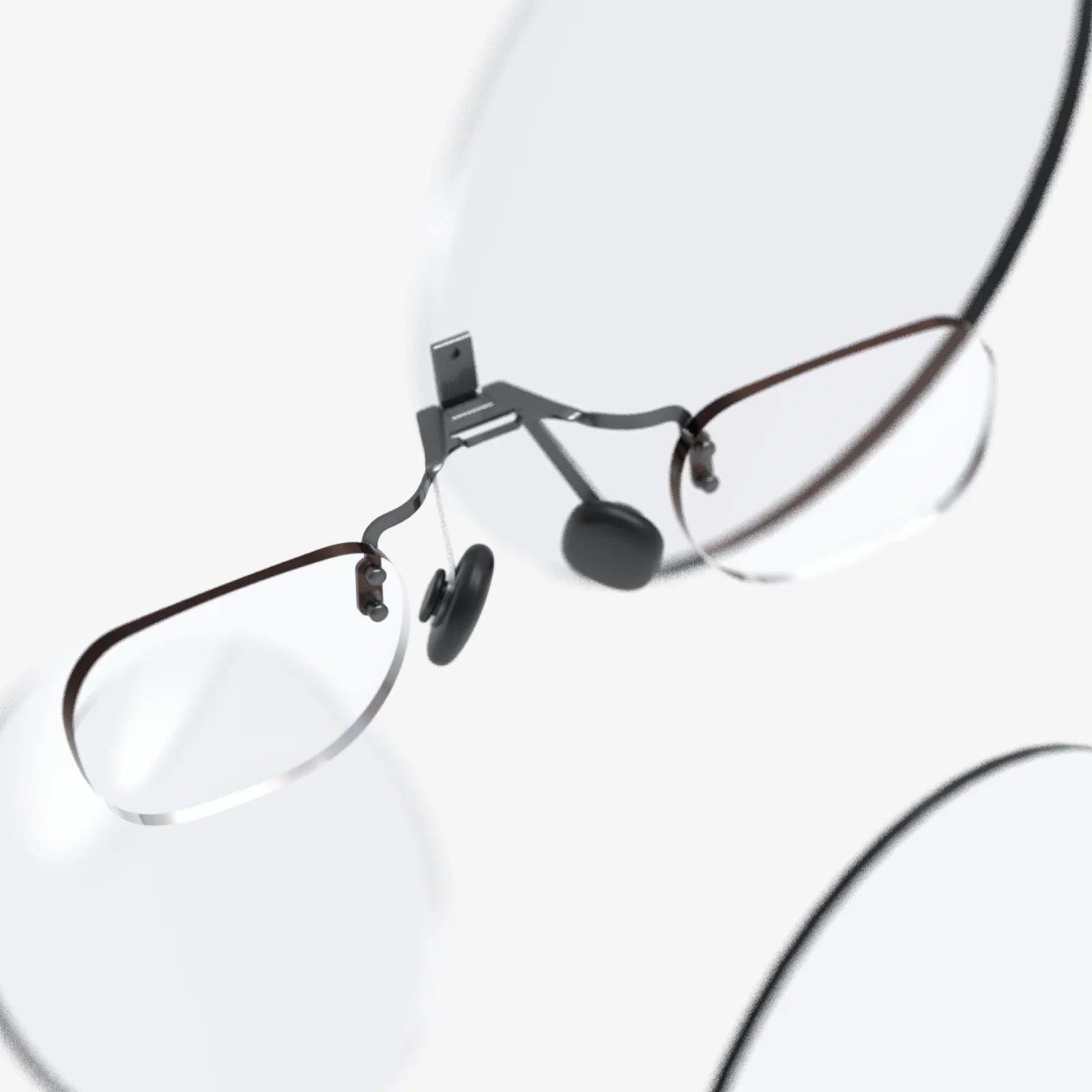
- by wangfred
Forms of Augmented Reality: A Deep Dive into the Digital Overlay Reshaping Our World
- by wangfred
Imagine a world where digital information doesn’t just live on a screen but is seamlessly woven into the fabric of your everyday reality. This is the promise of augmented reality (AR), a technology rapidly transitioning from science fiction to an integral part of our personal and professional lives. But AR is far from a single, monolithic entity. It’s a vibrant ecosystem of different forms and implementations, each with its own unique mechanics, applications, and potential to revolutionize how we work, learn, play, and connect. Understanding the distinct forms of augmented reality is key to appreciating its full scope and anticipating the profound impact it will have on our future.
Before dissecting its various forms, it's crucial to grasp the core concept that unites all AR experiences. At its heart, augmented reality is a technology that overlays computer-generated perceptual information—be it visual, auditory, haptic, or even olfactory—onto the user’s real-world environment. Unlike Virtual Reality (VR), which creates a completely immersive digital simulation, AR enhances reality by adding a layer of digital content to it. This process generally involves three key components: a camera to capture the real world, a processor to combine and align the digital and physical elements, and a display to present the final augmented view to the user. The sophistication of these components and the method of alignment define the different forms of AR we encounter today.
Often considered the progenitor of modern AR, marker-based AR (also known as image recognition or recognition-based AR) relies on a specific visual object—a marker—to trigger the digital overlay. This marker is typically a distinct, high-contrast image, like a QR code or a custom-designed symbol, that the device's camera can easily recognize.
The process is elegantly simple. The AR application continuously analyzes the camera's feed, searching for the predefined marker. Once identified, the software calculates the marker's position and orientation in space. This spatial data acts as an anchor, allowing the program to precisely place and lock a digital 3D model, video, or animation onto the marker's location. The digital content appears to be part of the real world, scaling and moving in perspective as the user moves their device around the marker.
Marker-based AR found early success in marketing campaigns, interactive print media, and educational toys. It was a powerful tool for bringing static images in magazines, posters, or product packaging to life. Its primary strength is its reliability and precision; the digital overlay remains stable and accurately aligned as long as the marker is in view. However, this is also its greatest limitation. The experience is entirely dependent on the presence of the physical marker. Without it, the AR content is inaccessible, making this form of AR less spontaneous and context-aware than its more advanced counterparts. Despite this, it remains a highly effective and cost-efficient method for controlled, targeted AR experiences.
As processing power increased and sensors improved, a more flexible and powerful form of AR emerged: markerless AR. This is the technology that powers most modern AR applications on smartphones and dedicated AR glasses. It liberates the user from the need for a predefined marker, instead using the environment itself as a digital canvas.
Markerless AR employs a technique called SLAM (Simultaneous Localization and Mapping). SLAM allows a device to simultaneously understand its own position in an unknown environment (localization) while creating a digital map of that space (mapping). It does this by using the camera and other sensors (like a gyroscope, accelerometer, and often a LiDAR scanner) to identify unique features, points, and planes—such as a tabletop, a floor, or a wall. These recognized surfaces become the anchor points for digital content.
Markerless AR can be broken down into several key subtypes:
The most advanced and immersive form of AR on the horizon is contention-based AR, often experienced through AR glasses and smart lenses. The goal of this technology is to achieve a level of integration where digital objects not only appear in the real world but also interact with it in a physically believable way. This means a digital ball should roll under a real couch, and a virtual character should cast a shadow from a real light source.
This requires an incredibly detailed and dynamic understanding of the environment. The AR system must move beyond mapping simple planes to understanding the material properties, physics, and occlusion of real-world objects. It needs to know that a table is solid, a curtain is semi-transparent, and water is reflective. Advanced sensors, AI-driven scene understanding, and immense computational power are required to make this a seamless reality.
The pursuit of contention-based AR is the pursuit of the perfect illusion—a blended reality so convincing that the user's brain ceases to distinguish between what is real and what is augmented. This will unlock applications we can only dream of: architects walking through fully interactive holographic models of their buildings, surgeons seeing a patient's vital signs and anatomical guides overlaid directly on their field of view, and entire new forms of social interaction and entertainment that blend the physical and digital into one cohesive experience.
There is no single "best" form of augmented reality. The choice of technology is dictated entirely by the intended application, target audience, and available resources.
The evolution of these forms is not linear; they continue to coexist and converge. Modern SLAM-powered devices can often utilize markers as optional, enhanced anchors within a broader markerless framework, combining the precision of the old with the freedom of the new. As the technology matures, the lines between these categories will continue to blur, leading to ever more sophisticated and context-aware augmented experiences. The journey from simple markers to a digitally-augmented world that understands and interacts with itself is well underway, promising to redefine the very nature of our reality.
Share:
Augmented Reality Office Space: The Invisible Revolution Reshaping the Modern Workplace
Augmented Reality Design Examples That Are Reshaping Our World