


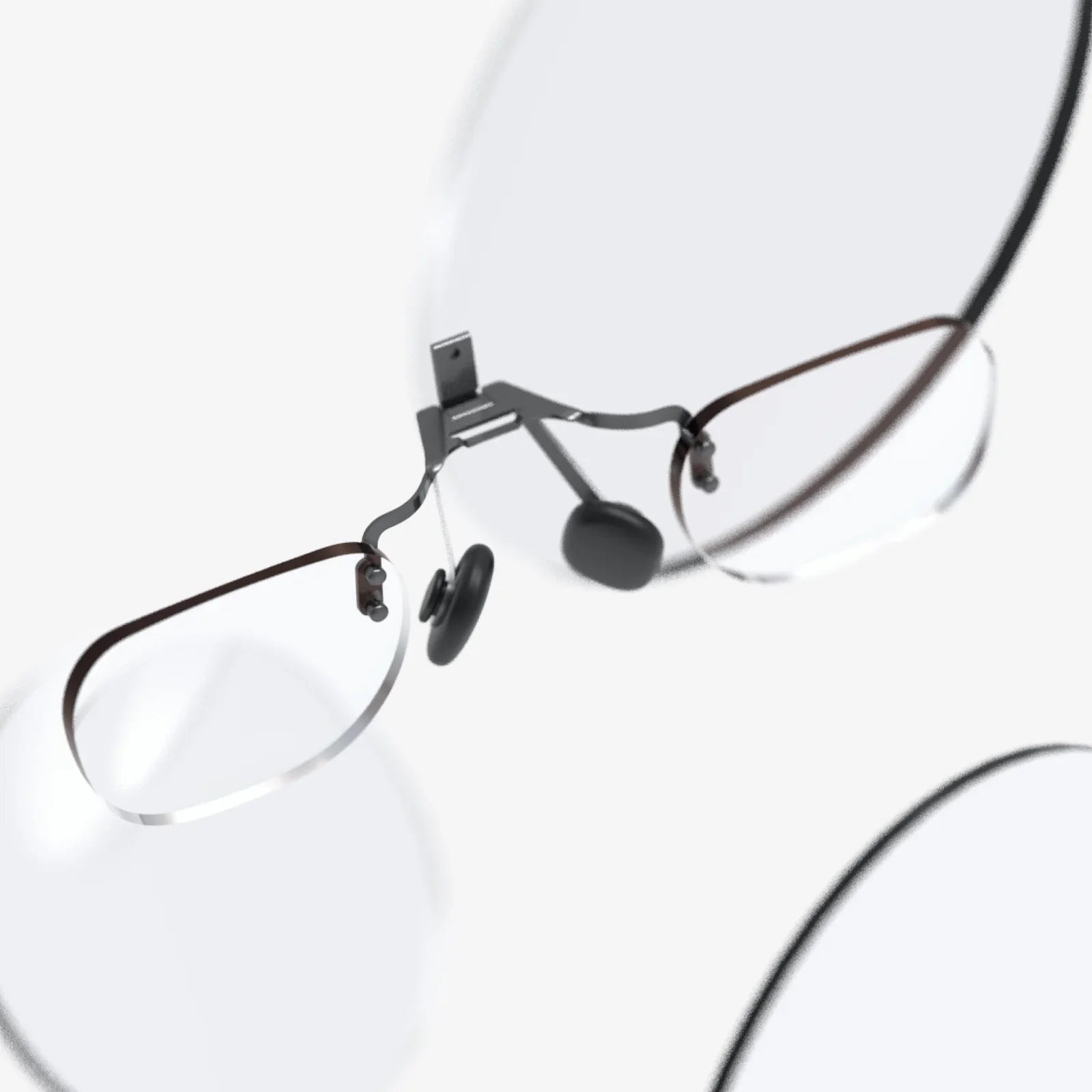
- by wangfred
Augmented Reality Office Space: The Invisible Revolution Reshaping the Modern Workplace
- by wangfred
Imagine walking into your office, but it’s not the one you left last night. Your minimalist physical desk is now a sprawling command center, alive with hovering data visualizations, real-time project timelines, and a virtual colleague presenting a 3D model from another continent. This isn't a scene from a science fiction film; it is the imminent future of the workplace, powered by the transformative potential of the augmented reality office space. This technology promises to dissolve the barriers between the digital and the physical, creating a dynamic, context-aware, and profoundly intelligent work environment that adapts to you, rather than the other way around. The revolution is not about replacing what we have but enriching it, overlaying a powerful digital stratum onto our familiar world to unlock capabilities we are only beginning to imagine.
To understand the augmented reality office space, one must first move beyond the perception of it as a novelty or a simple visual overlay. At its core, it is an information delivery system that contextually integrates digital information—3D models, data streams, instructions, and communications—directly into the user’s field of view within their physical environment. This is achieved through a combination of hardware, like smart glasses and sensors embedded in the office, and sophisticated software that understands the environment and the user's needs.
The true power of this system lies in its ability to be proactive and contextual. Unlike a traditional computer screen that demands your full attention and isolates you in a 2D world, an AR system understands the space around you. It can project the email you’re reading onto a blank wall as you walk, pin a video call window to a specific meeting room table, or display a schematic precisely where a physical prototype sits. This seamless integration turns the entire office into an interactive interface, fundamentally changing our relationship with information and collaboration.
The most immediate and profound impact of the augmented reality office space is on human collaboration, particularly as hybrid and remote models become permanent fixtures. Traditional video conferencing, with its grid of faces and shared screens, is a poor substitute for the nuance of in-person interaction. Augmented reality shatters this limitation.
Imagine a design review where team members across the globe can don their devices and see the same life-size, photorealistic 3D model of a new product hovering in the center of their respective rooms. They can walk around it, point to specific components, and make annotations that appear in real-time for everyone else, just as if they were all gathered in the same lab. This shared spatial understanding eliminates misinterpretation and fosters a level of cohesive teamwork previously impossible at a distance. The concept of a ‘digital twin’—a virtual replica of a physical asset or system—becomes a collaborative playground within the AR office, allowing teams to simulate processes, train for scenarios, and troubleshoot problems before a single physical resource is expended.
The traditional office is a static environment. Your desk, your monitors, your whiteboard—they are fixed entities. The augmented reality office space is inherently dynamic and personalized. With AR, your workspace is no longer defined by the physical furniture but by the digital ecosystem you summon around you.
An employee can sit at any clean-desk station, put on their glasses, and instantly their entire personalized digital setup materializes around them: their preferred array of virtual screens, their sticky notes, their calendar, and their ongoing tasks, all arranged exactly how they like them. At the end of the day, they take it all with them simply by removing the device. This not only enables true hot-desking and flexibility but also empowers individuals to create their optimal cognitive environment, boosting focus and productivity. Furthermore, the environment can respond to context. Walking into a meeting room could automatically trigger the display of the agenda and relevant documents on the table, while entering a creative zone might bring up brainstorming tools and inspiration boards on the walls.
Beyond collaboration and personalization, the augmented reality office space acts as a powerful productivity multiplier, especially for complex, information-dense tasks. For data analysts, AR can transform a conference room into an immersive data cave, with graphs and charts occupying three-dimensional space, allowing them to spot trends and correlations that would be invisible on a flat screen. For software architects, code could be visualized as interconnected modules floating in space, making system architecture tangible and easier to comprehend and debug.
For roles that involve physical tasks, like facilities management or assembly, AR provides hands-free, overlay instructions. A technician repairing a complex piece of equipment could see animated disassembly steps projected directly onto the machinery, highlighting exactly which bolt to turn next and with what tool, all while keeping their hands free and their focus on the task. This reduces errors, slashes training time, and dramatically improves efficiency and safety.
The path to a fully realized augmented reality office space is not without significant hurdles. The first is technological. The hardware needs to become lighter, more comfortable, socially acceptable, and offer all-day battery life with high-resolution, visually immersive displays. The software requires robust spatial mapping and computer vision to understand complex environments in real-time and with perfect accuracy.
Perhaps more complex are the human and organizational challenges. Companies must develop entirely new digital etiquette. Is it rude to wear glasses during a conversation? How do you know if someone is looking at you or a virtual object? There are serious concerns regarding data privacy and security, as these devices could potentially record everything a user sees and hears. Furthermore, a digital divide could emerge between AR-enabled employees and those who are not, potentially creating a two-tier workforce. Successful implementation will require careful change management, clear policies, and a focus on inclusive design that enhances, rather than replaces, human connection.
Looking further ahead, the evolution of the augmented reality office space points toward what interface designers call “the invisible interface.” The technology will recede further into the background, moving beyond headsets to more integrated solutions like smart contact lenses or even direct neural interfaces. The office environment itself will become smarter, with surfaces and objects capable of displaying information without the need for wearable devices.
Artificial intelligence will be the silent engine of this revolution, anticipating user needs, managing information flow, and creating intuitive interactions. The AR office will become a cognitive partner, enhancing human intelligence and creativity by offloading mundane tasks and providing just-in-time information. It will fundamentally reshape corporate real estate, potentially reducing the need for physical space as digital overlays make smaller, more flexible footprints incredibly efficient, or conversely, creating a new demand for spaces specifically designed to be augmented.
The journey toward the mainstream augmented reality office space is already underway, driven by rapid advancements and a fundamental shift in how we view work. It represents a move away from the era of the desktop computer, a tool that tethers us to a single location and a flat screen, and toward a future where computing is ambient, contextual, and seamlessly woven into the fabric of our physical reality. It is a future where the line between the digital and the physical blurs, not to confuse us, but to empower us to work smarter, collaborate deeper, and think bigger than ever before. The office of tomorrow won't just be a place we go to; it will be an experience that unfolds around us, an intelligent layer that transforms every blank wall and empty desk into a canvas for innovation.
Share:
Latest Research Trends in Augmented Reality 2025: The Invisible Revolution Reshaping Reality
Forms of Augmented Reality: A Deep Dive into the Digital Overlay Reshaping Our World