Imagine a world where the digital and physical are so seamlessly intertwined that the very concept of a 'screen' becomes obsolete, where information flows around you as naturally as air, and your environment understands you as intuitively as a close friend. This isn't a distant science fiction fantasy; it's the tangible future being forged in the labs and research institutions of 2025, pushing augmented reality beyond novelty into a fundamental, invisible layer of human experience. The latest research is not just about what we see through a lens, but how we perceive, interact with, and ultimately understand reality itself.
The Demise of the Device: Towards Frictionless and Ambient AR
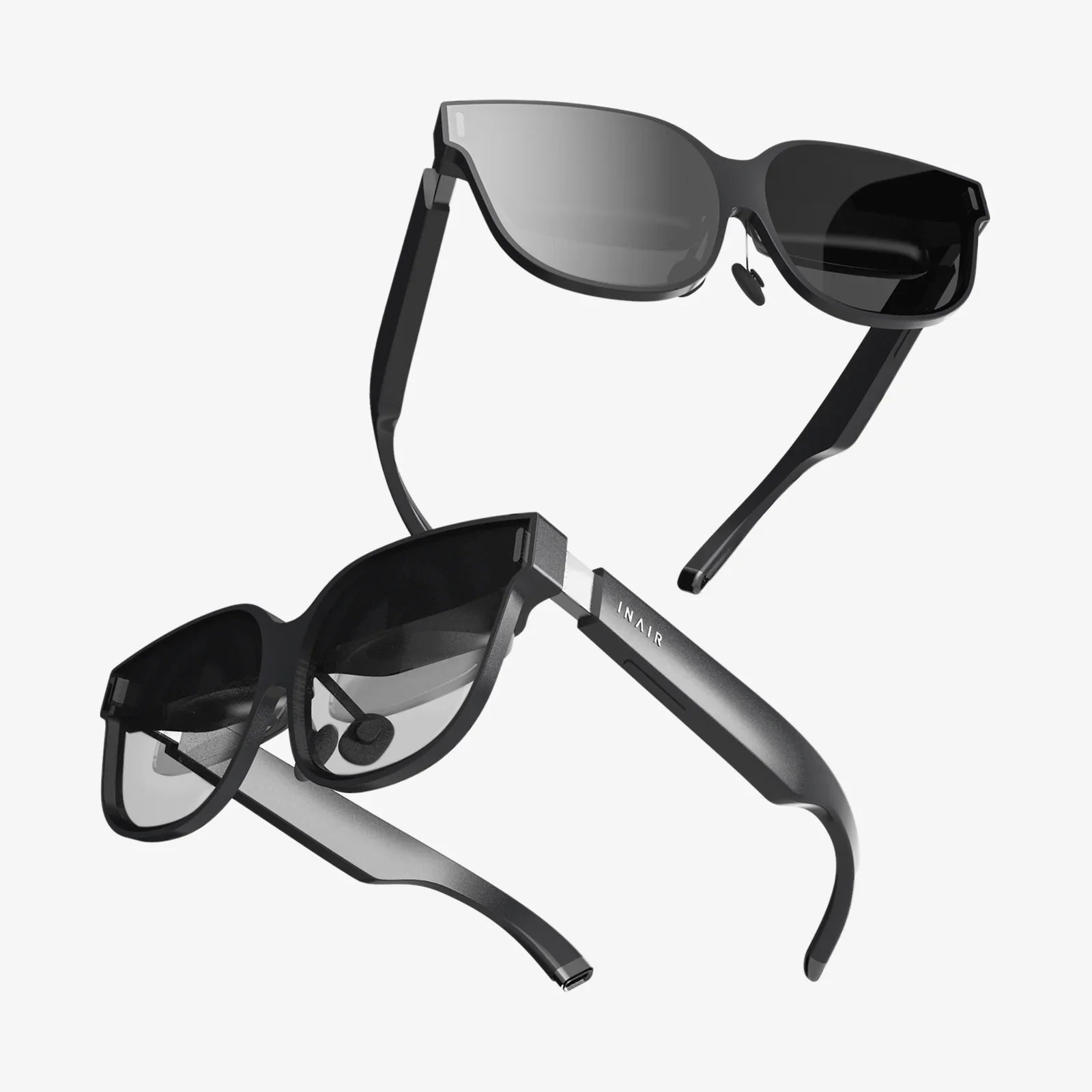
For years, AR has been shackled to hardware—bulky headsets, handheld phones, and obtrusive glasses that constantly remind the user of the technology's artificiality. The predominant research trend of 2025 is a concerted push to dismantle this barrier. The goal is no longer to build a better device, but to make the device disappear altogether.
Research is exploding in two key areas to achieve this: advanced optical waveguides and micro-LED projection systems that are orders of magnitude smaller, more efficient, and capable of projecting high-fidelity imagery directly onto the retina without large, complex hardware. Concurrently, material science is focusing on developing flexible, transparent substrates that can be integrated into everyday objects like car windshields, windows, and even ordinary eyeglass lenses, turning any surface into a potential AR canvas. The concept of 'ambient AR' is gaining traction, where contextual information is subtly embedded into our periphery, only becoming prominent when needed, reducing cognitive load and creating a calmer, more intuitive user experience.
The Rise of the Context-Aware and Predictive AR Cloud
An AR system that is not deeply aware of its environment is little more than a floating HUD. The second major trend is the evolution of the 'AR Cloud'—a persistent, shared digital twin of the real world—from a conceptual framework into a functional, scalable infrastructure. Research in 2025 is focused on making this cloud dynamically intelligent.
This involves massive leaps in real-time 3D mapping and semantic understanding. Instead of just recognizing a flat surface, next-generation systems are being trained to understand the object (e.g., a coffee maker), its state (on, off, brewing), and even its relationship to other objects (plugged into an outlet, sitting on a counter). This is powered by a fusion of edge computing, which processes sensor data locally for speed, and 5G/6G connectivity, which streams complex AI inferences from the cloud. The result is an AR environment that can predict user intent. Reaching for a tool? The instruction manual might automatically appear. Walking toward a complex intersection? Navigation cues and safety warnings could highlight the safest path based on real-time traffic data.
Neuro-Adaptive Interfaces: AR That Understands Your Mind
Perhaps the most futuristic trend is the move beyond manual and voice input towards direct brain-computer interaction. Research in neuro-adaptive AR is exploring the use of non-invasive sensors (like high-density EEG or functional near-infrared spectroscopy) to measure neural activity, cognitive load, and emotional state.
The applications are profound. An AR system could detect rising stress levels during a complex task and automatically simplify the instructions or pause notifications. In an educational setting, it could recognize confusion when a student looks at a historical artifact and offer a more detailed explanation. For industrial training, it could monitor focus and alert a supervisor if a worker is becoming fatigued while operating dangerous machinery. This research is pushing the boundaries of human-computer interaction from a conscious dialogue to a subconscious, symbiotic partnership, creating interfaces that are truly responsive to the user's internal state.
Spatial Audio and Haptics: Crafting a Full-Body Illusion
Visuals are only one piece of the immersion puzzle. A significant body of research is dedicated to making auditory and tactile feedback as spatially precise as visual overlays. Advanced spatial audio algorithms are being developed to convincingly anchor sounds to digital objects in 3D space, making a virtual bee sound like it's buzzing around your head or ensuring a navigation cue originates from the correct street corner.
Even more compelling is the work on haptic feedback. Researchers are moving beyond simple controller vibrations to ultrasonic arrays that can project tactile sensations onto bare skin, creating the feeling of virtual buttons, textures, and even resistance mid-air. Other projects are exploring wearable haptic suits and gloves that use micro-fluidics or electro-tactile stimulation to provide full-body feedback, essential for convincing virtual telepresence and deep training simulations where 'touch' is critical for learning.
The Ethical, Safety, and Privacy Imperative
As the technology's power grows, so does the urgency of the research into its governance. Unlike previous years, 2025 has seen a massive surge in interdisciplinary studies focused solely on the ethics of pervasive AR. Key research questions include: How do we prevent 'attention theft' and ensure AR enhances rather than degrades our connection to the physical world? How can we develop privacy-by-design frameworks that prevent the massive amounts of visual and biometric data collected by AR systems from being misused?
Safety research is paramount, particularly for urban environments. Studies are underway to establish standards for 'digital signage' to ensure AR content does not create dangerous distractions for drivers or pedestrians. There is also a focus on developing robust authentication systems to prevent 'AR spoofing'—where malicious actors could overlay false information, such as hiding a real hazard or creating a fake traffic sign—which is now treated as a critical cybersecurity challenge.
Democratization and Creator-Led Tools
A final, powerful trend is the research aimed at democratizing AR creation. The goal is to empower artists, educators, and small businesses to build spatial experiences without needing a team of dedicated engineers. This involves creating no-code and low-code spatial computing platforms with intuitive interfaces for placing and animating 3D content in the real world.
Research is also focused on AI-assisted content generation, where a creator could describe a scene ('a mythical creature sleeping under this bridge') and have the AI generate appropriate 3D models, animations, and behaviors. This shift from a technology-driven to a creator-driven ecosystem is seen as essential for AR to develop a rich and diverse content landscape that moves beyond corporate applications into personal expression and storytelling.
The horizon of augmented reality in 2025 is not defined by a single gadget, but by a convergence of disciplines—from neuroscience and ethics to material science and AI—all working in concert to weave digital intelligence into the very fabric of our lives. The most exciting research is that which strives to make the extraordinary feel ordinary, transforming augmented reality from something we look at into something we simply live within. The next time you glance at your seemingly ordinary surroundings, remember—they are on the verge of becoming anything but.


Share:
AR and VR Smart Glasses Market Analysis: Navigating the Next Digital Frontier
Augmented Reality Office Space: The Invisible Revolution Reshaping the Modern Workplace