


Imagine a world where the digital and the physical are not separate realms but a single, seamless tapestry of experience. This is the promise of augmented reality, a technology not confined to science fiction but being built, line by line, by developers today. The journey into augmented reality development is a dive into one of the most transformative technological landscapes of our time, a field where creativity meets complex engineering to redefine human interaction with reality itself. It’s a discipline poised to become as fundamental as web development, weaving an invisible layer of information and interaction over the world we see.
The Core Pillars of AR Technology
At its heart, augmented reality development is about creating a convincing and useful blend of digital content with the real world. This feat of technological magic rests on several core pillars, each a complex field of study in itself.
Computer Vision: The Eyes of AR
The single most critical component of any AR experience is its ability to see and understand the environment. This is the domain of computer vision. Developers leverage sophisticated algorithms to enable devices to perform tasks like:
- Object Recognition and Tracking: Identifying specific objects or images (often via markers or QR codes) and tracking their position and orientation in real-time. This allows digital content to be anchored precisely to a physical item.
- Plane Detection: Identifying horizontal and vertical surfaces, like floors, tables, and walls. This is essential for placing virtual objects convincingly in a room, making them appear to rest on a real surface.
- Simultaneous Localization and Mapping (SLAM): This is the holy grail of environmental understanding. SLAM algorithms allow a device to simultaneously map an unknown environment while tracking its own location within that map. This creates a persistent spatial understanding, enabling experiences where digital content remains in a fixed location even if the user walks away and returns.
- Depth Sensing: Using specialized sensors (like LiDAR) or stereo cameras, devices can perceive the distance to objects. This allows for incredibly realistic occlusion, where real-world objects can pass in front of virtual ones, and for accurate spatial measurements.
Display Technologies: The Window to Augmentation
How the digital overlay is presented to the user is another fundamental pillar. The choice of display directly impacts the immersion, accessibility, and application of the AR experience.
- Handheld AR: Utilizing the screens of smartphones and tablets. This is the most accessible and widespread form of AR today, leveraging the powerful sensors and processors already in consumers' pockets. Development for these devices often relies on robust software development kits.
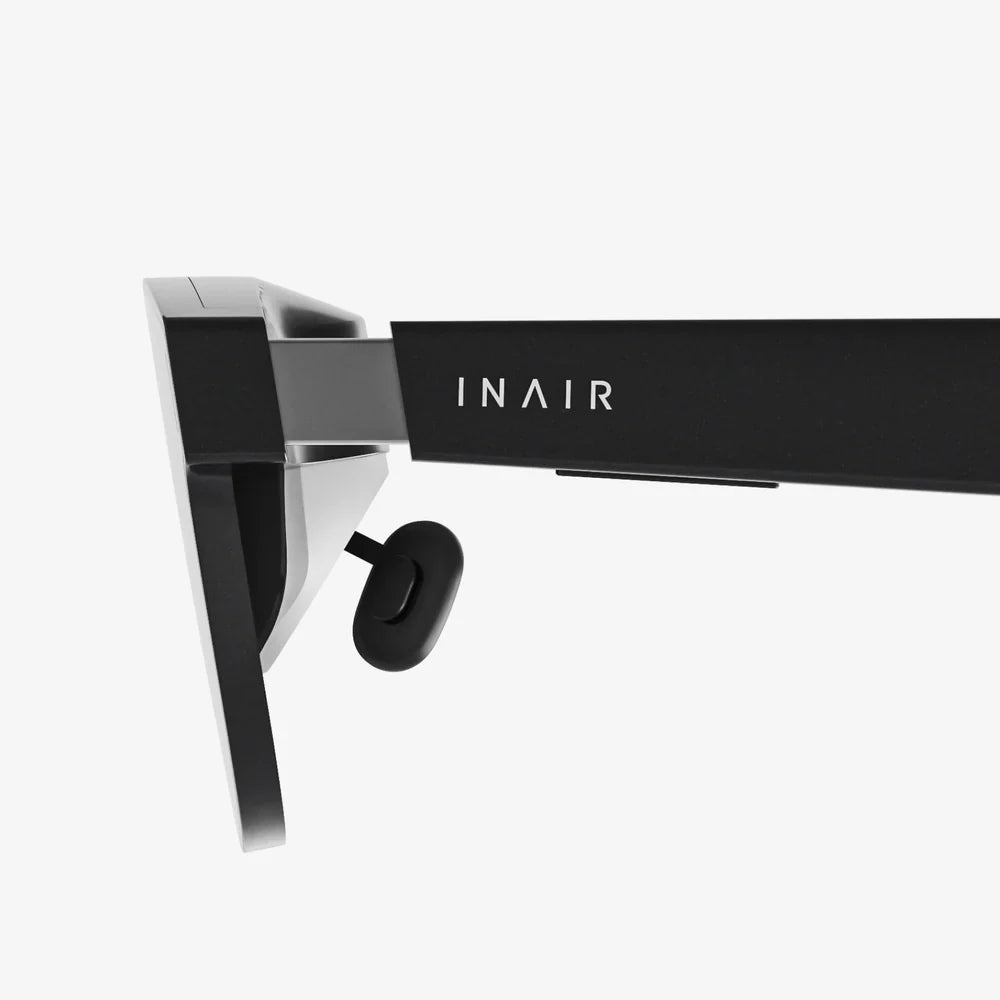
- Smart Glasses and Headsets: These wearable devices offer a hands-free, see-through experience, projecting images onto lenses or directly into the user's retina. Development for this platform focuses on creating contextual, always-available information that feels like a natural extension of the user's perception.
- Projection-Based AR: Instead of displaying content on a screen, this method projects light directly onto physical surfaces, dynamically altering their appearance. This is less common for consumer applications but has uses in industrial and artistic settings.
Processing Power and Hardware
The computational demands of AR are immense. Real-time computer vision, high-fidelity 3D rendering, and complex physics simulations all must run simultaneously without lag. This requires:
- On-Device Processing: Modern mobile processors are system-on-a-chip (SoC) marvels, with dedicated cores for AI, graphics (GPUs), and image signal processing (ISPs) that are crucial for AR workloads.
- Edge and Cloud Computing: For more complex tasks, like rendering photorealistic models or running massive AI simulations, processing can be offloaded to more powerful remote servers. This 5G-enabled paradigm allows for thinner, lighter wearable devices without sacrificing computational power.
The Developer's Toolkit: Frameworks and Platforms
Thankfully, developers are not starting from scratch. A mature ecosystem of software development kits and game engines provides the essential tools to build AR experiences without needing a PhD in computer vision.
The Role of Game Engines
Modern AR development is almost inseparable from game engine technology. These platforms provide the rendering power, physics systems, and asset pipelines needed to create compelling 3D content.
- Unity: With its extensive asset store, cross-platform capabilities, and strong support for major AR SDKs, Unity is often the engine of choice for AR developers. Its visual editor and C# scripting make it accessible to a wide range of creators.
- Unreal Engine: Known for its high-fidelity graphics, Unreal is the go-to engine for experiences demanding cinematic quality. Its Blueprints visual scripting system also offers a powerful node-based programming environment.
Essential Software Development Kits (SDKs)
SDKs bridge the gap between the game engine and the device's native AR capabilities, providing pre-built functions for tracking, surface detection, and lighting estimation.
- ARKit and ARCore: These are the native platforms for iOS and Android, respectively. They provide a robust, cross-device foundation that leverages the full hardware stack of modern smartphones, offering features like people occlusion, shared experiences, and environmental HDR.
- WebAR Platforms: Several SDKs enable AR experiences that run directly in a web browser, requiring no app download. This drastically lowers the barrier to entry for users and is perfect for marketing campaigns, product visualization, and quick educational tools.
- Cross-Platform SDKs: These tools abstract the underlying AR platform (ARKit/ARCore), allowing developers to write code once and deploy it across iOS and Android from within a game engine. They often add proprietary features like cloud storage for persistent AR content.
Designing for a Blended Reality
Coding an AR experience is only half the battle. The other, perhaps more challenging half, is designing it. UX/UI design for AR is a nascent field that throws out decades of screen-based design dogma.
- Spatial Design: Interfaces and objects exist in three-dimensional space. Designers must consider scale, perspective, and ergonomics. A virtual screen floating two meters away is readable; the same screen three centimeters from the user's face is not.
- Contextual and Minimalist UI: The best AR experiences are those that provide information only when and where it is needed. Overlaying the real world with cluttered menus and notifications creates a frustrating experience. The design must be intuitive and information must be ambient.
- User Safety and Comfort: Developers have a responsibility to design experiences that keep users aware of their physical surroundings. "World-scale" experiences that encourage movement must be carefully designed to avoid physical obstacles. Techniques like gradual fading or audio cues can help maintain spatial awareness.
- Accessibility: AR must be built for everyone. This includes considerations for users with different levels of vision, hearing, and mobility. Voice commands, audio descriptions, and customizable interfaces are crucial for inclusive design.
Transforming Industries: The AR Revolution in Action
The impact of AR development is not a future concept; it is delivering tangible value across the global economy today.
Industrial and Manufacturing
This is where AR is having its most immediate and profound impact. Developers are creating applications that:
- Overlay digital work instructions and schematics directly onto complex machinery, guiding technicians through assembly, maintenance, and repair procedures. This reduces errors, cuts training time, and improves safety.
- Enable remote expert assistance, where an off-site expert can see what a field technician sees and annotate the real world with arrows and notes to guide them in real-time.
- Visualize complex data from IoT sensors overlaid on equipment, showing temperature, pressure, or efficiency metrics at a glance.
Healthcare and Medicine
AR is becoming a vital tool for saving lives and improving patient outcomes.
- Medical students and surgeons can practice procedures on detailed, interactive 3D holograms of human anatomy, reducing risk to patients.
- During surgery, AR can project critical information, like the location of a tumor or a major blood vessel, directly onto the patient's body, providing a kind of "X-ray vision."
- It aids in vein visualization for easier injections and can provide therapeutic AR experiences for patient rehabilitation and pain management.
Retail and E-Commerce
AR is fundamentally changing how consumers shop by bridging the gap between online browsing and physical evaluation.
- Virtual try-on for furniture allows customers to see how a new sofa will look and fit in their living room before purchasing.
- Fashion retailers offer virtual fitting rooms where users can see how clothes, glasses, or makeup will look on their own body.
- Product packaging comes to life with interactive animations, providing additional information, demonstrations, or gamified experiences.
Education and Training
AR turns abstract concepts into tangible, interactive models, revolutionizing learning.
- History lessons can feature historical figures and events reenacted in the classroom.
- Chemistry students can manipulate and combine virtual molecules to see reactions in real-time.
- Technical training for dangerous jobs, like electrical work or firefighting, can be conducted safely in a realistic AR simulation.
The Future Horizon: Challenges and Opportunities
The path forward for augmented reality development is incredibly exciting, but it is not without significant hurdles that developers must overcome.
Persistent Technical Challenges
- Battery Life: The sensor and processing demands of AR are a significant drain on batteries. More efficient algorithms and hardware are constantly being developed to address this.
- Form Factor: For AR to become ubiquitous, the hardware must become socially acceptable and comfortable to wear all day. This means moving towards glasses that look like regular eyewear.
- Network Latency: For cloud-rendered AR, the latency of 5G and future networks must be imperceptible to prevent a disconnect between user movement and the digital overlay.
The Dawn of the Spatial Web
The ultimate goal of AR development is the creation of the spatial web—a version of the internet mapped onto the real world. In this future, developers won't just build apps; they will build persistent digital layers atop cities, homes, and products. A restaurant's menu, a museum's exhibit descriptions, or a bus schedule will exist as digital entities anchored to their physical locations, accessible to anyone with AR glasses. This will require new protocols, standards, and a fundamental rethinking of content creation and ownership.
Ethical Considerations and Privacy
With great power comes great responsibility. The ability to constantly analyze the world through cameras and sensors raises profound privacy questions. Development frameworks must prioritize user data protection, with clear opt-in policies and on-device processing for sensitive information. The potential for persistent advertising and digital graffiti also necessitates the development of social norms and potential digital "zoning" laws.
The invisible digital layer is no longer a futuristic concept; it is under active construction. Augmented reality development is the toolkit for this monumental task, blending art, science, and human-centered design to create a future where our reality is richer, more informative, and infinitely more connected. The developers who master this craft are not just coding applications; they are quietly architecting the very fabric of our next reality, one immersive experience at a time.
Share:
How to Improve Augmented Reality: A Deep Dive into the Next Digital Frontier
Augmented Reality Experience: The Digital Layer Reshaping Our World