


- by wangfred
How to Improve Augmented Reality: A Deep Dive into the Next Digital Frontier
- by wangfred
Imagine a world where digital information doesn't just live on a screen but is woven seamlessly into the fabric of your physical environment—a world where your glasses can translate a foreign street sign in real-time, a surgeon can see a patient's vitals overlaid on their body, and a mechanic can see animated repair instructions while fixing an engine. This is the promise of Augmented Reality (AR), a technology that has captivated our imaginations for decades. Yet, for many, the current experience falls short of this sci-fi ideal, often feeling clunky, isolating, or like a solution in search of a problem. The journey from today's nascent AR applications to that truly transformative future is not a matter of a single breakthrough but a complex, multi-disciplinary evolution. Improving AR requires a concerted effort across hardware, software, user experience design, and societal infrastructure, pushing the boundaries of what's possible to make the digital feel physical.
The most immediate barrier to widespread AR adoption is the physical hardware. For AR to become a pervasive tool, the devices must become socially acceptable, comfortable, and powerful.
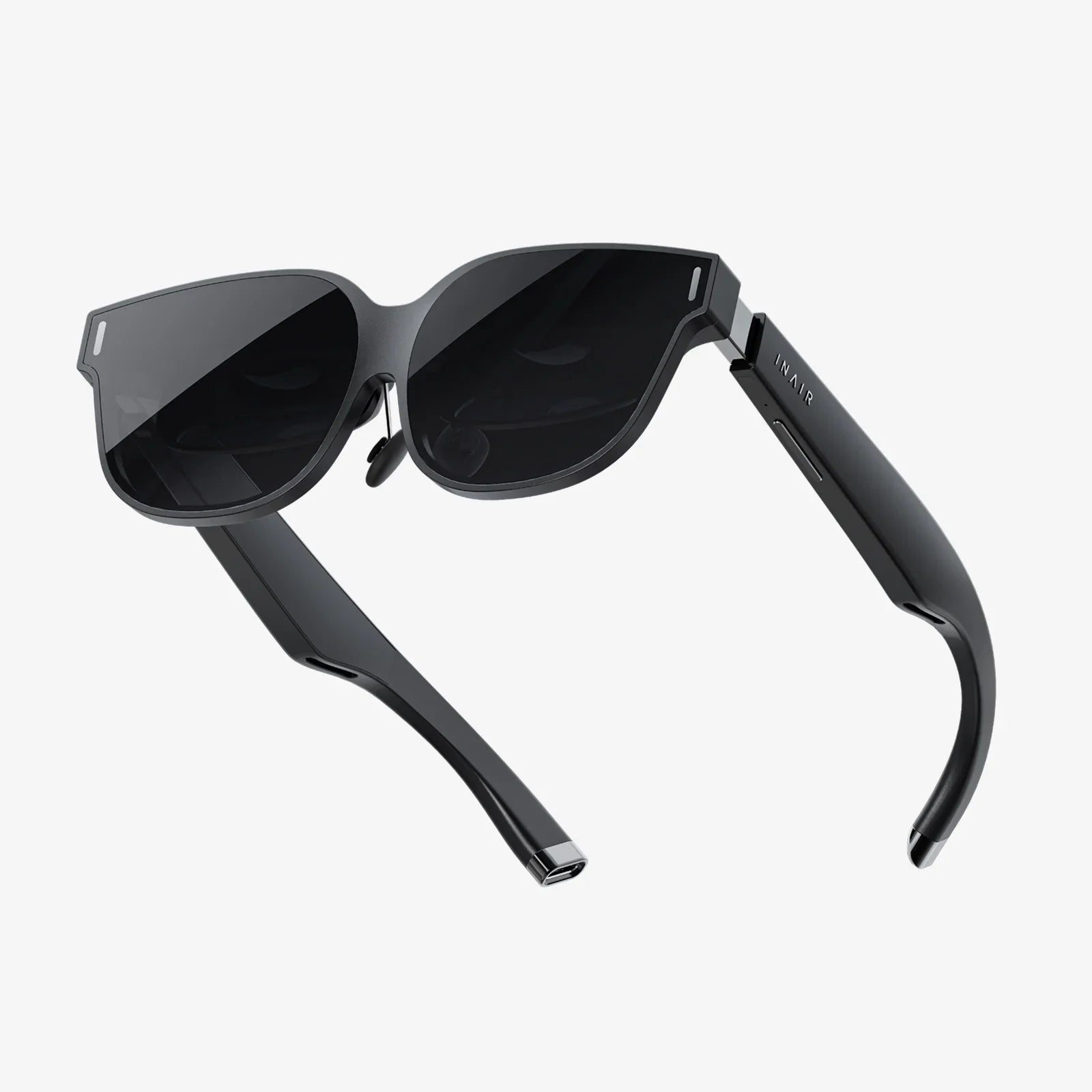
Current AR headsets and glasses often suffer from a fundamental trade-off between capability and comfort. High-end devices capable of rich, immersive experiences are typically bulky, heavy, and require tethering to a powerful computer. Conversely, sleek, socially acceptable glasses often offer limited functionality, like simple notifications or basic overlays. The path forward lies in radical miniaturization. Advancements in micro-optics, such as waveguides and holographic optical elements, are crucial for shrinking the projectors that beam light into the user's eyes. Similarly, developing smaller, more efficient spatial computing chipsets will reduce the need for large batteries and processing units, allowing the technology to fade into a form factor indistinguishable from standard eyewear.
A core tenet of immersion is the quality of the digital overlay. A ghostly, semi-transparent image that doesn't properly align with the physical world quickly breaks the illusion. Improving AR means achieving photorealistic rendering with a wide field of view (FOV). A narrow FOV feels like looking through a small window, constantly reminding the user they are wearing a device. Expanding the FOV to encompass human peripheral vision is a significant engineering challenge involving complex optical designs. Furthermore, addressing issues like the vergence-accommodation conflict—where your eyes struggle to focus on digital objects at different depths—is essential for visual comfort and preventing user fatigue. Future displays must perfectly mimic the way light behaves in the real world.
For digital objects to feel anchored in reality, the device must understand its environment with incredible precision. This relies on a suite of sensors: cameras, LiDAR, inertial measurement units (IMUs), and depth sensors. Improving the resolution, speed, and accuracy of these sensors is paramount. Next-generation AR will move beyond simple surface detection to a semantic understanding of the environment. Instead of just seeing a flat plane, the device will recognize it as a wooden table, understand that a coffee mug is on top of it, and know that the mug is a container that can be filled. This level of contextual awareness requires massive leaps in on-device artificial intelligence and computer vision.
Powerful hardware is useless without sophisticated software to act as its brain. The algorithms processing sensor data and generating the AR experience are what separate a compelling illusion from a distracting gimmick.
One of the most significant improvements needed is the development of persistent and shared AR. Today, most experiences are ephemeral; once you leave an app, the digital content vanishes. The future of AR requires a persistent digital layer over the physical world. This means creating a high-fidelity, constantly updated 3D map of the environment that can be stored and recalled. If you place a virtual sculpture in your living room, it should be there days later, in the exact same spot, even if your furniture has been moved slightly. This requires robust simultaneous localization and mapping (SLAM) algorithms that can handle dynamic environments and relocalize instantly. Furthermore, for collaborative AR, this spatial map needs to be shared across devices, allowing multiple users to see and interact with the same digital objects in the same physical space, creating a foundation for truly shared experiences.
The ultimate goal of AR is to provide the right information at the right time, without the user having to ask. This demands a deep, AI-driven understanding of context. The system must fuse data from its sensors with real-time user data (e.g., calendar, preferences, current task) and cloud-based knowledge. Imagine walking past a restaurant: your AR glasses could overlay not just its name and rating, but also notify you that you have a reservation there in one hour, highlight the dish your friend recommended, and show you a virtual menu. Achieving this requires immense progress in edge computing, natural language processing, and recommendation engines that operate seamlessly and privately within an AR framework.
A technology cannot thrive without a vibrant developer community. Improving AR means providing creators with robust, accessible, and standardized tools. Software development kits (SDKs) need to abstract away the immense complexity of spatial computing, allowing developers to focus on creating experiences rather than wrestling with core tracking technology. Cross-platform frameworks are essential to avoid fragmentation; an AR experience should be capable of running on various devices from different manufacturers, much like a website works on different browsers. Standardized file formats for 3D assets and AR content will enable a more open and collaborative ecosystem, accelerating innovation.
Technology is only as good as our ability to use it. The human-computer interface for AR is fundamentally different from the mouse, keyboard, and touchscreen. Getting it right is critical for adoption.
The dream of AR interaction is a completely natural one—using our hands, voice, and eyes to manipulate the digital world as we do the physical one. Improving hand-tracking technology to be low-latency, robust, and capable of understanding fine motor skills is a key frontier. Voice assistants need to evolve to handle complex, context-aware commands in noisy environments. Even more futuristic are interfaces that read neural signals or subtle muscle movements for silent, effortless control. The interface must be intuitive enough to disappear, allowing the user to focus on the task, not the tool.
Overlaying digital information onto reality creates a high risk of cognitive overload and clutter. Poorly designed AR can be more distracting and dangerous than helpful. UX designers must develop a new visual language for spatial computing. This involves principles for information hierarchy in 3D space, determining what deserves the user's attention and how to present it unobtrusively. When and how should notifications appear? How can data be visualized spatially to enhance understanding rather than obscure the view? This is a new design discipline that blends graphic design, architecture, and psychology.
Perhaps the most profound challenge is not technical but societal. AR devices, by their nature, are always-on cameras and microphones pointed at the world. This raises monumental questions about privacy and surveillance. How do we prevent a world where everyone is constantly recording each other? How is the immense amount of visual and locational data collected by these devices stored, used, and protected? Improving AR necessitates building privacy and ethics into its core architecture from the start. This could include hardware switches that physically disable sensors, on-device processing that anonymizes data before it reaches the cloud, and clear, transparent rules about data ownership and usage. Without public trust, AR will never succeed.
Truly powerful AR cannot exist on a device alone. It will rely on a robust, low-latency connection to the cloud for processing, storage, and sharing.
The high bandwidth and low latency promised by 5G networks are not just an improvement for AR; they are a prerequisite for its most advanced applications. Offloading complex rendering tasks or AI analysis to powerful cloud servers alleviates the burden on the wearable device, enabling thinner form factors and longer battery life. Edge computing, which processes data closer to the user than a traditional data center, will be critical for reducing latency to imperceptible levels, ensuring that digital objects react in real-time to the user's movements and environment.
This concept refers to a persistent, universally accessible 3D digital copy of the real world. It is the infrastructure that will allow for persistent content and shared experiences across devices and time. Building the AR Cloud is one of the most ambitious endeavors in tech, akin to creating a second, digital planet. It requires massive investment in data storage, streaming technology, and spatial indexing. It also reinforces the need for global standards and open protocols to ensure this new layer of reality is not controlled by a single entity but is an open platform for innovation.
The path to perfect Augmented Reality is not a straight line but a sprawling web of interconnected advancements. It demands that material scientists create new optics, that chip designers pack more power into smaller spaces, that AI researchers teach machines to see and understand, that UX designers craft invisible interfaces, and that ethicists and policymakers build a framework for a responsible future. Each breakthrough in miniaturization, each new algorithm for understanding space, and each thoughtful design principle adds another thread, weaving the digital and physical into a single, cohesive tapestry. The day when we no longer talk about "using AR" but simply experience an enriched reality is coming. It will be the result of countless improvements, both monumental and minute, converging to open a window to a world where the only limit is our imagination.
Share:
Augmented Reality Definition and Examples: A Deep Dive into the Digital Overlay
Augmented Reality Development: Building the Invisible Layer of Our Future