Imagine a world where digital information doesn't just live on a screen but is seamlessly woven into the fabric of your physical reality, enhancing everything you see, do, and experience. This isn't the distant future; it's the present, powered by a revolutionary technology known as augmented reality. From trying on furniture in your living room before you buy it to performing complex heart surgery with real-time guidance, AR is quietly reshaping our world, and understanding its definition and examples is the first step to embracing its immense potential.
Demystifying the Core Concept: What is Augmented Reality?
At its simplest, the augmented reality definition is a technology that superimposes a computer-generated image, video, or 3D model onto a user's view of the real world, thus providing a composite view that blends the physical and digital environments. Unlike virtual reality (VR), which creates a completely artificial digital environment for the user to immerse themselves in, AR takes your existing reality and augments it with contextual, interactive digital layers.
The magic of AR lies in its ability to bridge the gap between abstract digital data and our tangible surroundings. It acts as a dynamic lens, offering information, visual aids, and interactive experiences precisely when and where they are most relevant. This is achieved through a sophisticated interplay of hardware and software components working in unison.
The Technological Pillars of AR
For an AR experience to feel seamless and convincing, several key technologies must work together:
- Sensors and Cameras: These are the eyes of the device. Cameras scan the surrounding environment, while sensors like gyroscopes, accelerometers, and GPS determine the device's precise location, orientation, and movement in space.
- Processing: Powerful processors act as the brain, analyzing the camera feed in real-time to understand the environment. This involves complex tasks like SLAM (Simultaneous Localization and Mapping), where the device both maps the environment and tracks its own position within it.
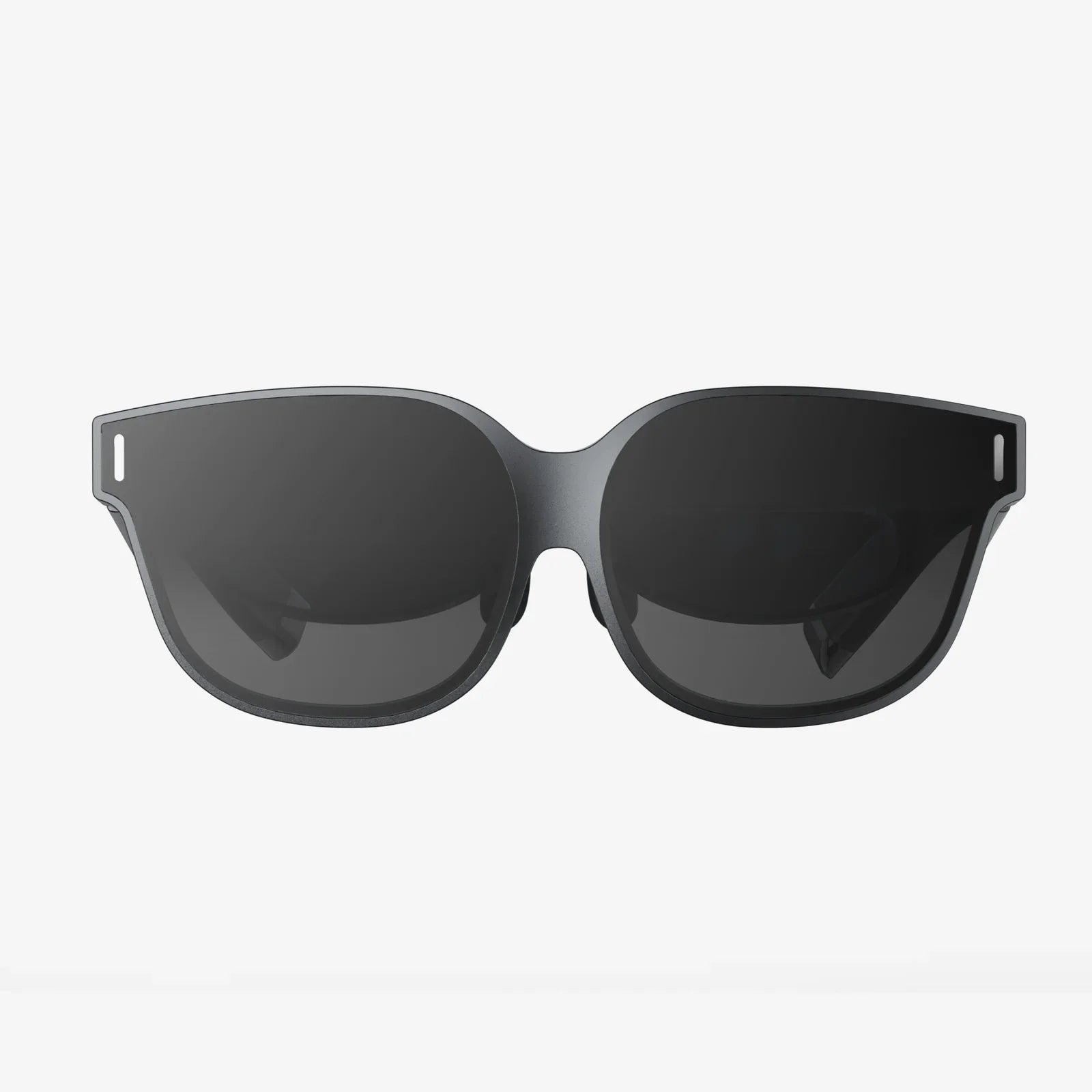
- Projection and Display: This is how the digital content is presented to the user. It can range from smartphone and tablet screens to more advanced systems like smart glasses and head-up displays (HUDs) that project imagery directly onto transparent lenses or real-world surfaces.
- Software and Algorithms: This is the intelligence behind the operation. AR software development kits (SDKs) provide the tools for developers to create applications that can recognize objects (like a product box or a wall), track surfaces, and anchor digital content firmly in the real world.
Augmented Reality vs. Virtual Reality: A Crucial Distinction
While often mentioned in the same breath, AR and VR represent two fundamentally different approaches to blending the real and the digital. Understanding this difference is critical.
Virtual Reality (VR) is an immersive technology. It completely replaces the user's real-world environment with a simulated one, typically achieved by wearing a headset that blocks out the physical world. Users are transported to a digital universe, whether it's a game, a simulation, or a virtual tour. The key here is replacement.
Augmented Reality (AR), as defined, is an overlay technology. It does not replace reality but enhances it. The user remains present in their physical environment while digital content is added on top of it. You can still see your hands, your room, and the people around you, but now they might be accompanied by a navigational arrow on the street or a animated character sitting on your sofa. The key here is supplementation.
There is also a hybrid concept known as Mixed Reality (MR), which sits on the spectrum between AR and VR. MR not only overlays digital objects but allows them to interact with the real world in a believable way. A digital ball in MR could bounce off your real table and roll underneath your real chair, with its physics and occlusion (hiding behind objects) behaving as a real object would.
From Sci-Fi to Everyday Life: Compelling Augmented Reality Examples
The theoretical definition of AR comes alive through its practical applications. The technology has moved far beyond simple novelty filters and is now driving value and innovation across a vast array of sectors. Here are some of the most impactful augmented reality examples.
Retail and E-Commerce: The Fitting Room of the Future
AR is revolutionizing the way we shop, solving one of online retail's biggest challenges: the inability to try before you buy.
- Virtual Try-On: Consumers can now use their smartphone cameras to see how sunglasses, makeup, watches, or hats look on their own face and in real-time. For apparel, apps allow users to project clothing onto their body or a mannequin to check fit and style.
- Furniture and Home Decor: Perhaps one of the most popular examples. Apps enable users to place true-to-scale 3D models of sofas, tables, lamps, and artwork directly into their living space. They can walk around the item, see how it looks from different angles, and ensure it fits with their existing décor before making a purchase, drastically reducing return rates.
- In-Store Navigation: Large retail stores are implementing AR wayfinding within their apps. By simply holding up their phone, shoppers can see arrows and paths overlaid on the live camera feed, guiding them directly to the aisle and shelf where their desired product is located.
Healthcare and Medicine: Enhancing Precision and Outcomes
In healthcare, AR is moving beyond convenience and into the realm of life-saving assistance.
- Surgical Visualization: Surgeons can wear AR headsets that overlay critical information, such as a patient's CT scans or MRI data, directly onto their field of view during a procedure. This can show the precise location of tumors, blood vessels, or bones beneath the surface without having to look away at a separate monitor.
- Medical Training: Students can practice complex procedures on detailed, interactive holographic models of human anatomy. They can dissect, explore, and understand bodily systems in 3D without the need for cadavers, accelerating the learning process.
- Vein Visualization: Devices using AR projection can map the network of veins just beneath a patient's skin and project the image directly onto their arm. This makes it significantly easier for nurses to locate veins for drawing blood or inserting IVs, especially in patients with difficult venous access.
Education and Training: Bringing Learning to Life
AR has the power to transform abstract concepts into tangible, interactive experiences, making it a powerful educational tool.
- Interactive Textbooks: By scanning a page with a tablet, a student can see a 3D model of the solar system planets orbiting above the book, a historical artifact rotating in mid-air, or a complex engine model that they can disassemble with their fingers.
- Skills Training: From mechanics to electricians, AR guides can be superimposed onto machinery. A technician repairing an engine could see step-by-step instructions, part names, and torque specifications overlaid on the physical components they are working on, reducing errors and training time.
- Museum and Historical Exhibits: Museums are using AR to create immersive exhibits. Pointing a device at a fossil might show a full-scale, animated dinosaur, or looking at a historical ruin through a phone could rebuild the structure as it once stood, offering a powerful window into the past.
Industrial Design and Manufacturing
In industrial settings, AR is boosting efficiency, safety, and accuracy on the factory floor and beyond.
- Assembly and Maintenance: Workers wearing smart glasses can see digital instructions and diagrams overlaid onto the physical equipment they are assembling or repairing. This hands-free guidance ensures procedures are followed correctly and can significantly reduce the time required for complex tasks.
- Design and Prototyping: Engineers and designers can use AR to visualize and interact with full-scale 3D prototypes of new products long before physical models are built. They can walk around the hologram, inspect details, and make collaborative changes in real-time, saving vast amounts of time and resources.
- Remote Assistance: An expert engineer located thousands of miles away can see what a field technician sees through their smart glasses. The expert can then draw arrows, highlight components, and share documents directly into the technician's field of view, enabling expert guidance without the cost and delay of travel.
Navigation and Wayfinding
AR is set to change how we navigate our cities and interiors.
- Windshield HUDs: High-end vehicles are beginning to feature head-up displays that project navigation arrows, speed, and safety warnings directly onto the windshield, allowing drivers to keep their eyes on the road.
- Pedestrian Navigation: Mobile apps are developing AR modes where users simply hold up their phone to see directional arrows and street names painted onto the real world, making it intuitive to find your way in an unfamiliar city without constantly looking down at a map.
The Future is Augmented: What Lies Ahead?
The evolution of AR is accelerating, driven by advancements in 5G connectivity, artificial intelligence, and wearable technology. The future points towards lighter, more powerful, and socially acceptable smart glasses that could eventually replace smartphones as our primary gateway to digital information. This will further blur the lines between the physical and digital worlds, creating a persistent layer of useful data and experiences accessible with a simple glance.
Imagine architects walking through buildings that are still in the blueprint phase, historians seeing historical events play out on the very streets where they occurred, or mechanics seeing the entire diagnostic history of a vehicle simply by looking at its engine. The potential applications are as limitless as our imagination. The journey from a simple definition to a world utterly transformed by these examples is already well underway, and it promises to be one of the most significant technological shifts of our time.
We are standing at the precipice of a new layer of reality, one where information is no longer confined to pages or screens but is dynamically interwoven with our physical existence. The augmented reality definition is just the starting point; its true power is revealed in the countless augmented reality examples that are already enhancing how we work, learn, heal, and play. This isn't just a technological trend—it's the beginning of a fundamental shift in human-computer interaction, and those who understand its language today will be the architects of tomorrow's world.

Share:
Is Augmented Reality Useful? Exploring the Practical Impact of a Digital Overlay on Our World
How to Improve Augmented Reality: A Deep Dive into the Next Digital Frontier