Imagine a world where digital information doesn’t trap you behind a screen but instead, enhances the very reality you see. Where instructions float over a complex machine you’re repairing, historical figures materialize in your living room to tell their stories, and the gap between the digital and physical realms seamlessly dissolves. This is the promise of augmented reality (AR), a technology that has buzzed for years on the periphery of our collective imagination. But beyond the futuristic allure and flashy demonstrations, a critical question remains: is augmented reality useful, or is it merely a sophisticated gimmick in search of a purpose? The answer, as we will explore, is a resounding and multifaceted yes, but its true utility is only just beginning to be unlocked in profound and practical ways.
Beyond the Novelty: Defining Augmented Reality's Core Utility
To understand its usefulness, we must first move beyond a simplistic definition. Augmented reality is not virtual reality (VR). Where VR seeks to replace your world with a digital one, AR aims to supplement it. It is a technology that superimposes computer-generated images, sounds, and other sensory information onto a user's view of the real world, ideally in real-time and in a way that allows for interaction. This fundamental principle—overlaying contextually relevant data onto our field of vision—is the bedrock of its utility.
The usefulness of AR stems from its ability to solve a fundamental human problem: information overload and contextual disconnect. We live in a data-rich world, but accessing that data often requires us to look away from the task at hand—to consult a manual on a tablet, to check a schematic on a phone, or to watch a tutorial on a separate screen. AR shatters this barrier. It brings the information directly into your line of sight, contextualizing it within the environment it describes. This creates a direct and intuitive link between knowledge and action, reducing cognitive load, minimizing errors, and drastically accelerating processes. It transforms the user from a passive consumer of information into an active participant in an enhanced reality.
Revolutionizing the Assembly Line and the Operating Room
Perhaps the most compelling and immediate evidence of AR's usefulness is found in industrial and medical settings, where its impact is measured in increased efficiency, enhanced safety, and saved lives.
Precision and Efficiency in Manufacturing and Maintenance
On the factory floor, AR is moving from an experimental tool to a core component of the industrial workflow. Technicians wearing AR smart glasses can see digital work instructions overlaid directly onto the machinery they are assembling. These instructions can highlight the exact bolt to tighten, show the correct routing for a wire harness with animated arrows, and display torque specifications right beside the wrench. This eliminates constant cross-referencing with paper manuals or desktop monitors, reducing assembly time by significant margins and virtually eradicating human error. For complex maintenance and repair, a remote expert can see what a field technician sees through their glasses, and then annotate the real-world view with arrows, circles, and notes to guide them through the procedure. This "see-what-I-see" remote assistance slashes travel costs, reduces equipment downtime, and empowers less experienced technicians to perform complex tasks with expert oversight.
Enhancing Vision and Outcomes in Healthcare
In healthcare, the usefulness of AR transcends efficiency and enters the realm of the miraculous. Surgeons are using AR to gain what amounts to X-ray vision. By overlaying 3D reconstructions from CT or MRI scans directly onto a patient's body during surgery, surgeons can visualize the precise location of tumors, blood vessels, and critical structures before making an incision. This enhances surgical precision, minimizes damage to healthy tissue, and can lead to better patient outcomes and faster recovery times. Furthermore, AR is revolutionizing medical training, allowing students to practice procedures on virtual anatomy superimposed onto mannequins, and improving the accuracy of difficult medical procedures like venipuncture by highlighting the best vein to puncture.
Transforming the Classroom and the Showroom
Beyond high-stakes industrial and medical applications, AR is proving its worth in reshaping how we learn and how we shop, creating more engaging, immersive, and informative experiences.
Creating Immersive and Interactive Learning Experiences
Education is ripe for an AR revolution. Traditional learning often relies on abstract descriptions and 2D images. AR makes learning tangible and interactive. A student studying astronomy can point a device at the ceiling to see a accurate, interactive model of the solar system. A history student can explore a ancient Roman ruin through their tablet, seeing it reconstructed to its former glory right from the textbook page. Chemistry students can manipulate virtual molecules that appear to float on their desk, observing reactions without the risk or cost of a physical lab. This kinesthetic, visual learning caters to different learning styles, boosts engagement and retention, and makes complex abstract concepts instantly comprehensible.
Reimagining Retail and Try-Before-You-Buy
In the world of commerce, AR is solving the fundamental limitation of online shopping: the inability to interact with a product physically. Furniture retailers now offer AR apps that allow customers to project true-to-scale 3D models of sofas, tables, and lamps into their own living rooms. They can walk around the virtual item, see how it fits with their existing decor, and avoid the hassle of a wrong purchase. Cosmetic companies offer virtual try-on apps, allowing users to see how different shades of lipstick or eyeshadow would look on their own face. Automotive companies let customers configure a car and then view it in their driveway. This utility bridges the gap between the digital and physical shopping experience, increases consumer confidence, and reduces return rates.
The Invisible Engine: AR in Navigation and Everyday Life
The most profound utility of a technology is often realized when it becomes so integrated into our daily routines that it becomes invisible. AR is steadily moving in this direction.
Navigation is a prime example. While traditional GPS maps have been revolutionary, they still require us to translate a 2D representation into a 3D world, sometimes leading to confusion and missed turns. AR navigation projects directions directly onto a live video feed of the road ahead. Giant, floating arrows indicate exactly which lane to be in and where to turn, superimposed over the real intersection. This creates a more intuitive and less distracting driving experience. Similarly, for pedestrians, directions can be overlaid onto the sidewalk, guiding you seamlessly through a complex urban environment.
Looking forward, this concept of contextual information overlay will define the next era of computing. Imagine walking through a city and seeing historical facts pop up about the building you're looking at, or having the name and artist of a song playing in a cafe appear in your field of vision. AR has the potential to become our constant, context-aware companion, filtering and presenting the digital world's information in a way that is immediately relevant to our physical surroundings.
Navigating the Obstacles: The Challenges to Widespread Utility
Despite its immense potential, the road to ubiquitous AR utility is not without significant roadblocks. For AR to become truly useful for the masses, several critical challenges must be addressed.
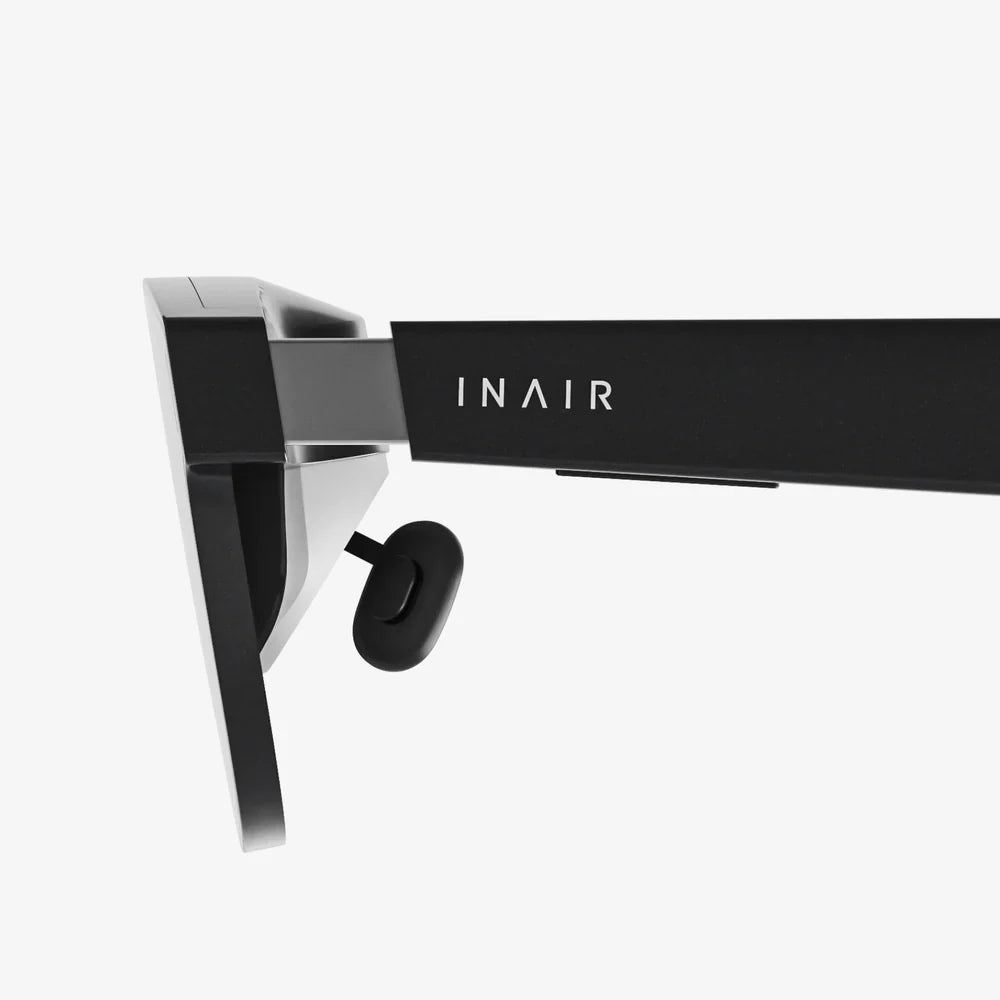
Technological Hurdles: For a seamless experience, AR requires powerful processing, long battery life, precise spatial mapping, and a comfortable, socially acceptable form factor. Current smart glasses often fall short, being too bulky, too expensive, or lacking in visual fidelity. The "perceptual realism"—where digital objects convincingly interact with light and physics in the real world—is still a work in progress. Overcoming these hardware limitations is essential.
The Social and Ethical Dimension: The usefulness of AR is shadowed by valid concerns about privacy and security. An always-on camera that maps our world raises alarming questions about data collection and surveillance. Digital graffiti and spam could literally deface our reality. Furthermore, the potential for distraction is immense; walking or driving with a constant stream of digital information overlaying your vision could be dangerous. Establishing clear ethical guidelines, robust privacy controls, and developing digital etiquette for AR will be just as important as the technology itself.
The Digital Divide: There is a risk that AR, like many technologies, could exacerbate social inequalities. If AR becomes a primary tool for work, education, and navigation, those who cannot afford the necessary hardware or access the required data networks could be left at a significant disadvantage, creating a chasm between the digitally augmented and the unaugmented.
The Future is Augmented: A Tool for Human Potential
The evolution of AR is moving towards a future where the technology fades into the background, leaving only its utility in focus. We are progressing from heads-up displays on phones and tablets to more advanced smart glasses, and eventually towards contact lens-based displays or even direct neural interfaces. The goal is not to dazzle with graphics, but to provide information so intuitively and contextually that it feels like a natural extension of our own cognition.
In this future, AR's usefulness will be measured not by the wow factor of its animations, but by its ability to make us more capable, more efficient, and more connected to the world around us. It will be the invisible guide that helps a engineer fix a wind turbine, the digital tutor that helps a child understand the cosmos, and the contextual filter that helps us navigate an increasingly complex information landscape.
So, is augmented reality useful? The evidence is overwhelming. It is already transforming critical industries, redefining educational paradigms, and creating new avenues for commerce. Its utility lies in its unique ability to merge the digital and physical, not as a escape from our world, but as a means to understand it better, interact with it more skillfully, and unlock human potential within it. The age of augmentation is not coming; it is already here, and its practical impact is only beginning to be felt. The real question is no longer about its usefulness, but about how we will choose to harness this powerful tool to build a better, more informed, and more capable future.


Share:
Augmented Reality Updates Are Reshaping Our Digital and Physical Worlds
Augmented Reality Definition and Examples: A Deep Dive into the Digital Overlay