


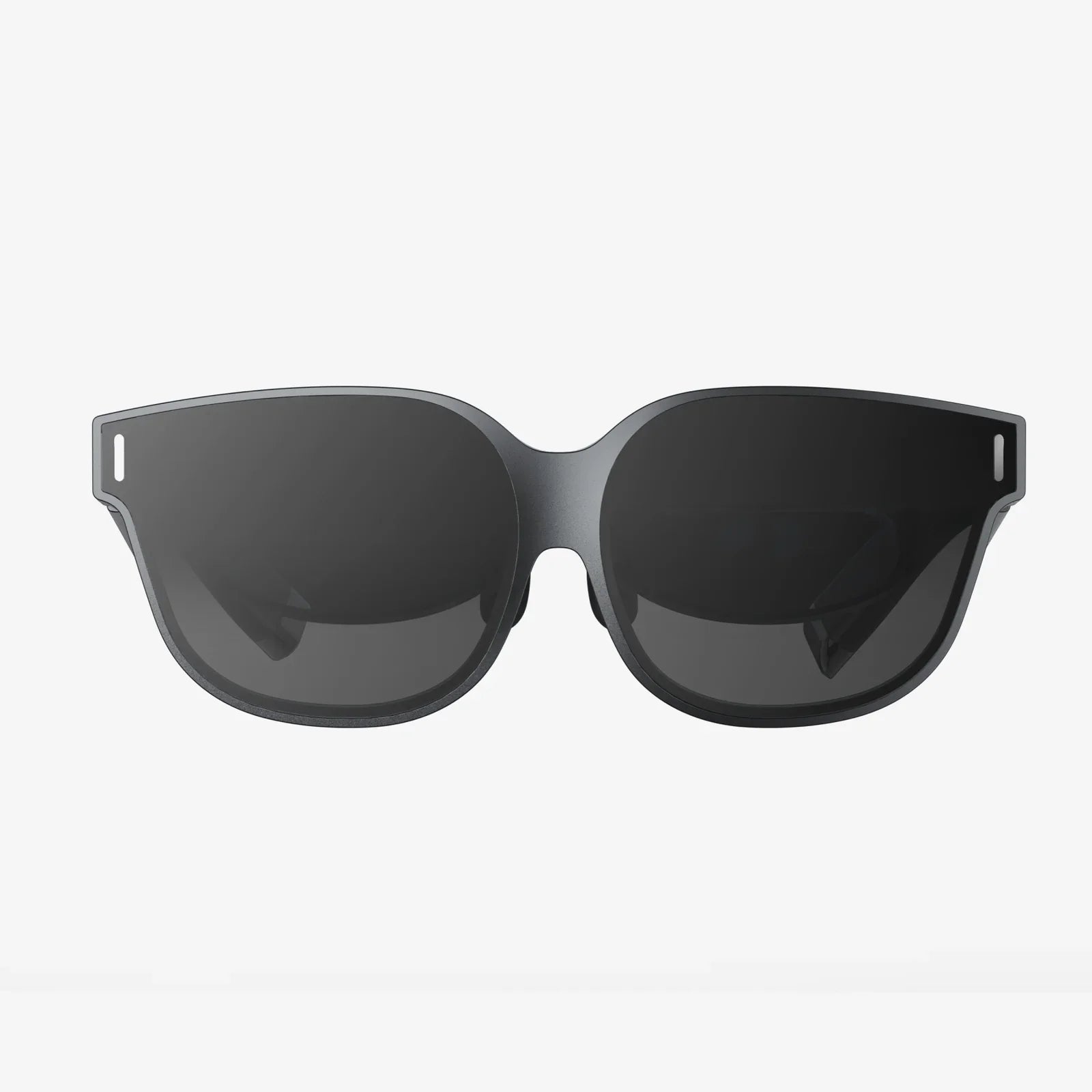
Imagine a world where digital information doesn't just live on a screen in your hand but is seamlessly painted onto the fabric of your reality, enhancing everything you see, do, and understand. This is the profound promise of augmented reality display technology, a frontier of innovation that is swiftly moving from conceptual prototypes to tangible tools set to revolutionize our personal and professional lives. It’s a gateway to a layered existence, where the physical and digital coalesce, and it’s arriving faster than many anticipate.
The Foundation: Blending Realities with Light and Pixels
At its core, augmented reality (AR) is an interactive experience that enhances the real world by overlaying computer-generated perceptual information. Unlike Virtual Reality (VR), which creates a completely artificial environment, AR allows users to remain present in their actual surroundings while digital content is superimposed upon or composited with that environment. The magic that makes this possible is the display technology, the crucial bridge between the binary world of data and the analog world we inhabit.
The fundamental challenge for any AR display is to convincingly merge virtual imagery with the user's view of the real world. This involves solving complex problems related to focus, occlusion, contrast, and field of view. The technology must project light that is bright enough to be visible in broad daylight yet subtle enough to not completely obscure the background. It must also ensure that digital objects appear to reside at the correct depth, interacting realistically with physical objects by being occluded by them and casting believable shadows.
The Engine Room: How AR Displays Project the Future
Several competing technological approaches are vying for dominance in the AR display space, each with its own strengths, limitations, and ideal use cases. The evolution of this field is a fascinating dance of optics, material science, and software engineering.
Waveguide Displays
Perhaps the most prominent technology for see-through AR displays, particularly in sleek, consumer-targeted eyewear, is the waveguide. This method uses a thin piece of transparent material, like glass or plastic, to guide light from a micro-display or laser beam scanner into the user's eye.
The process typically involves:
- In-Coupling: Light from a miniature projector is directed into the waveguide.
- Propagation: The light travels through the substrate via total internal reflection, bouncing between its surfaces.
- Out-Coupling: A grating structure (either diffractive or holographic) redirects the light out of the waveguide and toward the user's eye, forming an image that appears to float in space.
The primary advantage of waveguides is their potential for thin, lightweight form factors that resemble conventional eyeglasses. However, they often struggle with limited field of view, optical artifacts like the "rainbow effect," and relatively low optical efficiency, which can lead to dim images in very bright environments.
Birdbath Optics
Another common architecture is the "birdbath" design. This system uses a combiner—a partially reflective mirror—set at a 45-degree angle in front of the user's eye. A micro-OLED display is positioned above, projecting an image downward onto this combiner. The combiner then reflects the image into the user's eye while still allowing most of the light from the real world to pass through.
Birdbath optics generally offer brighter images, richer colors, and a wider field of view compared to many waveguide systems. The trade-off is a bulkier physical design, as the optics require more space, making it less ideal for all-day, everyday eyewear but excellent for high-fidelity experiences in headsets.
Retinal Projection and Laser Beam Scanning
Pushing the boundaries even further are technologies like retinal projection. This approach aims to draw images directly onto the user's retina using low-power lasers. A laser beam scanner (LBS) system uses tiny mirrors, known as Micro-Electro-Mechanical Systems (MEMS), to raster-scan red, green, and blue laser beams directly onto the retina.
The potential benefits are immense: an "infinite" depth of focus (virtual objects appear sharp whether they are "close" or "far"), very high brightness and contrast, and the potential for extremely compact projectors. The significant challenges involve ensuring eye safety, managing image stability, and achieving high resolution with this scanning method.
Emerging and Future Technologies
The innovation pipeline is bursting with other promising concepts. Holographic optics aim to use laser light to create true holographic images within a viewing window, offering more natural depth cues. Light field displays attempt to replicate the way light fields interact with our eyes in the real world, potentially solving the vergence-accommodation conflict—a major source of eye strain in current AR systems where your eyes converge on a virtual object but must focus on the fixed focal plane of the display.
Beyond the Glass: The Symphony of Enabling Technologies
A functional AR system is far more than just a display. It is a symphony of advanced technologies working in perfect harmony.
- Spatial Mapping: Using cameras and sensors like LiDAR, the device must continuously scan and understand the geometry of the environment to anchor digital objects accurately.
- World-Locked Rendering: The software must render graphics at an exceptionally high and stable frame rate, ensuring that virtual content stays "locked" in place in the real world without jitter or drift.
- Precise Tracking: This includes both inside-out positional tracking (to know where the user is in a room) and eye-tracking (for intuitive interaction and foveated rendering, which saves processing power by rendering only the area the user is directly looking at in high detail).
- Powerful Processing: All this data crunching and rendering requires immense computational power, either from an onboard chipset or streamed wirelessly from a nearby device.
Transforming Industries: The Practical Power of AR
The applications for this technology stretch across nearly every sector, moving beyond gaming and entertainment into critical, productivity-enhancing tools.
Revolutionizing Enterprise and Manufacturing
On factory floors and in warehouses, AR displays are providing workers with hands-free access to vital information. Technicians can see assembly instructions overlaid directly on the machinery they are repairing. Warehouse pickers can see navigation paths and item information appear in their field of view, dramatically speeding up fulfillment processes. Complex wiring diagrams or plumbing schematics can be projected onto physical walls before a single hole is drilled, reducing errors and rework.
Advancing Medical and Surgical Procedures
In healthcare, the implications are profound. Surgeons can use AR headsets to visualize patient data, such as MRI or CT scans, projected directly onto the patient's body during procedures, effectively giving them "X-ray vision." Medical students can practice complex procedures on detailed, interactive holographic models. AR can also assist in vein detection for injections or provide real-time guidance for physical therapy exercises, ensuring patients maintain correct form.
Redefining Design and Architecture
Architects and interior designers can walk clients through full-scale, holographic models of unbuilt structures, making changes to materials or layouts in real-time. Engineers can collaborate on 3D prototypes from different corners of the globe, all interacting with the same virtual model as if it were physically present in the room.
Enhancing Everyday Life and Navigation
For consumers, the future promises navigation arrows painted onto the street as you walk, contextual historical information popping up when you look at a landmark, and interactive translations of foreign street signs appearing instantly. Your smart glasses could recognize a friend in a crowd and display their name and last meeting, or help you find the exact ingredient you need on a crowded supermarket shelf.
The Road Ahead: Challenges and the Quest for the Ultimate Display
Despite the exciting progress, the path to perfect, ubiquitous AR is fraught with significant hurdles that engineers and designers are racing to overcome.
The quest for the "holy grail" of AR—a pair of glasses that are socially acceptable, all-day comfortable, visually stunning, and affordably priced—continues. Key challenges include achieving a wide field of view (ideally matching human peripheral vision) without increasing size and weight, managing the immense thermal load generated by powerful processors, and creating displays with high enough resolution to make text razor-sharp and visuals indistinguishable from reality. Furthermore, creating a compelling and intuitive user interface that relies on voice, gesture, and gaze instead of a traditional mouse and keyboard is a monumental software challenge. Finally, serious questions about privacy, data security, and the long-term social effects of an always-on, augmented world must be addressed by society as a whole.
The next decade will be defined by relentless miniaturization, improved battery technology, and breakthroughs in material science. We will see a shift from discrete headsets to multifunctional smart glasses that people choose to wear for their primary computing and communication needs. The line between the digital and the physical will continue to blur, creating new forms of art, entertainment, and human connection that we are only beginning to imagine.
We are standing at the precipice of a new layer of human experience, one where information is contextual, intuitive, and integrated directly into our perception. Augmented reality display technology is the lens through which we will apply this digital superpower, transforming not just what we see, but how we learn, work, and interact with the universe around us. The screen is fading, and the world itself is becoming the canvas.
Share:
Virtual Glasses Best Buy: Your Ultimate Guide to Smart Eyewear in 2024
What Does AR VR Mean? A Deep Dive Into The Digital Frontier