


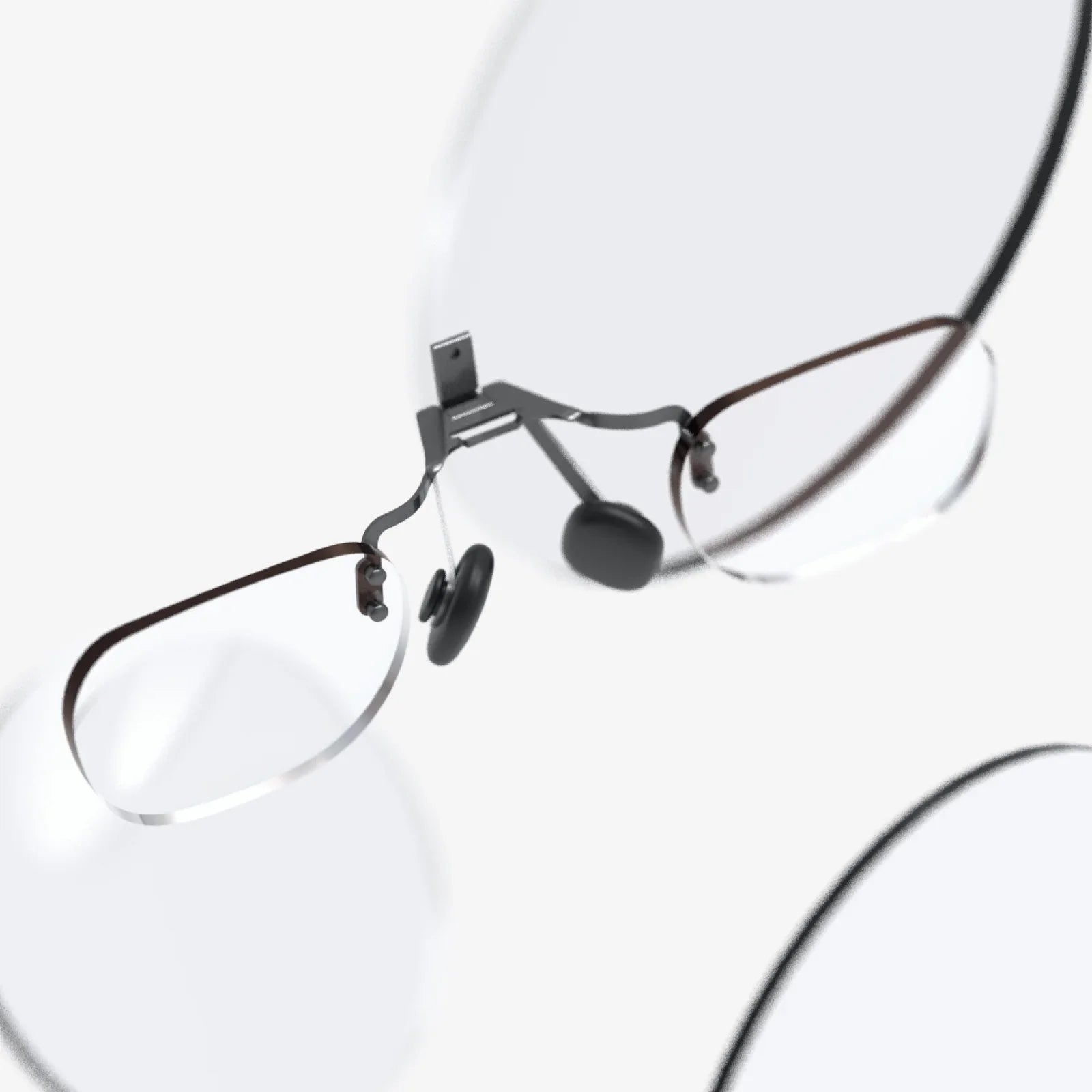
Imagine a world where the digital and the physical are no longer separate realms, but a seamless, integrated tapestry of information and experience. This is the promise of augmented reality displays, a technology not of distant science fiction, but of our imminent future, poised to fundamentally reshape every facet of our lives, from how we work and learn to how we connect and play. It’s a portal waiting to be opened, and the view on the other side will change everything.
The Core Technology: How AR Displays Paint Reality with Data
At its heart, an augmented reality display is a device that superimposes computer-generated sensory input—be it images, video, sound, or haptic feedback—onto a user's view of the real world. Unlike virtual reality, which seeks to replace reality entirely, AR aims to enhance and augment it. The magic lies in the sophisticated dance of hardware and software that makes this possible.
Optical Systems: Waveguides, Beam Splitters, and Retinal Projection
The primary challenge for any AR display is how to deliver digital imagery into the user's field of vision without obstructing their view of the real world. Several competing optical technologies are vying for dominance.
Waveguide Displays: Often considered the gold standard for consumer-ready devices, waveguides use microscopic structures etched into a transparent substrate (like a piece of glass or plastic) to "pipe" light from a micro-display on the temple of the glasses into the user's eye. Think of it like a fiber optic cable for your vision. This method allows for sleek, eyeglass-like form factors and is highly efficient at preserving ambient light and clarity.
Beam Splitter (or Combiners): This older, simpler technology uses a partially reflective surface placed directly in front of the eye. A micro-display projects an image onto this surface, which reflects it into the eye while simultaneously allowing light from the real world to pass through. While often bulkier, it can offer superior brightness and color fidelity.
Retinal Projection: Perhaps the most futuristic approach, retinal projection systems bypass a combiner altogether. Instead, they use low-power lasers or LEDs to scan images directly onto the user's retina. This can create images that appear incredibly vast and high-resolution, as they are drawn directly onto the eye's canvas, and can be effective for users with vision impairments.
Sensing and Tracking: The AR System's Eyes and Ears
For digital content to convincingly coexist with the physical world, the AR system must have a deep understanding of its environment and the user's place within it. This is achieved through a suite of advanced sensors.
- Cameras: Multiple cameras work in concert for different purposes. Standard RGB cameras capture the visible world, while depth-sensing cameras (like time-of-flight sensors) map the environment in 3D, measuring the distance to every surface. This creates a digital mesh of the room, allowing virtual objects to occlude and be occluded by real furniture.
- Inertial Measurement Units (IMUs): These components, including accelerometers and gyroscopes, track the precise movement and rotation of the user's head with extreme speed and low latency, preventing the nausea-inducing lag that plagued early VR systems.
- Eye Tracking: By monitoring where the user's pupils are focused, the system can enable intuitive interaction (selecting an item just by looking at it), create a more natural depth of field (blurring virtual objects not in focus), and dramatically improve rendering efficiency by allocating full processing power only to the area the user is directly viewing—a technique known as foveated rendering.
Spatial Computing: The Brain Behind the Operation
Raw sensor data is useless without interpretation. This is where spatial computing comes in—the software brain that fuses all this information into a coherent model. Using simultaneous localization and mapping (SLAM) algorithms, the device can localize itself within an unknown environment while simultaneously building a 3D map of it. This allows digital content to be "pinned" to a specific physical location. If you place a virtual character on your sofa, it will remain there, from every angle, even if you walk to the other side of the room and look back.
Beyond Novelty: The Transformative Applications of AR
The true power of augmented reality displays is revealed not in tech demos, but in their practical, problem-solving applications across countless industries.
Revolutionizing Enterprise and Industrial Work
This is where AR is already delivering immense value. Technicians repairing complex machinery can see animated repair instructions overlaid on the exact component they are holding, with arrows pointing to specific screws and warnings highlighting live wires. Architects and engineers can walk through full-scale 3D models of their designs before a single brick is laid, identifying clashes and testing sightlines. Warehouse workers are guided by digital navigation lines on the floor to the exact shelf location for an item, with picking information displayed in their periphery, drastically improving efficiency and reducing errors.
Redefining Healthcare and Medicine
In medicine, AR displays are moving from convenience to life-saving tools. Surgeons can see critical patient data—heart rate, blood pressure, MRI scans—floating in their field of view without looking away from the operating table. More powerfully, they can project a CT scan directly onto a patient's body, creating an "X-ray vision" effect to guide incisions and locate tumors with unprecedented precision. Medical students can practice procedures on hyper-realistic virtual anatomy, and physical therapists can use AR-guided exercises to ensure patients perform movements correctly at home.
Enhancing Daily Life and Social Connection
For the consumer, the applications are both practical and profound. Navigation arrows can be painted onto the street itself, guiding you to your destination. You could point your AR-enabled device at a restaurant and see its reviews and menu materialize in the air. At home, you could visualize how a new piece of furniture would look in your living room, at perfect scale and in the correct lighting, before making a purchase.
Socially, AR promises a new form of telepresence. Instead of flat video calls on a screen, friends and family could appear as realistic holograms in your room, sitting on your actual couch, able to gesture and interact with your environment. This could bridge geographical divides with a sense of shared presence that today's technology cannot match.
The Hurdles on the Horizon: Challenges to Overcome
For all its promise, the path to ubiquitous augmented reality is fraught with significant technical and social challenges that must be addressed.
The Form Factor Dilemma
The ultimate goal is a pair of ordinary-looking eyeglasses that can deliver rich, all-day AR experiences. We are not there yet. Current technology often requires trade-offs between field of view, processing power, battery life, and weight. Achieving a wide, immersive field of view without creating bulky, heavy, and power-hungry headsets remains the primary engineering challenge. Breakthroughs in micro-LED displays, waveguide efficiency, and battery technology are critical.
The Social and Privacy Conundrum
Walking around with a camera on your face recording the world raises profound privacy questions. How do we prevent a dystopian future where everyone is constantly scanning and analyzing everyone else? Robust digital ethics, clear laws on AR recording, and perhaps even visual indicators that show when a device is capturing will be essential to gaining public trust. Furthermore, the social awkwardness of interacting with someone whose eyes are partially obscured by a display is a non-trivial barrier to adoption.
The Digital Divide and Accessibility
As with any transformative technology, there is a risk that AR could exacerbate existing inequalities. Will this become an essential tool for work and education, creating a new class of "AR-haves" and "AR-have-nots"? Ensuring the technology is affordable, accessible, and designed for people with diverse abilities from the outset is crucial to preventing a new digital chasm.
The Future is Layered: What Comes Next?
The evolution of augmented reality displays will not be a single event, but a gradual process of integration and refinement. We will likely see a shift from today's task-specific devices to context-aware companions that understand our needs and intentions. With advancements in artificial intelligence, your AR display could become a true cognitive partner, highlighting the name of a person you just met whose name you've forgotten, translating a foreign street sign in real-time, or warning you of a potential hazard on the road ahead that you haven't noticed.
The concept of the "metaverse"—a persistent network of interconnected virtual spaces—is intrinsically linked to AR. Rather than being a place we go to by putting on a headset, the metaverse could become a layer seamlessly integrated into our physical reality through AR displays, a digital twin of our world enriched with information, entertainment, and social connection.
We are standing at the precipice of a new era of human-computer interaction. The graphical user interface brought us the desktop, the touch interface brought us the smartphone, and the next paradigm shift will be the spatial interface, orchestrated by augmented reality displays. It’s a future where information is not confined to rectangles of glass we carry in our pockets, but is instead woven into the very fabric of our perception, enhancing our capabilities, enriching our understanding, and deepening our connection to the world and to each other. The screen is fading, and the world is awakening.
Share:
Augmented Reality Market Trends: A Deep Dive into the Next Digital Revolution
Cheap VR Glasses: Your Ultimate Guide to Affordable Virtual Reality