


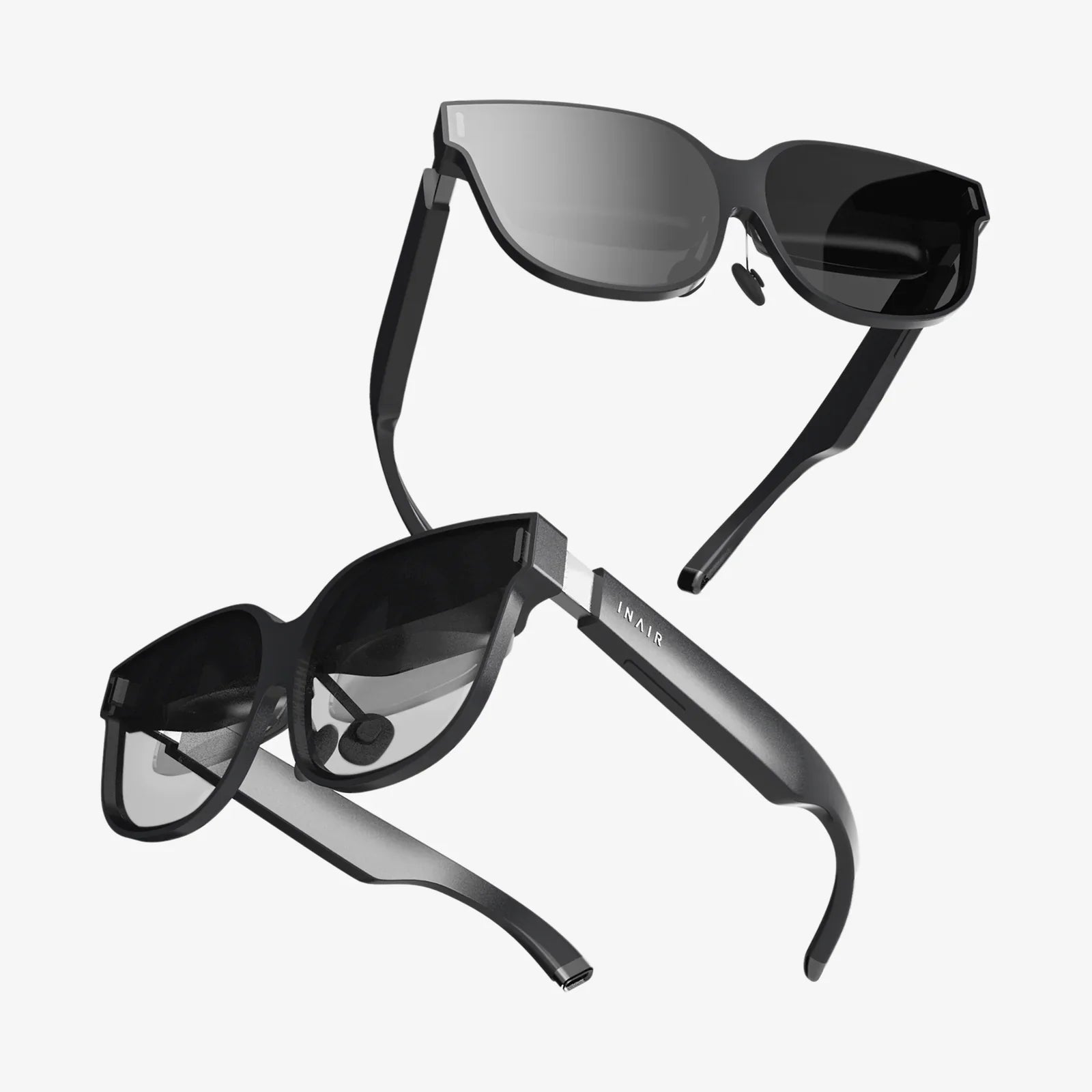
Imagine a world where the digital and the physical are no longer separate realms, but a single, unified experience. A world where information isn't confined to a screen but is painted onto the very fabric of your surroundings, accessible with a glance, a gesture, or a spoken word. This is the promise and the rapidly unfolding reality of the augmented reality environment—not as a gimmick or a fleeting trend, but as the next fundamental layer of human-computer interaction, poised to reshape everything from how we work and learn to how we connect and create.
Beyond the Novelty: Defining the Modern Augmented Reality Environment
At its core, an augmented reality environment is a seamlessly interwoven experience where computer-generated perceptual information enhances the real-world physical space around the user. Unlike virtual reality, which seeks to replace reality entirely, AR aims to supplement it. The earliest iterations were simple and marker-based, requiring a specific image or object to trigger a digital overlay. Today's environments are profoundly more sophisticated, powered by a confluence of advanced technologies.
This sophistication is built upon three critical pillars. First, spatial mapping allows the device to understand the geometry of the physical world. Using sensors like LiDAR, depth cameras, and simultaneous localization and mapping (SLAM) algorithms, the AR system constructs a detailed 3D mesh of the environment—identifying floors, walls, ceilings, and objects. This digital twin becomes the canvas upon which the AR experience is painted.
Second, persistent cloud anchoring ensures that digital content isn't just floating in space relative to the user's headset or phone. Instead, it is locked to specific coordinates in the real world. This means one user can place a virtual sculpture in their living room, and another user, with a compatible device, can walk into that same room days later and see it exactly where it was left, shared and persistent across time and users.
Third, contextual intelligence is the layer that transforms AR from a visual tool into an intelligent assistant. By leveraging artificial intelligence and machine learning, the AR environment can understand the context of what it's seeing. It can recognize a specific machine on a factory floor and display its real-time operational data. It can identify a component in an engine and highlight the next step in the repair manual. This contextual awareness is what makes the environment truly responsive and valuable.
The Architectural Blueprint: How an AR Environment is Constructed
Creating a convincing and functional augmented reality environment is a complex feat of digital engineering. It begins with the perception layer. This is the suite of hardware—cameras, infrared sensors, accelerometers, gyroscopes, and GPS—that acts as the system's eyes and ears, continuously gathering data about the user's surroundings and movements.
This raw data is then processed by the processing layer. Here, powerful algorithms interpret the sensor input. SLAM algorithms work in real-time to map the environment and track the user's position within it. Object recognition algorithms classify and label the physical objects detected by the cameras. This layer is computationally intensive and is increasingly being handled by dedicated processors on mobile devices and wearables.
Next, the integration layer takes this understood environment and merges it with the digital content. This is where the magic of occlusion happens—ensuring that a virtual character can walk behind a real sofa, or that a digital monitor appears to be sitting on a physical desk. Lighting estimation algorithms analyze the ambient light in the room and adjust the shading and shadows on digital objects to match, creating a photorealistic blend.
Finally, the interaction layer provides the interface for the user to engage with this hybrid world. This goes far beyond simple touchscreens. Modern AR environments utilize hand-tracking for natural gestures, voice commands for hands-free control, and even eye-tracking to understand user intent. This multimodal interaction is crucial for making the technology feel intuitive and immersive rather than cumbersome.
Transforming the Workspace: The Industrial and Enterprise Metaverse
While consumer applications often grab headlines, the most profound impact of augmented reality environments is currently happening in industry and enterprise. Here, the technology is solving real-world problems with clear returns on investment.
In manufacturing and field service, AR is revolutionizing complex assembly, maintenance, and repair. Technicians wearing AR glasses can see digital work instructions and animated diagrams overlaid directly onto the machinery they are servicing. A remote expert, seeing what the on-site technician sees through a live video feed, can annotate the real-world view with arrows, circles, and notes to guide them through a complex procedure, drastically reducing errors, downtime, and the need for travel.
The design and architecture sectors have been completely transformed. Instead of viewing blueprints on a 2D screen, architects and clients can walk through a full-scale, photorealistic 3D model of a building before a single brick is laid. They can change the materials of the walls, the placement of windows, or the lighting fixtures in real-time, experiencing the spatial and aesthetic implications immediately. This collaborative augmented reality environment eliminates costly misunderstandings and enables truly iterative design.
Logistics and warehouse management represent another frontier. AR smart glasses can display optimal picking routes, highlight the exact location of an item on a crowded shelf, and verify that the correct item has been selected using image recognition. This leads to dramatic increases in picking speed and accuracy, streamlining the entire supply chain from the warehouse floor to the delivery driver, who can use AR for optimized navigation.
Redefining Human Connection and Storytelling
The social and creative implications of persistent augmented reality environments are staggering. This technology offers a new canvas for artistic expression and a new medium for shared experience. Imagine a world where public art isn't confined to static sculptures but is dynamic, interactive, and layered over cityscapes. Artists could create site-specific AR installations that respond to the weather, the time of day, or the number of people viewing them.
Storytelling, too, is being unbounded from the screen. Historical sites could come alive with reenactments of famous events happening right where they occurred. Museums could display artifacts in their original, full-sized context instead of behind glass. A walking tour of a city could reveal the ghostly outlines of buildings long since demolished, offering a window into the past. This turns the entire world into a potential stage for narrative and education.
On a personal level, this technology will redefine communication. Instead of a grid of faces on a video call, future meetings could take place around a virtual 3D model that all participants can see and manipulate in their own physical space. Friends and families separated by geography could leave persistent digital notes, drawings, or photos in each other's homes, creating a shared, hybrid space that feels connected despite the distance.
Navigating the Invisible Frontier: Challenges and Ethical Considerations
The path to a ubiquitous augmented reality environment is not without significant hurdles. Technologically, achieving all-day battery life in sleek, comfortable wearables remains a challenge. Display technology needs to advance to provide high-resolution, wide-field-of-view visuals that are bright enough for outdoor use yet safe for prolonged exposure.
However, the most pressing challenges are not technical but social and ethical. Data privacy becomes paramount. An AR device that is continuously scanning and mapping its environment is, by its very nature, a powerful surveillance tool. The data it collects—a detailed 3D map of your home, your office, your daily routines—is incredibly sensitive. Clear, transparent, and user-centric data policies are non-negotiable to prevent misuse.
The concept of digital vandalism and spatial spam is a real concern. If everyone can leave persistent digital content anywhere, how do we prevent public spaces from becoming cluttered with unwanted advertisements or offensive imagery? This will require new social norms, content moderation frameworks, and potentially even digital zoning laws.
Furthermore, the potential for reality distortion is profound. When everyone can be presented with a personally tailored version of the world, we risk further fracturing our shared sense of reality. The same technology that can highlight a historical fact could also be used to overlay misinformation or propaganda onto a real-world location. Ensuring the integrity of information within the AR layer will be one of the defining challenges of the coming decade.
The Future is Layered: What Comes Next?
The evolution of the augmented reality environment is moving towards greater invisibility and intuition. The goal is to shift from a device we use to a layer we inhabit. We are moving towards sleek glasses, then eventually to contact lenses, and perhaps even direct neural interfaces that project information directly into our perception without any hardware intermediary.
The rise of the Ambient Internet will see information and intelligence fade into the background of our lives, available when we need it but otherwise unseen. The AR environment will act as the primary interface for this ambient world, allowing us to query and interact with the connected universe through natural language and gesture.
Ultimately, the success of this technology will not be measured by its graphical fidelity or its technical specs, but by its humanity. The most powerful augmented reality environment will be one that enhances our human capabilities—our creativity, our productivity, and our connections—without isolating us from the physical world and each other. It will not be about escaping reality, but about deepening our understanding and engagement with it.
The line between the digital and the physical is dissolving, giving way to a new hybrid reality that is richer, more informative, and more interactive than anything we have experienced before. This invisible layer is already beginning to transform how we see our world, and more importantly, how we understand our place within it. The future isn't on a screen; it's all around you, waiting to be unlocked.
Share:
Eye Glasses Virtual Mirror: The Future of Eyewear Shopping is Here
Are Aura Frames Secure? A Deep Dive into Digital Privacy and Protection