


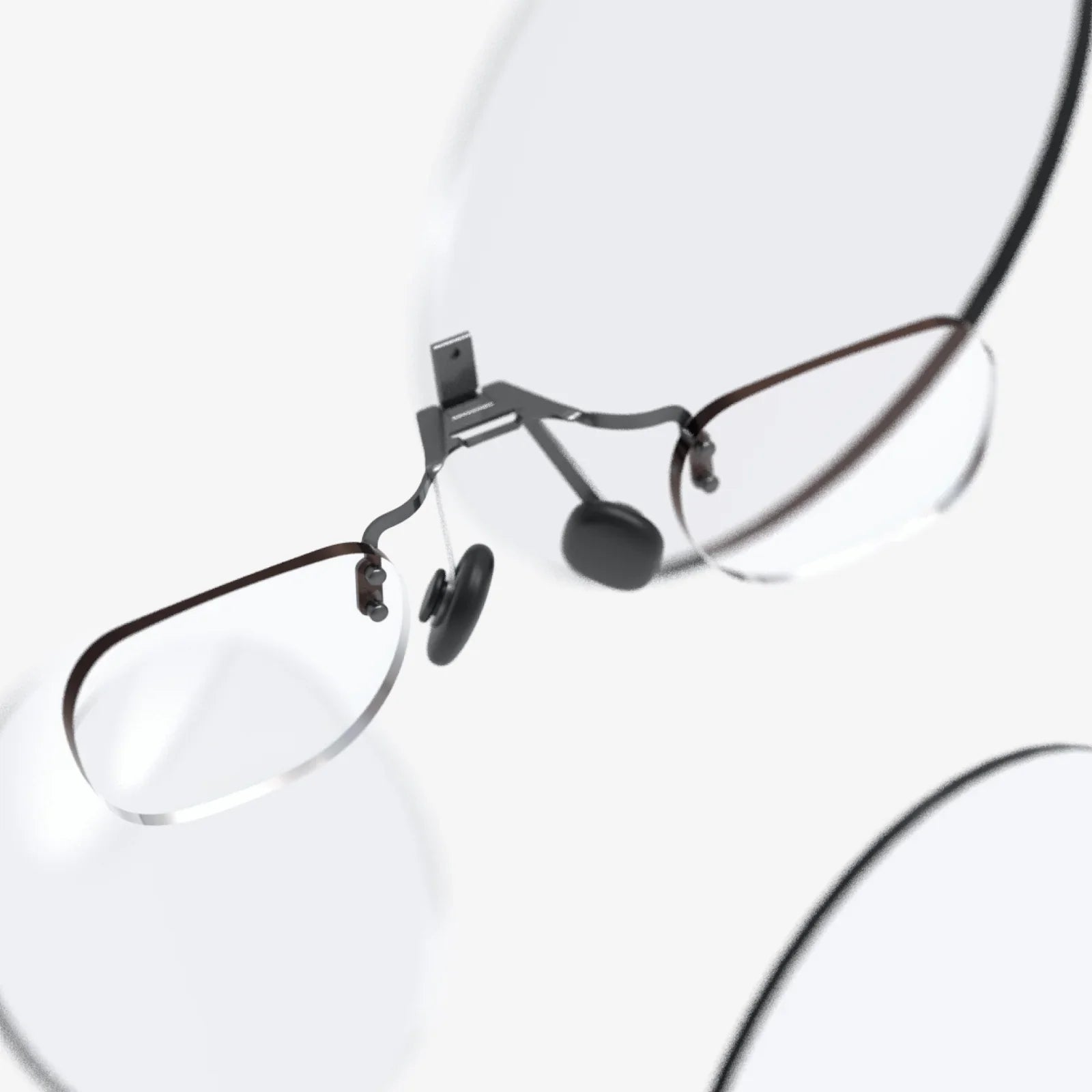
Imagine a world where information is not confined to a screen in your hand or on your desk, but is seamlessly overlaid onto your field of vision. The morning news headlines scroll subtly along the edge of your bathroom mirror as you get ready. Navigation arrows appear on the road itself, guiding you to your destination. The name and professional background of a person you’ve just met at a conference hovers discreetly near their shoulder. This is the breathtaking promise of augmented reality eye lenses, a technology not of tomorrow, but of the imminent future, set to dissolve the barrier between the digital and the physical and redefine the very nature of human experience.
From Sci-Fi Dream to Technological Feat
The concept of augmenting our reality with digital information has been a staple of science fiction for decades, but its path to reality has been a complex engineering puzzle. The journey began with head-mounted displays, evolved through bulky helmets, and has recently been popularized by smart glasses. However, all these devices share a fundamental limitation: they are an external apparatus, a device we must choose to wear, a visible layer between us and the world.
Augmented reality eye lenses represent the logical, and ultimate, endpoint of this evolution: complete invisibility and seamless integration. The goal is to move the technology from something on your face to something in your eye, effectively making the interface biological. This requires a convergence of several cutting-edge disciplines: micro-electronics, nanotechnology, materials science, optometry, and neuroscience. The challenges are immense—powering a sophisticated computer on the surface of the eye, projecting light onto the retina with perfect clarity without obstructing vision, and doing it all in a package that is safe, comfortable, and socially acceptable.
Deconstructing the Miracle: How AR Lenses Work
At its core, the technology functions by projecting digital images directly onto the retina, blending them with the light entering the eye from the real world. While designs vary, most concepts involve a few critical components integrated into a lens material that is biocompatible and allows for oxygen permeability to keep the eye healthy.
- Micro-LEDs or Laser Diodes: These are the incredibly tiny light sources, thinner than a human hair, that generate the pixels of the digital image. Thousands of these would be arrayed across the lens to create a high-resolution display.
- Optical Waveguides: These are microscopic channels etched into the lens that act like fiber optic cables, directing the light from the edge of the lens towards the center of the pupil. This allows the projection system to be tucked away, leaving the central vision clear.
- Micro-Power Source: This is perhaps the most significant hurdle. Solutions being explored include ultra-thin solid-state batteries that recharge wirelessly, harvesting energy from ambient light or even from the movement of the eye itself through piezoelectric systems.
- Nanoscale Chipset: A miniature processor, memory, and wireless communication chip (like a tiny 5G/6G antenna) are embedded to handle data processing, storage, and connection to external networks and devices.
- Sensors: Micro-electromechanical systems (MEMS) including accelerometers, gyroscopes, and potentially even photodiodes to monitor blood sugar levels or intraocular pressure turn the lens into a sophisticated health monitor.
The magic happens when these components work in concert. Data is received wirelessly, processed by the onboard chip, and used to instruct the micro-LEDs. Their light is channeled through the waveguides and focused onto the retina. Your brain perceives this light as a coherent image superimposed on your view of the real world.
A World Remastered: The Transformative Applications
The applications for this technology extend far beyond novelty, promising to revolutionize nearly every aspect of modern life.
Revolutionizing Healthcare and Medicine
For medical professionals, AR lenses could become an indispensable tool. A surgeon could see a patient’s vital signs, MRI data, or ultrasound imagery overlaid directly on their body during a procedure, without ever looking away from the operating field. A general practitioner could have a patient’s medical history and current medications displayed during a consultation, allowing for more informed and personal care. For individuals, the lenses could serve as a continuous health monitor, tracking biomarkers in tear fluid to provide real-time alerts for conditions like diabetic hypoglycemia or elevated intraocular pressure, enabling preventative medicine on a whole new level.
Redefining Work and Industry
The implications for the workforce are profound. A field engineer repairing a complex machine could see step-by-step instructions, technical schematics, and torque specifications highlighted directly on the components they are working with. An architect could walk through a full-scale, holographic model of their building design before a single brick is laid. Warehouse workers could have optimal picking routes and inventory data displayed in their vision, drastically improving efficiency and reducing errors. This hands-free, information-rich environment could create a new paradigm for productivity and training.
Transforming Social Interaction and Navigation
Socially, these lenses could erase language barriers, providing real-time subtitles for conversations in foreign languages. Navigation would become intuitive, with directions and points of interest painted onto the streets and buildings around you. Imagine looking at a restaurant and instantly seeing its reviews and tonight’s specials menu. The potential for enriched travel, education, and daily convenience is staggering.
The Other Side of the Lens: Ethical and Social Dilemmas
With such transformative power comes a host of serious ethical, privacy, and social challenges that must be addressed proactively.
The Privacy Paradox
If these lenses can recognize faces and overlay information, they become the ultimate surveillance tool. The concept of anonymity in public could vanish. Who controls the data being accessed and displayed? Could someone be recorded without their knowledge or consent? The potential for abuse by corporations, governments, and malicious actors is a dark shadow that looms over this technology. Robust digital privacy laws and ethical frameworks, far beyond what exists today, will be a prerequisite for their safe adoption.
The Digital Divide and Accessibility
Will this technology be a great equalizer or a catalyst for a new, more extreme digital divide? If AR lenses become essential for work, education, and social participation, what happens to those who cannot afford them or choose not to use them? They risk being left behind in an increasingly augmented world. Furthermore, accessibility for people with visual impairments must be a primary design consideration, not an afterthought.
Reality Ownership and Mental Health
When everyone can customize their perception of reality, what becomes of our shared objective experience? If one person sees historical facts overlaid on a monument and another sees a corporate advertisement, do they inhabit the same world? There is a risk of reality fracturing into personalized, algorithmically-curated bubbles. The constant stream of information could also lead to cognitive overload, social anxiety, and a new form of digital addiction, making it harder to be present in the un-augmented moment.
The Road Ahead: Challenges and The Path to Adoption
The final hurdles are not just technical but also biological and regulatory. The human eye is an incredibly sensitive and delicate organ. Any device placed on it must be perfectly safe, causing no long-term damage, dryness, or irritation. The materials must be durable yet comfortable. Regulatory bodies will require exhaustive clinical trials to ensure safety and efficacy. Furthermore, social acceptance will be a gradual process. The first iterations will likely be targeted at specific professional applications (e.g., medicine, engineering) before becoming a mainstream consumer product. The cost will initially be prohibitive, but like all technology, it will likely follow a curve toward affordability.
We are standing at the precipice of a new sensory paradigm. Augmented reality eye lenses are not merely a new gadget; they are a fundamental extension of human capability. They promise to unlock unprecedented efficiency, knowledge, and connection, weaving the digital tapestry of information directly into the fabric of our perceived reality. But this power carries a profound responsibility. Navigating the ethical minefields and ensuring this technology enhances humanity rather than divides it will be the defining challenge of its integration. The lens we place on our eyes will ultimately reflect the values we hold as a society, demanding a conversation that must begin today, before the future comes into focus.
The boundary between the human and the machine, the real and the digital, is about to become thinner than ever. The next time you look into someone’s eyes, you might not just be making a connection—you might be looking at the most powerful computer they will ever own, a window into a world where anything is possible, and the only limit is the imagination of the person behind the lens.
Share:
Which VR Headset is Best for VRChat: The Ultimate 2024 Guide to Immersive Socializing
Benefits of Extended Reality: Transforming Industries and Human Experience