


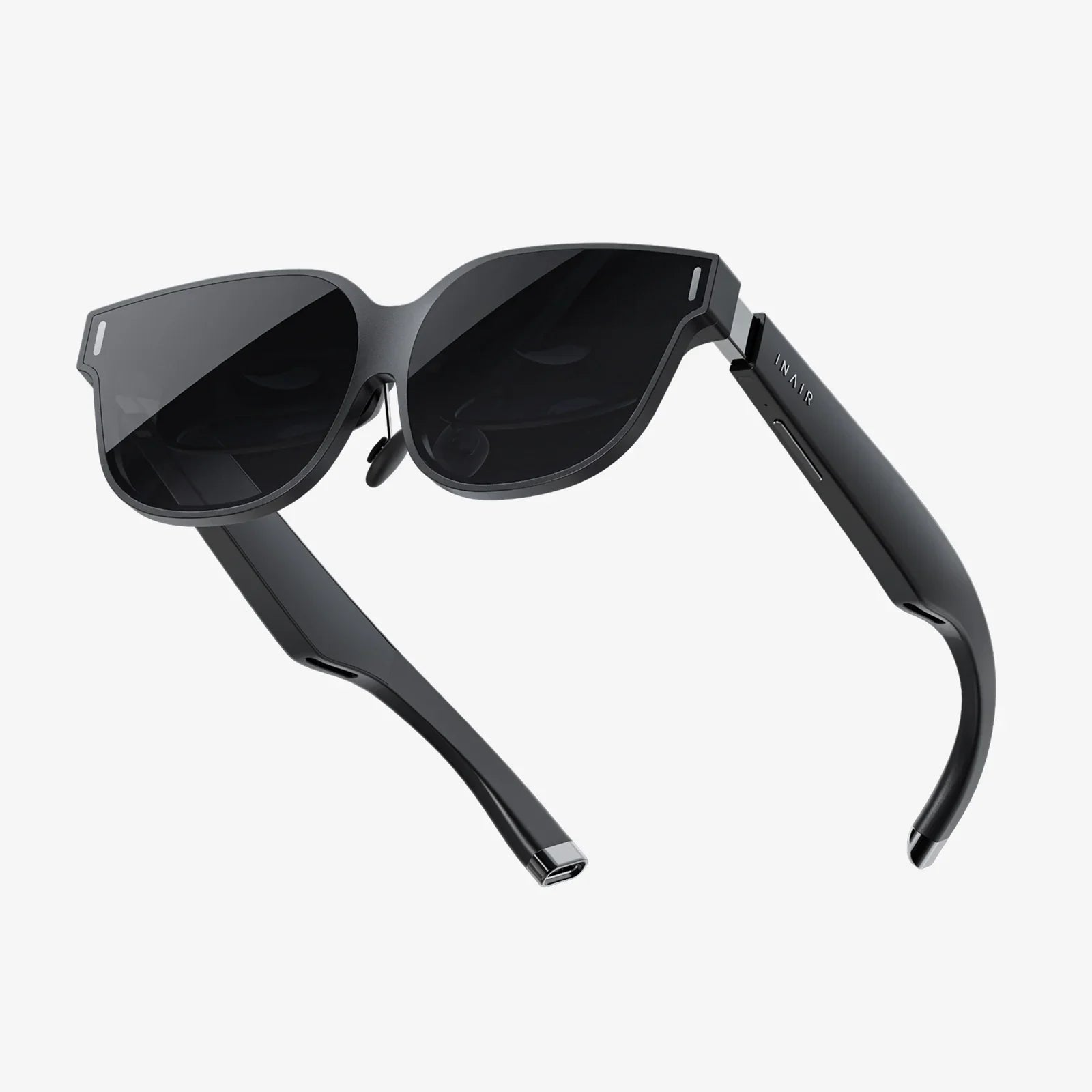
Imagine a world where digital information doesn't live on a screen in your hand but is seamlessly woven into the very fabric of your perception. Where directions float on the sidewalk before you, the history of a monument overlays its stone facade, and a colleague's avatar sits across from you at your kitchen table. This is the promise of augmented reality eyewear, a technology poised to fundamentally alter our relationship with information, work, and each other. The latest wave of news and developments suggests this future is no longer a distant sci-fi fantasy but an imminent reality, and the race to define it is heating up.
The Evolution of Form: From Bulky Prototypes to Socially Acceptable Frames
The most immediate barrier to widespread adoption of AR eyewear has historically been its aesthetics. Early prototypes were often bulky, cumbersome headsets with limited battery life, clearly marking the wearer as a tech enthusiast. Recent news from industry leaders and startups alike indicates a monumental shift in design philosophy. The new generation of devices prioritizes a form factor that resembles, and often is, standard eyewear.
Developments in micro-optics and waveguide technology have been crucial. These transparent lenses can project images directly into the user's eye without the need for large, opaque displays. This allows for frames that are significantly slimmer and lighter. We're seeing a move towards modular designs, where the AR compute unit might be a small, discreet pod attached to the temple rather than integrated into the entire frame, enabling users to switch between smart and regular lenses. The ultimate goal, as evidenced by recent patent filings and concept reveals, is complete invisibility—technology that is felt, not seen, moving from geek to chic.
The Heart of the Experience: Breakthroughs in Display and Optical Technology
At the core of any AR eyewear is its optical engine. This is the technological marvel that makes the digital magic happen. Recent news highlights fierce competition and rapid innovation in this space. Several key technologies are vying for dominance:
- Waveguide Displays: The current industry standard, using microscopic gratings on a glass lens to bend light from a projector on the temple into the eye. News from research labs points to advancements in efficiency and field of view (FOV), tackling previous limitations like a narrow "looking through a mail slot" effect.
- MicroLED Technology: Touted as the next big leap, MicroLEDs are incredibly small, bright, and power-efficient light sources. Their integration into eyewear is a significant news item, as they promise to enable brighter displays for outdoor use and richer colors, all while consuming less battery power.
- Laser Beam Scanning (LBS): This approach uses tiny mirrors to scan laser light directly onto the retina. It allows for very high contrast and always-in-focus images. Recent developments have focused on miniaturizing these systems to fit into an eyeglass form factor.
The competition is driving a rapid increase in performance while simultaneously reducing size and cost, a trend that promises to make high-fidelity AR accessible to a mass market sooner than anticipated.
Seeing the World Anew: Computer Vision and Spatial Mapping
For digital content to feel truly anchored in the real world, the device must understand its environment with incredible precision. This is where advanced computer vision and simultaneous localization and mapping (SLAM) come in. News from the software side of the industry is just as exciting as the hardware.
Modern AR eyewear is equipped with a suite of sensors—cameras, depth sensors, LiDAR, and inertial measurement units (IMUs)—that work in concert to create a real-time 3D map of the surroundings. This allows the device to understand surfaces, recognize objects, and place digital content persistently. The latest algorithms, often powered by on-device machine learning, can now identify everything from a specific coffee mug on your desk to the model of car driving down the street. This contextual awareness is the key to moving from simple notifications to truly intelligent augmentation that understands your intent and environment.
Powering the Paradigm Shift: Processing and Battery Life Innovations
All this sensing and rendering requires significant computational power, which traditionally means high energy consumption and heat generation. The news on this front revolves around custom silicon. Instead of using chips designed for mobile phones, companies are developing specialized processors optimized for the unique demands of AR. These AR-specific Systems on a Chip (SoCs) integrate the CPU, GPU, and dedicated processors for computer vision and AI tasks, performing these functions with far greater efficiency.
Battery technology remains a challenge, but innovations are emerging. We're seeing a multi-pronged approach: optimizing software and hardware for extreme power efficiency, developing new compact battery chemistries, and exploring alternative solutions like solar-charging coatings on the frames or swappable battery units. The industry news suggests that the goal of all-day battery life is within reach, which is a critical milestone for all-day wearability.
Building the Metaverse: The Critical Role of Software and Developers
Hardware is nothing without a robust software ecosystem. The most significant news often comes from developer conferences and platform updates. The major players are investing billions to create and nurture developer communities, providing them with sophisticated software development kits (SDKs) and creator tools.
The vision is to build a cross-platform "metaverse"—a network of persistent 3D spaces—where digital objects and experiences can exist consistently across different devices and brands of eyewear. This interoperability is crucial. News about new AR cloud services, which allow digital content to be pinned to real-world locations for anyone to see, points to a future where our physical world becomes a shared canvas for digital expression and utility. The success of AR eyewear hinges on this developer-driven explosion of apps, games, and enterprise tools that will provide genuine utility and delight.
Transforming Industries: Enterprise and Professional Applications
While consumer applications capture the imagination, the most immediate and impactful news is emerging from enterprise adoption. Businesses are deploying AR eyewear to solve real-world problems and achieve staggering returns on investment. The use cases are vast and transformative:
- Field Service & Repair: Technicians can see schematic diagrams overlaid on complex machinery, receive remote expert guidance with annotations visible in their field of view, and access hands-free manuals.
- Manufacturing & Logistics: Warehouse workers receive picking instructions directly in their vision, guiding them to items and verifying selections, dramatically increasing speed and accuracy. Assembly line workers see digital torque specs and wiring diagrams superimposed on the product in front of them.
- Healthcare: Surgeons can visualize patient vitals and 3D scans during procedures without looking away from the operating field. Medical students can learn anatomy on virtual cadavers overlaid on mannequins.
- Design & Architecture: Architects and clients can walk through full-scale 3D models of unbuilt structures, and interior designers can place virtual furniture in a room to preview layouts.
Enterprise news consistently highlights double-digit percentage increases in productivity and double-digit percentage decreases in error rates, proving the tangible value proposition of the technology.
Navigating the Uncharted: Privacy, Security, and Social Implications
As with any transformative technology, AR eyewear brings a host of societal questions that are increasingly becoming front-page news. The always-on cameras and microphones necessary for context-aware computing raise profound privacy concerns. The potential for constant recording and data collection demands a new framework for consent and digital ethics.
How do we prevent a world of "attention theft" where our visual field is cluttered with unwanted advertisements? How do we secure these devices from hackers who could potentially see through a user's eyes or manipulate the information they see? The industry news is starting to reflect a growing awareness of these issues, with companies announcing new privacy-focused features like physical camera shutters, on-device data processing, and clear user controls. The conversation is shifting from pure technological capability to one of responsible innovation and the need for thoughtful regulation to build trust before these devices become ubiquitous.
The Competitive Landscape: A Glimpse into the Future
The market for AR eyewear is currently a fascinating battleground. Tech giants, nimble startups, and traditional eyewear companies are all converging on this space. News cycles are dominated by rumors of new product launches, strategic partnerships, and major acquisitions. The strategies differ widely: some are focusing on a closed, vertically integrated ecosystem, while others are betting on an open platform model. Some are targeting the enterprise first to fund consumer development, while others are aiming straight for the consumer fashion market. This intense competition is the engine of rapid innovation, ensuring that the next generation of devices will be more capable, affordable, and desirable than the last.
The stream of augmented reality eyewear news is no longer a trickle but a steady flow, signaling a technology moving from the lab to the launchpad. The pieces are falling into place: the hardware is becoming invisible, the software is becoming intelligent, and the real-world applications are proving their worth. We stand at the precipice of a new era of computing, one that will dissolve the boundary between the digital and the physical. The next time you put on a pair of glasses, they might not just help you see the world more clearly—they might help you see an entirely new one layered on top of it, forever changing how we work, learn, play, and connect.
Share:
Extended Reality Business News: The Corporate Metaverse Is Now Open for Business
Can I Use My VR Headset as a Monitor? The Ultimate Guide to Immersive Computing