


- by wangfred
Augmented Reality Features Are Redefining Our Digital and Physical Worlds
- by wangfred
Imagine pointing your device at a city street and seeing its history unfold before your eyes, or trying on a new piece of furniture in your living room before you buy it, or receiving real-time, hands-free instructions to repair a complex engine. This is no longer the stuff of science fiction. The seamless integration of augmented reality features into our daily lives is fundamentally altering our perception of reality, creating a new, hybrid world where digital information enhances and interacts with our physical environment. This technological shift is not just about flashy filters or gaming; it’s a profound evolution in how we work, learn, shop, and connect, promising to dissolve the barriers between the screen and the world.
At its heart, augmented reality (AR) is a technology that superimposes a computer-generated image onto a user's view of the real world, thus providing a composite view. This seemingly simple feat is powered by a sophisticated symphony of hardware and software components working in perfect harmony.
The foundational technology enabling most augmented reality features is computer vision. This is the ability of a machine to 'see' and interpret the visual world. Using the camera on a device, computer vision algorithms perform several critical tasks simultaneously. Object recognition allows the system to identify specific items, like a product box or a landmark. Surface detection differentiates between horizontal planes (like a floor or table) and vertical planes (like a wall), enabling digital objects to sit convincingly in a space. Simultaneous Localization and Mapping (SLAM) is perhaps the most crucial process; it allows the device to understand its position in an unknown environment while simultaneously mapping the geometry of that space. This is what allows a virtual dinosaur to walk around your coffee table without sliding through it, as the AR system understands the table's boundaries and volume in real-time.
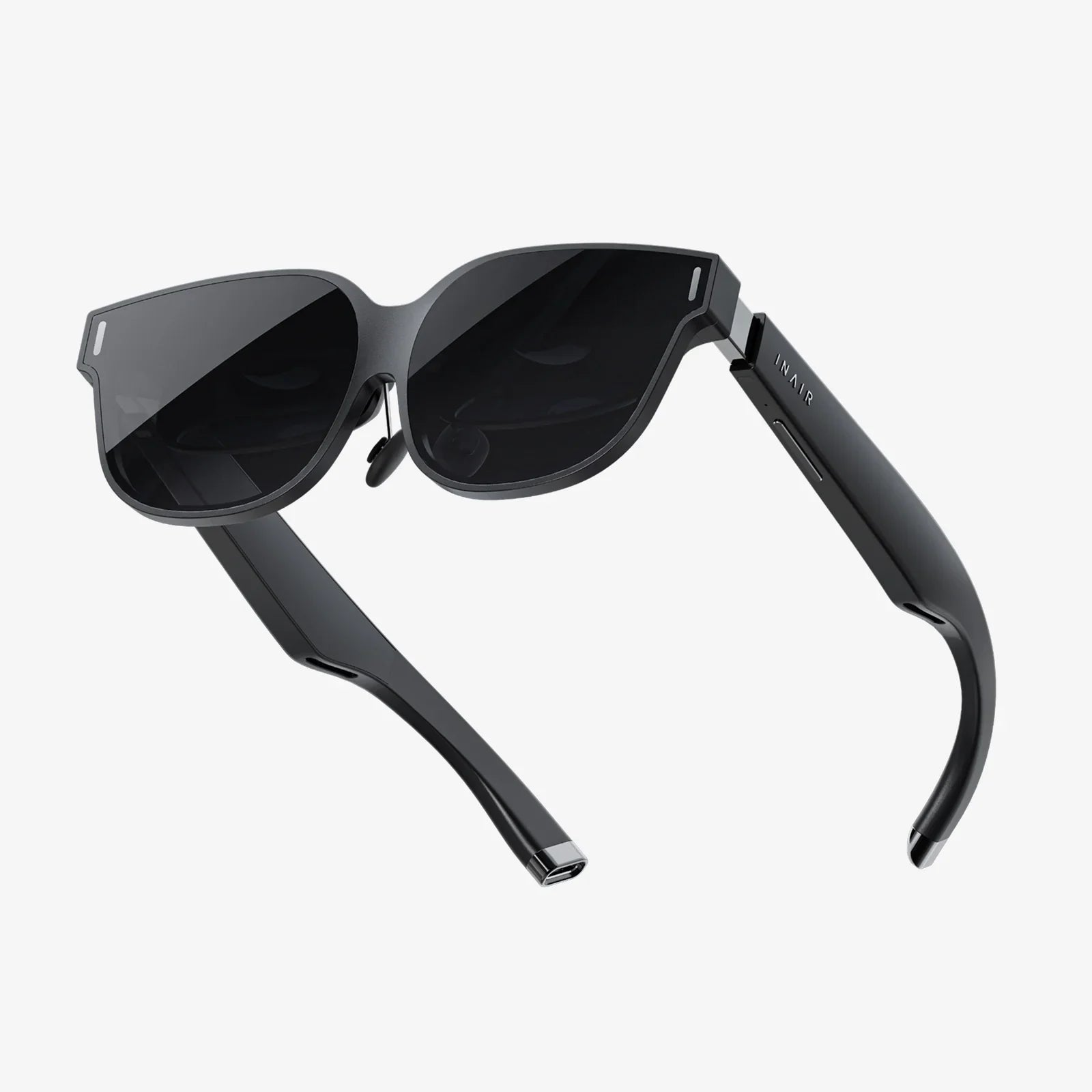
How we view these digital overlays varies significantly, defining the user experience. The most accessible and widespread method is through smartphone and tablet screens. The device acts as a viewfinder, displaying the real-world camera feed augmented with digital elements. This is known as video see-through AR. A more immersive experience is offered by smart glasses and headsets, which use optical see-through technology. These devices have transparent lenses that project light onto the retina, allowing users to see digital images overlaid directly onto their real-world view without a mediating screen. The choice of display is a constant trade-off between immersion, convenience, cost, and social acceptance.
For augmented reality to feel magical and not jarring, digital objects must stay precisely 'locked' to their intended position in the real world, a process known as registration. This is achieved through a combination of sensors. Visual-inertial odometry (VIO) fuses data from the camera (visual) with data from an inertial measurement unit (IMU) – which includes accelerometers and gyroscopes – to accurately track the device's position and orientation in space without relying on external markers. Depth-sensing cameras, like time-of-flight sensors, project infrared light to create a detailed 3D map of the environment, providing crucial data for occlusion (where real-world objects can pass in front of virtual ones) and precise placement.
One of the most immediate and impactful applications of augmented reality features is in the retail and e-commerce sector. It directly addresses a fundamental limitation of online shopping: the inability to physically interact with a product.
Furniture and home decor retailers were among the first to pioneer this. Apps now allow customers to project true-to-scale 3D models of sofas, lamps, and art directly into their living spaces. They can walk around the virtual item, see how the lighting in their room affects its color, and ensure it fits perfectly before committing to a purchase. This drastically reduces purchase hesitation and, consequently, return rates.
The fashion industry has embraced AR with equal fervor. Virtual try-on for glasses, makeup, and even clothing is becoming commonplace. Using sophisticated facial mapping and body tracking, users can see how a pair of sunglasses frames their face or how a shade of lipstick complements their skin tone, all through their device's camera. This interactive and personalized experience bridges the gap between the convenience of online shopping and the confidence of an in-store purchase, creating a powerful new sales channel.
Beyond consumer applications, augmented reality features are driving a powerful wave of innovation in industrial and enterprise settings, often referred to as the Industrial Metaverse or Industry 4.0.
In fields like manufacturing, aerospace, and complex machinery, AR is transforming training and assembly processes. Instead of relying on thick, static paper manuals, technicians can wear AR glasses that overlay animated, step-by-step instructions directly onto the equipment they are working on. Arrows can point to specific components, torque settings can be displayed next to a bolt, and safety warnings can be highlighted in real-time. This hands-free, contextual information delivery reduces errors, shortens training times, and significantly improves efficiency.
AR shatters geographical barriers for expertise. A senior engineer located thousands of miles away can see exactly what a field technician sees through a live AR feed. Using digital annotation tools, the remote expert can draw arrows, circles, and notes that appear anchored to the physical machinery in the technician's field of view, guiding them through a complex repair procedure. This "see-what-I-see" collaboration eliminates miscommunication, reduces travel costs, and ensures problems are resolved faster, minimizing downtime.
Architects, interior designers, and engineers are using AR for immersive design reviews. Instead of examining a new car model or building layout on a 2D screen, they can project a full-scale 3D hologram into a physical space. Teams can walk around the virtual prototype, assess ergonomics, identify potential design clashes with physical structures, and make iterative changes in real-time, long before any physical materials are used.
Augmented reality features have the potential to turn any environment into a dynamic learning space, making education more engaging, interactive, and accessible.
In classrooms, textbooks can come alive. A student pointing their tablet at a diagram of the human heart can see a beating, interactive 3D model spring forth, which they can rotate, zoom into, and dissect. History lessons can be transformed as students explore ancient Roman ruins reconstructed in their schoolyard. This experiential learning fosters deeper understanding and retention of complex subjects.
Museums and historical sites are leveraging AR to create deeply immersive experiences. Instead of reading a placard next to an artifact, visitors can use their devices or provided AR glasses to see historical figures reenact events, view artifacts restored to their original glory, or see ancient creatures superimposed into their natural habitats. This adds a rich, narrative layer to cultural exploration, appealing to all ages.
Despite its immense potential, the widespread adoption of advanced augmented reality features faces several significant hurdles that developers and society must overcome.
For AR to become truly ubiquitous, the hardware must become socially acceptable, comfortable to wear for long periods, and provide all-day battery life. Current smart glasses often face a trade-off between power and form factor. Bulky headsets offer high immersion but are impractical for daily use, while lighter glasses often have limited capabilities. The holy grail is a pair of glasses that look indistinguishable from regular eyewear but pack the computational power of a smartphone. Advances in waveguide technology, micro-LED displays, and low-power processors are steadily pushing towards this goal.
AR systems, by their very nature, are data-hungry. They require constant visual and spatial data from their environment to function. This raises profound privacy questions. If a device is always watching and mapping the world, how is that data stored, processed, and secured? Could it be used for unauthorized surveillance? The industry must prioritize privacy-by-design principles, implementing robust on-device processing, clear user consent protocols, and transparent data policies to build the essential trust required for this technology to flourish.
While there are many valuable enterprise and niche consumer applications, many argue that a true mass-market "killer app" for AR—akin to what the spreadsheet was for the PC or the browser for the internet—has yet to emerge. Furthermore, AR is a cornerstone of the broader vision for the metaverse—a persistent network of interconnected 3D virtual worlds. The ultimate promise is a seamless blend of our physical and digital lives, where AR glasses serve as our primary interface to this new layer of reality. Achieving this requires not just technological leaps, but the creation of open standards, interoperable platforms, and compelling shared experiences that attract a global user base.
The trajectory is clear. Augmented reality features are rapidly evolving from isolated novelties into an indispensable utility, a new sense that will augment human perception and capability. We are moving towards a world where information is not something we go to a screen to find, but something that appears contextually in the world around us when we need it. The boundary between atoms and bits is blurring, and in that convergence lies the potential to solve complex problems, enrich our understanding, and experience the world in ways we are only beginning to imagine. The future is not just something we will watch on a screen; it is something we will see, interact with, and shape through the invisible lens of augmented reality.
Share:
Difference Between AR, VR, and MR: The Ultimate Guide to Immersive Realities
Augmented Reality Updates Are Reshaping Our Digital and Physical Worlds