


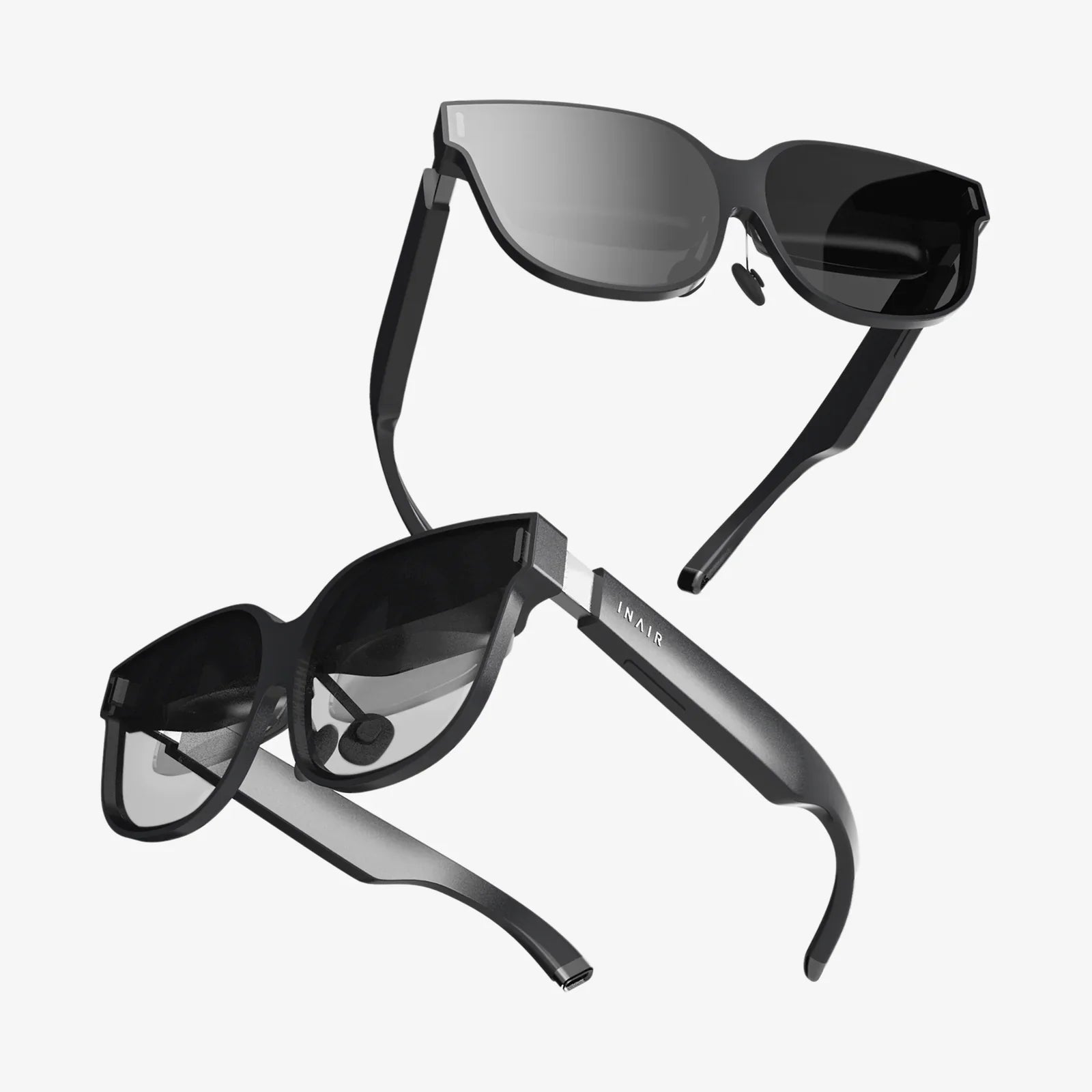
Imagine a world where the line between the digital and the physical isn't just blurred—it's elegantly woven into the very fabric of your daily life. Information doesn't live on a screen you have to pull out of your pocket; it lives in the world around you, accessible with a glance, a gesture, or a spoken word. This isn't a distant science fiction fantasy; it's the tangible, accelerating trajectory of the augmented reality future. We stand on the precipice of a transformation that will redefine how we work, learn, play, and connect, overlaying a rich tapestry of data and digital objects onto our perception of reality itself.
Beyond the Novelty: From Gimmick to Foundational Technology
For many, their first encounter with augmented reality was a fleeting moment of amusement—a cartoon character dancing on their living room floor through their smartphone or a quirky social media filter. While these applications successfully introduced the concept to the masses, they barely scratch the surface of AR's profound potential. The true augmented reality future moves far beyond these novelty acts, evolving into a ubiquitous and utility-driven layer of computing.
This shift is propelled by rapid advancements in several critical fields. The miniaturization and enhancement of optics, through technologies like waveguides and holographic lenses, are making sleek, socially acceptable eyewear a reality. Simultaneously, improvements in semiconductor power and efficiency allow for immense computational feats in ever-smaller form factors, necessary for real-time environmental understanding. Breakthroughs in computer vision and machine learning enable devices to not just see the world, but to comprehend it—identifying objects, understanding spatial geometry, and tracking surfaces and lighting with astonishing accuracy. Finally, the expansion of high-bandwidth, low-latency connectivity like 5G and beyond ensures that complex AR experiences can be streamed seamlessly or processed through powerful cloud systems, untethering the user from heavy local compute requirements.
Revolutionizing the Workforce: The Industrial Metaverse
One of the most immediate and impactful arenas for AR is the professional world. Often termed the 'industrial metaverse,' this application is transforming sectors like manufacturing, logistics, field service, and healthcare.
Precision and Efficiency in Manufacturing and Repair
On the factory floor, technicians wearing AR smart glasses can see digital work instructions overlaid directly onto the machinery they are assembling or repairing. Animated arrows can show the exact sequence of assembly, torque values can be displayed next to bolts, and safety warnings can highlight potential hazards in real-time. This hands-free access to information drastically reduces errors, slashes training time for new employees, and improves overall efficiency. For complex repairs, a remote expert located thousands of miles away can see what the on-site technician sees, annotate the live view with digital markers, and guide them through the process step-by-step, eliminating costly travel and downtime.
Transforming Medicine and Surgery
In healthcare, the implications are even more profound. Medical students can practice procedures on detailed, interactive holographic models of human anatomy. Surgeons can use AR to visualize a patient's internal anatomy—such as CT scans or MRI data—precisely registered onto their body during an operation, providing an invaluable “X-ray vision” that enhances precision and minimizes invasiveness. AR can also guide the administration of injections or the placement of IVs by highlighting the best vascular access points.
Reshaping Commerce and Retail: Try Before You Buy, Digitally
The retail landscape is poised for an AR-driven upheaval that will fundamentally change the consumer journey. The concept of “try before you buy” is being liberated from the physical constraints of the fitting room or showroom floor.
Imagine using your phone or glasses to see how a new sofa would look and fit in your actual living room, checking for size, color, and style against your existing décor. Fashion retailers are developing applications that allow you to “virtually try on” clothes, glasses, and jewelry, seeing how they look on your own body from every angle without ever changing an item. Automotive companies are enabling customers to explore different color options and feature packages on a holographic model of a car parked in their own driveway. This immersive, personalized shopping experience not only enhances consumer confidence and reduces return rates but also creates a powerful new engagement channel that bridges the online and offline worlds.
The New Social and Educational Paradigm
Human connection and learning are two pillars of society destined for enhancement in the augmented reality future.
Learning Through Interaction
Education will transition from passive absorption to active, experiential discovery. History students won't just read about ancient Rome; they will walk through a digitally reconstructed Colosseum teeming with holographic gladiators and crowds. Biology students will be able to dissect a virtual frog or walk through a beating human heart, understanding complex systems from the inside out. This spatial learning makes abstract concepts tangible and memorable, catering to diverse learning styles and democratizing access to experiences that were previously impossible outside of specialized labs or field trips.
Redefining Social Interaction
Social media will evolve from a feed on a screen to a shared layer of experience in physical space. Friends could leave digital notes or drawings for each other at specific locations—a inside joke hologrammed onto a park bench, a birthday message visible only when looking at a specific building. Multiplayer games will transform entire cities into sprawling game boards, encouraging exploration and physical activity. Remote communication will become more nuanced and present, as realistic avatars of colleagues or loved ones can appear in your environment, making a video call feel more like a face-to-face conversation and helping to foster a deeper sense of connection across distances.
Navigating the Challenges: The Path to an Ethical AR Future
For all its promise, the widespread adoption of augmented reality presents a host of significant challenges that society must proactively address. The path to this future is not merely a technological one; it is also an ethical, legal, and social one.
Privacy in a World of Constant Sensing
AR devices, by their very nature, are equipped with cameras and sensors that continuously scan the environment. This raises immense privacy concerns. Who has access to this data? How is it stored and used? The potential for surveillance, both by corporations and governments, is unprecedented. Clear regulations and transparent data policies will be essential to prevent a dystopian scenario where our every movement and interaction is monitored and monetized without our consent.
The Digital Divide and Accessibility
There is a real risk that AR technology could exacerbate existing social and economic inequalities. If crucial information, services, and social interactions migrate into the AR layer, those who cannot afford the necessary hardware or connectivity could be left at a severe disadvantage, creating a new form of digital divide. Furthermore, the technology must be designed with universal accessibility at its core, ensuring it is usable and beneficial for people with a wide range of physical and cognitive abilities.
Mental Health and Reality Blur
The long-term psychological effects of perpetually mediating our reality through a digital filter are unknown. Will we become more disconnected from the authentic physical world around us? Could constant information overlay lead to cognitive overload or anxiety? The potential for “advertising spam” in our literal field of vision is a chilling prospect for many. Establishing digital etiquette and developing features that promote digital wellness and periods of disconnection will be critical for maintaining a healthy relationship with this powerful technology.
The Invisible Interface: Blending Seamlessly Into Life
The ultimate goal of AR interface design is to become invisible. The technology should feel like a natural extension of our own cognition, not a distracting device we are constantly aware of. This will be achieved through intuitive input methods—voice commands, subtle hand gestures, eye-tracking, and eventually, even direct neural interfaces. The information presented must be contextually relevant, appearing only when needed and receding when not, allowing us to remain engaged with the people and the world right in front of us. The success of the augmented reality future hinges on this seamless, almost magical, integration.
The journey into the augmented reality future is not about escaping our world, but about enriching it. It's a paradigm shift from looking down at a device to looking up and engaging with an enhanced version of our own reality. The challenges are formidable, but the potential to amplify human potential, dissolve geographical barriers, and unlock new forms of creativity and understanding is too profound to ignore. The next great computing platform isn't on your desk or in your hand; it's being painted directly onto the canvas of the world you see, waiting for you to reach out and interact.
Share:
VR AR MR XR: Navigating the Immersive Technology Spectrum
Innovae Augmented Reality: Reshaping Reality and Redefining Human Potential