


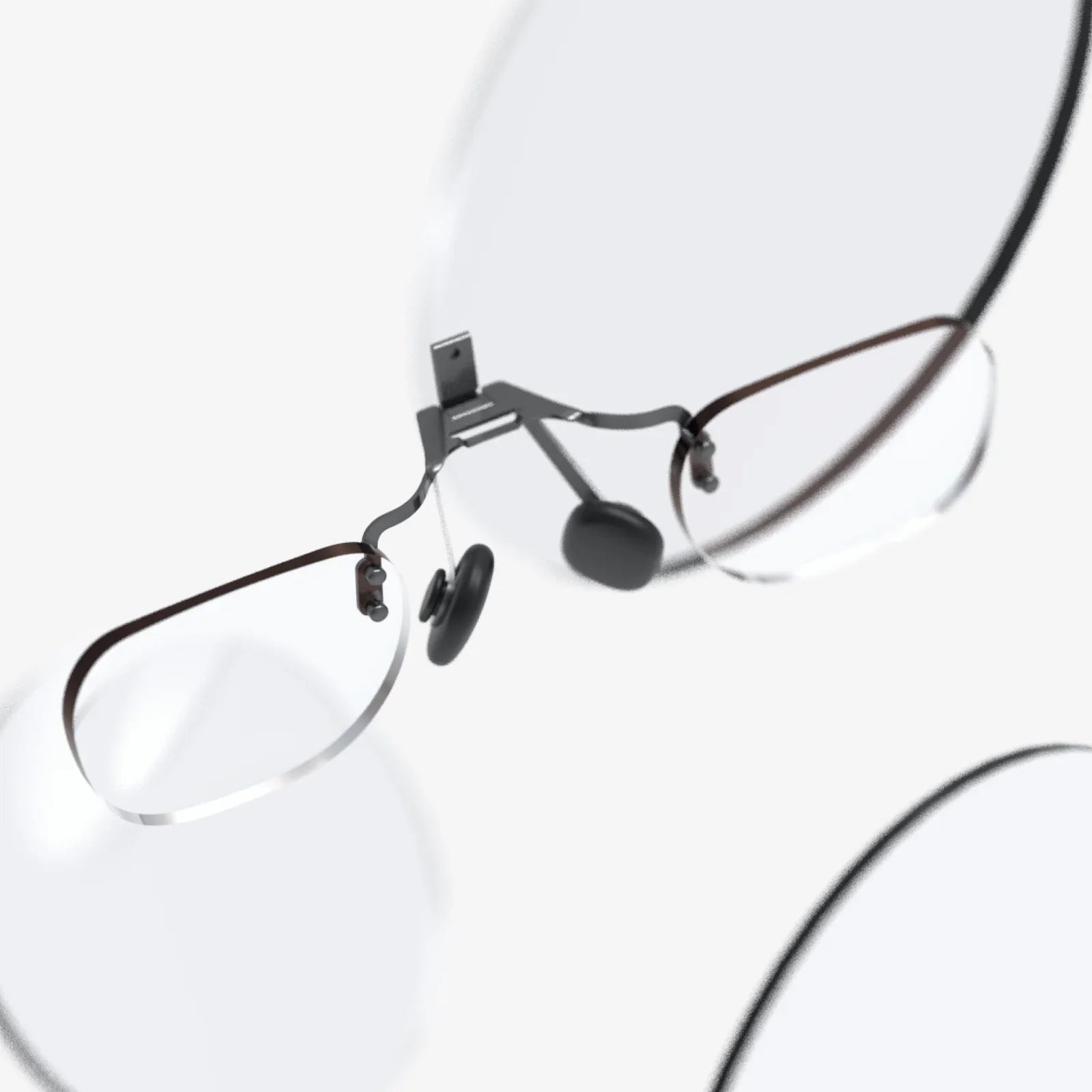
Imagine a world where the digital and the physical are no longer separate realms, but a single, seamless tapestry of interactive intelligence. This is the promise of Innovae Augmented Reality, a technological frontier that is not just knocking on our future's door but is already stepping inside, ready to transform everything from how we work and learn to how we connect and create. It’s more than a tool; it’s a new lens through which to perceive and enhance our reality.
The Architectural Framework of a New Reality
At its core, Innovae Augmented Reality is built upon a sophisticated stack of technologies working in concert to superimpose computer-generated sensory input onto our view of the real world. Unlike its cousin, virtual reality, which seeks to replace the user's environment, AR aims to augment and enrich it.
The magic begins with advanced computer vision algorithms. These are the eyes of the system, allowing devices to understand their environment. Through a combination of cameras and sensors, the technology performs simultaneous localization and mapping (SLAM). This process scans the physical surroundings in real-time, creating a digital map that understands depth, planes (like floors and walls), and the relative position of objects within the space. This spatial awareness is the bedrock upon which digital content can be anchored and interacted with.
The next critical component is precise tracking and registration. For the illusion to be believable, a digital dragon must sit convincingly on your coffee table, and a virtual instruction manual must appear fixed to a real-world machine part. This requires incredibly low-latency tracking of the user's head and eye movements, ensuring the digital overlay maintains its position and perspective as the user moves, without any perceptible lag that would break the immersion.
Finally, the user interface and interaction paradigms are what make AR accessible. We are moving beyond touchscreens into a world of gesture control, voice commands, and even gaze-based navigation. This creates an intuitive, hands-free experience where users can manipulate digital objects as if they were physically present, fostering a deeper and more natural connection with the technology.
Beyond Novelty: The Industrial and Enterprise Revolution
While consumer applications often grab headlines, the most profound and immediate impact of Innovae Augmented Reality is being felt on factory floors, in surgical theaters, and across construction sites. Here, AR is moving from a novel experiment to an indispensable tool, driving efficiency, safety, and precision.
In manufacturing and complex assembly, technicians are using AR-enabled smart glasses or tablet devices to visualize digital work instructions overlaid directly onto the machinery they are assembling or repairing. Animated arrows can show the exact sequence of steps, torque values can be displayed next to specific bolts, and safety warnings can pop up in the user's field of view when approaching a hazardous component. This reduces errors, drastically cuts down training time, and empowers workers with contextual knowledge exactly when and where they need it.
The field of medicine and healthcare is experiencing a similar transformation. Surgeons can now have critical patient data, such as MRI or CT scans, projected directly onto their field of view during procedures. This allows for unprecedented precision, as they can effectively "see inside" the patient without looking away from the operating table. Medical students can practice complex procedures on detailed, interactive 3D holograms of human anatomy, accelerating learning and improving outcomes.
For architecture, engineering, and construction (AEC), AR allows professionals to step inside their designs before a single brick is laid. By overlaying full-scale 3D BIM models onto a physical site, teams can identify potential design clashes, visualize spatial relationships, and conduct virtual walkthroughs with clients. This not only saves immense costs on rework but also ensures the final build aligns perfectly with the envisioned design.
Transforming the Consumer Landscape and Daily Life
The enterprise wave is merely the precursor to a broader societal shift. Innovae Augmented Reality is poised to weave itself into the very fabric of our daily consumer and social lives, changing how we shop, learn, and play.
The retail and e-commerce sector is being completely reimagined. Imagine pointing your device at your living room and seeing a new sofa rendered in perfect scale and color right in the space. Or trying on glasses, makeup, or clothing virtually before making a purchase. This "try-before-you-buy" capability bridges the gap between online convenience and in-store confidence, reducing return rates and creating highly engaging customer experiences.
Education and training are undergoing a paradigm shift. Textbooks become living, breathing entities. A student studying astronomy can point their device at the night sky to see constellations labeled and myths narrated. A history class can walk through an ancient Roman settlement overlaid onto their school playground. This contextual, immersive learning fosters deeper understanding and retention by making abstract concepts tangible and exciting.
Navigation and wayfinding are becoming intuitive. Instead of glancing down at a map on a phone, directions can be painted onto the street in front of you, with arrows guiding your path. In large venues like airports or museums, AR can highlight the quickest route to your gate or provide information about an exhibit simply by looking at it.
Navigating the Challenges on the Path to Pervasiveness
For all its potential, the path to ubiquitous Innovae Augmented Reality is not without significant hurdles. These challenges are not merely technical but also deeply social and ethical.
On the hardware front, the quest for the perfect device continues. The ideal AR glasses need to be socially acceptable—as lightweight, stylish, and unobtrusive as regular eyewear. They must offer all-day battery life, high-resolution displays that work well in all lighting conditions, and powerful onboard processing, all without generating excessive heat. Achieving this perfect blend of form and function remains the holy grail for the industry.
Perhaps the most pressing concerns revolve around data privacy and security. AR devices, by their very nature, are data collection powerhouses. They have cameras and sensors constantly scanning our homes, offices, and public spaces. This raises critical questions: Who owns this spatial data? How is it stored and used? The potential for unauthorized surveillance, data breaches, and the creation of detailed behavioral profiles is immense, necessitating robust, transparent, and ethical data governance frameworks from the ground up.
Furthermore, the creation of an addictive digital layer over reality presents a societal risk. Could we become so engrossed in digital annotations and notifications that we disengage from the un-augmented world around us? The potential for digital advertising spam in public spaces or new forms of distraction could have profound implications for social interaction and mental well-being.
The Future is an Augmented Canvas
Looking ahead, the evolution of Innovae Augmented Reality is intrinsically linked with other exponential technologies. The integration of Artificial Intelligence will be particularly transformative. AI will act as the brain, interpreting the vast stream of visual data in real-time to provide predictive and contextual information. Imagine your AR device not only showing you how to assemble a product but also recognizing a mistake you are about to make and warning you.
The development of the spatial web or WebXR will be another monumental leap. This refers to a version of the internet that is not confined to pages on a screen but is mapped onto the physical world. Digital information, services, and experiences will have a permanent spatial address. A restaurant's menu could be accessed by looking at its facade, and a historical monument could have a persistent layer of stories accessible to anyone who visits.
As hardware becomes more powerful and affordable, we will see a move from assistive to transformative applications. AR will evolve from providing helpful information to enabling entirely new capabilities, such as real-time language translation subtitles appearing over a conversation with someone speaking a foreign language, or enhancing human perception by visualizing otherwise invisible data like thermal signatures or air quality.
The journey of Innovae Augmented Reality is a journey of expanding human potential. It is about removing friction between intention and action, between curiosity and knowledge. It’s about enhancing our natural capabilities and providing a canvas for creativity that is bound only by the limits of our imagination. The world is about to gain a new dimension, and it is one overflowing with limitless possibility, waiting for us to reach out and interact with it.
The line between science fiction and reality is blurring, and the most exciting chapters of this story are yet to be written. The tools to build, explore, and define this new augmented layer of existence are rapidly moving into the mainstream, inviting us all to become active participants in shaping a future where our digital and physical lives are not just connected, but beautifully and intelligently intertwined.
Share:
Augmented Reality Future: A World Transformed Through Digital Overlays
Augmented Reality (AR) Apps: The Invisible Layer Reshaping Our World