


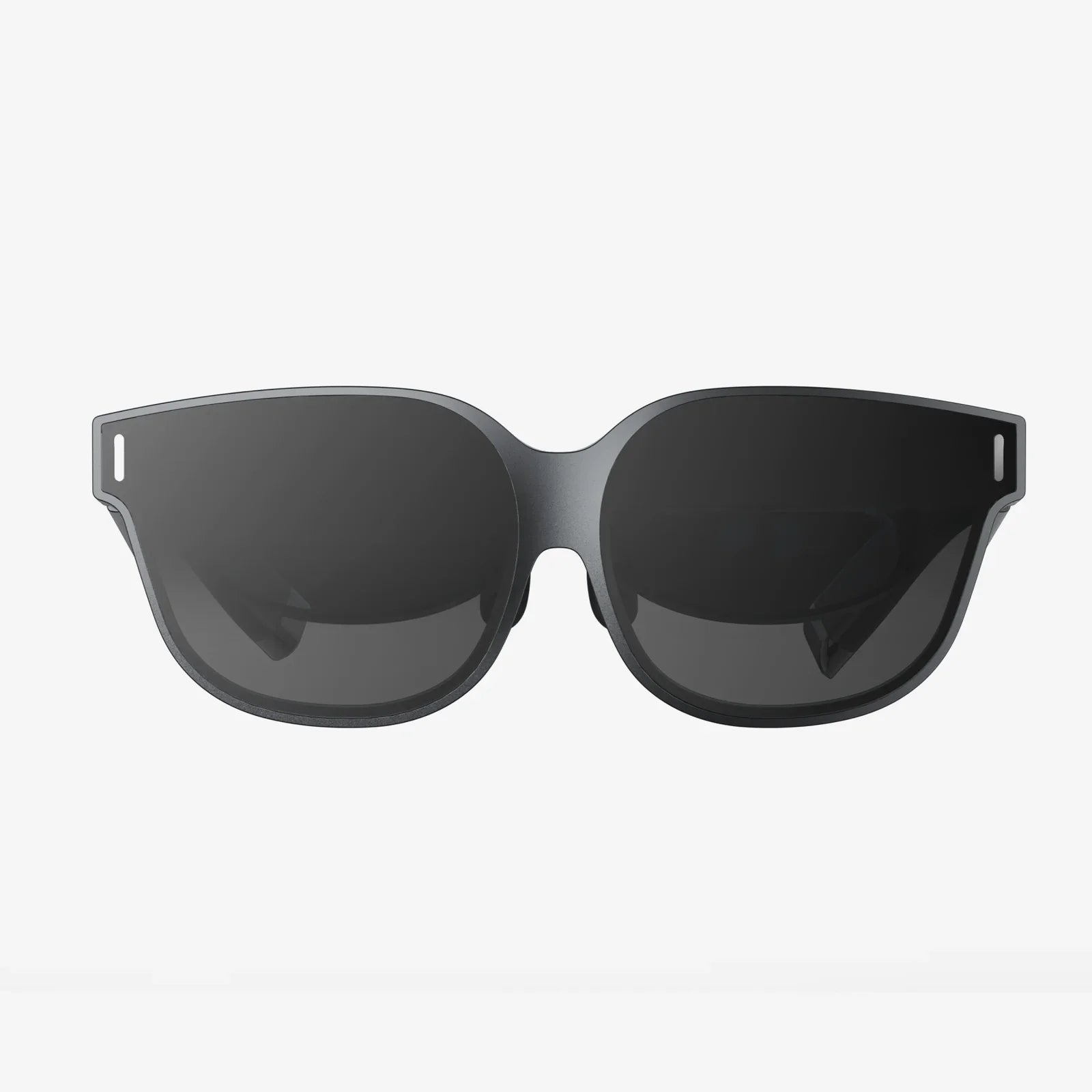
Imagine a world where digital information doesn't live on a screen in your hand or on your desk, but floats seamlessly in the air before you, integrated into the very fabric of your reality. This vision, once the exclusive domain of science fiction, began its arduous journey into our world not with a polished product launch, but in the cluttered labs and research halls of a previous generation. The early era of augmented reality glasses was a time of wild experimentation, breathtaking innovation, and bulky headgear—a necessary and fascinating period of gestation that defined the possibilities and pitfalls of an entire industry. To understand the sleek, powerful AR wearables of tomorrow, we must first look back at the ambitious, imperfect giants upon whose shoulders they stand.
The Conceptual Dawn: Before There Were Glasses
The dream of augmenting human perception is not new. For decades, the military pursued head-up displays (HUDs) in aircraft, projecting crucial flight data onto the cockpit canopy, allowing pilots to keep their "heads up" and focused on the world outside. This was a form of augmented reality, albeit a confined and specialized one. The seminal moment for wearable AR, however, arguably arrived in 1968 with computer scientist Ivan Sutherland and his student Bob Sproull. They created what Sutherland dubbed "The Sword of Damocles," a head-mounted display system so monstrously heavy it had to be suspended from the ceiling. It presented simple, wireframe graphics that were overlaid onto the user's real-world view. It was crude, terrifying, and utterly revolutionary. It established the core principle that would define the quest for decades to come: the fusion of computer-generated imagery with a user's live visual field.
The 1990s: Academia Takes the Baton
The next major leap occurred within university research programs, most notably at the U.S. Air Force's Armstrong Laboratory and at universities like Columbia and UNC Chapel Hill. Here, the term "Augmented Reality" was formally coined by researchers Thomas P. Caudell and David Mizell in 1992. Their work focused on using see-through head-worn displays to assist industrial workers, such as providing wire harness assemblers with diagram overlays. This period was characterized by a focus on utilitarian applications rather than consumer entertainment.
It was also during this time that the fundamental technological challenges became starkly clear. Researchers grappled with the infamous "vergence-accommodation conflict," a physiological problem where the 3D graphics rendered by the display would force the user's eyes to focus on one distance (the screen) while converging at another (the virtual object's perceived distance), causing eye strain and headaches. They also struggled with tracking—precisely understanding the user's head position and orientation in real-time to keep virtual objects locked in place in the real world. Early systems relied on cumbersome external sensors, ultrasonic trackers, and fiducial markers (black and white patterns stuck to physical objects), a far cry from today's inside-out SLAM (Simultaneous Localization and Mapping) tracking.
The Turn of the Millennium: The First Commercial Forays
As computing power increased and components miniaturized, the first companies emerged to try and commercialize this bleeding-edge technology. The early 2000s saw the arrival of devices that, for the first time, could be legitimately called "augmented reality glasses." They were not for the faint of heart or light of wallet. These systems were primarily targeted at enterprise and research clients, costing tens of thousands of dollars.
These early commercial glasses shared a common set of characteristics that now seem archaic:
- Bulk and Weight: They were large, heavy, and often required a separate processing unit worn on a belt or in a backpack, connected by a thick cable. Wearing one for more than an hour was a test of neck strength.
- Limited Field of View (FoV): The digital overlay often appeared as a small, postage stamp-sized window in the user's vision, a starkly separate box of information rather than a blended part of reality.
- Low Resolution and Fidelity: The graphics were primitive, often monochrome or with very limited color, and plagued by latency issues that caused the virtual images to "swim" or jitter unnaturally when the user moved their head.
- Clunky Interaction: Input methods were non-intuitive, often relying on handheld trackers, button presses on the glasses themselves, or early voice command systems with limited vocabularies.
Despite these limitations, these devices were miracles of engineering for their time. They proved that wearable AR was possible outside of a multi-million-dollar lab. They enabled groundbreaking work in fields like military logistics, where soldiers could practice equipment repair with virtual instructions, and in medicine, where surgeons could envision patient scan data during procedures.
The Core Technological Hurdles of the Era
The development of early AR glasses was a battle fought on multiple technological fronts simultaneously. Progress was not linear; a breakthrough in display technology could be negated by a lack of processing power, while improved tracking was hamstrung by poor battery life.
The Display Dilemma: How to Make the Digital Visible
Perhaps the most significant challenge was the display technology itself. How do you project an image that is both see-through and bright enough to be visible in various lighting conditions, especially outdoors? Early systems experimented with several approaches:
- CRT (Cathode Ray Tube): Incredibly rare and power-hungry, but used in some ultra-high-end systems for their brightness.
- LCD (Liquid Crystal Display) with Beam Splitters: A more common approach where a miniature LCD screen would project an image onto a beamsplitter, a semi-transparent piece of glass that reflected the screen's image into the user's eye while allowing real-world light to pass through. This often resulted in dim, low-contrast images.
- LED and Laser Scanning: Some systems used micro-mirrors to raster-scan low-power lasers directly onto the retina. This technology, known as retinal scanning, offered high brightness and a large depth of focus but was complex and raised safety concerns.
All these methods struggled with the basic trade-off between transparency and image quality. A brighter, more opaque virtual image made the digital content clearer but obscured the real world behind it. A more transparent display made the real world clear but washed out the virtual graphics.
The Tracking Problem: Anchoring the Virtual World
For AR to feel magical, a virtual coffee cup must sit firmly on a real table, not drift through it when you move. Achieving this requires incredibly precise and fast tracking of the user's head and, eventually, their environment. Early tracking was a patchwork of solutions:
- Inertial Measurement Units (IMUs): Small sensors containing accelerometers and gyroscopes could track the rotation of the head very quickly but were terrible at tracking position, leading to rapid "drift" of the virtual scene.
- Ultrasonic and Magnetic Trackers: These systems used external emitters placed around a room to create a field. Sensors on the headset could then triangulate their position within this field. They were effective but tethered the user to a specific, pre-calibrated space, utterly defeating the purpose of mobile AR.
- Fiducial Markers: The most common solution for early research. By placing distinct black-and-white patterns around a room, a camera on the headset could easily recognize these markers and use their known size and position to calculate the headset's location. It was a reliable crutch but meant the real world had to be pre-labeled for the AR to work.
The Compute Conundrum: The Need for a Supercomputer in a Backpack
The tasks required for AR—rendering complex 3D graphics at high frame rates, running computer vision algorithms to understand the camera feed, and processing all the tracking sensor data—were far beyond the capability of mobile processors of the time. The solution was to offload the processing to a powerful computer connected by a cable. This tether was the single biggest obstacle to true freedom and usability. It was a constant reminder to the user that they were wearing a computer, not a pair of glasses.
The Legacy of the Prototype Era
While the commercial impact of these early glasses was minimal, their influence on the trajectory of technology is immeasurable. They were not failures; they were the essential first drafts of a new language of computing. They served as powerful proof-of-concept platforms that:
- Identified the Core Problems: They didn't just highlight the challenges; they provided a framework for solving them. Every research paper, every patent, and every clumsy prototype contributed to a collective understanding of what needed to be done.
- Fostered a Developer Community: These devices, though expensive, found their way into dedicated research labs and universities. A generation of computer scientists, engineers, and interaction designers cut their teeth on them, experimenting with the first AR applications and establishing the foundational UX principles for spatial computing.
- Drove Component Miniaturization: The demand from these early AR efforts helped drive investment and innovation in micro-displays, miniature cameras, and motion sensors. The lessons learned directly fed into the smartphone revolution, which, in a beautiful twist of fate, would later provide the mature components (cameras, IMUs, processors) that made modern AR possible.
- Explored the Killer App: Early experimentation wasn't just about the hardware; it was about the software. Researchers used these platforms to explore what AR was actually good for—from complex assembly and maintenance to navigation and data visualization—long before a consumer market existed.
Today, as we witness the arrival of increasingly sophisticated AR glasses, it's easy to see them as a sudden invention. But their DNA was written in the gritty, determined, and resourceful era of their ancestors. The early AR glasses, with their tangled wires, humming fans, and narrow fields of view, were the daring pioneers. They ventured into an uncharted technological wilderness so that the sleek devices of today could have a map. They answered the most critical question: is this even possible? Their resounding, if quiet, yes echoes in every pair of smart glasses now, a testament to the visionaries who saw the future clearly, even if they had to see it through a bulky, head-mounted display first.
Share:
Assisted Reality Definition: The Unobtrusive Future of Hands-Free Digital Information
Head Mounted Display for PC: The Ultimate Guide to Immersive Computing