


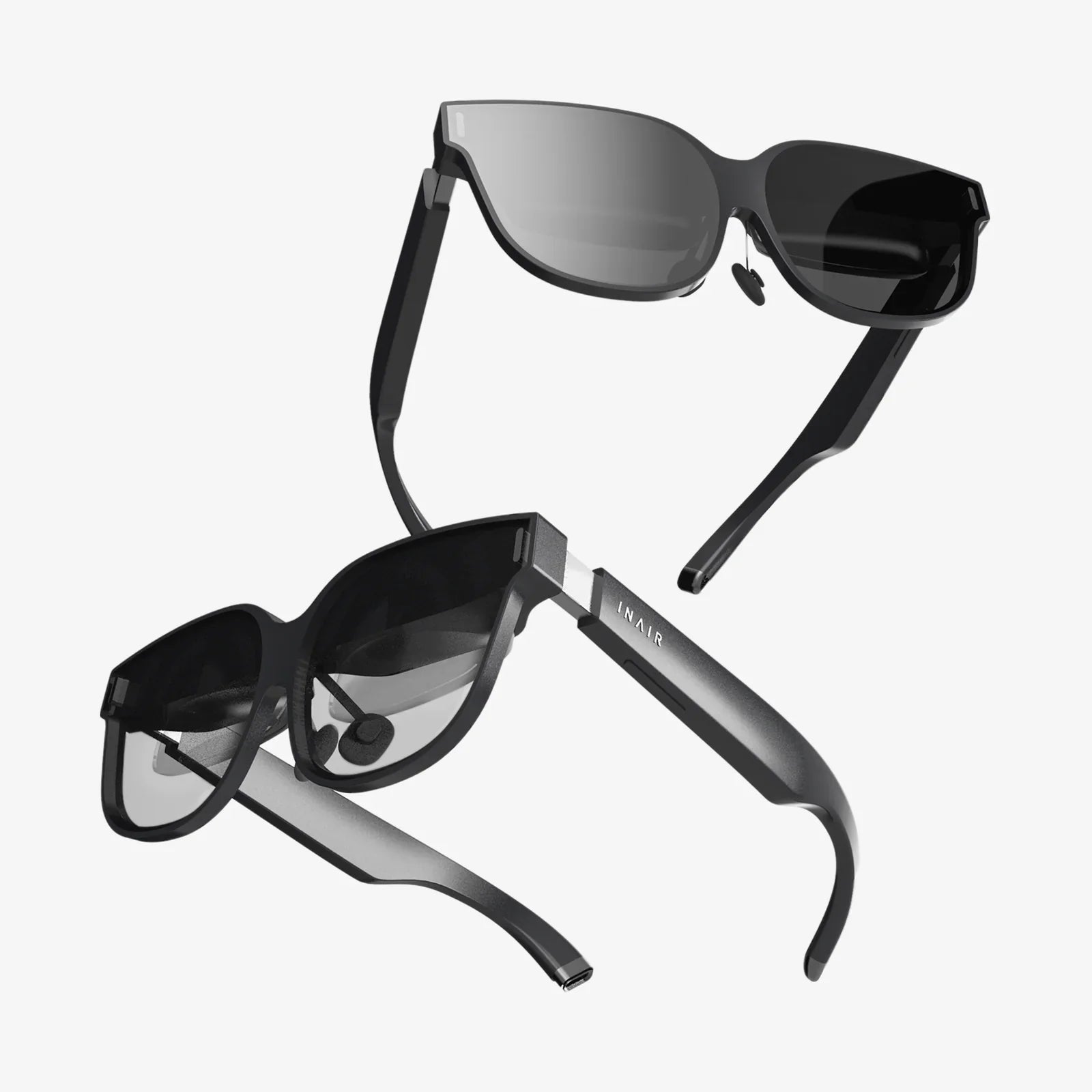
Imagine looking at your living room wall and seeing not just blank space, but a sprawling, high-resolution desktop with multiple windows floating in perfect clarity. Picture a video game where fantastical creatures not only appear on a screen but climb out from behind your monitor to scamper across your actual desk. This isn't science fiction; it's the emerging reality powered by augmented reality glasses for PC, a technological synergy that is fundamentally reshaping our relationship with computers and the very space around us.
Beyond the Screen: Redefining the Desktop Experience
For decades, the paradigm of personal computing has been constrained by the rectangle. We've progressed from monochrome CRTs to ultra-wide, curved displays, but the fundamental concept remains: we peer into a digital world through a flat, static window. Augmented reality glasses for PC shatter this limitation, projecting the digital realm directly into our physical environment. The central processing unit and graphics card of a powerful computer do the heavy lifting—rendering complex environments, processing data, and running demanding applications. The glasses then act as a personalized, high-resolution visual display system, untethered from a fixed location.
The immediate and most profound application is in spatial computing. Instead of being limited by the physical size of your monitors, you can create a virtual workspace that spans your entire field of view. You can have a web browser pinned to your left, a code editor or document centered, and a communication app to your right, all existing as persistent, resizable windows in your room. This isn't just about having more screen real estate; it's about contextualizing digital information within your physical world, reducing the cognitive load of switching between confined, overlapping 2D windows on a traditional display.
The Seamless Connection: How PC and Glasses Unite
The magic of this setup lies in the seamless, often wireless, connection between the two components. A dedicated software platform running on the computer manages the stream of visual data, leveraging the PC's powerful GPU to render the high-fidelity graphics required for a comfortable and immersive experience. This data is then compressed and transmitted to the glasses with extremely low latency, ensuring that digital elements remain locked in place and respond instantly to your head movements.
Inside the glasses, a combination of sophisticated technologies brings the digital to life. Micro-OLED displays project images directly onto waveguides or other optical systems, which then reflect the light into your eyes, overlaying the digital content onto your view of the real world. Advanced inside-out tracking systems, using cameras and sensors embedded in the glasses themselves, constantly map your environment. This allows the PC's software to understand the geometry of your room—the location of walls, tables, and other surfaces—so it can anchor digital objects convincingly, making them appear to sit on your desk or hang on your wall.
A New Dimension of Work and Productivity
The implications for professional workflows are staggering. For architects and engineers, 3D models can be examined at life-size scale, walked around, and peered into, facilitating a deeper understanding of a design long before a physical prototype is built. Data scientists can visualize complex datasets in three dimensions, spotting patterns and correlations that might be missed in a spreadsheet. For content creators, digital sculpting and video editing timelines can extend beyond the confines of a monitor into a truly immersive environment.
Remote collaboration is also transformed. Instead of simply sharing a screen, colleagues wearing compatible glasses can join a shared persistent space. A 3D model, a complex schematic, or a brainstorming whiteboard can be placed in the center of a virtual meeting room. Participants, represented by avatars, can point, annotate, and manipulate the same digital objects as if they were physically present together, breaking down the barriers of geography and creating a far more natural and effective collaborative experience than traditional video conferencing can offer.
Transforming Play: The Future of PC Gaming
While productivity applications are compelling, the realm of PC gaming is where this technology promises pure wonder. Augmented reality glasses can take the rich, graphically intense worlds rendered by a high-end gaming rig and seamlessly blend them with the player's surroundings. Imagine a strategy game where the battlefield unfolds across your entire living room floor, with tiny units marching between your coffee table legs. Envision a horror game where the eerie sounds and ghostly apparitions are not confined to the monitor but inhabit the dark corners of your own home.
This technology enables new genres and gameplay mechanics that are impossible on a traditional screen. Puzzle games could require players to physically walk around and examine objects from different angles. Fitness games could turn your entire environment into an obstacle course. The fusion of a PC's raw graphical power with the immersive, spatial context of augmented reality creates a new medium for interactive entertainment, one that is more physically engaging and personally resonant.
Overcoming the Hurdles on the Path to Adoption
Despite the exciting potential, the widespread adoption of augmented reality glasses for PC faces significant challenges. The form factor remains a critical barrier. For all-day use, glasses need to be lightweight, comfortable, and socially acceptable—looking more like fashionable eyewear than a bulky piece of technical equipment. Advances in materials science and optical miniaturization are rapidly progressing toward this goal, but it remains a key focus for developers.
Visual fidelity is another crucial area. The technology must achieve a high enough resolution and a wide enough field of view to make reading text comfortable for hours and to make digital objects visually indistinguishable from reality. Furthermore, overcoming issues like vergence-accommodation conflict—where the eyes struggle to focus on virtual objects at different depths—is essential for long-term comfort. Finally, creating an intuitive and universal interface for interacting with this spatial data, moving beyond controllers to perhaps hand-tracking, voice commands, and eventually neural interfaces, is the key to unlocking its full potential.
Glimpsing the Horizon: What the Future Holds
The evolution of this technology points toward a future where the distinction between our physical and digital lives becomes increasingly blurred. We are moving toward a world where your powerful personal computer ceases to be a device you sit in front of and instead becomes the silent brain powering the digital layer of your existence, accessible through lightweight glasses you wear throughout the day.
In this near future, your workspace, your entertainment, and your social connections will not be tied to a specific desk or room but will be a persistent layer over your reality, accessible anywhere. The combination of ever-increasing computing power, faster wireless standards, and breakthroughs in optics will make this seamless integration not just possible, but commonplace. The PC, in its traditional form, may fade into the background, but its computational heart will beat stronger than ever, enabling experiences we are only beginning to imagine.
The fusion of powerful PC processing with the immersive canvas of augmented reality glasses is more than just a new peripheral; it's the foundation for the next great computing platform. It promises to unlock human potential, redefine creativity, and create unimaginable forms of play. The screen-less, boundless digital future is putting on its glasses and preparing to change everything you thought you knew about your computer.
Share:
Augmented Reality Industrial News Today: The Digital Revolution Reshaping Global Manufacturing
Best Virtual Office Tools: The Ultimate Guide to a Seamless Remote Workspace