


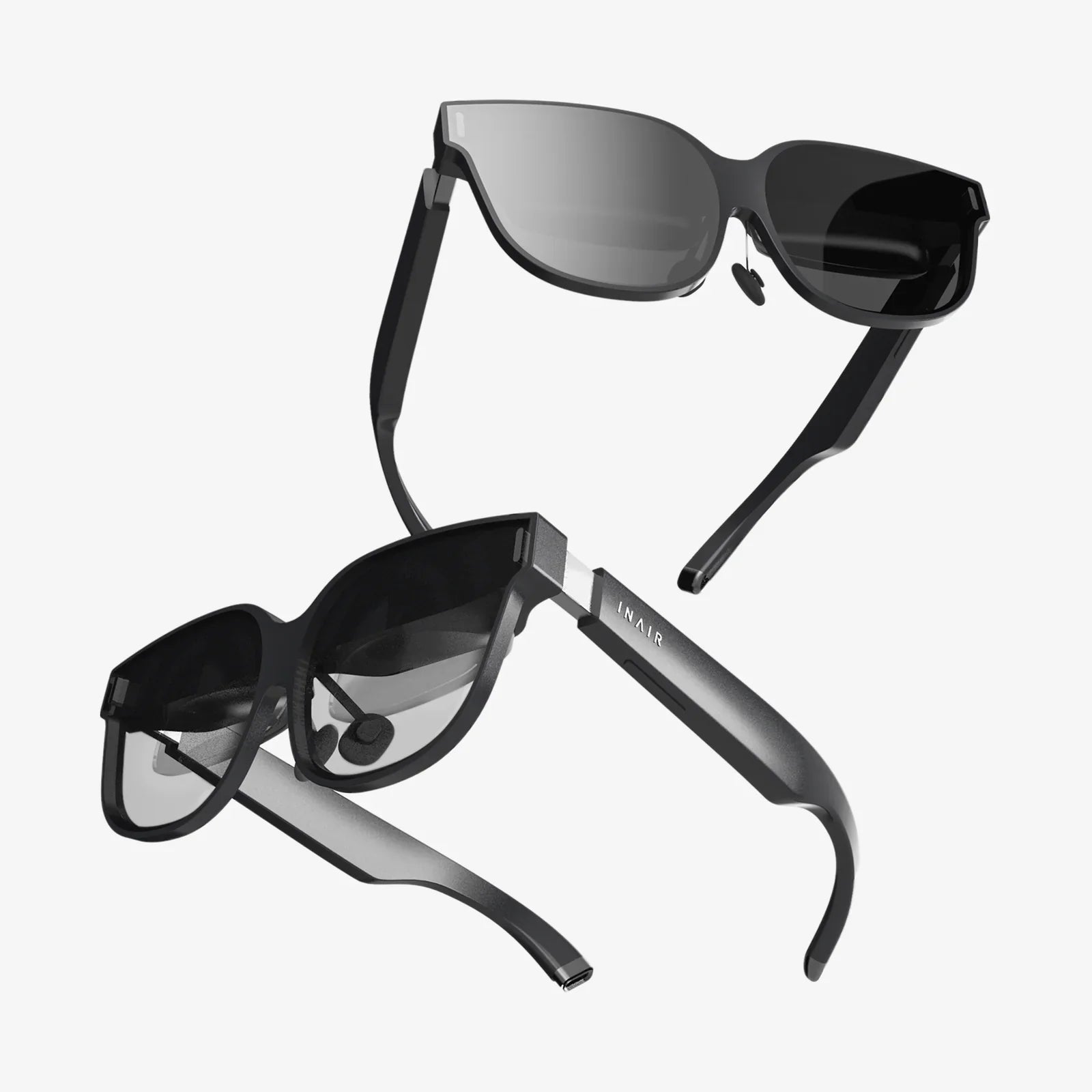
The factory floor of tomorrow is materializing today, not through science fiction, but through the rapid, tangible integration of Augmented Reality (AR) into industrial operations. From guiding a technician through a complex repair half a world away to overlaying critical performance data onto a humming turbine, AR is fundamentally rewriting the rules of manufacturing, maintenance, and logistics. This isn't a distant promise; it's the industrial news of today, a seismic shift happening now in sectors from aerospace to energy, creating smarter, safer, and vastly more efficient workflows. The convergence of powerful hardware, robust software, and high-speed connectivity has propelled AR from a novel concept to an indispensable industrial tool, and the pace of innovation shows no signs of slowing.
The Core of Industrial Augmented Reality
At its essence, industrial Augmented Reality is the seamless blending of digital information—3D models, instructions, sensor data, live video feeds—with the user's real-world physical environment. Unlike Virtual Reality (VR), which creates a completely immersive digital world, AR enhances reality by superimposing computer-generated perceptual information onto it. This is typically achieved through devices like smart glasses, tablets, or even smartphones, which act as a window to this enriched view of the physical world.
The technological stack enabling this is multifaceted. It involves advanced computer vision algorithms that understand and map the environment, spatial computing to anchor digital objects precisely in physical space, and cloud computing platforms to process immense datasets in real-time. The result is a contextual, hands-free flow of information that is directly relevant to the task at hand, eliminating the constant back-and-forth between a physical manual and the equipment.
Breaking News: Key Applications Dominating Headlines
The applications making waves in today's industrial news are diverse and profoundly impactful.
Remote Expert Guidance and Collaboration
This is arguably the 'killer app' for industrial AR today. It allows a seasoned expert, situated anywhere on the globe, to see exactly what an on-site technician sees through their AR glasses. The expert can then annotate the technician's live field of view with arrows, circles, text, and even 3D holograms to guide them through a complex procedure. This drastically reduces travel costs, minimizes machine downtime from hours to minutes, and empowers less experienced workers to perform tasks normally reserved for senior staff. In a world still adapting to hybrid work models and facing a growing skills gap, this application is proving revolutionary.
Assembly, Manufacturing, and Digital Work Instructions
On complex assembly lines, workers are transitioning from paper manuals or static PDFs to dynamic, AR-powered digital work instructions. As a worker approaches a assembly station, their AR device recognizes the components and projects the next steps directly onto the work surface—highlighting which screw to tighten, showing the torque value, and displaying an animation of the correct tool path. This reduces errors by over 90% in some documented cases, accelerates training times for new employees, and ensures strict adherence to quality standards and procedures.
Maintenance, Repair, and Overhaul (MRO)
For maintenance teams, AR is a game-changer. Technicians can point a device at a machine and instantly see its operational status, historical service data, and upcoming maintenance schedules overlaid on the physical asset. When a fault is detected, AR can visually guide the disassembly process, highlight the likely faulty component, and provide animated instructions for its replacement. This predictive and assisted maintenance approach prevents catastrophic failures and extends the lifecycle of critical equipment.
Logistics and Warehouse Operations
In massive distribution centers, AR is supercharging efficiency. 'Smart glasses' can direct warehouse pickers along the most optimal route, visually indicating the exact shelf and bin number for the required item and even displaying the quantity to pick. This 'vision picking' eliminates guesswork, reduces walking time, and cuts picking errors to near zero. Similarly, in loading bays, AR can outline exactly where and how to place pallets in a truck to maximize space utilization.
Training and Skill Development
AR creates a risk-free, immersive learning environment. Trainees can practice disassembling a complex valve or operating a multimillion-dollar piece of machinery through a photorealistic AR simulation before ever touching the physical asset. This accelerates the learning curve, builds muscle memory and confidence, and eliminates the risk of damage to expensive equipment during the training process. It is a powerful tool for capturing the tacit knowledge of retiring experts and institutionalizing it for the next generation.
Digital Twins and Design Visualization
AR is the perfect interface for interacting with digital twins—virtual replicas of physical assets, processes, or systems. Engineers and designers can project a life-size 3D model of a new engine prototype into an empty space on the factory floor. They can walk around it, peer inside it, and even see simulated stress points or fluid dynamics data visualized on the model. This allows for collaborative design reviews, rapid prototyping, and the identification of potential spatial conflicts or ergonomic issues long before physical manufacturing begins.
The Driving Forces Behind the AR Surge
This explosion in industrial AR adoption is not happening in a vacuum. Several powerful macro-trends are converging to create the perfect conditions for its growth.
The transition to Industry 4.0 and the Industrial Internet of Things (IIoT) is foundational. As machines and sensors become increasingly connected, they generate a torrent of valuable data. AR provides the ideal visual interface to make sense of this data, transforming it from abstract numbers on a dashboard into intuitive, contextual insights overlaid on the real world.
Furthermore, industries worldwide are grappling with a severe skills gap and an aging workforce. As experienced workers retire, they take decades of invaluable tacit knowledge with them. AR systems are becoming a critical tool for knowledge capture and transfer, allowing companies to upskill new workers rapidly and preserve operational expertise in a digital format.
There is also an intensified focus on operational efficiency and cost reduction. In a competitive global market, minimizing downtime, reducing errors, and optimizing workflows are paramount. AR delivers a clear and compelling return on investment (ROI) by addressing these pain points directly.
Finally, the technology itself has matured significantly. Hardware has become more powerful, lighter, and designed for all-day wear in harsh industrial environments. Software platforms have become more robust and user-friendly, and 5G connectivity enables the low-latency, high-bandwidth data transfer essential for complex AR applications, especially those leveraging remote experts and cloud processing.
Navigating the Real-World Challenges
Despite the exciting progress, the path to widespread AR integration is not without its obstacles. A significant hurdle is the initial investment cost for hardware, software development, and system integration, which can be prohibitive for smaller enterprises. There are also lingering concerns about user experience; devices must be comfortable for long-term use, interfaces must be intuitive to avoid cognitive overload, and the technology must prove its reliability in mission-critical scenarios.
Data security and connectivity are paramount. Industrial data is highly sensitive, and transmitting video feeds and operational data to the cloud requires robust, secure, and uninterrupted network infrastructure. In areas with poor connectivity, this can be a major limitation.
Perhaps the most complex challenge is cultural and organizational change. Successfully deploying AR is not just a technology implementation; it requires a shift in processes, redefined worker roles, and a commitment to continuous training and adaptation. Overcoming workforce skepticism and demonstrating clear value is essential for adoption.
Glimpsing the Future: What's Next on the Horizon?
The industrial AR story is still in its early chapters. The news today points toward an even more integrated and intelligent future. We are moving towards AR-powered by Artificial Intelligence (AI). Imagine an AR system that not only shows a repair step but uses machine learning to analyze a video feed in real-time, recognize that a step was performed incorrectly, and immediately alert the technician. AI will enable predictive guidance and truly adaptive instructions.
The concept of the 'metaverse' for industry is also gaining traction. This involves persistent AR overlays on physical spaces—a digital layer of information, instructions, and historical data that is always present and accessible to authorized personnel, transforming entire facilities into interactive, smart environments.
Finally, we will see the rise of autonomous AR, where systems will self-diagnose issues, order their own parts, and guide human operators through the repair process with minimal human intervention, creating a seamless collaboration between human intelligence and machine efficiency.
The headlines are being written on factory floors and in service depots across the globe. Augmented Reality is no longer a futuristic buzzword but a practical, powerful engine of transformation. It is bridging the gap between the digital and physical realms, empowering the human workforce, and unlocking unprecedented levels of productivity and innovation. For any leader in the industrial sector, ignoring this wave is no longer an option; understanding and leveraging it is the key to remaining competitive in the decade to come. The revolution is not coming; it is being visualized, one digital overlay at a time.
Share:
What Do You Need for a Virtual Meeting: The Ultimate 2024 Setup Guide
Augmented Reality Glasses PC: The Ultimate Fusion of Real and Digital Worlds