


- by wangfred
Augmented Reality Glasses: The Invisible Revolution Reshaping Our World
- by wangfred
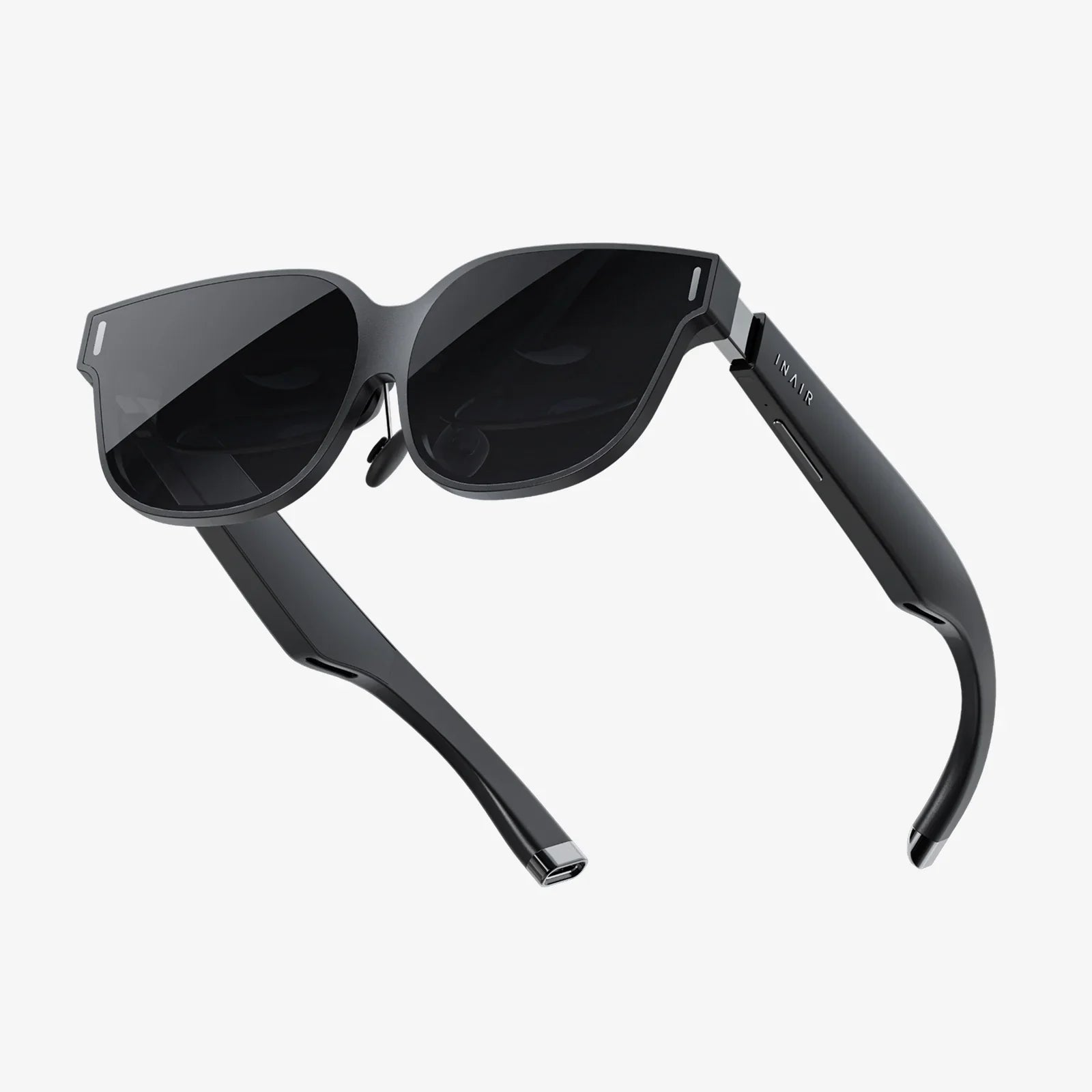
Imagine a world where the digital and the physical are no longer separate realms, but a single, seamless tapestry of experience. Where information floats effortlessly in your field of vision, contextually aware and instantly accessible. Where your reality is not replaced, but enhanced, annotated, and empowered. This is not a distant science fiction fantasy; it is the imminent future being crafted by a quiet technological revolution, one powered by a device that promises to be as transformative as the smartphone: augmented reality glasses.
At first glance, the concept seems simple: project digital images onto clear lenses. The engineering reality, however, is a breathtaking symphony of advanced components working in perfect harmony. The core challenge is to overlay high-resolution, dynamic graphics onto the real world without obstructing it, a feat requiring immense miniaturization and optical innovation.
The heart of any AR glasses system is its display technology. Unlike virtual reality headsets that completely immerse the user in a digital environment, AR glasses must be transparent. Several cutting-edge methods are employed to achieve this. Waveguide technology uses microscopic gratings etched into the lens itself to bend light from a micro-projector at the temple into the user's eye, creating the illusion that images are floating in space. Another approach utilizes miniature OLED or MicroLED displays paired with complex systems of mirrors and lenses to reflect imagery onto the retina. The goal is always the same: to create bright, vibrant, and stable digital objects that coexist convincingly with the physical world.
For digital content to be relevant, it must understand its environment. This is achieved through a sophisticated array of sensors that act as the glasses' digital nervous system. High-resolution cameras continuously scan the surroundings, while depth sensors (like time-of-flight sensors) map the world in three dimensions, measuring distances and understanding the geometry of a room. Inertial Measurement Units (IMUs) track the precise movement and rotation of the user's head with minuscule latency, ensuring virtual objects don't jitter or drift. Advanced systems also include eye-tracking cameras, which not only enable intuitive control but also allow for foveated rendering—a technique that concentrates processing power only on the area where the user is directly looking, drastically improving efficiency.
Processing the immense torrent of data from these sensors requires formidable computing power. Early systems relied on a tether to a powerful external computer, but the true potential of AR is unlocked by mobility. This has driven the development of ultra-compact, incredibly efficient systems-on-a-chip (SoCs) designed specifically for spatial computing. These processors handle simultaneous localization and mapping (SLAM), which allows the glasses to understand their position in the world in real-time, object recognition, gesture tracking, and the seamless rendering of graphics. The integration of dedicated AI accelerators is crucial, enabling on-device machine learning for tasks like translating text in real-time or identifying products on a shelf without needing a constant cloud connection, thus preserving user privacy and responsiveness.
The journey of augmented reality glasses has been one of gradual expansion, moving from highly specialized industrial applications toward broader consumer and enterprise adoption.
Long before they were considered for consumer play, AR glasses found a vital home in industry. On factory floors, technicians use them to see digital schematics overlaid on complex machinery, guiding them through repair procedures with animated arrows and instructions, reducing errors and training time. In warehouses, logistics companies employ them to create "vision picking" systems, where order fulfillment is guided by digital markers that highlight the exact shelf and item needed, dramatically increasing speed and accuracy. For field service engineers, accessing a remote expert who can annotate their real-world view transforms complex diagnostics, enabling a single specialist to guide countless on-site workers.
Beyond the factory, AR glasses are reshaping knowledge work. Architects and interior designers can walk clients through life-sized, interactive 3D models of unbuilt structures. Surgeons can have vital patient data, like MRI scans, visually pinned to their field of view during procedures without looking away from the operating table. In offices, the concept of the infinite desktop becomes reality—where multiple virtual screens can be arranged in space, untethered from physical monitors, offering a portable and immersive workstation anywhere.
The ultimate goal is seamless integration into daily life. Imagine walking through a foreign city where translations of street signs and menus appear instantly. Navigating a complex subway system with directional arrows painted onto the platform floor. Learning to cook a new recipe with each step visually demonstrated on your countertop. Watching a sports game with live stats and player information hovering over the field. Or sharing an immersive video call where a remote family member appears as a photorealistic hologram sitting on your couch, able to see and interact with your space. This is the promise of consumer AR—a contextual, ambient layer of computing that enhances rather than interrupts.
With such profound potential comes an equally profound responsibility. The widespread adoption of augmented reality glasses will force us to confront a host of complex social, ethical, and philosophical questions that we are only beginning to grapple with.
Devices equipped with always-on cameras and microphones, continuously scanning and analyzing the world, represent a privacy challenge of unprecedented scale. The concept of consent becomes blurred when recording is constant and passive. Who has access to the data collected? How is it stored and used? Could someone be recorded without their knowledge in a public or private space? The potential for surveillance, both corporate and governmental, is immense. Robust, transparent data governance, on-device processing, and clear digital etiquette will be non-negotiable prerequisites for public trust.
As with any transformative technology, there is a risk of exacerbating existing inequalities. Will access to this enhanced layer of reality become a prerequisite for success in education and the workplace? If crucial information and services are delivered primarily through AR interfaces, those who cannot afford the technology or lack the digital literacy to use it could be left further behind, creating a new form of digital exclusion.
The smartphone already altered social dynamics, pulling attention away from physical interactions. AR glasses, which are always present and visually immersive, could accelerate this trend. Will we become a society of people who are physically together but digitally elsewhere? Establishing new social norms will be critical. The design of these systems must prioritize human connection, allowing users to be present in the moment rather than lost in a digital overlay. Features that clearly indicate when someone is recording or immersed, and the ability to easily "dim" the digital world, will be essential for maintaining healthy real-world relationships.
The current generation of devices is merely the prototype for a future where the technology itself fades into the background. The trajectory is clear: towards smaller, lighter, more powerful, and ultimately, invisible form factors.
The holy grail is a pair of glasses that are indistinguishable from ordinary eyewear—or even contact lenses—that offer all-day battery life and a always-available, intelligent assistant. This will require breakthroughs in battery technology, perhaps leveraging ultra-low-power displays and ambient light harvesting, and even more radical miniaturization of compute and sensor packages.
Furthermore, the true power of AR will be unlocked not by standalone devices, but by a rich ecosystem. This includes the development of a spatial web—a standards-based layer for the physical world where digital content is anchored to locations and objects, accessible by anyone with the right device. It will involve seamless integration with other smart devices, from your phone to your smartwatch to your home, creating a unified and context-aware computing environment.
The most profound applications may be those we haven't even conceived of yet. The combination of AR with advances in artificial intelligence will create systems that don't just display information, but anticipate our needs and intentions. They could become cognitive partners, enhancing memory, creativity, and decision-making in ways that fundamentally expand human potential.
The path forward is not without its obstacles. Technical hurdles around display clarity, field of view, power consumption, and network latency (for 5G/6G-dependent applications) remain significant. But the pace of innovation is relentless. We are marching steadily toward a world where the boundary between our minds and our machines becomes increasingly porous, where our reality is a customizable canvas limited only by our imagination. The age of staring down at a small glass rectangle is ending. The age of looking up and out into a world infinitely enhanced and empowered is dawning. The future is not something we will watch on a screen; it is something we will live in, see through, and experience all around us.
Share:
Are Holograms Augmented Reality? Demystifying the Digital Overlay
It Comes With Augmented Reality Technology: Redefining Our Interaction With The Digital World