


- by wangfred
Are Holograms Augmented Reality? Demystifying the Digital Overlay
- by wangfred
You’ve seen it in blockbuster movies and futuristic concept videos: a doctor manipulates a beating, three-dimensional heart floating in mid-air; a designer reviews a full-scale model of a new car right in their living room; a historian brings a ancient ruin back to its former glory, stone by digital stone. These visions of the future often use the words ‘hologram’ and ‘augmented reality’ interchangeably, leaving many to wonder, are holograms augmented reality? The answer is a fascinating and resounding no, but the journey to understanding why reveals a world of technological convergence that is far more exciting than simple semantics. The line between science fiction and science fact is blurring, and understanding these technologies is the first step into a new digital layer of existence.
To understand the difference between a hologram and augmented reality, we must first place them on the broader spectrum of immersive technologies. This spectrum ranges from the completely real environment we naturally perceive to a fully digital, virtual world.
Holograms, as we will see, are not a point on this spectrum but rather a specific type of display technology that can be used to create visual effects that fit into several of these categories.
The term ‘hologram’ is rooted in the Greek words holos (whole) and gramma (message). It is, in its purest scientific form, a photographic recording of a light field, not an image formed by a lens. Created through a process called holography, a true hologram is a unique representation of an object that retains its three-dimensional qualities—parallax, depth, and perspective—meaning it changes as you move around it, just like a real object.
Unlike a standard photograph that only records the intensity (amplitude) of light reflecting off an object, a hologram records both the amplitude and the phase of the light waves. This phase information is what encodes the depth data. The process involves using a laser beam split into two parts: the reference beam and the object beam. The object beam illuminates the subject, and its reflected light interferes with the reference beam on a photographic plate. This interference pattern, which looks nothing like the original object, is the hologram. When another laser (or in some cases, just a direct light source) illuminates this pattern, the light is diffracted to reconstruct the original light field, creating the illusion of a three-dimensional object.
Most of what the public calls ‘holograms’ today are not true holograms. The stunning performances by departed musicians on stage or the giant creatures seen in stadium shows are typically advanced versions of a 19th-century stage illusion called ‘Pepper’s Ghost.’ This technique uses a transparent surface (like a pane of glass or a thin plastic film) set at a 45-degree angle between the audience and a hidden, brightly lit room or screen. The reflection of a performer or a high-resolution 2D screen from this hidden space is projected onto the transparent surface, making it appear as a ghostly, semi-transparent image floating on the stage. While visually impressive, these are flat projections lacking true volumetric properties; you cannot walk around them and see the back.
Augmented Reality is not a display illusion but a technology platform. It is a real-time, interactive experience that seamlessly blends digital information—be it images, video, 3D models, or data—with the user’s real-world environment. The core of AR is software, not optics. It relies on a combination of hardware sensors (cameras, accelerometers, GPS, depth sensors) and sophisticated software algorithms to understand the physical world and place digital content within it in a meaningful way.
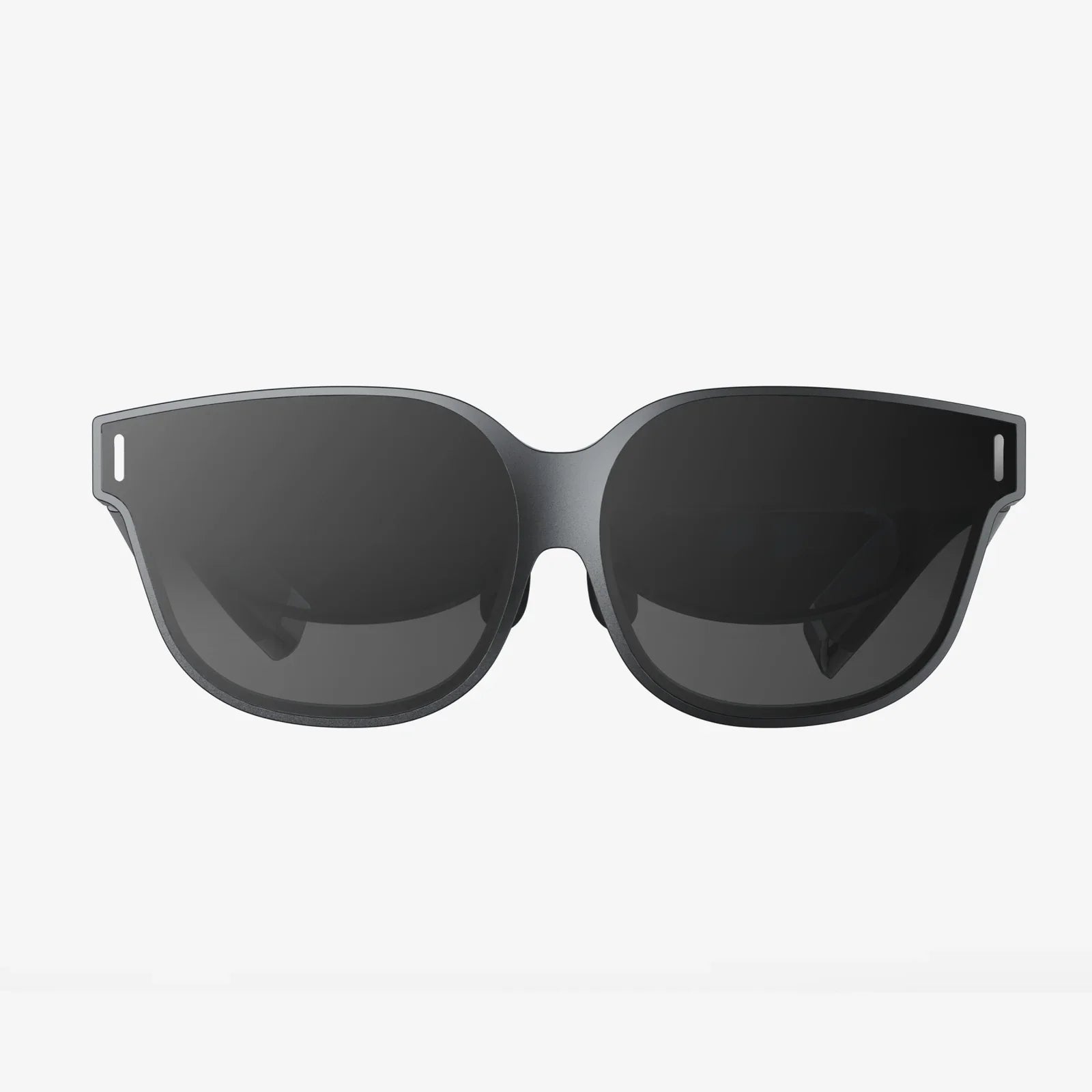
While smartphones and tablets brought AR to the masses, the experience is evolving through specialized hardware:
Now that we have clear definitions, the distinctions become sharp and significant.
| Feature | Hologram (True) | Augmented Reality |
|---|---|---|
| Core Nature | A display technique; a physical recording of light. | A technology platform; a software-driven experience. |
| Interactivity | Generally static and non-interactive. You view it, but cannot change it. | Inherently interactive. Digital content can be manipulated, selected, and changed. |
| Dependence on Environment | Self-contained. The illusion is created by the hologram itself and its light source. | Completely dependent on understanding the real-world environment to place content contextually. |
| Required Hardware | A laser or dedicated light source and the holographic plate/film. | A camera-equipped computer (phone, tablet, glasses) with sensors and processing power. |
| User Perspective | Provides true parallax and depth from any viewing angle. | Parallax is simulated by software, based on the tracked movement of the user’s device or head. |
This is where the story gets truly exciting. While they are fundamentally different, the fields are rapidly converging. The ultimate goal of many AR developers is to create digital visuals that are as convincing and integrated as the holograms of science fiction. They are adopting holographic-like principles to achieve this.
Researchers and companies are developing true volumetric displays that create light points within a confined volume of space, such as inside a glass dome or using rapidly spinning LEDs. These displays generate 3D images that can be viewed from 360 degrees without any headgear, much like a true hologram. When combined with the contextual and interactive principles of AR, this could lead to shared, collaborative digital objects existing in a physical space.
The transparent lenses in advanced AR glasses often use ‘holographic waveguide’ technology. In this case, ‘holographic’ refers to the use of microscopic diffraction gratings (a holographic optical element) etched into the glass. These gratings bend light from a micro-projector on the glasses’ arm, piping it into the lens and then into the user’s eye, all while allowing real-world light to pass through. This is a practical application of holographic principles to achieve the goal of augmentation.
Powerful game engines and AR development platforms now allow creators to design complex 3D scenes and behaviors. They can author experiences where digital objects have realistic physics, shadows, and occlusion (where real objects can pass in front of virtual ones). This software is what makes a dragon look like it’s landing on your driveway or a new piece of furniture appear to cast a shadow in your room. It is creating a perceptual hologram, even if the underlying technology is AR.
The distinction will matter less to the end user. The future belongs to mixed-reality experiences that leverage the best of all these technologies. We are moving towards a world where information, entertainment, and social connection will be spatially mapped onto our reality. Surgeons will use AR overlays guided by true 3D holographic scans of a patient’s anatomy. Engineers will collaborate on full-scale, interactive holographic models of machinery. Our homes will be filled with persistent digital art and interfaces that look and feel as solid as the walls they are projected upon. The question won't be ‘is this a hologram or AR?’ but rather ‘how does this digital layer improve my reality?’
Imagine a world where your entire field of vision becomes an interactive canvas. The faded sign on a historic building flickers back to life with its original neon glow, visible only through your glasses. The recipe you’re following from a digital cookbook projects each step directly onto the ingredients in front of you, guiding your hands. A colleague from across the globe sits across your physical desk, their life-size, three-dimensional representation gesturing towards a shared 3D model you can both manipulate. This is the promise of the merger—not a choice between a hologram or AR, but a seamless fusion that will redefine how we work, learn, play, and connect, making the digital world an intuitive and tangible part of our everyday lives.
Share:
What AR VR Headsets Could Look Like: A Glimpse Into the Future of Wearable Computing
Augmented Reality Glasses: The Invisible Revolution Reshaping Our World