


- by wangfred
What AR VR Headsets Could Look Like: A Glimpse Into the Future of Wearable Computing
- by wangfred
Imagine a world where the digital and physical seamlessly intertwine, where information floats before your eyes, virtual colleagues sit across your real desk, and fantastical worlds are just a blink away. This isn't a distant science fiction fantasy; it's the imminent future being forged in the labs of today, and it all hinges on one pivotal piece of technology: the next generation of AR and VR headsets. The question on everyone's mind is not if this will happen, but what AR VR headsets could look like when they finally evolve from niche gadgets into ubiquitous, world-changing tools. The journey from the bulky, tethered helmets of the present to the elegant, powerful wearables of tomorrow is a story of converging technologies, bold design philosophies, and a fundamental reimagining of human-computer interaction.
The most immediate and obvious evolution will be in physical design. Current headsets, while impressive, are often criticized for their weight, size, and isolating nature. The future lies in a bifurcation of form factors, each serving a distinct purpose.
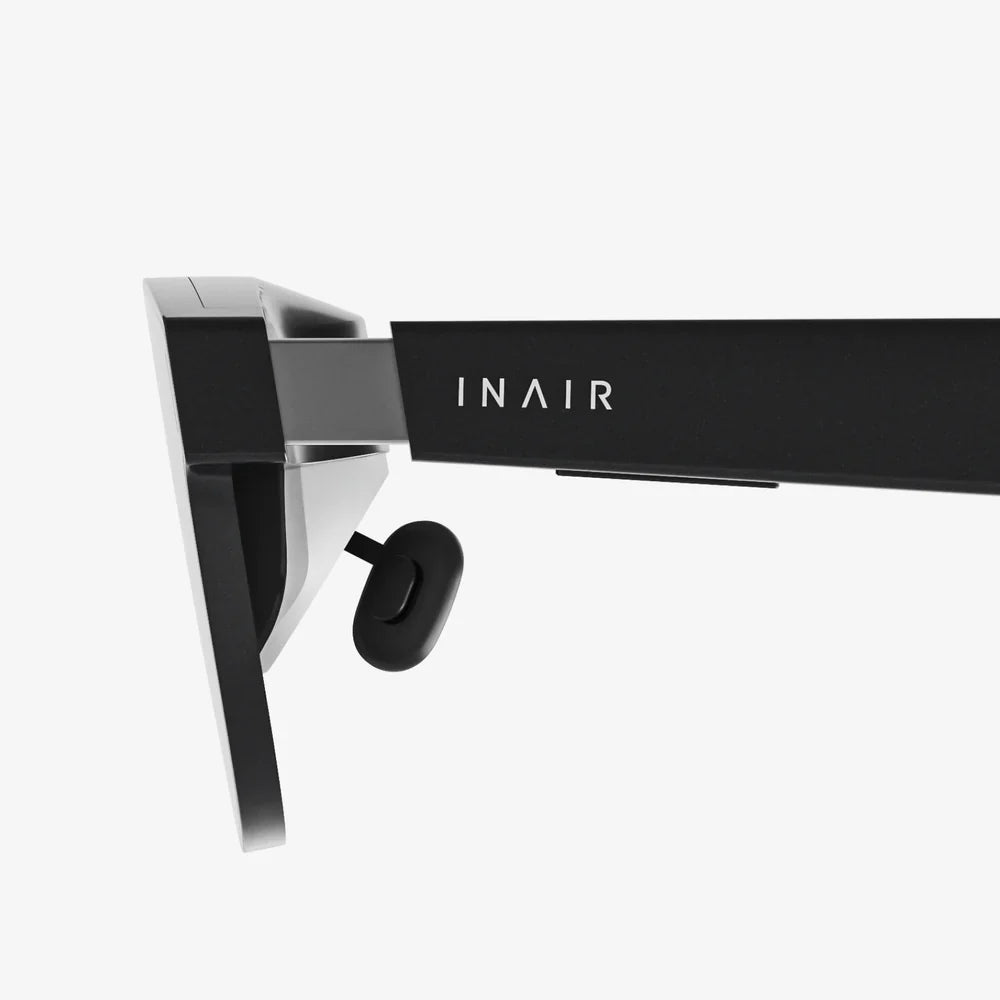
For all-day, ambient computing, the ultimate goal is a pair of glasses that are virtually indistinguishable from fashionable eyewear. This is the holy grail of augmented reality. What AR VR headsets could look like in this category is a device with incredibly thin, transparent waveguides for displays, micro-projectors hidden within the frame, and a miniaturized compute unit—either distributed within the frame itself or offloaded to a powerful, pocketable companion device. The materials will shift from plastic and foam to advanced polymers, titanium, and ceramics, making them lightweight and durable. Battery life, a current pain point, will be addressed through low-power micro-LED or Laser Beam Scanning displays, advanced silicon, and perhaps even kinetic or solar charging integrated into the frames.
On the other end of the spectrum will be devices dedicated to deep, high-fidelity virtual and mixed reality experiences. These won't be meant for all-day wear at the coffee shop but for specific, powerful applications: professional design, advanced training simulations, and truly immersive entertainment. Their design will prioritize performance and immersion over discretion. Expect broader field-of-view lenses, advanced eye-tracking and facial expression capture sensors, integrated haptic feedback for the face, and significantly more onboard processing power. They will likely remain slightly larger than glasses but will evolve into sleek, form-fitting visors that distribute weight evenly and comfortably, eliminating the front-heavy pressure of today's models.
A headset's appearance is only part of the story. The real magic lies in its ability to engage our senses in a convincing and natural way.
Resolution will continue to increase, pushing towards and beyond the dreaded "screen door effect" until it's a forgotten relic. But more importantly, advancements in varifocal displays will solve the vergence-accommodation conflict—the current disconnect between where your eyes point and where they focus—which is a major source of eye strain and a barrier to photorealistic AR. This might be achieved through moving displays, multi-plane projection, or revolutionary liquid crystal lenses. Furthermore, high dynamic range (HDR) capabilities will bring the intense brightness and deep blacks of the real world into the virtual one, making digital objects feel solid and tangible.
Spatial audio will become standard and more sophisticated. Instead of generic surround sound, headsets will feature personalized HRTF (Head-Related Transfer Function) profiling, using scans of your ears to create a perfect, 3D audio bubble that matches your unique physiology. Sound will not just come from around you; it will feel like it's emanating from specific points in the room, enhancing the illusion of presence.
What AR VR headsets could look like will also be defined by their ability to simulate touch. Basic haptics in controllers will evolve into sophisticated, wearable gloves that provide detailed force and texture feedback. The next frontier is non-contact haptics, using focused ultrasound arrays to project tactile sensations directly onto your skin, allowing you to "feel" a virtual object without wearing anything on your hands. Integrated into the headset itself, subtle haptic motors on the headband or temple could simulate the rush of wind, the impact of a virtual object, or the gentle nudge of a navigation cue.
The sleek exterior will hide a technological marvel. On-device AI accelerators will be as crucial as the GPU. This dedicated neural processing unit (NPU) will handle a constant stream of real-time data: understanding the environment through computer vision, tracking your eyes and hands, and running intelligent assistants. This offloads intensive tasks from the main processor, making interactions instantaneous and preserving battery life. This onboard intelligence will enable features like persistent digital objects—leaving a virtual note on your real refrigerator that stays there days later—and context-aware information that automatically appears based on what you're looking at and what task you're doing.
The interface of future headsets will move beyond clunky menus and floating panels. Interaction will be multimodal and intuitive.
The applications for these advanced headsets will stretch far beyond gaming and passive consumption.
In the workplace, architects will walk clients through full-scale, interactive building models before a single brick is laid. Remote collaboration will transform from a grid of video calls into a shared virtual office where colleagues' avatars can manipulate the same 3D models and data visualizations. In medicine, surgeons could overlay real-time MRI data and critical vitals directly onto their field of view during procedures. For education, students will take field trips to ancient Rome or the depths of the ocean, experiencing history and science rather than just reading about it.
In our daily lives, navigation arrows will be painted onto the street, subtitles will appear under a speaking foreigner, and the recipe for your dinner will hover neatly next to the ingredients on your countertop. The world will become annotated, personalized, and infinitely more accessible.
This future is not without its hurdles. The societal and ethical questions are profound. Privacy concerns are paramount; always-on cameras and microphones scanning our environments require a fundamentally new framework of data ownership and security. The potential for overwhelming information overload and a new digital divide is real. Furthermore, creating a universal standard for the "metaverse"—an interoperable network of experiences—will be a monumental technical and political challenge to prevent a future of walled-garden platforms. The design of these devices must include thoughtful features like a physical "privacy shutter" or clear external indicators when sensors are active to build public trust.
The path from today's prototypes to tomorrow's pervasive reality is being paved with breakthroughs in optics, material science, and artificial intelligence. The question of what AR VR headsets could look like is being answered not with a single design, but with a spectrum of devices tailored to different needs, from invisible glasses that enhance our reality to powerful visors that replace it. They will become the most intimate and transformative technology we have ever worn, moving from our desks and living rooms out into the wide world, forever changing how we work, learn, connect, and perceive the very nature of reality itself. The future isn't just something we will see on a screen; it's something we will step into, and it's putting on a pair of glasses.
Share:
Superfast WiFi Tethering for AR VR Headsets: Unleashing a Cordless Future
Superfast WiFi Tethering for AR VR Headsets: Unleashing a Cordless Future